
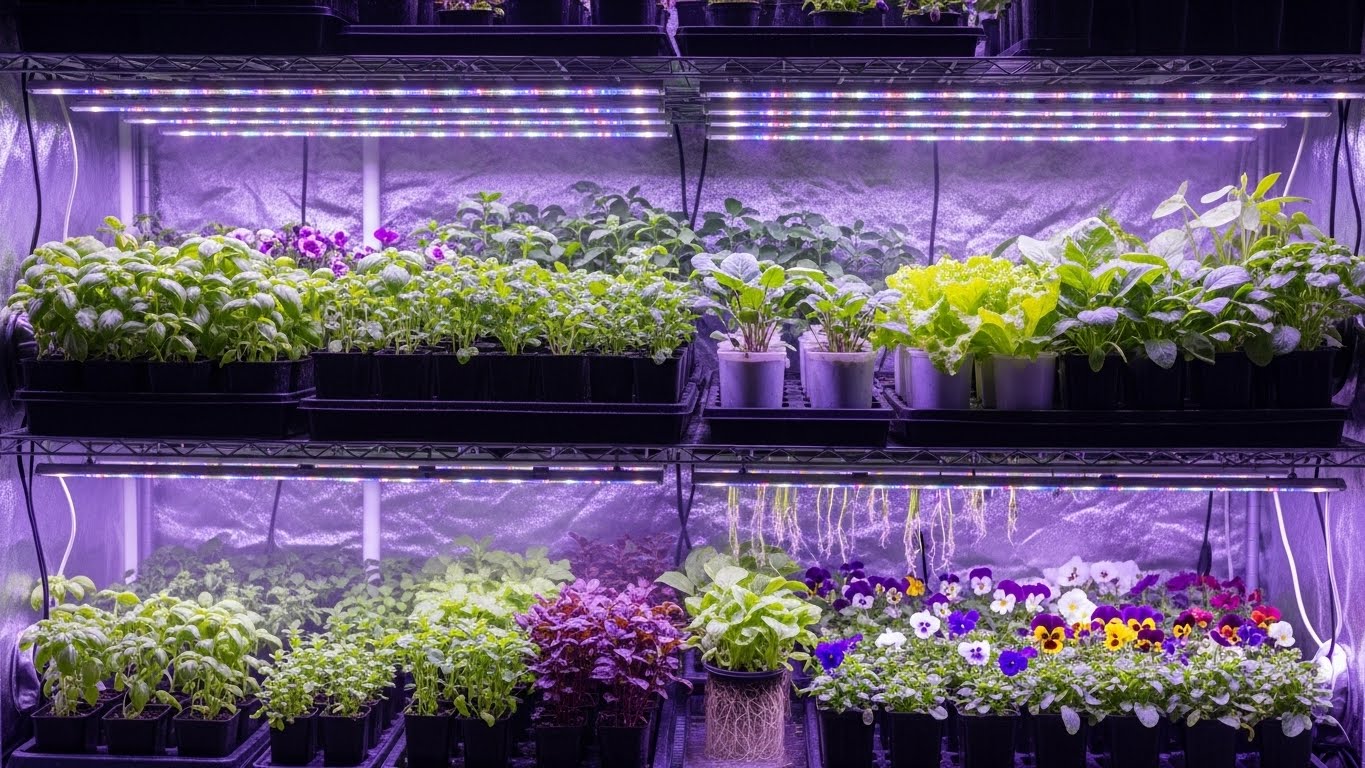
If you’re looking to brighten up your indoor garden, several plants do great with grow lights! Succulents and cacti love the bright light, while herbs like basil and parsley thrive under specific light durations. Leafy greens and flowering houseplants, such as African violets, appreciate those rays, too! Peace lilies and spider plants are friendly under grow lights as well, and you can’t forget about adaptable kinds like pothos and ZZ plants. Let’s explore more options together!
Succulents
Succulents are fascinating plants that store water in their leaves, stems, or roots, which helps them thrive in dry environments. You’ll find a variety of succulent types, each with its unique charm, from the vibrant Echeveria to the classic Aloe Vera. When caring for these beauties, keep a few tips in mind. First, make sure they get plenty of bright light; grow lights can be a great help. Water them sparingly, letting the soil dry completely between waterings, and use well-draining potting mix to avoid root rot. Finally, don’t forget to check for pests, as they can be sneaky! With just a little attention, your succulents will flourish and bring joy to your space.
Herbs
Herbs are not just flavorful additions to your meals; they can also be a rewarding project to grow indoors with the help of grow lights. Indoor cultivation of herb varieties like basil, parsley, and cilantro can bring fresh flavors right to your kitchen. Using grow lights, you can create the perfect environment for these plants to thrive, even in limited sunlight.
Herb Varieties | Light Requirement | Ideal Temperature |
|---|---|---|
Basil | 12-16 hours/day | 70-80°F |
Parsley | 10-12 hours/day | 60-70°F |
Cilantro | 12-14 hours/day | 65-75°F |
Chives | 10-12 hours/day | 60-75°F |
Growing these herbs is easy and fulfilling, making your meals even more delightful!
Leafy Greens
When you think about growing your own food, leafy greens might just be the first thing that comes to mind, especially since they’re packed with vitamins and are super easy to cultivate indoors! Whether you’re growing lettuce, spinach, or kale, these greens thrive under grow lights, making them perfect for your home garden. Focus on proper growing techniques, like using a balanced potting mix and ensuring your lights are positioned correctly. Leafy greens have specific nutrient needs, so consider adding a liquid fertilizer every couple of weeks to keep them healthy. With a little care and attention, you’ll enjoy fresh, crispy greens right from your kitchen. Trust me, nothing beats the taste of homegrown salads!
Flowering Houseplants
Flowering houseplants can bring a burst of color and joy to your space, making them a great choice for grow lights. You’ll find popular varieties like African violets and orchids that not only brighten your home but also have specific light requirements to help them thrive. With a few maintenance tips, you can keep your flowering plants healthy and blooming beautifully all year round!
Popular Flowering Varieties
Choosing the right flowering houseplants can truly brighten up your space and lift your mood, especially when you’re using grow lights to help them flourish. Some popular flowering varieties include the vibrant African violet, which offers lovely blooms nearly year-round, and the cheerful begonias, known for their colorful petals. You might also consider the elegant orchids, which add a touch of sophistication to any room. If you want a splash of color, petunias are perfect, thriving beautifully under grow lights. These plants not only enhance your home but also create a lively atmosphere. By selecting the right flowering varieties, you’ll enjoy a stunning display that’s sure to bring joy and warmth to your living space.
Light Requirements Explained
Understanding the light requirements for your flowering houseplants is key to keeping them vibrant and healthy. Flowering plants thrive when they receive the right light spectrum, which includes both red and blue wavelengths. These colors support blooming and healthy growth. You’ll want to provide around 12 to 16 hours of light duration each day, mimicking natural sunlight.
Consider using grow lights that can adjust to the specific needs of your plants. Bright light is essential for flowers like orchids, while others, like peace lilies, prefer indirect light. Monitor your plants closely; if they lean towards the light or their leaves start yellowing, it’s a sign you may need to adjust the light settings. Happy growing!
Maintenance Tips for Success
To guarantee your flowering houseplants thrive, regular maintenance is essential. You’ll want to establish consistent care habits to keep them blooming beautifully. Here are some handy tips:
- Watering Schedules: Check the soil moisture weekly, watering when the top inch feels dry, ensuring you don’t overwater.
- Nutrient Management: Feed your plants with a balanced fertilizer every month, especially during their growing season.
- Pruning: Remove dead flowers and leaves regularly to encourage new growth and maintain plant health.
- Pest Checks: Inspect your plants for pests like aphids or spider mites, and treat them promptly to prevent infestations.
Fruit-Bearing Plants
When it comes to growing fruit-bearing plants indoors, you’ve got a fantastic variety to choose from, and each option can thrive under grow lights! Imagine plucking juicy strawberries from your very own berry bushes, or savoring sweet, tropical fruits like mini bananas or dwarf pineapples. These vibrant plants not only brighten your space but also provide delicious rewards.
To get started, consider the space you have; berry bushes need room to spread, while tropical fruits can fit snugly on a sunny windowsill. Make sure to give them enough light, warmth, and water. With a little love and attention, you’ll soon enjoy the thrill of harvesting fresh fruits right from your own indoor garden!
Ferns
After enjoying the sweetness of homegrown fruits, you might want to explore another fascinating type of indoor plant: ferns. These lush beauties not only brighten your space but are also quite easy to care for. Here are four popular fern varieties to evaluate:
- Boston Fern – Known for its feathery fronds.
- Maidenhair Fern – Delicate, with stunning heart-shaped leaves.
- Staghorn Fern – Unique with its antler-like growths.
- Asparagus Fern – Actually not a true fern, but charming with its fine foliage.
When it comes to fern care, keep them in indirect light, maintain humidity, and water regularly. With a little love and attention, your ferns will flourish, bringing a touch of nature indoors.
Cacti
Cacti are like nature’s little warriors, perfectly adapted to thrive in some of the harshest environments on Earth. With a variety of cacti varieties available, you can easily find one that fits your personal style. These resilient plants love bright light, making grow lights a fantastic option for your indoor garden.
Cacti Variety | Light Requirement | Watering Frequency |
|---|---|---|
Saguaro | Full Sun | Every 2-3 weeks |
Easter Cactus | Bright Indirect | Weekly |
Barrel Cactus | Full Sun | Every 2-3 weeks |
Cacti care is simple; just make certain they receive enough light and don’t overwater. Embrace the challenge, and watch your little warriors thrive!
Orchids
Orchids are some of the most stunning and diverse flowers you can grow, boasting an incredible range of shapes and colors that can brighten up any indoor space. For successful orchid care, understanding their light preferences is crucial. Here’s what you need to know:
- Indirect sunlight is ideal; avoid harsh direct rays.
- Grow lights can help; fluorescent or LED options work well.
- Monitor temperature; they thrive in 65-75°F during the day.
- Rotate your orchids regularly to guarantee even growth and exposure.
With the right care and lighting, your orchids will flourish, filling your home with beauty and joy. Don’t hesitate—dive into the world of orchids and let their elegance brighten your life!
African Violets
African violets are a popular choice for indoor gardening enthusiasts, and it’s easy to see why! Their vibrant colors and delicate blooms can brighten any space. When it comes to African violet care, you’ll want to provide them with plenty of indirect sunlight. Grow lights can be your best friend here, ensuring they get the right amount of African violet lighting. Position your lights about 12 to 14 inches above the plants, and keep them on for around 12 to 16 hours daily. Water them carefully, avoiding wet leaves, and use a balanced fertilizer for best results. With a little attention, you’ll enjoy these lovely flowers thriving in your home, bringing joy and beauty to your life!
Peace Lilies
Peace lilies are not just beautiful houseplants; they also have specific light requirements that can help them thrive. You’ll find that providing the right amount of light can enhance their growth and lead to stunning blooms. Let’s explore how to meet their light needs and enjoy the benefits of these lovely plants in your space!
Light Requirements Explained
When it comes to growing Peace Lilies, understanding their light requirements is essential for keeping them healthy and thriving. These beautiful plants prefer bright, indirect light but can adapt to lower light conditions. Here’s what you need to know about their light spectrum:
- Bright, Indirect Light: Place them near a window with filtered sunlight.
- Avoid Direct Sunlight: Too much can scorch their leaves, harming plant health.
- Low Light Tolerance: Peace Lilies can survive in low light, but they won’t bloom as frequently.
- Supplement with Grow Lights: If natural light is scarce, use grow lights to provide the necessary spectrum for growth.
Growth Benefits Noted
Growing Peace Lilies not only brightens up your space but also offers a range of benefits that can enhance your indoor environment. These lovely plants thrive under grow lights, as they benefit from the right light spectrum. When you provide them with consistent, quality light, their plant health improves greatly. You’ll notice more vibrant leaves and stunning blooms, which can boost your mood and create a peaceful atmosphere. Plus, Peace Lilies are known for their air-purifying abilities, helping to remove toxins from your home. Remember, with the right light and care, these beautiful plants can thrive beautifully, bringing joy and tranquility to your living space. Enjoy nurturing your Peace Lilies and watch them flourish!
Spider Plants
Spider plants, known for their arching green leaves and charming offshoots, make fantastic companions for grow lights. If you’re keen to nurture these lovely plants, here are some tips for spider plant care and propagation:
Spider plants with their graceful leaves and delightful offshoots thrive beautifully under grow lights, making them perfect indoor companions.
- Light: Position your spider plant under grow lights for 12-16 hours daily to mimic natural sunlight.
- Water: Keep the soil slightly moist, but avoid overwatering to prevent root rot.
- Fertilizer: Feed with a balanced fertilizer every few months during the growing season.
- Propagation: When your spider plant produces offshoots, simply snip them off and plant them in their own pots for new growth.
With these simple steps, you’ll enjoy a thriving spider plant that brightens your space!
Pothos
Pothos is a fantastic choice for grow lights, as it thrives in bright, indirect light but can also adapt to lower lighting conditions. When you use grow lights, you’ll notice your Pothos grows faster and healthier, with vibrant leaves that really pop. So, if you’ve got those lights set up, get ready to see your Pothos reach its full potential!
Ideal Light Conditions
When you think about bringing a bit of nature indoors, understanding the ideal light conditions for your plants can make a big difference. For your Pothos, you’ll want to create a cozy environment that mimics its natural habitat. Here’s what you need to know:
- Light Spectrum: Pothos thrives under a full spectrum light, which closely resembles natural sunlight.
- Optimal Distance: Keep your grow lights about 12-24 inches above the plant for the best results.
- Duration: Aim for 12-14 hours of light each day to keep your Pothos happy.
- Rotation: Rotate your plant occasionally to guarantee even light exposure.
Growth Benefits With Lights
Using grow lights can greatly boost the growth of your Pothos, making it a happier and healthier plant. These lights provide a specific light spectrum that mimics sunlight, which is essential for photosynthesis enhancement. When you position your Pothos under grow lights, it absorbs that light efficiently, leading to faster growth and lush, vibrant leaves. You’ll notice how your Pothos becomes more robust and resilient, thriving even in low-light conditions. Plus, with the right setup, you can encourage longer vines and fuller foliage, creating a stunning display in your home. Remember, the right balance of light not only fuels its growth but also adds life to your space. Your Pothos will surely thank you for the extra care!
ZZ Plants
ZZ plants, known scientifically as Zamioculcas zamiifolia, are fantastic choices for those who want to add a touch of greenery to their indoor spaces without demanding too much attention. If you’re considering incorporating this resilient plant into your home, here’s what you need to know about zz plant care and zz plant propagation:
ZZ plants are perfect for adding greenery indoors with minimal care, making them an excellent choice for busy plant lovers.
- Light Needs: They thrive under grow lights but can also adapt to low light.
- Watering: Allow the soil to dry out between waterings; they prefer neglect over overwatering.
- Soil: Use well-draining potting mix to prevent root rot.
- Propagation: You can easily propagate them through leaf cuttings or division.
With these tips, you’ll enjoy the beauty of ZZ plants with minimal effort and maximum reward!
Conclusion
In summary, growing a garden indoors with grow lights can be a fun and fulfilling adventure. From succulent stars to leafy green giants, the possibilities are plentiful. You’ll find that flowering houseplants brighten your space, while fruit-bearing plants provide delicious rewards. So, whether you’re nurturing peace lilies or watching your spider plants stretch, you’re sure to enjoy the joy of indoor gardening. Immerse yourself in this delightful journey and let your plants thrive under those glowing lights!


