
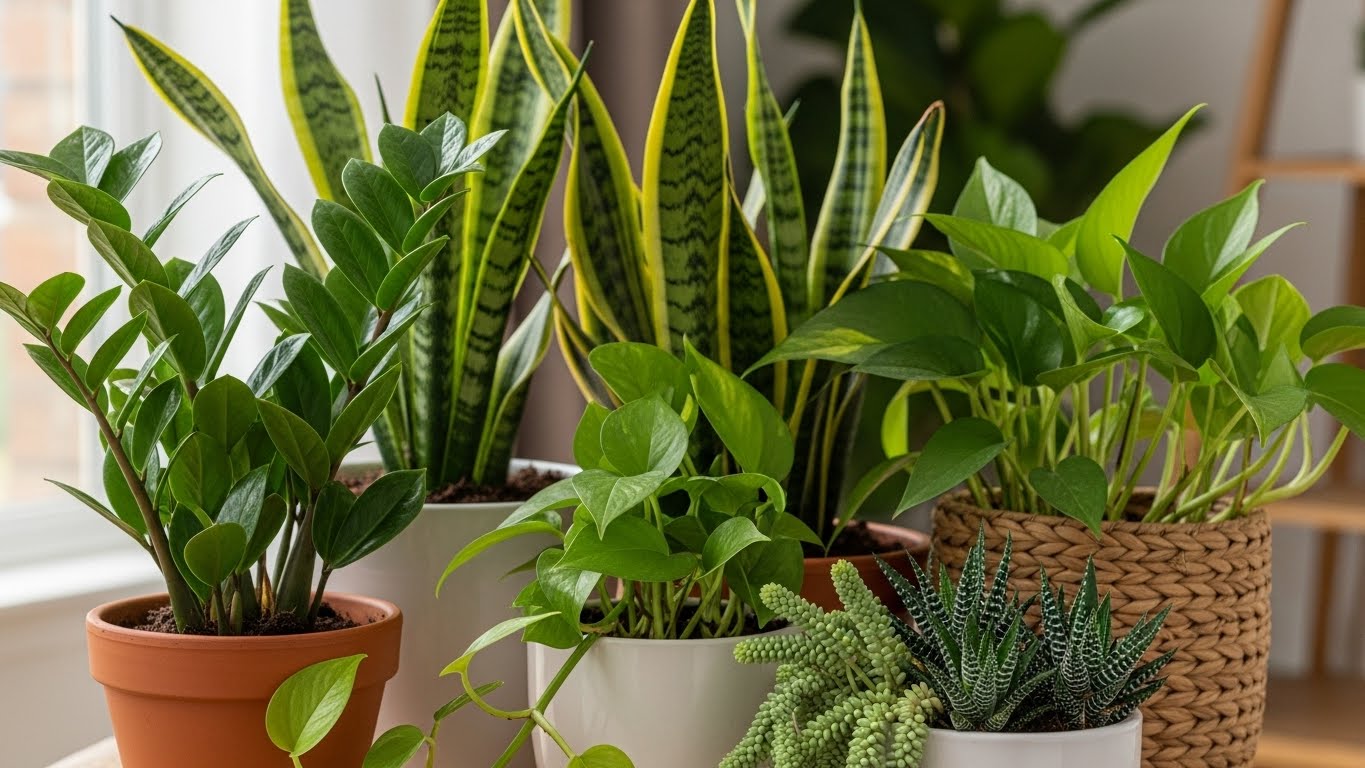
If you’re looking for beginner-friendly plants, you’ve got some fantastic options! Succulents like Echeveria and Jade Plants need little water, while Snake Plants and ZZ Plants thrive in low light and need minimal care. Pothos and Spider Plants are super easy to grow, adapting well to different conditions. Don’t forget about ferns and even some herbs like basil and mint! With these plants, you’ll see your space come alive effortlessly. Let’s explore even more amazing options!
Succulent Varieties
💡 If you’re just starting your plant journey, this article is a must-read for selecting resilient options.
➜ Explore beginner-friendly houseplants
When it comes to succulent varieties, you’ll find that there are countless options, each with its own unique charm and characteristics. Some popular succulent varieties include the cheerful Echeveria, the stunning Jade Plant, and the quirky Haworthia. These plants not only brighten up your space but are also quite forgiving, perfect for beginners like you!
To keep your new friends thriving, remember these succulent care tips: guarantee they receive plenty of bright, indirect sunlight, and don’t overwater them. A good rule is to let the soil dry out completely between waterings. By choosing the right varieties and following these simple care tips, you’ll create a beautiful, low-maintenance indoor garden that brings joy into your life.
Snake Plant
Even if you’re new to plant care, the Snake Plant, also known as Sansevieria, is a fantastic choice that can thrive in various conditions. Its tall, striking leaves not only add elegance to your space but also offer impressive snake plant benefits. This resilient plant purifies the air, making it healthier for you and your family. When it comes to snake plant care, you’ll appreciate its low-maintenance nature. Just place it in indirect light, and water it sparingly—only when the soil is dry. This plant can tolerate neglect, so you won’t feel overwhelmed. With a Snake Plant by your side, you’re not just growing a plant; you’re inviting a little greenery into your life. Enjoy the journey!
Pothos
Pothos is one of the easiest houseplants you can care for, making it perfect for beginners like you. With its stunning heart-shaped leaves, it thrives in a variety of lighting conditions, from bright light to low light, so you won’t have to worry too much about where to place it. Plus, propagating Pothos is a fun and simple process, allowing you to grow new plants from cuttings and share them with friends!
Easy Care Requirements
Caring for a Pothos plant is a breeze, making it a perfect choice for beginners. These charming plants offer easy care, allowing you to enjoy their lush greenery without stress. Here are some simple requirements you’ll love:
- Water: Let the soil dry out between waterings.
- Soil: Use a well-draining potting mix.
- Fertilizer: Feed every few months during the growing season.
- Pests: Watch for pests but they’re usually not a problem.
- Pruning: Trim back to encourage bushier growth.
With these easy care tips, you’ll find that Pothos are among the most beginner-friendly plants out there. They thrive on little attention, making them a lovely addition to your home. Embrace your green thumb and enjoy!
Ideal Lighting Conditions
What’s the secret to keeping your Pothos thriving? It all comes down to finding the right lighting conditions! These beautiful plants love bright, indirect light, but they can adapt to lower light intensity too. Just remember, too much direct sunlight can scorch their leaves, so keep them in a cozy spot away from harsh rays. Aim for around 12 to 14 hours of light duration each day, if possible. If your space is dim, don’t worry; they’ll still grow, just more slowly. You might even see some stunning variegation in brighter spots! So, whether it’s a bright window or a shadier corner, your Pothos will flourish with a little attention to light. Happy growing!
Propagation Techniques Explained
If you’re keen to expand your Pothos collection, you’re in luck; propagating this plant is both easy and rewarding! Here are some simple propagation methods you can try with plant cuttings:
- Water Propagation: Place cuttings in water until roots develop.
- Soil Propagation: Plant cuttings directly into soil for faster growth.
- Leaf Node: guarantee each cutting has a leaf node for successful rooting.
- Temperature: Keep cuttings warm to encourage growth.
- Patience: Give your cuttings time to thrive; it can take a few weeks.
With these techniques, you’ll watch your Pothos flourish, and before you know it, you’ll have a lush collection to show off! Happy propagating!
Spider Plant
Spider plants are perfect for beginners because they’re easy to care for and thrive in various conditions. You’ll love learning how to propagate them, as they produce adorable baby plants called “pups” that can grow into new companions. Plus, knowing how to tackle common issues will keep your spider plant looking vibrant and healthy!
Easy Care Requirements
When you’re looking for a low-maintenance houseplant, the Spider Plant stands out as an excellent choice. It thrives on easy maintenance and doesn’t demand much from you, making it perfect for beginners. Here are some care tips to keep your Spider Plant happy:
- Low Water Needs: Water only when the top inch of soil feels dry.
- Indirect Light: Place it in bright, indirect sunlight for ideal growth.
- Temperature Tolerance: It enjoys a range of temperatures, generally between 65°F to 75°F.
- Occasional Fertilization: Feed it with a balanced fertilizer once every month during growing season.
- Dusting Leaves: Wipe its leaves occasionally to keep them clean and healthy.
With these simple steps, you’ll enjoy a flourishing Spider Plant!
Propagation Techniques
Propagating your Spider Plant can be a fun and rewarding experience, especially since it’s one of the easiest plants to multiply! You’ll love watching your little plant babies grow. Here are some beginner tips and popular propagation methods:
Method | Steps | Time to Root |
|---|---|---|
Water Propagation | Cut a pup, place it in water | 2-4 weeks |
Soil Propagation | Plant a pup directly in soil | 4-6 weeks |
Division | Separate the plant at the roots | Immediate growth |
Just choose a method that suits you best, and don’t forget to keep the new babies in a warm, bright spot. Your green thumbs will be thriving in no time!
Common Issues Encountered
Taking care of a Spider Plant can feel like a delightful adventure, but sometimes you might run into a few bumps along the way. Knowing what to look out for can help you nurture your green friend with confidence. Here are some common issues to watch for:
- Overwatering problems: Too much water can lead to root rot. Make sure the pot has drainage holes.
- Yellowing leaves: This could signal overwatering or nutrient deficiencies.
- Brown tips: It often means the air is too dry; try misting the leaves.
- Pest infestations: Keep an eye out for spider mites or aphids, which can be pesky.
- Slow growth: This might indicate it needs repotting or more light.
With a little care, your Spider Plant can thrive!
ZZ Plant
The ZZ plant, known for its glossy leaves and resilience, is an excellent choice for beginners looking to add some greenery to their space. ZZ plant care is a breeze; it thrives in low light and doesn’t need frequent watering, making it perfect for anyone with a busy lifestyle. Just water it when the soil feels dry, and watch it flourish!
One of the best ZZ plant benefits is its ability to purify the air, helping to create a healthier environment for you and your loved ones. Plus, it’s incredibly forgiving if you forget about it for a while. With its unique charm and easy-going nature, the ZZ plant is sure to become a cherished part of your home.
Peace Lily
Let’s talk about the Peace Lily, a fantastic choice for beginners! It’s not only beautiful with its glossy leaves and stunning white blooms, but it’s also easy to care for. You’ll find that keeping it healthy is simple, and we’ll cover common issues to watch out for, making it a perfect plant for your home or classroom!
💡 For those who may struggle with regular watering, this guide will help you find plants that thrive on neglect.
➜ Discover set-and-forget plants
Care Requirements Simplified
Caring for a Peace Lily can be a rewarding experience, especially since these beautiful plants thrive with just a little attention. To help you get started, here are some simple care tips:
💡 If you’re worried about keeping plants alive, this article showcases beautiful options that require mthismal care.
➜ Learn about low-maintenance plants
- Plant Watering: Keep the soil moist but not soggy; check it weekly.
- Sunlight Exposure: Place your Peace Lily in bright, indirect light for ideal growth.
- Humidity: These plants love humidity, so mist them occasionally.
- Fertilizing: Feed with a balanced fertilizer every 6-8 weeks during the growing season.
- Repotting: Every couple of years, repot to refresh the soil and promote growth.
With these guidelines, your Peace Lily will flourish, bringing a touch of nature into your space!
Common Issues Addressed
While Peace Lilies are generally easy to care for, they can sometimes show signs of distress that may leave you scratching your head. One common issue is yellowing leaves, often due to overwatering or poor soil types. Make sure your potting mix drains well, as soggy roots can lead to trouble. Keep an eye out for common pests like spider mites or aphids; they love to hide in the foliage! If you notice sticky residue or tiny webs, it’s time for a closer look. Adjusting your watering habits and using insecticidal soap can help. By staying aware of these signs, you can keep your Peace Lily thriving and vibrant, adding joy to your space. Happy gardening!
Lavender
Lavender, with its vibrant purple blooms and soothing fragrance, is a fantastic choice for beginner gardeners looking to add a splash of color and aroma to their outdoor spaces. Its beautiful lavender varieties, like English and Spanish lavender, thrive in sunny spots and well-drained soil, making them easy to care for.
Here are some lavender benefits that make it special:
- Attracts pollinators like bees and butterflies
- Provides a calming scent for relaxation
- Can be used in cooking and herbal remedies
- Drought-tolerant, saving water
- Versatile for gardens, pots, or borders
With lavender, you’ll not only enjoy its beauty but also create a serene atmosphere in your garden. Start your lavender journey today!
Marigolds
Marigolds are a delightful addition to any garden, especially because they’re not just pretty to look at; they’re also incredibly easy to grow! With vibrant colors and a cheerful presence, these flowers can brighten up any space. When you engage in marigold care, you’ll find that they thrive in full sun and well-drained soil. Water them regularly, but don’t overdo it—just let the soil dry between waterings.
There are many marigold varieties to choose from, like the classic French marigold or the tall African marigold. Whether you plant them in pots or directly in the ground, you’ll enjoy their stunning blooms and the way they attract beneficial insects. So get ready to watch your garden flourish with marigolds!
Herbs for Beginners
Getting started with herbs can be one of the most rewarding experiences for any budding gardener! Herbs are not only easy to grow but also add flavor and freshness to your meals. Here are some beginner-friendly herbs to try:
- Basil: Known for its culinary uses, basil benefits your garden and your dishes.
- Mint: This fragrant herb can spice up drinks and desserts.
- Parsley: A versatile garnish that enhances many meals.
- Chives: With a mild onion flavor, they’re perfect for salads and soups.
- Thyme: Great for seasoning meats and veggies, bringing warmth to your cooking.
Start your herb garden today, and you’ll be amazed at how these little plants can elevate your kitchen!
Cacti
After exploring the wonderful world of herbs, it’s time to turn our attention to a different type of plant that’s just as fascinating: cacti! These unique plants come in various shapes and sizes, making them a delightful addition to any beginner’s collection. When it comes to cacti care, you’ll find they’re low-maintenance. They thrive in bright light, and a little water goes a long way—just be sure to let the soil dry out between waterings. Some popular cacti varieties include the classic prickly pear and the charming Christmas cactus. With their quirky appearance and resilience, cacti can easily become your new favorite plant. So, grab one, and let it brighten your space with minimal effort!
Ferns
Have you ever wondered why ferns are such popular plants among beginners? Their lush, green fronds and easy-going nature make them a top choice for new plant parents. With a bit of love, you can enjoy a thriving fern in your home. Here’s a quick guide to ferns care and some fantastic fern varieties to explore:
Ferns are beloved by beginners for their lush fronds and easy care, making them perfect for new plant enthusiasts.
- Boston Fern: Known for its feathery leaves.
- Maidenhair Fern: Delicate and stunning, perfect for a touch of elegance.
- Staghorn Fern: Unique and eye-catching, they love hanging.
- Asparagus Fern: Not a true fern, but charming nonetheless.
- Kimberly Queen Fern: Hardy and easy to care for, great for beginners.
Embrace the beauty of ferns, and let their vibrant life brighten your space!
Tomato Plants
Tomato plants are a fantastic choice for beginner gardeners looking to cultivate their green thumbs. With so many delicious tomato varieties like cherry, beefsteak, and Roma, you’ll have plenty of options to explore! They thrive in warm weather and love sunlight, making them perfect for your backyard or patio.
Here’s a quick guide on tomato care:
Tomato Variety | Care Tips |
|---|---|
Cherry | Water regularly, prune for air circulation. |
Beefsteak | Support with cages, guarantee plenty of sunlight. |
Roma | Fertilize every few weeks, keep soil moist. |
San Marzano | Space for growth, protect from pests. |
Grape | Harvest when firm, don’t overcrowd plants. |
Start planting, and soon you’ll enjoy fresh, homegrown tomatoes!
Radishes
Radishes are not just quick to grow; they’re also a fun and colorful addition to any garden! You’ll love how easy they are to cultivate, and the variety you can choose from will keep things exciting. Here are some radish varieties you might want to try:
Radishes are a vibrant and quick-growing delight for any garden, with exciting varieties to explore!
- Cherry Belle: A classic, round red radish.
- French Breakfast: Long and mild, with a lovely pink hue.
- Black Spanish: A bold variety, perfect for winter.
- Watermelon: Bright pink on the outside, green on the inside!
- Daikon: A giant radish, great for stir-fries.
These beauties thrive in well-drained soil and enjoy full sun. With minimal growing conditions, you’ll be munching on your fresh radishes in no time!
Conclusion
So, whether you’re drawn to the spiky elegance of a cactus or the lush green leaves of a pothos, there’s a perfect plant waiting for you. Imagine your windowsill adorned with vibrant succulents, each telling a story of resilience and growth. These beginner-friendly plants thrive on your care, bringing life into your space, even if you’ve got a busy schedule. Immerse yourself in the world of gardening, and watch your leafy companions flourish right before your eyes!
💡 Enhance your indoor environment with plants that not only survive but also improve air quality.
➜ See which plants purify air


