
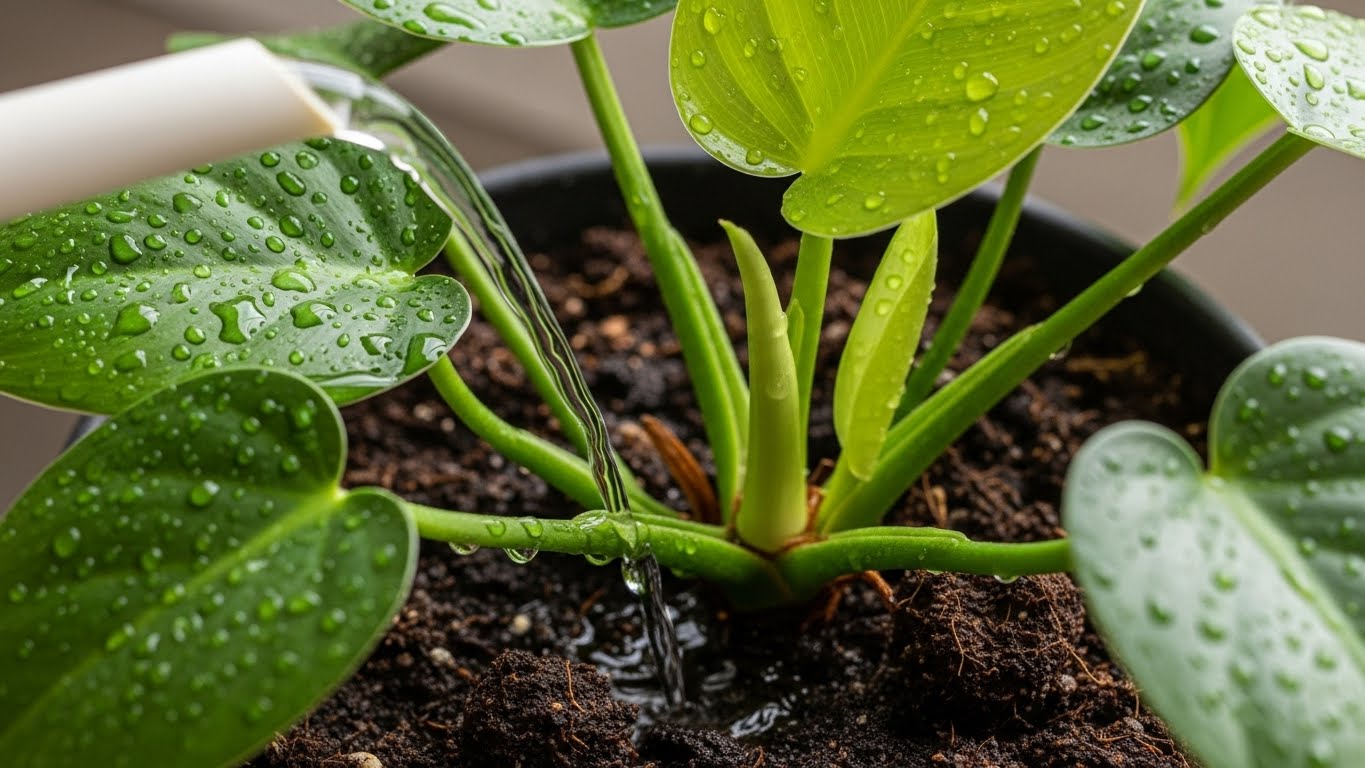
To keep your Philodendron happy, water it when the top inch of the soil feels dry. This usually means watering every 1-2 weeks, but it can change with the seasons. In warm months, they need more water, while cooler months require less. Be on the lookout for yellowing leaves or drooping, as these can mean it’s getting too much or not enough water. Keep an eye out for more tips to guarantee your plant thrives!
Key Takeaways
- Water Philodendrons when the top inch of soil is dry, adjusting frequency with the seasons.
- Increase watering in warmer months and decrease during cooler months to match plant needs.
- Monitor for signs of overwatering, like yellowing leaves, and adjust watering schedule accordingly.
- Use well-draining soil to prevent root rot and ensure proper moisture balance.
- Check humidity levels; higher humidity may require more frequent watering for optimal growth.
Understanding Philodendron Watering Needs
When it comes to keeping your philodendron happy and healthy, understanding its watering needs is key! To encourage robust philodendron growth, you’ll want to establish a consistent watering schedule. Start by checking the top inch of the soil; if it feels dry, it’s time for a drink. Your philodendron loves moisture, but it doesn’t want to sit in soggy soil, so be mindful of overwatering. During the warmer months, you might find yourself watering more frequently, while in cooler months, cut back a bit. Remember, every plant is unique, so pay attention to how your philodendron responds. With a little patience, you’ll find the perfect balance to keep your leafy friend thriving!
Signs of Overwatering
Recognizing the signs of overwatering is essential for keeping your philodendron healthy and vibrant. If you notice yellowing leaves, that’s one of the main overwatering symptoms you should pay attention to. Drooping leaves can also indicate your plant’s roots are sitting in too much water. In severe cases, you might experience root rot, where roots turn brown and mushy. If you gently tug on the plant and it feels loose in the pot, that’s another sign it’s struggling. To revive your philodendron, let the soil dry out before watering again. Remember, finding the right balance is key, and your plant will thank you with lush, green growth! Keep an eye out for these signs to guarantee your plant thrives.
Signs of Underwatering
How can you tell if your philodendron needs more water? Look for underwatering symptoms, which can be quite noticeable. One of the first signs is leaf drooping; when your plant’s leaves start to hang down, it’s a clear indication it’s thirsty. You might also notice that the leaves are becoming crisp or developing brown edges. These changes aren’t just sad; they’re your plant’s way of asking for help! If you catch these signs early, you can quickly bring your philodendron back to life with a good drink. Remember, it’s all about balance—too little water can be just as harmful as too much. Keep an eye on your plant, and it’ll reward you with vibrant growth!
Soil Type and Its Impact
Soil type plays an essential role in how often you should water your philodendron, as it affects drainage and moisture retention. Understanding your soil composition can help you keep your plant healthy and happy. Here are some key points to evaluate:
- Well-draining soil allows excess water to escape, preventing root rot.
- Peat-based mixes retain moisture but need to be balanced with other materials.
- Soil with high organic content retains nutrients, supporting healthy growth.
- Sandy soils drain quickly, requiring more frequent watering to maintain moisture.
Pot Size and Drainage
When you think about how often to water your philodendron, pot size and drainage really come into play. A pot that’s too small can lead to root crowding, making it harder for your plant to soak up water, while a larger pot may hold excess moisture, risking root rot. That’s where drainage importance comes in. Always use pots with drainage holes to allow excess water to escape. This guarantees your philodendron gets the right amount of hydration. When choosing pot size, consider the plant’s growth; it’s best to opt for a pot that’s one size larger than the current one. This balance helps your philodendron thrive, keeping it healthy and happy as it grows.
Environmental Factors: Light and Humidity
Although you might think water is the only thing your philodendron needs, light and humidity actually play a huge role in its health and how often you should water it. Understanding these environmental factors will help you care for your leafy friend better.
Water isn’t the only requirement for your philodendron; light and humidity are crucial for its well-being.
- Light Intensity: Bright, indirect light is best; too much direct sunlight can scorch leaves.
- Humidity Levels: Aim for 40-60% humidity; dry air can lead to crispy leaves.
- Watering Frequency: Higher light and humidity often mean you’ll need to water more frequently.
- Signs of Stress: Yellowing leaves can signal too little water or humidity.
Seasonal Changes and Watering Frequency
As the seasons change, so do the watering needs of your philodendron. During the warmer months, when temperatures rise and sunlight is abundant, your plant will likely need more frequent watering. However, as you shift into fall and winter, those temperature fluctuations can lead to a slower growth rate. This means you might need to cut back on watering, allowing the soil to dry out between waterings. Keep an eye out for signs of seasonal drought, like drooping leaves, which can indicate that your plant is thirsty. By adjusting your watering routine seasonally, you’ll help keep your philodendron healthy and thriving, ensuring it continues to brighten your space all year long.
Water Quality and Temperature
When you’re watering your philodendron, the quality and temperature of the water matter more than you might think. Using water that’s around room temperature helps the plant absorb it better, while tap water can sometimes contain chemicals that could harm your green friend. So, keep an eye on what you’re using, and make sure it’s as good as your plant deserves!
Ideal Water Temperature
To keep your Philodendron thriving, it’s important to take into account the temperature of the water you use for watering. The best water temperature should be warm, mimicking the plant’s natural environment. Here’s what to remember:
- Room Temperature: Aim for water that’s around 68-72°F (20-22°C).
- Avoid Cold Water: Cold water can shock your plant’s roots, causing stress.
- Hot Water is a No-Go: Water that’s too hot can harm the roots and disrupt growth.
- Consistency Matters: Stick to this temperature range for an effective watering schedule, promoting healthy growth and importance.
Tap Water Considerations
Before you fill up your watering can, it’s essential to contemplate the quality of the tap water you’ll use for your Philodendron. Tap water often contains minerals, which can be beneficial, but too many might affect your plant’s health over time. If you notice white crust on the soil or leaves, it’s a sign of mineral buildup. That’s where the filtered water benefits come in—using filtered water helps remove excess minerals and chemicals, giving your plant a healthier drink. Plus, it can improve overall growth and vibrancy. So, whether you choose tap or filtered, make sure you’re mindful of what you’re giving your green companion, ensuring its well-being and happiness in your home.
Water Quality Importance
Understanding the importance of water quality and temperature is essential for keeping your Philodendron happy and thriving. The right water types and mineral content can make all the difference in your plant’s health. Here’s what to take into account:
- Use filtered water: This helps remove chemicals that could harm your plant.
- Check mineral content: Low mineral content is ideal, as high levels can lead to leaf burn.
- Avoid distilled water: It lacks essential minerals that your Philodendron needs.
- Temperature matters: Water that’s too cold can shock your plant, while warm water can encourage root growth.
Tips for Proper Watering Techniques
When it comes to watering your philodendrons, keeping a few key techniques in mind can make all the difference. First, you’ll want to check the soil moisture before adding more water, ensuring your plants get just the right amount. Additionally, using proper containers and adjusting your watering routine with the changing seasons will help your philodendrons thrive!
Check Soil Moisture
How can you tell if your philodendron needs water? Checking the soil moisture is key to keeping your plant happy and healthy. You can use a moisture meter for quick readings, or simply do some soil testing with your fingers. Here are some ways to check:
- Touch Test: Stick your finger about an inch into the soil. If it feels dry, it’s time to water.
- Weight Check: Lift the pot; a heavy pot usually means it’s still moist.
- Visual Clues: Yellowing leaves can signal overwatering, while droopy leaves often mean underwatering.
- Moisture Meter: Use a moisture meter for precise readings and to avoid guesswork.
Use Proper Containers
Choosing the right container for your philodendron can make a big difference in how well it thrives, so don’t overlook this important detail! First, consider container materials; clay pots are breathable, helping prevent overwatering, while plastic pots retain moisture longer. Next, think about container size. A pot that’s too small can restrict root growth, leading to stress, while one that’s too big may hold excess water, risking root rot. Aim for a pot that’s about 1-2 inches larger than the current root ball. Finally, make sure your container has drainage holes to allow excess water to escape. By choosing the right container materials and size, you’ll help your philodendron flourish and thrive in its new home.
Adjust for Seasons
Adjusting your watering routine based on the seasons can greatly enhance your philodendron’s health and growth. As the climate variations change, so should your approach to watering. Here are some tips for seasonal adjustments:
- Spring: Increase watering as your plant wakes up; it craves moisture.
- Summer: Water more frequently; warm temperatures cause soil to dry out faster.
- Fall: Gradually reduce water; cooler weather signals your philodendron to slow down.
- Winter: Cut back considerably; your plant’s growth slows, needing less water to thrive.
Monitoring Soil Moisture Levels
When should you check if your Philodendron needs water? It’s essential to monitor the soil moisture regularly. You can stick your finger about an inch into the soil; if it feels dry, it’s time to water. For a more accurate approach, consider using a moisture meter. This handy tool can help you gauge the soil moisture levels precisely, ensuring your plant gets just the right amount of hydration. Remember, overwatering can be just as harmful as underwatering, so keep an eye on those moisture levels. By regularly checking, you’ll get to know your Philodendron’s needs better, creating a beautiful bond between you and your leafy friend. Happy watering!
Common Myths About Watering Philodendrons
When it comes to watering your philodendrons, you might hear some surprising myths that could lead you astray. For instance, many people worry about overwatering, thinking it’s the only way to harm their plants, while others believe that letting the soil dry out completely is fine. Let’s clear up these misconceptions so you can keep your green friends thriving!
Overwatering Concerns
Overwatering is a common concern for plant lovers, especially when it comes to caring for philodendrons, and many myths surround this issue. It’s essential to recognize overwatering symptoms early, as they can lead to root rot, which is detrimental to your plant’s health. Here are some common myths to clear up:
- Watering once a week is always enough.
- Yellowing leaves are always due to overwatering.
- You can’t overwater if you use a pot with drainage.
- Philodendrons thrive in soggy soil.
Understanding these misconceptions will help you nurture your philodendrons more effectively. So, keep an eye on your plant, check the soil moisture, and prevent those pesky overwatering symptoms from creeping in!
Dry Soil Myths
It’s a common belief that philodendrons can thrive in completely dry soil, but that’s not quite the case! Let’s clear up some drying misconceptions. While these plants can tolerate a bit of neglect, they thrive best in consistently moist soil. Waiting until the soil is bone-dry can stress your philodendron, leading to droopy leaves and stunted growth. Moisture myths suggest that letting the soil dry out completely is beneficial, but in reality, it’s essential to keep some moisture present. Aim for a balance—water when the top inch of soil feels dry. This way, you’ll support healthy growth and vibrant leaves, keeping your plant happy and thriving! So, don’t fall for those drying misconceptions; your philodendron deserves better!
Conclusion
To sum up, watering your philodendrons isn’t just a routine; it’s an art! Remember, “too much of a good thing can be bad,” so keep an eye on your plant’s signs and adjust your watering accordingly. With the right soil, pot, and moisture monitoring, you’ll have thriving philodendrons in no time. So grab that watering can and give your leafy friends the care they need, and watch them flourish right before your eyes!


