
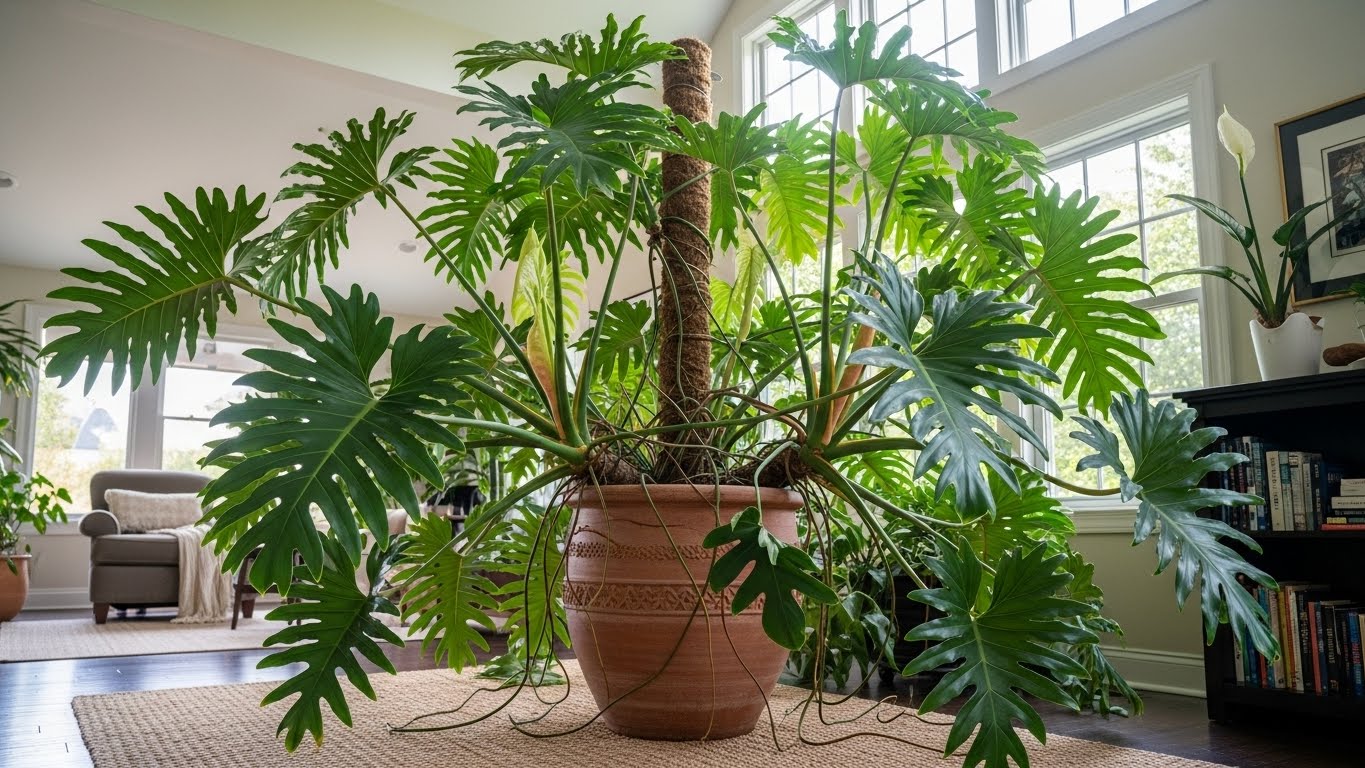
Your philodendron’s size indoors can vary, but with the right care, it can grow impressively! Factors like the variety you choose, light, humidity, and pot size all play a role. For example, heartleaf philodendrons usually stay smaller, while climbing varieties can sprawl widely. Make sure your plant receives bright, indirect light, and water it properly to prevent issues. As you track its growth, you’ll discover the best way to help it thrive! There’s more to learn about optimizing your plant’s potential!
Key Takeaways
- Philodendron varieties can vary in size; some may grow up to 3-4 feet indoors, while others remain smaller.
- Growth size is influenced by light exposure, with brighter indirect light promoting larger leaves and overall growth.
- Adequate pot size (1-2 inches larger than the root ball) supports healthy root development, affecting the plant’s overall size potential.
- Proper watering and humidity levels are crucial; consistent care can lead to a robust, larger philodendron.
- Regular pruning encourages bushier growth and can influence the perceived size of the plant indoors.
Understanding Philodendron Varieties
When it comes to understanding philodendron varieties, you’ll discover there’s a fascinating world of options waiting for you! From the popular philodendron types like the heartleaf and Brasil, which have captured many plant lovers’ hearts, to rare philodendron species that can take your collection to the next level, there’s so much to explore. Each variety boasts unique leaf shapes, colors, and growth habits, making it easy for you to find the perfect fit for your space. Whether you’re drawn to the striking beauty of a variegated philodendron or the sturdy resilience of a traditional type, you’ll find joy in nurturing these leafy friends. So, plunge into and let your philodendron journey begin—your plant family is waiting!
Factors Influencing Growth Size
Several factors influence how big your philodendron can grow indoors, and understanding these can help you create the best environment for your plant. First, light exposure is essential; these plants thrive in bright, indirect sunlight. If they don’t get enough light, they might become leggy and small. Next, consider soil composition. A well-draining potting mix rich in organic matter encourages healthy growth. If the soil retains too much moisture, it can lead to root rot, stunting your plant’s size. Additionally, keep an eye on humidity levels; philodendrons love moisture! By paying attention to these factors, you’ll set the stage for your philodendron to flourish and reach its full potential indoors. Enjoy the journey of growing!
Optimal Pot Size for Growth
Choosing the right pot size for your philodendron is essential if you want to see it thrive indoors. A pot that’s too small can restrict growth, while a pot that’s too large might lead to excess moisture and root rot. Aim for a container with adequate potting depth, allowing roots to stretch and grow. Ideally, the pot should be about 1-2 inches larger than your plant’s current root ball. Make sure the container has good drainage holes, too, as stagnant water can damage your plant. Remember, a healthy philodendron thrives in an environment where it can grow comfortably, so take the time to choose a pot that fits just right! Your green friend will thank you with lush, vibrant leaves.
Light Requirements for Healthy Growth
Light plays a significant role in how big and healthy your philodendron can grow indoors. To thrive, your plant craves the perfect balance of natural light and artificial light. Here’s what you need to keep in mind:
- Bright, indirect light encourages lush, green leaves.
- Too much direct sunlight can scorch those delicate leaves.
- Low-light conditions might stunt its growth, leaving you longing for more vibrancy.
- Supplementing with artificial light can provide that extra boost during darker months.
Watering Needs and Their Impact
When it comes to keeping your philodendron thriving, understanding its watering needs is essential. You’ll want to find the right balance in how often you water, as too much can lead to signs of overwatering, like yellowing leaves or soggy soil. Let’s explore how to keep your plant happy and healthy with the perfect watering routine!
Optimal Watering Frequency
To keep your philodendron thriving indoors, understanding its watering needs is essential, as too much or too little can affect its growth and overall health. You’ll want to find that sweet spot for ideal watering frequency, ensuring you use effective watering techniques that promote moisture retention.
- Check the top inch of soil; if it’s dry, it’s time to water.
- Water deeply, allowing excess to drain out—your plant will love you for it.
- Consider humidity levels; they can change how often you water.
- Adjust frequency with the seasons; your philodendron might need more love in warmer months.
Signs of Overwatering
Recognizing the signs of overwatering is essential for keeping your philodendron healthy and happy. If you notice yellowing leaves or a wilting plant, those might be overwatering symptoms. Your philodendron can’t thrive in soggy soil; it craves balance. Check the soil moisture—if it feels constantly wet, you’re risking root rot.
Also, look for a musty smell coming from the pot; that’s your plant signaling distress. If you see black, mushy roots when you inspect them, it’s a clear sign of trouble. To prevent these issues, allow the top inch of the soil to dry out before watering again. Keep a close eye on your plant, and you’ll guarantee it grows beautifully indoors!
Fertilization Tips for Philodendrons
When it comes to helping your philodendron thrive, choosing the right fertilizer and feeding it on a consistent schedule can make all the difference. You’ll want to look for a balanced, water-soluble fertilizer that’s specifically formulated for houseplants, as this will provide the nutrients your plant craves. Plus, understanding when and how often to feed your philodendron will keep it growing strong and healthy, so let’s explore those tips!
Best Fertilizer Types
Choosing the right fertilizer for your philodendron can make a huge difference in its growth and overall health. For lush, vibrant leaves, consider these top choices:
- Organic fertilizers: They’re gentle and enrich the soil naturally.
- Slow release options: These provide a steady supply of nutrients over time, so you won’t have to worry about frequent feedings.
- Balanced NPK: Look for fertilizers with equal parts nitrogen, phosphorus, and potassium to support overall growth.
- Liquid fertilizers: These can give an instant boost and are easy to apply.
Your philodendron will thrive with the right care, and using the best fertilizer types can help you create a lush indoor jungle that brings joy to your space!
Optimal Feeding Schedule
To help your philodendron flourish, it’s essential to stick to an ideal feeding schedule that matches its growth cycle. During the growing season, typically spring and summer, aim to fertilize every four to six weeks. This fertilizer frequency supports your plant’s vibrant growth, ensuring it receives the right nutrient balance. As fall approaches and growth slows, reduce feeding to every eight weeks, and stop altogether in winter. Remember, over-fertilizing can harm your plant, so always follow the instructions on your fertilizer package. Keeping an eye on your philodendron’s leaves will also help; if they’re yellowing, it might be a sign of nutrient imbalance. With the right care, you’ll see your philodendron thrive!
Ideal Humidity Levels
Creating the perfect environment for your philodendron involves more than just sunlight and soil; it also hinges on maintaining the right humidity levels. Philodendrons thrive in humidity, so understanding their humidity preferences is key to their happiness. Aim for levels between 40% and 60% to keep your leafy friend thriving.
Here are some ways to help achieve those ideal humidity levels:
- Misting your plant regularly to provide extra moisture.
- Using a humidifier in the room where your philodendron lives.
- Grouping plants together to create a mini humidity oasis.
- Placing a pebble tray with water underneath your pot.
Pruning for Size Management
Pruning your philodendron is a fantastic way to keep its size in check while promoting healthy growth! By using effective pruning techniques, you can encourage bushier growth and prevent your plant from becoming too large for your space. Start by removing any yellowing or dead leaves, then focus on trimming back long, leggy stems. This not only controls growth but also helps your plant direct energy to healthier parts. Aim for a balance, ensuring you’re not over-pruning, which can stress your philodendron. Regular pruning sessions every few months can enhance growth control and keep your plant looking lush and vibrant. With a little care, your philodendron will thrive beautifully in your home!
Common Pests and Their Effects on Growth
When you care for your philodendron, keep an eye out for common pests like aphids and spider mites, as they can really affect your plant’s growth. Aphids suck the sap from your leaves, leading to stunted growth and yellowing foliage, while spider mites create webbing and cause leaves to drop. By recognizing these pests early, you can take action to keep your philodendron thriving indoors!
Aphids and Their Damage
Aphids can sneak onto your beloved philodendron and cause some serious trouble, even if you might not notice them right away. These tiny pests can lead to an aphid infestation that stunts your plant’s growth and health. To keep your philodendron thriving, watch out for these signs:
- Sticky leaves from honeydew excretion
- Curling or yellowing leaves
- Wilting stems that lose strength
- Ants trailing to the leaves, attracted to honeydew
Damage prevention is key! Regularly check your plant, ensuring you catch these pests early. If you spot any, act quickly—wash them off with water or use insecticidal soap. Your philodendron deserves the best care, and keeping it healthy is a rewarding journey!
Spider Mites Impact Growth
Spider mites, though tiny, can pack a punch when it comes to affecting your philodendron’s growth. These pesky pests suck the sap from your plant, leading to yellowing leaves and stunted growth, which isn’t what you want, right? To keep your philodendron healthy, focus on spider mite prevention. Regularly mist your plants, as they thrive in dry conditions, and check for signs of webs or tiny dots on leaves. If you spot spider mites, don’t panic! Quick spider mite treatment involves washing your plant with a strong stream of water or using insecticidal soap. Keeping an eye on your plant and acting fast can guarantee your philodendron continues to flourish indoors. Let’s keep those mites at bay!
Signs of a Thriving Philodendron
A healthy philodendron is like a green superstar in your home, and there are several signs that show it’s thriving! First, pay attention to the vibrant leaf color; lush, deep green leaves indicate your plant’s happy. Next, check the stem health; sturdy, thick stems suggest your philodendron is strong and well-nourished. You’ll also notice new growth—fresh leaves unfurling is a fantastic sign of robustness. Finally, if your plant is reaching toward the light, it’s a clear indication it’s thriving and seeking more energy.
A thriving philodendron showcases vibrant leaves, sturdy stems, new growth, and a delightful reach for light!
- Bright, vibrant leaf color
- Strong, sturdy stems
- New leaves popping up
- Growth towards light
Keep an eye out for these signs, and your philodendron will surely shine!
Creating a Support System for Climbing Varieties
Once you’ve spotted the signs of a thriving philodendron, you might want to contemplate how to help your climbing varieties reach new heights. Creating a climbing support system is essential for their growth. Consider installing a trellis, which can be a fun DIY project! Choose a sturdy material, like wood or metal, and position it near your plant. As your philodendron grows, gently guide its vines toward the trellis, using soft ties if necessary. This encourages upward growth and helps your plant absorb more light. Regularly check the installation to verify it’s stable and secure. With a little care, your philodendron will soon be climbing high, adding beauty and life to your space. Happy gardening!
Tracking Growth Over Time
Tracking your philodendron’s growth over time can be an exciting journey, especially when you see how much your plant can thrive indoors. By noting growth milestones, you’ll feel more connected to your green companion. Here are some effective tracking methods:
- Keep a growth journal: Document changes in height and leaf count.
- Take photos: Capture your philodendron’s progress, creating a visual timeline.
- Measure regularly: Use a ruler to check growth every month.
- Share updates: Connect with fellow plant lovers online, sharing your successes.
Conclusion
To sum up, your philodendron can grow impressively indoors, reaching heights of up to 10 feet! By understanding the variety you have, providing the right light, and meeting its watering needs, you’ll set the stage for a healthy plant. Remember, with the right care, your philodendron can not only beautify your space but also improve air quality by removing toxins. So, keep an eye on its growth, and enjoy watching your green friend thrive!


