
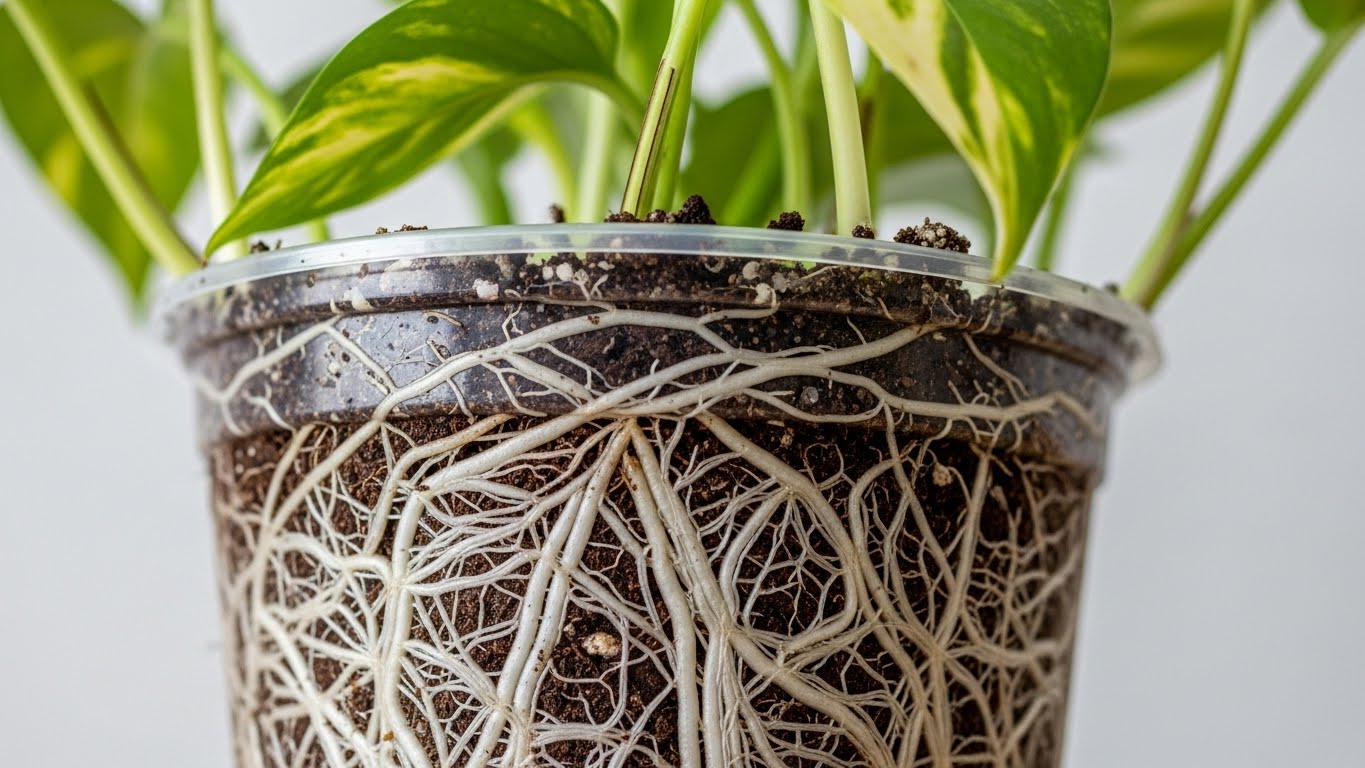
If your pothos is showing signs like roots poking out of the drainage holes, wilting or drooping leaves, or soil drying out fast, it might need repotting. You’ll also want to keep an eye out for stunted growth and leaf discoloration, which can signal distress. These issues often mean the roots are cramped or lacking nutrients. Repotting gives your plant a fresh start, so it’s ready for more growth! You’ll discover more plants’ needs if you keep going!
Key Takeaways
- Roots are tightly circling the pot or poking out of drainage holes, indicating root-bound conditions.
- Leaves are wilting or drooping, suggesting insufficient water retention or nutrient deficiency.
- The plant shows stunted growth with yellowing leaves and quickly drying soil.
- Soil dries out rapidly between waterings, indicating the need for a larger pot.
- Discoloration of leaves, such as yellowing or browning, may signal distress and root issues.
Root Bound Condition
When it comes to your Pothos plant, recognizing a root bound condition is essential for keeping it healthy and thriving. When the roots start to outgrow their pot size, they can become tangled and cramped, leading to poor root growth. You might notice roots poking out of the drainage holes or even wrapping around the inside of the pot. This overcrowding can limit the plant’s ability to absorb water and nutrients, stunting its growth. If you suspect your Pothos is root bound, it’s time to contemplate repotting. Choose a larger pot to give those roots the space they need to spread out and flourish. A little extra room can make a world of difference in your plant’s health and happiness!
Wilting or Drooping Leaves
If you notice your pothos leaves wilting or drooping, it might be trying to tell you something important. Often, this could mean it’s struggling with insufficient water retention or is root bound, leaving it with little room to grow. Additionally, a nutrient deficiency could also be at play, so let’s explore what these signs mean and how you can help your plant perk up again!
Insufficient Water Retention
Pothos plants, with their lush green leaves and trailing vines, are often a favorite among indoor gardeners. If you notice your Pothos has wilting or drooping leaves, it might be struggling with insufficient water retention. This issue often arises from using the wrong potting soil types or inadequate watering practices.
To improve water retention, consider these techniques:
- Choose a potting mix that retains moisture but drains well.
- Add perlite or coconut coir to your soil for better aeration.
- Water consistently, allowing the top inch of soil to dry between waterings.
- Verify your pot has drainage holes to prevent waterlogging.
Root Bound Condition
A root bound condition can sneak up on your Pothos, leading to those sad wilting or drooping leaves you might be seeing. When roots start to outgrow their pot size, they can’t absorb water or nutrients effectively, making your plant look droopy and unhappy. You may notice the roots circling around the edges of the pot, seeking more space to grow. This is a clear sign that it’s time for a bigger home! By repotting your Pothos into a larger pot, you’ll allow those roots to spread out and thrive. Keep an eye on your plant’s overall health, and don’t hesitate to give it a little extra room when you notice those droopy signs. Your Pothos will thank you!
Nutrient Deficiency Symptoms
When leaves start to droop and wilt, it’s like your Pothos is sending you a little SOS about its nutrient needs. This symptom could signal a nutrient imbalance or poor soil quality, which can leave your plant feeling neglected. Don’t worry; you can bring it back to life! Keep an eye out for these signs:
- Yellowing leaves that lose their vibrant green
- Stunted growth with new leaves appearing smaller
- Leaf drop, especially older leaves falling off
- Weak stems that can’t support the plant
Stunted Growth
If your pothos isn’t growing like it used to, it might be a sign that it’s root-bound and needs more space. You might also notice yellowing leaves or that the soil dries out faster than usual, indicating it’s time for a new pot. Let’s explore these clues together and get your plant thriving again!
Root Bound Condition
Recognizing the signs of a root-bound condition is essential for keeping your pothos thriving, and one major indication is stunted growth. When your plant’s roots can’t spread out, it struggles to absorb nutrients and water, ultimately affecting its overall health. If you notice your pothos isn’t growing as it should, check for these signs:
- Roots poking out of the drainage holes
- Roots circling tightly around the soil
- Soil that dries out quickly
- Poor water absorption
These symptoms indicate that your pothos is craving more space for root growth. Repotting can rejuvenate your plant, encouraging better root development and enhancing its overall plant health. Don’t wait too long—your pothos deserves to flourish!
Yellowing Leaves Issue
Yellowing leaves on your pothos can be a sign that something’s not quite right, and it often accompanies stunted growth. When you notice these color changes, it’s essential to pay attention to your plant’s leaf health. Yellowing may indicate that your pothos is running out of space, and it’s struggling to absorb nutrients. If the roots are cramped, they can’t deliver the essentials your plant needs, leading to those sad, discolored leaves. Don’t wait too long—repotting can rejuvenate your pothos and restore its vibrant green color. Choose a slightly larger pot with fresh soil, and watch your plant bounce back! Remember, a little care can turn those yellow leaves into a thriving display of lush greenery.
Decreased Water Retention
When your pothos starts to show signs of decreased water retention, it could be a clear indication that it’s time for a repotting. This stunted growth often stems from poor water absorption due to compacted soil or a lack of nutrients in the current soil composition. If you notice these signs, it’s a good idea to check your plant:
- Roots growing out of the drainage holes
- Soil drying out too quickly after watering
- Leaves drooping despite regular watering
- Slow or halted growth
Repotting allows your pothos to thrive in fresh soil, improving water absorption and ensuring it gets the nutrients it needs. Keep an eye on these signs, and your pothos will be back to its vibrant self before you know it!
Soil Drying Out Quickly
If you’ve noticed that your pothos plant’s soil seems to dry out faster than usual, it might be a sign that it’s ready for a new home. When the soil moisture disappears quickly, it often means your plant has outgrown its pot size. A smaller pot can limit the amount of soil available, causing it to dry out rapidly. Check if you’re watering regularly, as a healthy pothos should hold moisture for a while. If you find yourself watering more often than before, consider repotting into a larger container. This change not only provides extra soil but also helps retain moisture better, allowing your pothos to thrive. Keep an eye on those signs, and your plant will be happier!
Visible Roots Through Drainage Holes
One telltale sign that your pothos is ready for a repotting adventure is when you spot visible roots poking through the drainage holes at the bottom of its pot. This root visibility means your plant is outgrowing its current home, and it’s time to give it a bigger pot size. Ignoring this can lead to root-bound issues, which can stunt your plant’s growth.
Here are some key points to evaluate:
- Roots emerging: When you see roots peeking out, it’s a strong signal.
- Tightly packed soil: If the soil feels compacted, repotting is essential.
- Stunted growth: Notice slower growth? It could be due to limited space.
- Wilting leaves: If leaves droop even with proper care, repotting may help.
Your pothos will thank you!
Discoloration of Leaves
Discoloration of leaves can be a major warning sign that your pothos is in distress, and it’s essential to address it quickly. When you spot color changes, like yellowing or browning, take a closer look at the leaf texture. Healthy leaves are vibrant and firm, while discolored ones may feel soft or crispy. These changes can indicate that your pothos is root-bound or lacking nutrients. If you notice these signs, it’s time to contemplate repotting. Gently remove the plant from its pot, and check the roots. If they’re circling the pot, it’s definitely time for a new home. By repotting, you’ll give your pothos a fresh start, promoting healthier leaves and a happier plant overall!
Pest Infestation or Disease Signs
Pothos plants can sometimes show signs of trouble beyond just leaf discoloration, and it’s important to keep an eye out for pests or diseases that might be affecting your green friend. Quick pest identification is key to ensuring your plant stays healthy. Look for these signs:
- Sticky residue on leaves, indicating aphids or mealybugs
- Webbing or fine silk, a sign of spider mites
- Yellowing leaves with spots, suggesting a fungal infection
- Wilting or drooping, which may indicate root rot or disease
Conclusion
To sum up, keeping an eye on your pothos is key to its happiness. If you notice signs like wilting leaves or roots peeking out, it might be time for a little upgrade in its home. Don’t worry, repotting is like giving your plant a fresh start, helping it thrive again. By paying attention to its needs, you’re ensuring your pothos stays vibrant and healthy, ready to brighten your space for years to come. Happy planting!


