
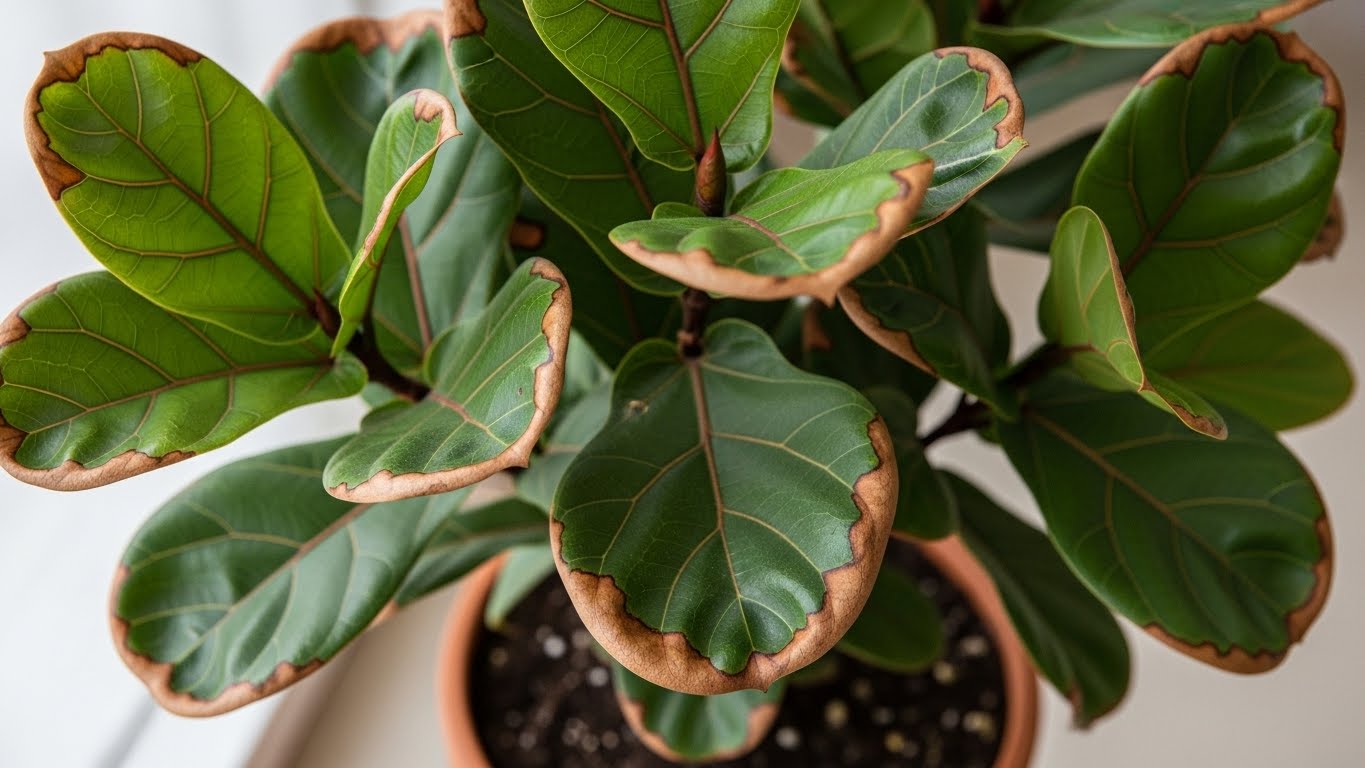
If your Fiddle Leaf Fig’s leaves are turning brown, it could be due to several reasons like overwatering, underwatering, insufficient light, or even pests. Overwatering usually leads to droopy leaves, while underwatering results in dry, brown tips. Lack of proper light can stunt growth, and pests can leave sticky residue. Nutrient deficiencies may also cause discoloration. Each factor needs your attention, so stay alert! Stick around to uncover more secrets for keeping your plant healthy.
Key Takeaways
💡 If your fiddle leaf fig is struggling, understanding the reasons behind its lack of growth is crucial.
➜ Discover proven techniques
- Overwatering can lead to brown leaves due to waterlogged soil; allow the soil to dry out between waterings.
- Insufficient light can cause brown leaves; provide bright, indirect sunlight for optimal growth.
- Pest infestations, like spider mites or mealybugs, can result in brown leaves; regularly inspect for pests and treat accordingly.
- Nutrient deficiencies, such as lack of nitrogen or iron, can lead to discoloration; use balanced fertilizer to restore nutrient levels.
- Root rot from poor drainage can cause brown leaves; ensure well-draining soil and check roots for health regularly.
Overwatering Issues
When it comes to caring for your fiddle leaf fig, overwatering is one of the biggest culprits behind those brown leaves you might be noticing. You may see yellowing leaves or even drooping, which are clear overwatering symptoms. It’s essential to let the soil dry out between waterings because these beautiful plants don’t like sitting in soggy soil. One of the best drainage solutions is to use a pot with holes at the bottom, allowing excess water to escape. If you’ve got a decorative pot, consider using a nursery pot inside it, so you can easily check and manage watering. Remember, your fiddle leaf fig thrives when you balance moisture, so keep an eye on it, and you’ll nurture a happy plant! Additionally, using well-draining soil is crucial to prevent water retention and promote healthy root systems.
Underwatering Problems
When your fiddle leaf fig isn’t getting enough water, it can show some clear signs of distress. You might notice the leaves starting to turn brown, which isn’t a good sign for their health. Let’s explore how to identify these underwatering issues and learn the best watering techniques to keep your plant thriving!
Signs of Underwatering
If you notice your Fiddle Leaf Fig’s leaves turning brown, it might be a sign that it’s not getting enough water. One clear sign of underwatering is dry soil; if the top inch feels like a desert, your plant’s crying out for moisture. You might also see leaf drooping, a clear signal that your Fiddle Leaf Fig is feeling parched. Those once vibrant leaves can lose their perkiness, making your plant look sad and lifeless. It’s essential to pay attention to these signs, as your plant relies on you for hydration. Regularly check the soil and don’t hesitate to give it a drink when needed. Your Fiddle Leaf Fig will thank you with lush, green leaves!
Effects on Leaf Health
Underwatering your Fiddle Leaf Fig can lead to some serious issues for its leaves, so it’s important to understand how this affects your plant’s health. When your plant doesn’t get enough water, you might notice leaf discoloration, which can be one of the main leaf discoloration causes. This stress can make your Fiddle Leaf Fig vulnerable to environmental stressors like pests and diseases.
Here’s a quick overview of the effects of underwatering:
Leaf Condition | Symptoms | Recovery Steps |
|---|---|---|
Healthy Leaves | Vibrant green color | Maintain consistent watering |
Slight Browning | Tips and edges turn brown | Increase watering frequency |
Severe Wilting | Leaves droop and fall off | Deep soak the soil |
Proper Watering Techniques
To keep your Fiddle Leaf Fig healthy and thriving, mastering proper watering techniques is essential, especially since these plants can be quite sensitive to changes in their water supply. First, pay attention to your watering frequency. It’s best to water when the top inch of soil feels dry to the touch, ensuring the moisture levels are just right. Overwatering can lead to root rot, while underwatering causes those browning leaves you want to avoid. Make it a habit to check the soil weekly; this simple act can make a huge difference! Remember, every home environment is unique, so adjust your routine based on your plant’s needs. Your Fiddle Leaf Fig will thank you with vibrant, healthy leaves!
Insufficient Light Conditions
When your fiddle leaf fig isn’t getting enough light, it can start to show distress, leading to those dreaded brown leaves. To keep your plant thriving, make certain it’s basking in the right light sources. Consider its plant placement; a spot near a bright window is ideal.
Here are three things to look for:
- Bright, indirect sunlight: This helps avoid scorching while providing the energy it needs.
- Consistent light exposure: Rotating your plant can help it grow evenly.
- Avoid low-light corners: These areas can stunt its growth and lead to unhappy leaves.
Pest Infestations
Pest infestations can sneak up on your fiddle leaf fig, causing those beautiful leaves to turn brown and drop off. Common pest types like spider mites, mealybugs, and aphids love to munch on your plant, weakening it and leading to distress. You might notice tiny webs or sticky residue as signs of their presence.
To tackle these pesky invaders, pest control is essential. Start by inspecting your plant regularly, checking both the leaves and stems. A mixture of water and mild soap can work wonders, wiping away pests without harming your fig. If the situation worsens, insecticidal soap or neem oil can help. Stay vigilant, and your fiddle leaf fig will thrive, keeping its lush greenery intact.
Nutrient Deficiencies
💡 Leaf drop can be a sign of distress in your fiddle leaf fig, often linked to browning leaves.
➜ Explore advanced methods
Nutrient deficiencies can sneak up on your fiddle leaf fig, causing those once vibrant leaves to turn brown and lose their appeal. When there’s a nutrient imbalance, your plant may struggle to thrive. To keep your fiddle happy, stick to a regular fertilization schedule.
Here are some key nutrients to watch for:
💡 Pests can contribute to leaf browning, making it essential to know how to identify and treat them.
➜ Master this approach
- Nitrogen: Essential for healthy, green leaves.
- Iron: Helps prevent yellowing and browning of foliage.
- Magnesium: Vital for energy production in the leaves.
If you notice your fiddle’s leaves changing, it might be time to reassess what it’s getting. Regularly check your soil and consider a balanced fertilizer to nourish your plant back to health, ensuring it stays lush and vibrant!
Temperature Fluctuations
Temperature fluctuations can be sneaky troublemakers for your fiddle leaf fig, often leading to those unsightly brown leaves. These plants thrive in a stable environment, so sudden temperature extremes can stress them out. When the seasons change, be mindful of how drafts from windows or heaters might impact your plant’s cozy space.
To help your fiddle leaf fig flourish, aim for a consistent temperature between 60°F and 75°F. Avoid placing it near sources of heat or cold, like air vents or chilly windows. If you notice browning leaves, it could be a cry for help from your plant, urging you to create a more stable and loving atmosphere. Your attention to temperature will keep it happy and healthy!
Humidity Levels
Humidity levels play an essential role in keeping your Fiddle Leaf Fig healthy and vibrant. Ideally, these plants thrive in humidity ranging from 30% to 65%, so if your home feels dry, it’s time to take action. You’ll know humidity is low when you spot brown tips on leaves or drooping, which are clear signs your plant needs a little extra moisture!
Ideal Humidity Range
When caring for your Fiddle Leaf Fig, aiming for the right humidity level is essential—ideally, it should be between 30% and 65%. This ideal humidity range is vital, as humidity affects your plant’s health and appearance.
To create a cozy environment for your Fiddle Leaf Fig, consider these options:
- Misting: Lightly misting the leaves can boost humidity and bring a rejuvenating feel.
- Pebble Trays: Place a tray of water and pebbles under your pot to increase moisture in the air.
- Humidifiers: Using a humidifier can maintain a consistent humidity level, keeping your plant happy.
Signs of Low Humidity
Noticing your Fiddle Leaf Fig isn’t looking its best? One of the clear humidity indicators is when the leaves start to curl or develop brown edges. If you see these signs, your plant might be crying out for more moisture! Dry air can cause stress, leading to those pesky brown spots that ruin its beauty. Another hint is when the leaves become fragile, making them more prone to breakage.
To keep your Fiddle happy, consider some humidity solutions like misting the leaves, using a pebble tray, or placing a humidifier nearby. These small changes can make a big difference in creating a cozy environment for your beloved plant, ensuring it thrives and shines in your home!
Root Rot Concerns
If you’ve been caring for your Fiddle Leaf Fig and noticed the leaves turning brown, it might be time to dig a little deeper into the root situation. A root assessment is essential because brown leaves often signal that your plant is struggling with root rot, usually caused by poor soil drainage.
To make certain your Fiddle Leaf Fig thrives, keep an eye out for these signs of root trouble:
- Mushy, dark roots that feel slimy to the touch
- Foul odor coming from the soil, signaling decay
- Waterlogged soil that doesn’t dry out quickly
If you spot any of these issues, it’s time to take action! Adjust your watering routine and consider repotting with well-draining soil to help your plant flourish again.
Conclusion
So, if your fiddle leaf fig’s leaves are turning brown, don’t panic! You’ve got a detective job on your hands. Check for overwatering, insufficient light, or sneaky pests, and don’t forget about temperature and humidity! With a little TLC and some detective skills, you can turn your plant’s frown upside down. Remember, a happy fiddle leaf fig means vibrant green leaves that’ll make your space feel like a tropical paradise. Let’s get that plant thriving again!
💡 Brown spots can indicate specific problems that may also lead to browning leaves.
➜ Get the step-by-step guide


