
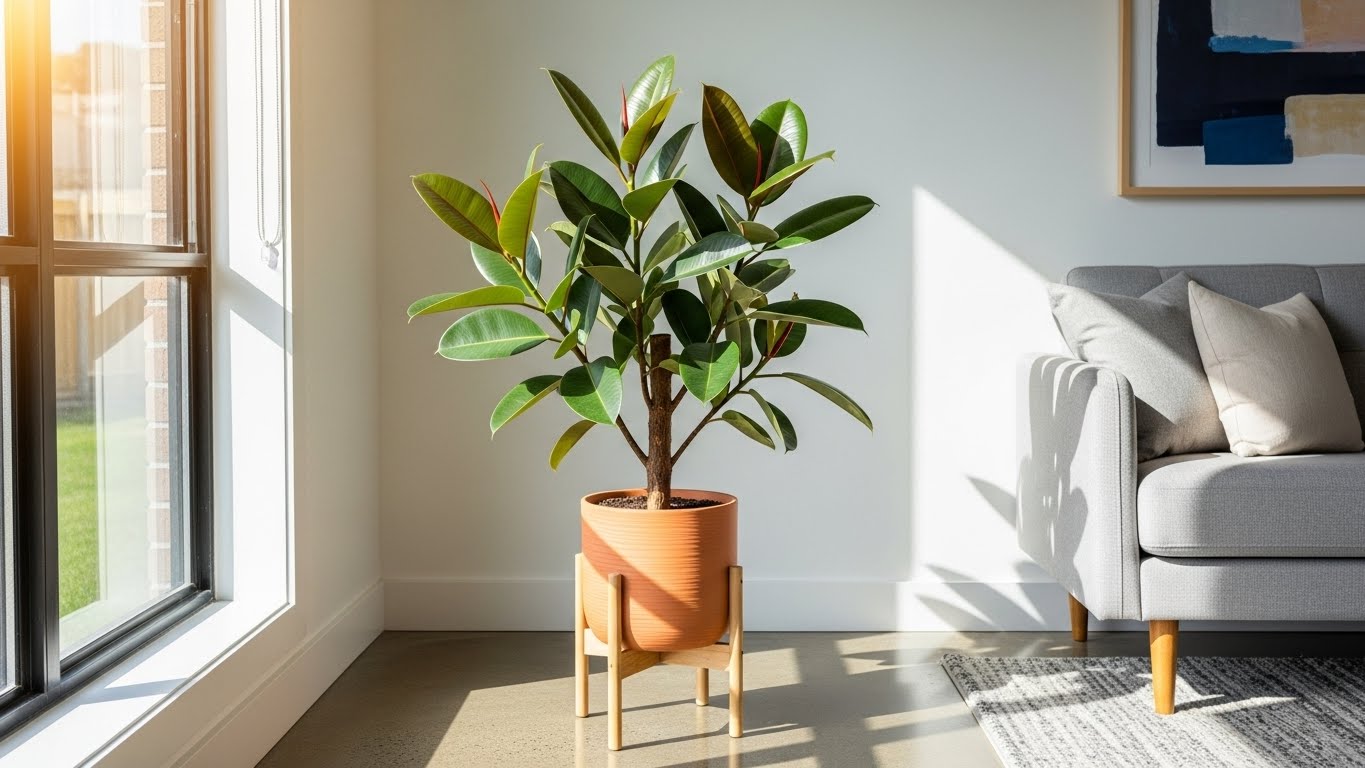
To grow a rubber plant indoors, find spots with bright, indirect light, like near east-facing windows, or use sheer curtains to filter harsh sunlight. It won’t mind low-light areas too, as long as there’s some indirect light. Ideal temperatures range between 60°F and 75°F, so keep it away from drafts. A cozy corner with humidity around 40-60% works wonders too! Keep these tips in mind, and you’ll discover even more ways to care for your plant.
Key Takeaways
- Living rooms provide ample natural light, making them ideal for rubber plants to thrive.
- Home offices offer bright spaces that enhance focus and support healthy plant growth.
- Kitchens can be cozy spots, but humidity levels should be monitored for optimal conditions.
- Bathrooms with windows can enhance aesthetics and provide beneficial humidity for rubber plants.
- Ensure potting locations have indirect sunlight to prevent leaf scorching and allow for easy maintenance.
Understanding Rubber Plant Requirements
When you think about bringing a rubber plant into your home, it’s important to understand what these unique plants need to thrive. First, focus on soil types; a well-draining mix with peat and perlite is ideal. This helps prevent root rot, allowing your plant to flourish. Next, consider watering frequency. Rubber plants prefer their soil to dry out slightly between waterings, so checking the top inch of soil is a great practice. Watering too often can lead to problems, but letting them get too dry isn’t good either. Striking the right balance will keep your rubber plant happy and healthy, creating a beautiful addition to your space. Remember, attentive care goes a long way in nurturing your new green friend! Additionally, ensuring optimal light conditions is crucial for promoting healthy growth and vibrant foliage.
Ideal Light Conditions
To keep your rubber plant thriving, you’ll want to pay attention to its light needs. It loves bright, indirect light, which helps it grow strong and healthy, but be careful—direct sunlight can scorch its leaves and cause damage. So, find a cozy spot near a window where it can soak up the brightness without getting too much sun!
Bright Indirect Light
Bright indirect light is the secret ingredient for keeping your rubber plant happy and thriving. This means you want to place your plant in a spot where it can soak up bright light, but not directly. Aim for about 6 to 8 hours of light duration each day, and make sure the light intensity isn’t too harsh. A nearby window with sheer curtains is perfect! Your rubber plant loves to feel the warmth of the light, which helps it grow those beautiful, glossy leaves. If you notice your plant reaching toward the light, it’s a sign it’s getting just what it needs. Keep an eye on it, and soon enough, you’ll have a vibrant indoor companion!
Avoid Direct Sunlight
While rubber plants thrive in bright light, they absolutely can’t handle the harsh rays of direct sunlight. For the best rubber plant placement, find a bright room where sunlight exposure is filtered, like near a window with sheer curtains. Direct sun can scorch their leaves, causing brown spots and wilting. Instead, let them bask in that lovely indirect light, which promotes healthy growth. Remember, rubber plants love a cozy spot, so consider rotating them occasionally to guarantee all sides get equal light. If you notice the leaves stretching or losing their vibrant color, it’s a sign they need a better location. Your rubber plant will reward you with lush greenery if you keep it safe from those intense sunbeams!
Bright Indirect Light Spots
Finding the perfect spot for your rubber plant can be a fun adventure, especially when it comes to bright indirect light. These areas, like near a north-facing window or a spot filtered by sheer curtains, are just what your plant craves. This kind of light helps your rubber plant thrive, encouraging lush growth without burning its leaves. Keep in mind, the ideal soil for your plant should be well-draining, helping to prevent overwatering. When it comes to watering frequency, aim to check the soil moisture once a week. If the top inch feels dry, it’s time to give it a drink. Your rubber plant will flourish in this bright, nurturing environment, bringing life to your space!
Low-Light Areas for Rubber Plants
If you’ve got low-light areas in your home, don’t worry—rubber plants can thrive there! These resilient plants can tolerate less-than-ideal lighting conditions, making them perfect for corners or rooms that don’t get much sun. Plus, with a few simple tricks, you can improve those low-light spots to help your rubber plant grow even better!
Ideal Low-Light Locations
When you’re looking to place a rubber plant in a low-light area of your home, you might be surprised at how adaptable this vibrant greenery can be! To guarantee your rubber plant thrives, think about spots that receive indirect sunlight or light filtering through curtains. Consider placing it near a north-facing window, as this often provides gentle light without overwhelming the plant. Shelves or corners in your living room, where they’ll be seen but not in the path of harsh light, are fantastic options too. If you have a cozy nook with soft lighting, that could become its new favorite spot! Remember, the right plant placement is key to keeping your rubber plant healthy and happy in those low-light conditions.
Rubber Plant Tolerance Levels
Rubber plants are impressively resilient, making them perfect for those low-light areas in your home. You might be surprised to learn that these plants can thrive even when the light isn’t ideal. With proper rubber plant care, they’ll adjust nicely to dimmer spots, adding a touch of green to your space. However, keep an eye out for rubber plant diseases, as low light can sometimes encourage issues like root rot or pests. Be sure to water sparingly and allow the soil to dry out between watering. Remember, a little patience goes a long way; your rubber plant will reward you with glossy leaves and vibrant growth, even in those cozy, shaded corners.
Improving Low-Light Conditions
To create a welcoming environment for your rubber plant in low-light areas, you’ll want to think creatively about how to enhance those dim spots. Start by managing humidity levels; rubber plants thrive in moisture-rich air. Using a humidifier or grouping plants can help. Next, focus on soil selection. Well-draining soil is key to keeping your rubber plant happy and healthy.
Here’s a simple table to guide you:
Factor | Tip |
|---|---|
Humidity Management | Use a humidifier or mist daily |
Soil Selection | Choose a mix designed for indoor plants |
Light Source | Place near an indirect light source |
Watering Frequency | Allow soil to dry between waterings |
Temperature | Keep it between 60-75°F |
Optimal Temperature Ranges
Finding the right temperature for your rubber plant can make all the difference in keeping it healthy and thriving. Ideally, you want to maintain a cozy range between 60°F and 75°F. Rubber plants don’t like sudden temperature fluctuations, so place them away from drafty windows or heat vents. During the colder months, be mindful of seasonal adjustments; your plant might appreciate a slightly warmer spot as temperatures drop. Remember, consistent warmth helps your rubber plant grow strong and vibrant. If you notice drooping leaves, it might be a sign that it’s feeling too chilly. By paying attention to these temperature needs, you’ll create a loving environment where your rubber plant can truly flourish.
Humidity Levels and Their Importance
When it comes to keeping your rubber plant happy, humidity levels play an essential role. These plants thrive in an ideal humidity range of 40-60%, and if the air gets too dry, you might notice droopy leaves or brown edges. Understanding how humidity affects your plant can help you create the perfect indoor environment for it to flourish!
Optimal Humidity Range
Humidity plays an essential role in keeping your rubber plant healthy and thriving, so it’s important to understand the ideal humidity range for these tropical beauties. Aim for a humidity level between 40% and 60%. To help maintain this favorable range, consider these humidity sources:
- Humidifiers – Invest in a portable humidifier to provide consistent moisture.
- Pebble Trays – Place your plant on a tray filled with water and pebbles; as the water evaporates, it adds humidity.
- Grouping Plants – Cluster your rubber plant with other plants to create a mini-humid environment.
- Humidity Monitoring – Use a hygrometer to keep an eye on your humidity levels, ensuring your rubber plant stays happy and healthy.
Effects of Low Humidity
Low humidity can really put a damper on your rubber plant’s health and happiness. When the air’s too dry, you might notice those beloved leaves drooping or even developing brown tips. This isn’t just a sign of sadness; it’s your plant’s way of saying it needs better rubber plant care! Low humidity can also make it harder for your plant to absorb moisture, leading to stress and vulnerability to pests. To keep your rubber plant thriving, humidity control is key. Consider using a humidifier, misting the leaves, or placing a tray of water nearby to boost moisture levels. By giving your rubber plant the right humidity, you’re setting the stage for a lush, vibrant indoor garden that flourishes beautifully!
Best Rooms for Rubber Plants
Choosing the right room for your rubber plant can make all the difference in how well it thrives. For ideal rubber plant care, consider these four perfect spaces in your home:
Choosing the ideal room for your rubber plant is essential for its thriving growth and overall health.
- Living Room: With plenty of natural light, your rubber plant can soak up those rays while being part of the family.
- Home Office: A bright, dedicated space helps you focus, and your rubber plant will enjoy the company.
- Kitchen: The warmth from cooking creates a cozy environment for your plant, just be mindful of humidity.
- Bathroom: If it has a window, the humidity will benefit your rubber plant while adding a lovely touch to your indoor gardening.
Selecting these rooms helps promote your rubber plant flourishes beautifully!
Avoiding Drafts and Temperature Fluctuations
When you’ve found the perfect room for your rubber plant, it’s time to think about its surroundings. You want to create an environment that guarantees draft protection and temperature stability. Rubber plants thrive in warm, consistent temperatures, so avoid placing them near open windows or air vents, where chilly drafts can shock them. Instead, look for a cozy corner that stays warm and has minimal temperature fluctuations. If you notice sudden changes in the air, consider using curtains to block drafts or even a small space heater during colder months. By keeping your rubber plant safe from drafts and maintaining a steady temperature, you’ll help it flourish and grow healthy, vibrant leaves that you’ll love to admire.
Choosing the Right Potting Location
Finding the right spot for your rubber plant’s pot can make a big difference in its overall health and growth. To guarantee your plant thrives, consider these key factors when choosing a location:
- Pot Size: Make sure the pot isn’t too small; a larger pot allows roots to spread.
- Drainage Holes: Always choose a pot with drainage holes to prevent waterlogging and root rot.
- Light Conditions: Look for a spot with indirect sunlight, as direct rays can scorch leaves.
- Accessibility: Place it somewhere you can easily water and care for it, making routine maintenance a breeze.
East-Facing Windows: A Perfect Choice
If you’re looking for the ideal location for your rubber plant, east-facing windows should be at the top of your list. These windows offer fantastic east-facing benefits, providing gentle morning light that boosts your plant’s growth without overwhelming it. The light intensity in the early hours is just right, encouraging vibrant foliage and healthy development. You won’t have to worry about harsh afternoon rays, which can scorch your leaves. Plus, the consistent exposure helps maintain humidity levels, keeping your rubber plant happy and thriving. By placing your plant in an east-facing window, you create a cozy, inviting environment that your rubber plant will adore. So, go ahead, give it the perfect spot to flourish!
South-Facing Windows: Pros and Cons
South-facing windows can be a fantastic option for your rubber plant, especially since they provide plenty of bright, direct sunlight throughout the day. Here are some south-facing advantages and disadvantages to take into account:
South-facing windows offer your rubber plant abundant sunlight, promoting vibrant growth while requiring careful monitoring to prevent leaf burn.
- Abundant Light: Your rubber plant thrives in the bright sunlight, promoting lush growth.
- Consistent Temperature: These windows can keep your space warm and cozy.
- Faster Growth: More sunlight means quicker growth and vibrant leaves.
- Potential Leaf Burn: Too much direct light can scorch your plant’s leaves, so watch for damage.
While the advantages are enticing, the south-facing disadvantages could affect your plant’s health. Balance is key, so keep an eye on your rubber plant and adjust its position as needed to guarantee it flourishes!
Using Grow Lights for Low-Light Situations
When your rubber plant sits in a spot with limited natural light, using grow lights can really make a difference in its health and happiness. These lights offer fantastic grow light benefits, like boosting growth and enhancing the plant’s vibrant colors. Not only do they mimic sunlight, but they also help you create low light solutions that keep your rubber plant thriving. Simply position the grow light about 12-24 inches above your plant, and set it to run for about 12-16 hours a day. This guarantees your rubber plant gets the care it craves, even in dim spaces. With proper lighting, you’ll notice your plant becoming fuller, greener, and more beautiful, bringing life to any indoor environment.
Conclusion
To sum up, finding the best indoor spots for your rubber plant can be a fun adventure! Whether you’re placing it near an east-facing window or using grow lights, it’s all about meeting its needs for light and warmth. Just when you think you’ve found the perfect spot, you might discover your plant thriving in a completely unexpected place! So, get creative with your space, and enjoy the journey of nurturing your rubber plant as it grows and flourishes.


