
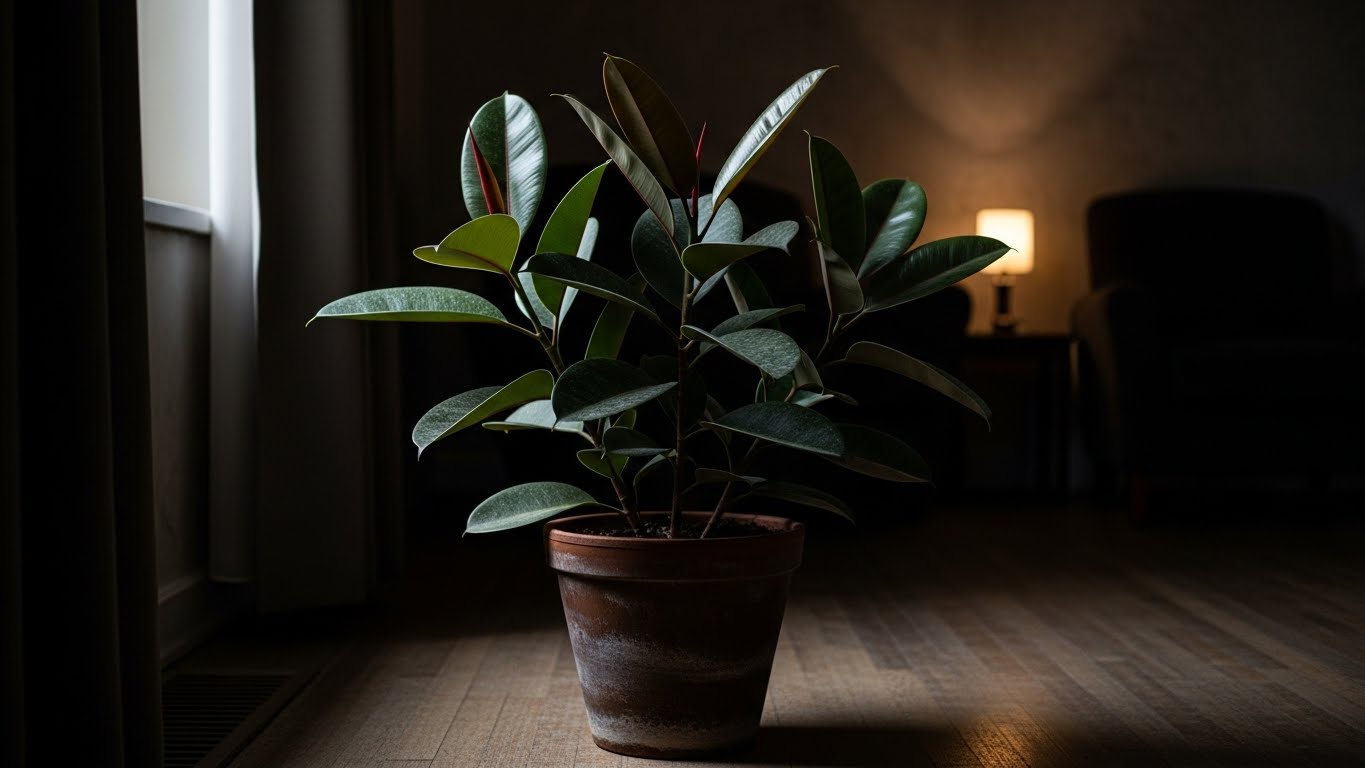
Rubber plants can grow in low light, but they won’t thrive like they do in bright, indirect light. In low light, their growth slows down, and you might notice yellowing leaves or leggy stems as they stretch for more light. While they can adapt to dim spaces, providing some indirect sunlight or using grow lights can boost their health. If you want to learn how to help your rubber plant flourish in low light, there’s more valuable info ahead!
Key Takeaways
- Rubber plants can survive in low light but may not thrive, leading to slower growth and smaller leaves.
- Insufficient light causes leaf drop, yellowing, and leggy stems as the plant stretches for more light.
- Regular rotation and adequate light exposure are crucial to prevent stunted growth and maintain health.
- Position rubber plants near windows with indirect light or use grow lights to enhance growth in low light conditions.
- Adjust watering frequency in low light, as rubber plants require less water to prevent root rot.
Understanding Rubber Plants and Their Light Requirements
When it comes to growing rubber plants, understanding their light requirements is essential, especially if you want them to thrive in your home. Native to tropical regions, rubber plants enjoy bright, indirect light, which mimics their natural habitat. Their striking leaf structure, with large, glossy leaves, helps them capture light efficiently. You’ll notice that these leaves can become droopy or develop brown spots if they’re not getting enough light, but don’t worry—this is just a sign they need a brighter spot! While they can tolerate lower light conditions, keeping them in brighter areas promotes healthier growth. So, find a cozy spot near a window, and watch your rubber plant flourish as it soaks up that lovely light! Additionally, understanding their light requirements can significantly enhance their overall health and vitality.
The Science Behind Low Light Conditions
When you think about how plants like your rubber plant survive in low light, it’s all about the science of photosynthesis. In these dim conditions, plants adapt in fascinating ways to capture whatever light they can, which affects their growth and health. Understanding how light intensity impacts these processes helps you become a better plant owner and guarantees your rubber plant thrives even in less-than-ideal lighting!
Photosynthesis in Low Light
Even though you might think plants need bright sunlight to thrive, rubber plants and many others can pull off photosynthesis in low light conditions, too! These green wonders adapt to utilize different parts of the light spectrum, allowing them to absorb whatever light is available. Even in low light, they can maintain photosynthesis efficiency, converting carbon dioxide and water into energy. It’s pretty amazing how they’ve evolved to make the most of their environment! Rubber plants have larger leaves that capture more light, ensuring they still get what they need. So, if your space isn’t flooded with sunlight, don’t worry! Your rubber plant can still thrive, soaking up every drop of light it can find.
Plant Adaptations Explained
Plants have an incredible ability to adapt to their surroundings, especially in low light conditions, and rubber plants are no exception! These green beauties showcase unique plant morphology, allowing them to thrive even when light is scarce. Their large, broad leaves capture whatever sunlight filters through, maximizing photosynthesis. Rubber plants also employ clever survival strategies, like reducing leaf size when light is limited, helping them conserve energy. This adaptability means they can grow in darker corners of your home, bringing life to spaces where other plants might struggle. So, if you’re nurturing a rubber plant, you’re not just caring for a houseplant; you’re witnessing nature’s remarkable ability to adjust and survive in less-than-ideal conditions!
Light Intensity Impact
Understanding how light intensity affects rubber plants is vital for their health and growth, especially if you’re trying to keep one in a dimly lit corner of your home. Rubber plants thrive best in bright, indirect light, where they can absorb the right light spectrum to boost their growth rate. In low light conditions, you might notice their leaves becoming smaller and their growth slowing down considerably. This happens because they’re not getting enough energy to perform photosynthesis efficiently. While they can survive in lower light, it’s important to remember that their vibrant beauty might fade, and you won’t see as much new growth. So, if you want a thriving rubber plant, consider giving it a brighter spot when possible!
Signs of Insufficient Light for Rubber Plants
When your rubber plant isn’t getting enough light, you might notice several telltale signs that signal it’s time to adjust its environment. You may see leaf drop, which is a clear indication that your plant is stressed. Yellowing leaves and leaf discoloration can also occur, making your once-vibrant plant look lackluster. If you spot leggy stems, that’s a sign your rubber plant is stretching toward the light, which isn’t ideal. Stunted growth and slow growth rates suggest that it’s not thriving in its current conditions. These symptoms indicate poor health and a need for more light. Keep an eye on these signs, and your rubber plant will thank you for making a change!
Ideal Light Conditions for Optimal Growth
To help your rubber plant thrive, you need to understand its light requirements. These plants can adapt to lower light conditions, but they truly flourish with the right amount of bright, indirect sunlight. Let’s explore how you can create those ideal light conditions for peak growth!
Light Requirements Explained
Rubber plants thrive best when they get just the right amount of light, so finding that balance is key to their happy growth. For indoor gardening, understanding their light requirements will help you with effective plant care. Here’s what you need to know:
- Bright, Indirect Light: They love bright spots but don’t want direct sun burning their leaves.
- Moderate Light: They can adapt to moderate light, just be cautious with excessive shade.
- Avoid Dark Corners: Dark areas can stunt their growth, so place them where they can still receive some light.
- Rotate Regularly: Rotating your rubber plant helps guarantee uniform growth and prevents one-sided stretching.
Low Light Adaptations
While rubber plants prefer bright, indirect light, they can still adapt to lower light conditions, making them a versatile choice for indoor spaces. They do this through impressive light absorption capabilities and enhanced shade tolerance, helping them thrive even in dim corners of your home.
Here’s a quick overview of their adaptations:
Adaptation | Description | Benefit |
|---|---|---|
Leaf Structure | Wider leaves to catch more light | Improved light absorption |
Growth Rate | Slower growth in low light | Energy conservation |
Color Change | Darker green leaves | Better light utilization |
Root System | Shallow roots for quick nutrient access | Efficient resource gathering |
Caring for a rubber plant in low light can be rewarding, so embrace their adaptability and enjoy your indoor jungle!
Tips for Growing Rubber Plants in Low Light
Even if your space doesn’t get much sunlight, you can still enjoy the beauty of a rubber plant. Here are some tips to help your plant thrive in low light:
- Choose the Right Spot: Place your rubber plant near a window with indirect light, or use grow lights if needed.
- Water Wisely: Allow the top inch of soil to dry out between waterings; overwatering can cause root rot.
- Maintain Humidity Levels: Keep humidity around 40-60% to help your plant flourish; consider using a humidifier or pebble tray.
- Fertilizer Application: Use a balanced, diluted fertilizer every 4-6 weeks during the growing season to provide essential nutrients.
With these tips, you’ll create a cozy home for your rubber plant, even in low-light conditions!
Common Mistakes to Avoid With Low Light Rubber Plants
When you’re caring for rubber plants in low light, it’s easy to make some common mistakes that can hinder their growth. One of the most common misconceptions is thinking they can thrive in complete darkness. While they tolerate low light, they still need some indirect sunlight. Proper placement is key; avoid putting them in corners or behind heavy furniture. Another mistake is over-watering. In lower light, these plants need less water, so check the soil before watering. Finally, don’t ignore leaf care! Dust can accumulate, blocking their ability to photosynthesize. By steering clear of these pitfalls, you’ll help your rubber plant flourish, even in dim conditions. Happy planting!
Additional Care Tips for Rubber Plants
Caring for rubber plants can be a rewarding experience, especially if you know a few essential tips to keep them happy and healthy. Here are some great ways to boost your plant’s well-being:
- Check soil moisture: Water your plant when the top inch of soil feels dry, making sure it doesn’t sit in soggy soil.
- Maintain humidity levels: Rubber plants love humidity, so mist their leaves or place a humidifier nearby.
- Rotate your plant: Every few weeks, spin it around to guarantee even growth and exposure to light.
- Dust the leaves: Gently wipe their big leaves with a damp cloth to keep them clean and help with photosynthesis.
Conclusion: Can Rubber Plants Really Thrive in Low Light?
Can rubber plants really thrive in low light? The answer’s a bit tricky. While rubber plants can survive in indoor environments with low light, their growth potential diminishes considerably. They may not flourish as beautifully or robustly without adequate light adjustments, which are vital for ideal growth. If you’re looking to keep one in a dim corner, it’s essential to understand that you might need to adjust your expectations. A little extra care, like rotating the plant occasionally or providing supplemental light, can help. Ultimately, if you want your rubber plant to thrive and reach its full potential, aim for bright, indirect light whenever possible. With the right conditions, your rubber plant can be a stunning addition to your space!
Conclusion
So, can rubber plants thrive in low light? Absolutely! While they prefer bright, indirect light, they can adapt to lower conditions if you give them a bit of extra care. You might worry they won’t grow well, but with the right attention, like occasional rotation and careful watering, they can flourish. Just remember, they won’t grow as fast or as lush, but you’ll still enjoy their beautiful leaves. With patience, your rubber plant can become a happy, green companion!


