
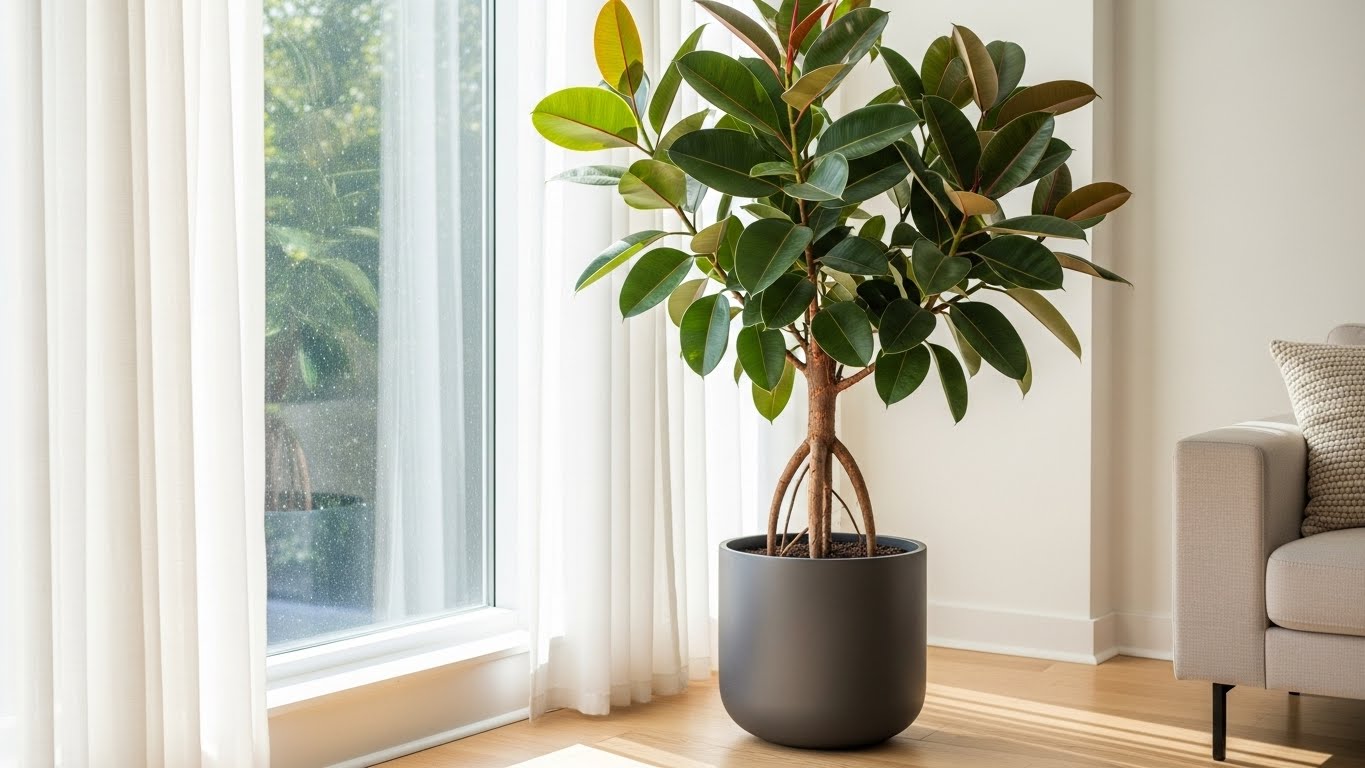
Rubber plants can grow impressively tall indoors, reaching heights of up to 10 feet if you give them the right care! Make sure to provide bright, indirect light, keep humidity between 40% to 60%, and give them a suitable pot size. Regular watering and occasional pruning will help them flourish. Remember, the better the conditions, the more vibrant and taller your rubber plant will become. Stick around, and you’ll discover even more tips for keeping your plant thriving!
Key Takeaways
- Rubber plants can grow up to 6 to 10 feet tall indoors under optimal conditions.
- Growth potential varies based on genetic factors and plant variety.
- Providing bright, indirect light encourages taller growth, while low light may stunt height.
- Regular pruning can help shape growth direction and stimulate height increase.
- Humidity and temperature significantly influence overall health and growth potential indoors.
Understanding Rubber Plant Growth Habits
When you bring a rubber plant into your home, you’re not just adding a lovely green decoration; you’re also inviting a unique growth habit that can surprise you. Rubber plants, or Ficus elastica, have fascinating growth patterns. They can stretch tall and wide, reaching impressive heights if given the right care. You’ll notice that young plants tend to grow upright, while older ones may develop a more bushy appearance. It’s essential to provide consistent plant care, including proper watering and light. If you notice your rubber plant leaning, it’s a sign it needs more sunlight. By understanding these growth habits, you’ll create a nurturing environment that encourages your plant to flourish and thrive, transforming your space into a vibrant oasis. Additionally, knowing the optimal temperature range for rubber plants helps to maintain their health and encourages robust growth.
Ideal Indoor Conditions for Rubber Plants
To guarantee your rubber plant thrives indoors, creating the right environment is essential. Start by keeping the temperature between 65°F and 80°F, as these are its ideal temperature preferences. A cozy spot near a window with bright, indirect light is perfect for your plant to soak up some sunshine. Don’t forget about humidity, too! Rubber plants love ideal humidity levels around 40% to 60%. If your home is too dry, misting the leaves or placing a humidifier nearby can help. Regularly check the soil; it should be moist but not soggy. With these conditions in place, your rubber plant will flourish, bringing a vibrant touch to your home while potentially reaching impressive heights!
Factors Affecting Height Growth
Creating the right indoor conditions for your rubber plant sets the stage for healthy growth, but several factors can influence just how tall your plant can get. One of the key elements is genetic factors; different plant varieties have distinct growth potentials. For instance, some varieties may reach impressive heights, while others stay more compact. Lighting plays a significant role too; brighter locations can encourage taller growth, while low light might stunt it. Additionally, humidity levels and temperature affect your plant’s overall health, which in turn impacts its height. Regular pruning can also help shape your rubber plant, guiding its growth direction. By understanding these factors, you can nurture your rubber plant to reach its full height potential.
The Role of Pot Size in Growth
The size of your rubber plant’s pot can make a big difference in how tall it can grow. A pot that’s too small stunts growth, while a larger pot allows for proper root expansion. Pot depth is essential, as deeper pots promote healthier roots. Good soil quality in a larger pot also provides the nutrients your plant craves. Here’s a quick guide to help you choose the right pot size:
Pot Size (inches) | Ideal Depth (inches) | Soil Quality |
|---|---|---|
6 | 5 | Well-draining mix |
8 | 7 | Nutrient-rich mix |
10 | 9 | Organic compost |
12 | 11 | Peat-based mix |
14 | 13 | Balanced potting soil |
Selecting the right pot isn’t just about size; it’s about nurturing your plant’s potential!
Importance of Proper Lighting
When it comes to growing a rubber plant indoors, proper lighting plays an essential role in its health and growth. You need to understand the light requirements, whether you’re using natural sunlight or artificial light, to keep your plant thriving. Without enough light, your rubber plant might struggle, leading to stunted growth and leggy stems, so let’s explore how to get it just right!
Light Requirements Explained
Understanding how crucial proper lighting is for your rubber plant can make all the difference in its growth and overall health. You’ll want to provide the right light intensity, which means bright, indirect light is best. Too little light can cause your plant to weaken, while too much direct sunlight can scorch its leaves. Balance is key! Light duration also plays an important role; aim for about 12 to 14 hours of light each day to keep your plant thriving. If you can’t provide that naturally, consider using grow lights to supplement. By paying attention to these light requirements, you’re ensuring your rubber plant gets the love and care it needs to flourish indoors. Happy growing!
Natural vs. Artificial Light
Natural and artificial light both play important roles in helping your rubber plant thrive, so knowing how to use each effectively can be a game-changer.
Natural light benefits your plant by providing the spectrum it needs to grow strong and healthy. However, if you live in a dimly lit area, you might struggle to get enough sunlight. On the other hand, artificial light can fill that gap, but it comes with some drawbacks, such as not mimicking natural sunlight perfectly.
Light Type | Pros |
|---|---|
Natural Light | Promotes healthy growth |
Artificial Light | Useful in low-light areas |
May not support full growth |
Ultimately, balancing both types is key to your rubber plant’s success!
Effects of Insufficient Lighting
Insufficient lighting can really put a damper on your rubber plant’s growth, even if you’ve got the perfect pot and soil. When your plant doesn’t get enough light intensity, it can become leggy, stretching toward the light source. This means fewer leaves and a weak structure! Low light also affects the light spectrum your plant absorbs, preventing it from thriving. Without the right mix of blue and red light, your rubber plant may struggle to photosynthesize, leading to dull, yellowing leaves. To keep your plant happy and growing tall, make sure it’s getting the appropriate amount of light. Whether it’s natural sunlight or a good grow light, your rubber plant will flourish when you prioritize proper lighting!
Watering Practices for Maximum Growth
To help your rubber plant reach its maximum height indoors, you’ll want to nail down your watering practices. This means knowing how often to water, ensuring your soil drains well, and spotting the signs of overwatering before it’s too late. By mastering these techniques, you can create an environment where your rubber plant thrives and grows tall!
Watering Frequency Guidelines
When it comes to keeping your rubber plant thriving indoors, understanding the right watering frequency is crucial for maximum growth. To achieve healthy moisture levels, you should water your rubber plant every 1-2 weeks, adjusting based on the season. During warmer months, your plant may need more frequent watering, while in winter, it’s best to let the soil dry out a bit more.
Use your finger to check the top inch of soil; if it feels dry, it’s time to water. Employing proper watering techniques, like soaking the soil until water drains from the bottom, guarantees your plant gets just what it needs. Remember, consistency is key to nurturing your rubber plant’s growth!
Soil Drainage Importance
Soil drainage plays an essential role in keeping your rubber plant healthy and happy, as it directly affects how well the roots can absorb moisture and nutrients. To guarantee your plant thrives, focus on the right soil composition. A mix of potting soil, perlite, and peat moss can create a well-draining environment that prevents water from pooling. Use drainage techniques like adding gravel or stones at the bottom of the pot to enhance airflow and keep roots dry. Remember, while rubber plants love moisture, they don’t enjoy sitting in soggy soil, which can lead to root rot. By monitoring your soil’s drainage, you create the perfect setting for your rubber plant to grow tall and strong.
Signs of Overwatering
Recognizing the signs of overwatering is just as important as ensuring good soil drainage for your rubber plant. If you notice yellowing leaves, especially at the bottom, that’s a red flag. Another significant sign is wilting, even though the soil’s wet. These overwatering signs can lead to root rot, which is a serious issue. You might also see a mushy stem or dark spots on the leaves. If you detect a foul smell coming from the soil, it’s time to act. To keep your rubber plant thriving, let the top inch of soil dry out before watering again. Remember, it’s all about balance—your plant will thank you for it!
Nutrient Requirements for Rubber Plants
To help your rubber plant thrive indoors, it’s essential to understand its nutrient requirements. Rubber plants need a balanced mix of nutrient types, including nitrogen, phosphorus, and potassium. These nutrients support healthy growth, vibrant leaves, and strong stems. When you choose a fertilizer, look for one that’s specifically formulated for houseplants, giving your rubber plant the best chance to flourish. During the growing season, typically spring and summer, apply fertilizer every four to six weeks. Dilute it to avoid overwhelming your plant with nutrients, which could cause damage. Pay attention to your plant’s response; if it’s growing well, you’re likely on the right track. With proper care and nutrient management, your rubber plant can reach impressive heights indoors!
Pruning Techniques to Encourage Height
Once you’ve got your rubber plant thriving with the right nutrients, it’s time to think about how to help it grow taller through pruning. Using effective pruning methods can really boost growth stimulation. Here are some techniques to keep in mind:
Enhance your rubber plant’s height with effective pruning techniques for optimal growth stimulation.
- Cut Back Leggy Stems: Trim those long, spindly branches to encourage bushier growth.
- Remove Lower Leaves: Snipping off older leaves allows energy to focus on new growth.
- Pinch Off New Growth: Gently pinching tips of young stems can prompt branching.
- Use Clean, Sharp Tools: Always use sanitized scissors to avoid introducing harmful bacteria.
Common Pests and How They Affect Growth
When it comes to growing a rubber plant, keeping an eye out for common pests is essential. These unwelcome visitors, like spider mites and mealybugs, can slow down your plant’s growth and even cause damage if left unchecked. Knowing how to identify and tackle these pests will help guarantee your rubber plant thrives and reaches its full potential indoors.
Common Rubber Plant Pests
Rubber plants, with their glossy leaves and impressive height, can sometimes attract a few unwelcome guests—pests! Knowing common pests helps you keep your plant healthy and thriving. Here are some you might encounter:
- Spider Mites: Tiny and sneaky, they create webs and suck the sap.
- Aphids: These little green bugs can cluster on new growth and weaken your plant.
- Mealybugs: They look like tiny cotton balls and can cause yellowing leaves.
- Scale Insects: Hard to spot, they stick to stems and leaves, robbing your plant of nutrients.
For effective pest control, regularly inspect your rubber plant, and don’t hesitate to act quickly. A healthy plant is a happy plant, so keep those pests at bay!
Impact on Growth Rates
Pests can really put a damper on your rubber plant’s growth, impacting its health and overall appearance. When pests invade, they disrupt your plant’s growth patterns, making it harder for it to reach its height potential. For instance, spider mites and aphids suck crucial nutrients, leaving your rubber plant weak and stunted. This can lead to yellowing leaves and slowed growth, which isn’t what you want to see! To keep your plant thriving, it’s important to monitor it regularly and address any pest issues promptly. By doing so, you not only protect its beauty but also guarantee it can grow tall and strong, reaching its full potential. Remember, a healthy rubber plant is a happy rubber plant!
Signs of a Healthy Rubber Plant
Keeping an eye on your plant’s health can be really rewarding, especially when you spot the signs of a thriving rubber plant. When you practice good rubber plant care, you’ll notice these signs of vitality:
- Rich, healthy leaves: They should be a deep green and glossy, indicating proper light and moisture.
- New growth: Look for fresh leaves emerging, a sure sign your plant is happy and flourishing.
- Sturdy stems: Strong stems support healthy leaves and promote growth, showing your plant’s resilience.
- No pests: A clean, pest-free environment means your rubber plant is well-cared for and flourishing.
Repotting: A Key to Continued Growth
After enjoying the signs of a healthy rubber plant, it’s time to think about how to keep that growth going strong. One of the most important steps is repotting. The benefits of repotting are huge: it provides fresh soil, more space for roots, and essential nutrients. Ideal timing for repotting usually happens every couple of years, ideally in spring when your plant is waking up from dormancy. When you notice roots peeking out of the drainage holes or if the growth seems stunted, that’s your cue! Gently lift your rubber plant from its pot, shake off old soil, and place it in a slightly larger pot filled with fresh mix. Your plant will thank you by thriving and growing even taller!
Seasonal Changes and Growth Patterns
As the seasons change, your rubber plant’s growth patterns will shift too. You’ll notice that environmental factors, like light and temperature, can greatly influence how quickly it grows or when it takes a break for dormancy. Understanding these seasonal changes helps you care for your plant, ensuring it thrives year-round.
Environmental Influences on Growth
When you think about how tall a rubber plant can grow indoors, it’s essential to contemplate the environmental influences that affect its growth, especially seasonal changes. The climate impact on your rubber plant’s growth can be significant, as it thrives in warm conditions. During different seasons, you’ll notice variations in light and temperature, both of which play a vital role in its development.
- Consistent warmth promotes healthy growth.
- Adequate light levels improve air quality and photosynthesis.
- Humidity levels can affect leaf health.
- Seasonal changes can trigger growth spurts or slowdowns.
Understanding these factors helps you create the best environment for your rubber plant, allowing it to reach its full potential and brighten your indoor space.
Dormancy and Active Growth
Understanding the rhythm of your rubber plant’s growth is key to keeping it healthy and thriving. Your plant goes through dormancy cycles, usually in the winter, when it slows down and needs less water and light. This rest period allows it to gather energy for the upcoming active growth phase. Come spring, you’ll notice fresh leaves sprouting and its overall readiness to reach new heights. During this time, provide it with bright, indirect light and regular watering to support its growth. Remember, recognizing these seasonal changes helps you nurture your rubber plant better. By syncing with its natural rhythms, you’ll not only enjoy its beauty but also watch it flourish like never before!
Troubleshooting Stunted Growth
Troubleshooting stunted growth in your rubber plant can feel a bit like detective work, but don’t worry—solving the mystery is often simpler than it seems! First, identify the causes of stunted growth, and then focus on correcting conditions.
Here are some common issues to check:
- Light: Is your plant getting enough bright, indirect sunlight?
- Water: Are you over or under-watering? The right moisture balance is vital.
- Soil: Is the soil draining well, or is it compacted and suffocating the roots?
- Nutrients: Have you fertilized your plant recently, or is it lacking essential nutrients?
The Impact of Humidity on Rubber Plants
Humidity plays an essential role in the health and growth of your rubber plant, as it thrives in environments that mimic its tropical origins. When humidity levels are high, you’ll notice your plant’s leaves become lush and vibrant, growing more actively. But when those levels drop, the humidity effects can be quite the opposite; your plant might show signs of stress, like brown leaf tips or droopy foliage. To keep your rubber plant happy, aim for humidity levels between 40% and 60%. If your home is too dry, consider using a humidifier, placing a tray of water nearby, or misting the leaves occasionally. Your rubber plant will thank you with stunning growth and beautiful greenery!
Tips for Maintaining a Tall Rubber Plant
To keep your rubber plant reaching for the sky, you’ll need to focus on a few key factors that promote its growth and stability. Start by using effective pruning strategies to encourage new growth and maintain a balanced shape. Regularly apply the right fertilizer types, especially during the growing season, to provide essential nutrients.
Here are some tips to help your rubber plant thrive:
- Prune regularly to remove dead or leggy growth.
- Choose a balanced fertilizer with equal parts nitrogen, phosphorus, and potassium.
- Ensure proper lighting; a bright spot is ideal, but avoid harsh sunlight.
- Monitor watering; let the top inch of soil dry out between watering sessions.
With these tips, your rubber plant will stretch towards the ceiling in no time!
Conclusion
To sum up, with the right care, your rubber plant can reach impressive heights, almost like it’s trying to touch the ceiling! By providing ideal indoor conditions, proper lighting, and adequate humidity, you’ll help it thrive. Remember, a larger pot can encourage taller growth, while seasonal changes can affect its development. Keep an eye on its needs, and soon you’ll have a stunning, towering plant that adds life to your space! Happy planting!


