
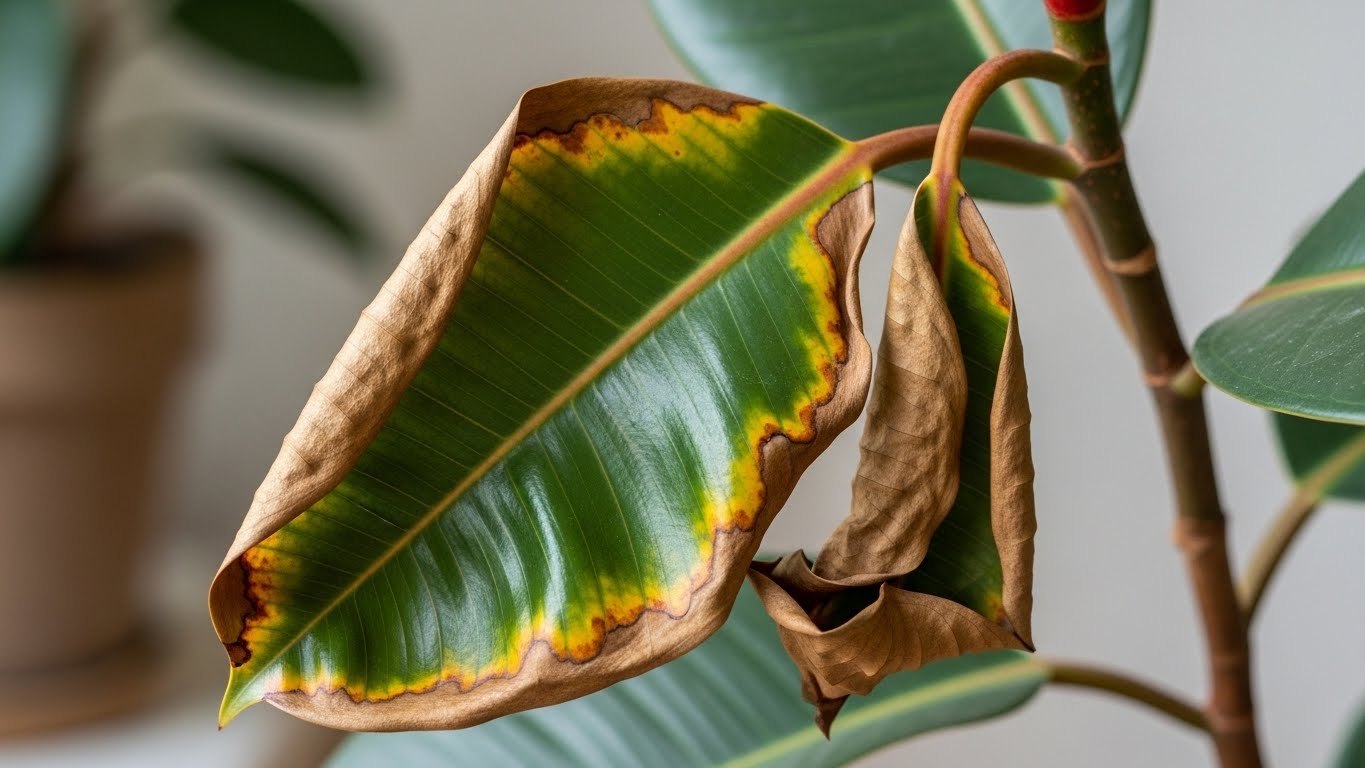
Leaf drop in rubber plants can signal that your plant needs better care. It might be caused by overwatering, underwatering, temperature changes, or even seasonal shifts. If the leaves turn yellow and fall, it’s a clue that your plant’s environment, watering routine, or light conditions aren’t right. Staying aware of these factors helps keep your rubber plant healthy and thriving. Stick around, and you’ll discover tips to prevent leaf drop and promote vibrant growth!
Key Takeaways
- Leaf drop can be natural as older leaves shed to make way for new growth in rubber plants.
- Continuous leaf drop may indicate inadequate care, particularly in light, water, and nutrients.
- Temperature fluctuations and low humidity can lead to leaf drop; maintain 60°F to 75°F and 40-60% humidity.
- Overwatering and underwatering both stress the plant, causing yellowing leaves and drooping stems, leading to potential leaf drop.
- Nutrient deficiencies and pest infestations can result in leaf drop; regular inspections and balanced fertilization are essential.
Understanding Leaf Drop in Rubber Plants
When you notice your rubber plant dropping leaves, it can feel alarming, but don’t worry—this is often a natural part of its growth process. Understanding leaf drop is essential for your plant care journey. Sometimes, your rubber plant sheds older leaves to make room for new ones, which is a sign of leaf health. It’s like a refresh for your green friend!
However, you should still keep an eye on the overall condition of your plant. Verify it’s getting the right amount of light, water, and nutrients. If the leaf drop continues, it could signal that your rubber plant needs a little extra love. Just remember, nurturing your plant can lead to vibrant growth and a happy home! Additionally, temperature fluctuations can be a common trigger for leaf drop, so ensure your plant is in a stable environment.
Common Environmental Stressors
When it comes to rubber plants, environmental stressors can play a huge role in their health. You might not realize it, but temperature fluctuations, humidity levels, and light exposure can all cause your plant to drop its leaves. Understanding these factors can help you create the perfect home for your rubber plant to thrive.
Temperature Fluctuations
Temperature fluctuations can be tricky for rubber plants, causing them to drop leaves and stress out. These plants thrive in warm, stable temperature ranges, ideally between 60°F and 75°F. When seasonal shifts bring unexpected cold drafts or intense heat, your rubber plant can react negatively. It’s like a cozy blanket suddenly being pulled away; they feel vulnerable and might shed their leaves as a response. To keep your plant happy, try to maintain a consistent environment. Avoid placing it near windows that get chilly at night or near heating vents that blast hot air. By monitoring those temperature changes, you can help your rubber plant stay vibrant and leafy, enjoying its beautiful presence in your home!
Humidity Levels
Humidity plays a big role in keeping your rubber plant healthy and happy, just like temperature does. Your rubber plant thrives in humidity levels of around 40-60%, so if the air in your home is too dry, it might start dropping leaves. High humidity encourages lush plant growth, while low humidity can lead to stress. To help your plant flourish, consider using a humidifier, misting the leaves, or placing a pebble tray filled with water nearby. By maintaining proper humidity levels, you’ll not only enhance your plant’s appearance but also promote its overall well-being. Remember, a happy rubber plant means vibrant leaves and a thriving home atmosphere! Take care of those humidity levels, and your plant will thank you.
Light Exposure
Light exposure is essential for the health of your rubber plant, as it directly affects its growth and energy. Your plant thrives best in bright, indirect natural sunlight, which helps it produce the food it needs to flourish. If it’s getting too little light, you might notice those precious leaves dropping off. On the flip side, too much direct sunlight can scorch the leaves, making them crispy and brown. If natural sunlight isn’t an option in your space, don’t worry! You can use artificial lighting to supplement your plant’s needs. Just make sure to choose a light that mimics sunlight, and keep it a safe distance away from your rubber plant. With the right light exposure, you’ll keep your plant healthy and happy!
Overwatering: The Silent Killer
When you think about plant care, it’s easy to focus on things like sunlight and soil, but overwatering can sneak up on you and cause serious problems for your rubber plant. You might notice overwatering symptoms like yellowing leaves, drooping stems, or even leaf drop. These signs can indicate that your plant’s roots are drowning, leading to root rot, a condition that can be fatal if left untreated. It’s essential to let the top inch of soil dry out before watering again. Using a pot with drainage holes can really help prevent this issue. Remember, your rubber plant needs love and attention, but balance is key—too much water can be just as harmful as too little.
Underwatering: A Common Mistake
Underwatering might not seem as obvious a problem as overwatering, but it can sneak up on you just the same. When you skip watering, your rubber plant’s leaves may drop, signaling distress. This common mistake often stems from an inconsistent watering schedule, leaving your plant thirsty and anxious.
To maintain ideal root health, check the soil regularly. If it feels dry a couple of inches down, it’s time to give your plant a drink. Remember, rubber plants thrive on routine, so establishing a dependable watering schedule will help you avoid the dreaded leaf drop. By staying attentive, you’ll guarantee your plant remains vibrant and healthy, ready to reward you with lush, beautiful foliage.
Temperature Fluctuations and Leaf Drop
When it comes to rubber plants, temperature fluctuations can really mess with their health and lead to leaf drop. Ideally, these plants thrive in a stable temperature range, but sudden changes can shock them, causing those beautiful leaves to fall off. Plus, as the seasons change, you might notice your plant reacting differently, so keeping an eye on the temperature is essential for its well-being.
Ideal Temperature Range
Maintaining the ideal temperature range for your rubber plant is essential, as fluctuations can lead to leaf drop and other stress signs. Your plant thrives best in temperatures between 60°F and 75°F, which promotes ideal growth and keeps it happy. Rubber plants have a decent temperature tolerance, but they struggle when it gets too cold or too hot. If temperatures dip below 50°F or rise above 85°F, you might notice your rubber plant shedding leaves, a clear sign it’s not feeling its best. To keep your plant in tip-top shape, place it away from drafts and direct heat sources, ensuring it enjoys a stable environment. Your attention to its needs will make all the difference in its health.
Sudden Temperature Changes
Sudden temperature changes can be quite a shock for your rubber plant, and just like people, plants don’t always handle surprises well. Your rubber plant has a certain temperature sensitivity, making it vulnerable to drastic shifts in its environment. If it suddenly experiences a cold draft or a heat wave, it might respond by dropping leaves, which can be pretty alarming.
To keep your plant happy, aim for a stable climate, allowing it to adapt gradually. This way, it can adjust to its surroundings without the stress of sudden fluctuations. So, whether you’re moving it around or just changing the thermostat, remember that a little consistency goes a long way in helping your rubber plant thrive!
Seasonal Temperature Effects
As the seasons change, your rubber plant can experience a rollercoaster of temperature fluctuations that might lead to unexpected leaf drop. During these seasonal shifts, your plant struggles to adjust, which can lead to stress. If temperatures drop suddenly, or if your rubber plant moves between warm and cool areas, it may not have enough time for proper temperature acclimatization. This can cause it to shed leaves as a way to cope. To help your beloved plant, keep it in a stable environment where temperatures remain consistent. By shielding it from drafts and drastic changes, you’ll encourage healthy growth and minimize leaf drop. Remember, a little care goes a long way in nurturing your rubber plant!
Humidity Levels: Too Low or Too High?
When you think about keeping your rubber plant healthy, humidity levels can make a big difference. Too low humidity can lead to dry leaves and leaf drop, while too high humidity may encourage mold growth. You want to strike a balance! Understanding humidity effects is vital for your plant’s well-being. If you notice your plant shedding leaves, it might be time for some humidity control. A simple way to increase humidity is by misting the leaves or placing a humidifier nearby. Conversely, if the air feels sticky and your plant’s leaves appear droopy, consider improving airflow. Remember, your rubber plant thrives in moderate humidity, so keeping an eye on these levels will help you maintain a happy, healthy plant!
Pest Infestations: An Unseen Threat
When caring for your rubber plant, keep an eye out for pesky pests that can sneak in and cause trouble. Common invaders like spider mites and mealybugs can leave telltale signs, such as yellowing leaves or sticky residue. Knowing how to spot these invaders and treat them effectively will help keep your plant healthy and thriving.
Common Pests Identified
Pest infestations can be a sneaky problem for rubber plant owners, often lurking unnoticed until they cause visible damage. To keep your beloved plant thriving, it’s important to know the common pests that can invade your space. Here are a few to watch for:
- Spider Mites: Tiny, web-spinning nuisances that suck the life out of leaves.
- Mealybugs: Cotton-like pests that cling to stems and leaves, robbing your plant of nutrients.
- Scale Insects: Hard, shell-like bugs that can hinder growth by feeding on sap.
- Aphids: Small, soft-bodied insects that multiply quickly and can cause leaf distortion.
Regular pest control checks can help you catch these invaders early, ensuring your rubber plant stays healthy and vibrant.
Signs of Infestation
Identifying signs of infestation is essential for keeping your rubber plant healthy, as many pests can hide out of sight, making it easy to overlook their presence. Start by looking for infestation symptoms like tiny webs or sticky residue on leaves—these could mean spider mites or aphids are causing trouble. You might notice yellowing leaves or even sudden leaf drop, which can signal a pest problem. Additionally, keep an eye out for small holes or discolored spots on the leaves; these could be signs of chewing insects. For effective pest identification, regularly inspect your plant, especially the undersides of leaves where pests love to hide. Catching infestations early saves your rubber plant from more serious damage!
Treatment Options Available
Addressing pest infestations in your rubber plant quickly can make a big difference in its health and longevity. Here are some effective treatment options to evaluate:
- Inspect regularly for signs of pests, like webbing or sticky residue.
- Use insecticidal soap or neem oil to treat the affected areas gently.
- Practice proper pruning techniques to remove infested leaves, allowing your plant to focus energy on healthy growth.
- Apply balanced fertilizer to strengthen your plant’s overall health and resilience against future infestations.
Nutrient Deficiencies and Their Impact
When your rubber plant starts shedding leaves, it might be sending you a message about nutrient deficiencies. You see, a nutrient imbalance can lead to yellowing leaves and even drop. Essential nutrients like nitrogen, potassium, and magnesium play vital roles in your plant’s health. If the soil quality isn’t up to par, these nutrients might not be available for your plant to absorb. Regularly checking the soil’s pH and ensuring it’s rich in organic matter can help maintain a balanced nutrient supply. Remember to use fertilizers wisely; too much can have the opposite effect! By keeping a close eye on these factors, you can help your rubber plant thrive and enjoy its lush foliage for years to come.
Repotting Stress: A Transition Phase
Repotting your rubber plant can feel like a big adventure, but it often comes with its own set of challenges that can lead to leaf drop. During this shift, your plant might experience root disturbance, which can stress it out. To help your rubber plant thrive, keep these tips in mind:
- Choose high-quality soil to encourage healthy growth.
- Water gently to avoid shocking the roots.
- Place your plant in a stable environment away from drafts.
- Monitor its response and be patient as it adjusts.
Seasonal Changes and Leaf Shedding
As the seasons change, your rubber plant might surprise you with a little leaf shedding, which is completely normal. During seasonal shedding, your plant may lose some leaves as it prepares for periods of dormancy. This natural process often happens in fall and winter when sunlight and warmth decrease. Don’t worry; it’s your plant’s way of conserving energy!
To help your rubber plant thrive, keep it in a stable environment, and don’t stress over a few fallen leaves. Instead, focus on providing proper care during these seasonal changes. Remember, every plant goes through this cycle, and soon enough, you’ll see new leaves sprouting as your rubber plant wakes up again, ready to thrive in the warmer months!
Light Conditions: The Right Balance
Light plays an essential role in keeping your rubber plant healthy and vibrant, especially after those seasonal changes when it might have shed a few leaves. Striking the right balance between natural light and indirect sunlight is vital. Too much direct light can scorch those beautiful leaves, while too little can lead to more leaf drop.
Here are some tips for ideal light conditions:
- Place your plant near a window that offers bright, indirect sunlight.
- Rotate your rubber plant occasionally to guarantee even light exposure.
- Monitor leaf color; yellowing may indicate too much light, while dark green leaves suggest it’s happy.
- Adjust the position if you notice any signs of stress from light exposure.
Finding that sweet spot will help your rubber plant thrive!
Preventing Leaf Drop: Best Practices
To keep your rubber plant looking its best and prevent those pesky leaves from dropping, you’ll want to focus on a few key practices that create a stable environment. Start with proper leaf care; regularly wipe dust off the leaves to help them breathe and photosynthesize. Next, pay attention to soil quality. Use well-draining soil to avoid waterlogging, which can cause root rot and lead to leaf drop. Make sure to water your plant only when the top inch of soil feels dry—this helps maintain moisture without drowning the roots. Finally, keep your plant in a spot with consistent light and temperature. By following these simple steps, you’ll create a happy home for your rubber plant, ensuring vibrant leaves for years to come!
Conclusion
To sum up, keeping your rubber plant healthy is like mastering a delicate dance—it requires attention and care. By understanding the causes of leaf drop, such as overwatering, temperature changes, and light conditions, you can help your plant thrive. Remember, a little TLC goes a long way, so monitor your plant’s environment and adjust as needed. With the right practices, your rubber plant will not only survive but flourish, bringing vibrant life to your space!


