
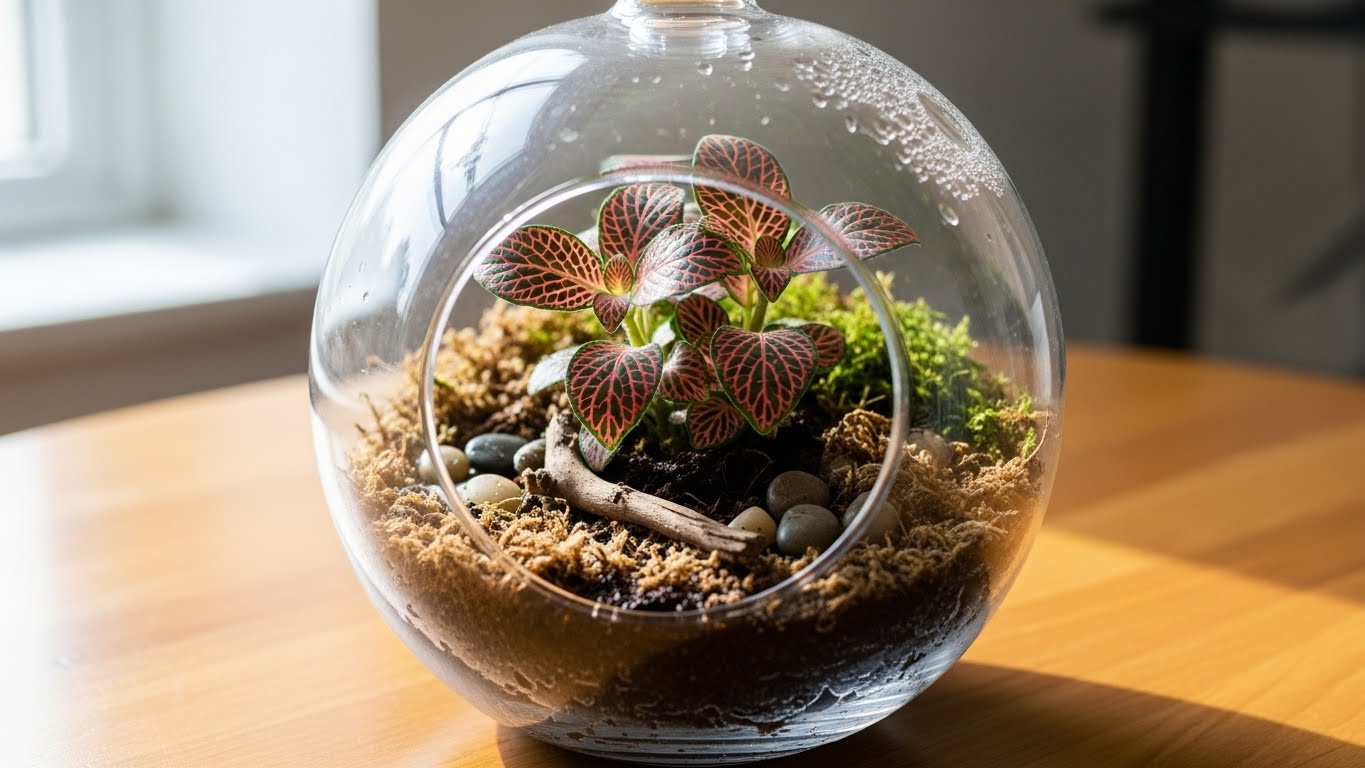
To care for your fittonia in terrariums, avoid these common mistakes: don’t overwater; check the soil moisture regularly to prevent root rot. Make sure your plant gets bright, indirect light—too little light can lead to leggy growth. Maintain humidity levels between 60-80% to keep leaves healthy and vibrant. Use a well-draining soil mix, prune regularly for growth, and keep an eye out for pests like spider mites. Stick around to discover even more tips for thriving fittonias!
💡 Understanding the basics of Fittonia care is crucial for success. This guide covers everything you need to know about light, water, and soil.
➜ Master the essential care techniques
Key Takeaways
💡 If you’re looking to enhance your Fittonia care skills, this comprehensive guide is a must-read.
➜ Discover proven techniques
- Avoid overwatering to prevent root rot; always check soil moisture before watering your fittonia.
- Use a well-draining soil mix to ensure adequate airflow and prevent suffocation of roots.
- Ensure fittonias receive bright, indirect light; avoid placing them in dark corners or exposing them to direct sunlight.
- Maintain humidity levels between 60-80% to prevent wilting or browning of leaves; use humidity trays as needed.
- Regularly inspect for pests and prune dead leaves to promote healthy growth and prevent overcrowding.
Overwatering Your Fittonia
When it comes to caring for your Fittonia, one of the biggest mistakes you can make is overwatering. It may seem loving to give your plant a lot of water, but too much can actually harm its health. When you overwater, it suffocates the roots, leading to root rot and stunted fittonia growth. To avoid this, set up a consistent watering schedule—check the soil moisture first. Stick your finger about an inch into the soil; if it’s still damp, wait before watering. Your Fittonia will thrive when you find that perfect balance, so pay attention to its needs. Remember, less can be more when it comes to keeping your beautiful plant happy and healthy! Additionally, using filtered or distilled water can help prevent brown, crispy leaf tips often caused by minerals found in tap water.
Insufficient Light Conditions
Insufficient light can be just as harmful to your Fittonia as overwatering. These beautiful plants thrive in bright, indirect natural light, so placing them in a dim corner can lead to unhappy, leggy growth. If you can’t provide enough sunlight, consider using artificial lighting. LED grow lights are a fantastic option; they mimic natural light and can give your Fittonia the boost it needs. Remember, balance is key! Too much direct sunlight can scorch those lovely leaves, while too little can cause them to lose their vibrant colors. Check your terrarium regularly and adjust the light source as needed. Your Fittonia will thrive when it gets just the right amount of light, keeping it lively and stunning!
Ignoring Humidity Levels
When it comes to caring for your Fittonia in a terrarium, ignoring humidity levels can spell trouble for your plant. These beauties thrive in a humid environment, so it’s important to maintain an ideal humidity range—usually around 60-80%. If you notice leaves wilting or browning, that’s a clear sign your humidity levels are too low, and you’ll need to take action to keep your plant healthy and happy!
Optimal Humidity Range
Creating a thriving environment for your Fittonia in a terrarium means understanding its ideal humidity range, which is essential for keeping your plant healthy and vibrant. Fittonias thrive in humidity levels between 60% to 80%. To achieve this, you’ll want to incorporate various humidity sources, like a small water dish or a pebble tray filled with water. These methods can help create that perfect atmosphere for your plant. Don’t forget about humidity monitoring—using a hygrometer will let you keep an eye on those levels. If you notice the humidity fluctuating too much, you might need to adjust your humidity sources. Keeping your Fittonia happy and lush is all about finding that sweet spot, so stay attentive!
Signs of Low Humidity
Low humidity can sneak up on your Fittonia, and you might not realize it until you spot some telltale signs. These humidity indicators can help you gauge how your plant is feeling in its terrarium home. Here are three signs to watch for:
- Crispy Leaf Edges: If you see brown, crunchy edges on the leaves, that’s a clear signal your Fittonia is thirsty for moisture.
- Wilting Leaves: When the leaves droop more than usual, it’s a cry for help.
- Leaf Loss: If your plant starts shedding leaves, it’s a desperate call for humidity measuring adjustments.
Keep an eye on these signs, and your Fittonia will thrive in its cozy environment!
Maintaining Consistent Moisture
Maintaining consistent moisture in your Fittonia’s terrarium is essential for its health and vibrancy, especially since these plants thrive in damp environments. To achieve the right water balance, keep an eye on humidity levels. These little beauties love humidity, so a dry atmosphere can quickly lead to wilting. Use a spray bottle to mist your terrarium regularly, ensuring moisture retention without overwatering. Too much water can drown roots, while too little can leave your Fittonia looking sad. Aim for a balanced environment, checking the soil with your finger; it should feel slightly damp but not soggy. By nurturing consistent moisture, you’ll create a thriving home for your Fittonia, bursting with life and color!
Using Inappropriate Soil Mix
💡 Even with the best care, problems can arise. Learn how to identify and solve common Fittonia issues to keep your plants thriving.
➜ Discover proven solutions to common issues
💡 Understanding common issues is crucial for any plant owner. This guide offers practical solutions to keep your Fittonia healthy.
➜ Get the step-by-step guide
When caring for your Fittonia in a terrarium, using the right soil mix is essential for keeping your plant healthy and happy. You need a blend that not only drains well but also provides the nutrients your Fittonia craves, and the pH level must be just right to avoid any stress. Let’s explore why these factors are important and how they can help your Fittonia thrive!
💡 Humidity is vital for Fittonia health. Learn how to effectively use a pebble tray to maintain the right moisture levels.
➜ Explore advanced humidity techniques
Importance of Drainage
💡 Soil quality is critical for Fittonia health. Discover the best soil mixes that promote growth and prevent common mistakes.
➜ Explore advanced methods
The importance of drainage in your Fittonia terrarium cannot be overstated, as using an inappropriate soil mix can quickly lead to problems for your plant. Poor drainage can suffocate your roots, leading to root rot and other issues. Here are three key drainage solutions to evaluate in your terrarium design:
- Use a well-draining soil mix: Opt for a mixture that includes perlite or sand to promote airflow.
- Create a drainage layer: Place small stones or gravel at the bottom of your terrarium to help excess water escape.
- Monitor moisture levels: Keep an eye on your soil’s dampness; it should be moist but not soggy.
Nutrient-Rich Soil Blend
Creating a nutrient-rich soil blend is essential for the health of your Fittonia terrarium, as using an inappropriate soil mix can lead to stunted growth and unhappy plants. Start with a quality potting mix, but don’t stop there! To achieve the right soil composition, add components like peat moss or coconut coir for moisture retention, and perlite for aeration. This combination helps maintain a proper nutrient balance, ensuring your Fittonia thrives. Remember, a well-balanced soil mix provides the essential nutrients your plant needs to grow vibrant leaves and stay healthy. By investing a little time in crafting the perfect soil blend, you’ll set your Fittonia up for success, making your terrarium a beautiful, lively space to enjoy!
Ph Level Considerations
Understanding pH levels is essential for maintaining a thriving Fittonia terrarium, especially since using an inappropriate soil mix can throw everything off balance. You’ll want to guarantee your Fittonia’s environment is just right, so consider these points:
- pH Testing: Regularly check the soil’s pH to keep it between 5.5 and 6.5, as this range supports healthy growth.
- Soil Amendments: If your soil is too alkaline, mix in organic matter like peat moss to lower the pH.
- Drainage: Use a soil mix that drains well; avoid heavy soils that can retain too much moisture, which can harm your Fittonia.
Neglecting Regular Pruning
While it might be tempting to let your fittonia plants grow wild and free, neglecting regular pruning can lead to a tangled mess that detracts from their beauty. Regular trimming not only keeps your plants looking neat, but it also promotes better plant health. Use simple pruning techniques like snipping off dead leaves and cutting back overgrown stems. This encourages new growth and allows your fittonia to thrive. Plus, it helps prevent diseases that can come from overcrowding. Make it a habit to check your plants every few weeks, and don’t be afraid to give them a little haircut. With a bit of attention, your fittonia will flourish, becoming a stunning centerpiece in your terrarium!
Failing to Monitor Pests
Ignoring the health of your fittonia doesn’t just stop at neglecting pruning; failing to monitor pests can also lead to disaster. Pests can sneak in quietly, wreaking havoc on your beloved plant. Here’s how you can stay vigilant:
- Regularly Inspect: Check the leaves and stems for signs of pests like aphids and spider mites. Early pest identification is key!
- Watch for Damage: Look for yellowing leaves or webbing; these could signal an infestation.
- Implement Pest Control: Use natural remedies or insecticidal soap to keep those pests at bay.
Placing in Poor Location Within the Terrarium
Placing your fittonia in the wrong spot within the terrarium can spell trouble for its health and growth. Think about the terrarium orientation and how light exposure affects your plant. If you tuck it away in a dark corner, it won’t thrive; fittonias adore bright, indirect light. Position it closer to the glass, where it can soak up that lovely, filtered sunlight. Keep in mind that too much direct sunlight can scorch its delicate leaves, so find that perfect sweet spot. Regularly check how the light changes throughout the day and adjust its placement as needed. By giving your fittonia the right location, you’ll guarantee it flourishes, creating a vibrant centerpiece in your terrarium. Happy gardening!
Conclusion
By avoiding common mistakes like overwatering and poor lighting, you’ll create a flourishing fittonia paradise in your terrarium. Imagine lush, vibrant leaves painting a miniature landscape, each one thriving under your care. Keep an eye on humidity and pests, and give your plant a little trim now and then to encourage growth. With a bit of attention, your fittonia can transform your space into a tropical oasis, bringing a splash of color and life right into your home!
💡 Winter can be tough on your Fittonia. Learn how to prevent cold shock and keep your plants thriving during the colder months.
➜ Master this approach
💡 Repotting is a delicate process, especially for Fittonia. Ensure you do it right to avoid damaging the roots.
➜ Get the step-by-step repotting guide


