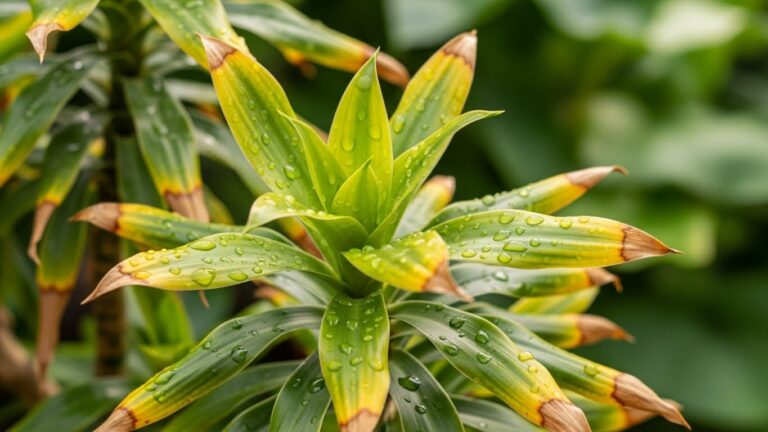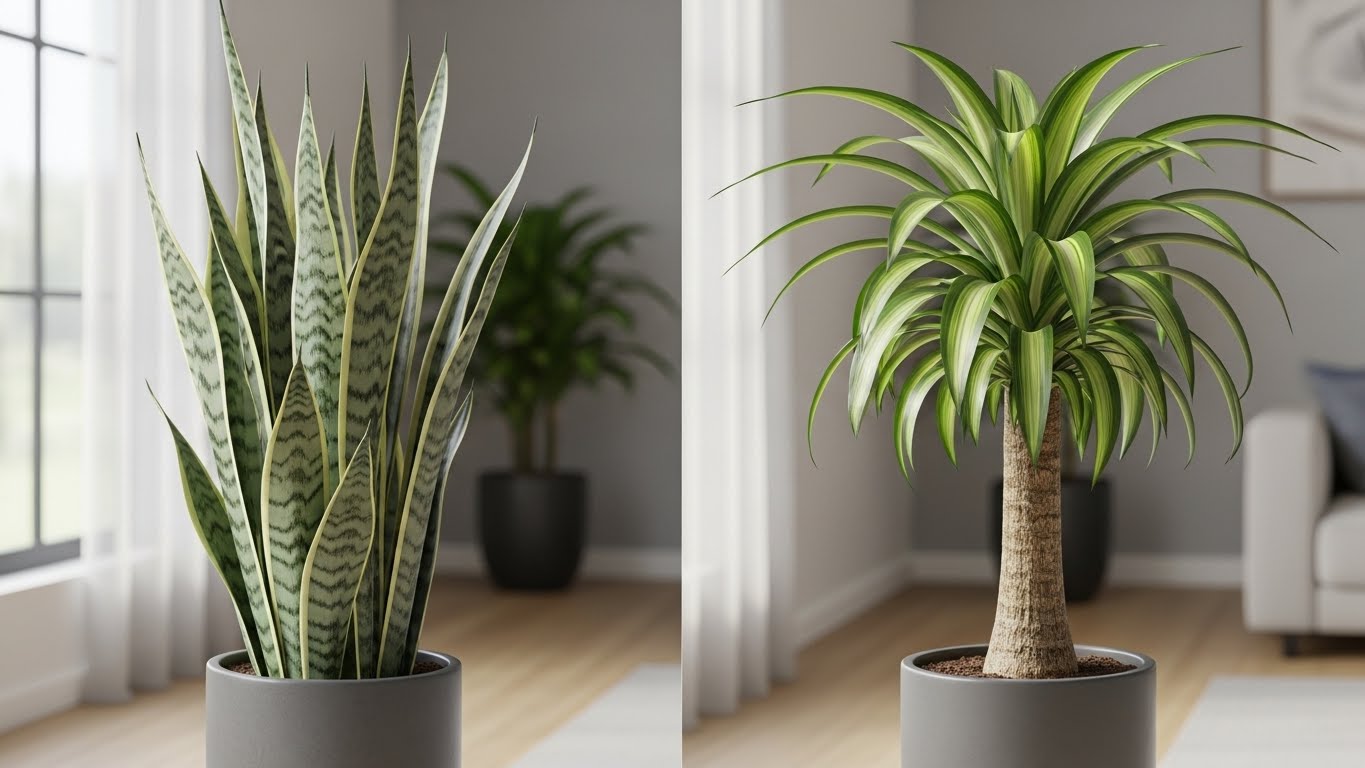
When choosing between Dracaena and Snake Plant, think about your environment. Dracaena needs slightly more care, benefiting from indirect light and humidity, while Snake Plant thrives on neglect and can handle low light and dry air. Both plants are resilient and purify the air. If you want a more forgiving option, Snake Plant might be easier for you. Keep going to discover more about their unique qualities and care tips!
Key Takeaways
💡 If you’re considering adding a Dracaena to your home, understanding its care requirements is essential.
➜ Get the step-by-step guide
- Snake plants thrive on neglect, making them easier for beginners due to their low watering needs and adaptability to various light conditions.
- Dracaena requires slightly more care, needing to dry out between waterings and enjoying higher humidity for optimal growth.
- Both plants are resilient, but snake plants are less prone to issues related to overwatering, making them simpler to maintain.
- Dracaena benefits from monthly fertilization during the growing season, while snake plants need fertilization less frequently, simplifying care.
- Consider your environment: Dracaena prefers humid spaces, while snake plants adapt well to drier conditions, influencing ease of care.
Overview of Dracaena
Dracaena, a popular houseplant, stands out for its striking appearance and easy care requirements. With various dracaena varieties, like the Dracaena marginata and Dracaena fragrans, you can find one that perfectly fits your space. These plants are not only beautiful but also resilient, thriving in low light and requiring minimal watering. However, it’s important to be aware of dracaena toxicity; while they’re safe for adults, they can be harmful to pets if ingested. Keeping your furry friends safe means placing your dracaena out of reach. Embracing a dracaena in your home adds a vibrant touch and can boost your mood. You’ll appreciate the easy-going nature of these plants as they flourish in your care, especially given their air-purifying abilities that help improve indoor air quality.
Overview of Snake Plant
When it comes to houseplants that are both striking and easy to care for, the snake plant, also known as Sansevieria, is a top contender. With its tall, sword-like leaves and various snake plant varieties, it brings a unique touch to your space. You might find the classic green and yellow striped variety or even the stunning silvery-blue version. One of the best snake plant benefits is its air-purifying abilities, making your home healthier while looking fabulous. Plus, it thrives on neglect, requiring minimal watering and attention, which is perfect for busy lifestyles. Whether you’re a seasoned plant parent or just starting, the snake plant is a fantastic choice that can boost your decor and well-being effortlessly.
Care Requirements Comparison
Caring for your plants can be a rewarding experience, especially when you compare the care requirements of dracaena and snake plants. Both are popular houseplants, but they have different needs. Here’s a quick comparison to help you decide:
- Watering Frequency: Dracaena prefers to dry out slightly between waterings, while snake plants can go weeks without water.
- Light Preferences: Dracaena thrives in indirect light but can tolerate low light; snake plants love indirect light but can handle low light too.
- Humidity Levels: Dracaena enjoys higher humidity, while snake plants adapt well to drier air.
- Fertilization: Dracaena benefits from monthly feedings during growing season; snake plants need less frequent fertilization.
Choose which one fits your lifestyle, and enjoy nurturing your green companion!
💡 Choosing the right type of Dracaena can make all the difference for beginners.
➜ Discover proven techniques
Growing Conditions and Environment
Understanding the growing conditions and environment for your plants is essential, especially if you want them to thrive in your home. Both Dracaena and Snake Plants have unique light requirements. Dracaenas prefer bright, indirect light, while Snake Plants can handle low light, making them more forgiving.
When it comes to humidity preferences, Dracaena loves a bit more moisture, thriving in humid spaces, like bathrooms or kitchens. On the other hand, Snake Plants are perfect for drier environments, as they can tolerate low humidity without a fuss.
Resilience and Common Issues
Resilience is key when it comes to keeping your houseplants healthy, and both Dracaena and Snake Plants have their own strengths in this area. Understanding the resilience factors can help you tackle common issues that arise. Here are some common pests to watch out for:
- Spider Mites – Tiny and sneaky, they can cause leaves to yellow.
- Mealybugs – These little white fluffballs love to hide in leaf joints.
- Scale – They attach themselves to stems, making them hard to spot.
- Fungus Gnats – Annoying little flies that thrive in moist soil.
With a little care, you’ll keep both plants thriving despite these challenges. So, don’t fret; you’ve got this!
Conclusion
In the battle of Dracaena versus Snake Plant, both make fantastic houseplants, but the Snake Plant is often easier to care for, like finding a Wi-Fi signal in a crowded café! With its low-light tolerance and minimal watering needs, it’s perfect for busy lifestyles. Meanwhile, Dracaena brings variety and vibrancy to your space, but it might need a bit more attention. Ultimately, choose the one that fits your style, and you’ll have a thriving green companion!
💡 If you have pets, understanding the safety of your plants is vital.
➜ Explore advanced methods