
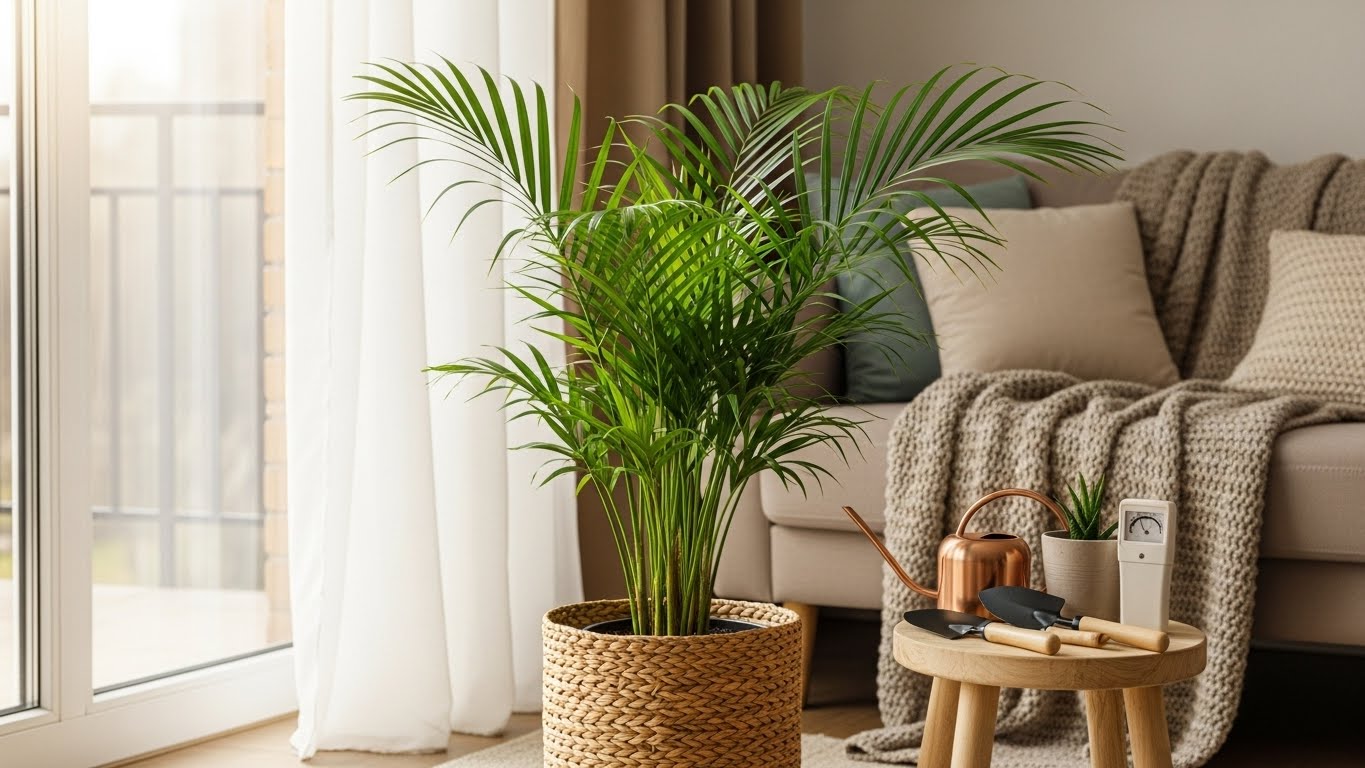
The Kentia Palm is a fantastic choice for indoor spaces, thanks to its graceful look and ability to thrive in low light. To care for it, keep it in bright, indirect light and use well-draining soil. Water when the top inch of soil feels dry, and maintain humidity of 50% or more. Fertilize during the growing season and keep an eye out for pests like spider mites or mealybugs. Stick around, and you’ll discover even more tips for keeping your plant healthy!
Key Takeaways
💡 Understanding root rot is crucial for maintathisng your Kentia Palm’s health.
➜ Master the signs of root rot
- Place your Kentia Palm in bright, indirect light, avoiding direct sunlight to prevent leaf scorching.
- Use a well-draining soil mix with potting soil, sand, and perlite for optimal growth.
- Water when the top inch of soil is dry, typically every 1-2 weeks, and maintain humidity around 50%.
- Fertilize every 4-6 weeks during the growing season with a balanced nutrient ratio for healthy growth.
- Regularly inspect for pests like spider mites and mealybugs, applying treatments as necessary to manage infestations.
Understanding the Kentia Palm
Have you ever wondered what makes the Kentia Palm such a popular houseplant? This charming plant hails from the lush forests of Lord Howe Island in Australia, which gives it a unique vibe you can’t resist. With its graceful, arching fronds, the Kentia Palm adds a touch of elegance to any room. You’ll find that there are several Kentia palm varieties, each offering something special, but the most common one is the Howea forsteriana. Its ability to thrive in lower light conditions makes it appealing for indoor spaces. By understanding its origins and different varieties, you can better appreciate this stunning plant and create a nurturing environment for it to flourish in your home! The Kentia Palm is also known for its air-purifying benefits, making it an excellent choice for improving indoor air quality.
Ideal Lighting Conditions
While the Kentia Palm is known for its adaptability, providing the right lighting conditions is crucial for keeping it healthy and vibrant. This lovely plant thrives in bright, indirect natural light, so placing it near a window is ideal. However, avoid direct sunlight, as it can scorch those delicate leaves. If you don’t have enough natural light, don’t worry! Your Kentia can also do well with artificial light; just make sure it’s a full-spectrum bulb that mimics sunlight. Keep it in a well-lit room, and watch it flourish! Remember, your Kentia Palm appreciates a balance, so treat it to the best lighting you can offer, and it’ll reward you with its lush, green beauty.
Watering and Humidity Needs
To keep your Kentia Palm thriving, it’s essential to understand its watering and humidity needs. You’ll want to water your palm when the top inch of soil feels dry, typically every 1-2 weeks, depending on your home’s conditions. Pay attention to the water frequency, as overwatering can lead to root rot, while underwatering can stress your plant.
Humidity levels are just as important! Kentia Palms love a bit of moisture in the air, so aim for a humidity level of around 50% or higher. If your home is dry, consider using a humidifier or placing a tray of water near your palm. By meeting these needs, you’ll help your Kentia Palm flourish and bring a touch of paradise to your space!
Soil and Potting Requirements
When it comes to growing a healthy Kentia palm, choosing the right soil and pot is essential. You’ll want a well-draining mix that supports the plant’s growth, so consider a combination of potting soil, sand, and perlite. Also, think about the pot size—too small, and the roots can get cramped; too big, and the soil might stay too wet, which can harm your palm.
Ideal Soil Composition
Creating the right soil composition for your Kentia palm is essential for its growth and health, as it thrives best in a mix that mimics its natural habitat. Aim for a well-draining potting mix that balances moisture retention and airflow. A combination of potting soil, perlite, and orchid bark works wonders, ensuring your palm gets the drainage it craves. You’ll want to keep the soil pH between 6.0 and 7.5, as this range supports healthy nutrient absorption. Regularly check for compacted soil, which can hinder drainage requirements, leading to root rot. By providing this perfect blend, you’ll create a cozy home for your Kentia palm, allowing it to flourish and bring life to your space.
Pot Size Considerations
Selecting the right pot size for your Kentia palm plays a significant role in its overall health and growth. You’ll want a pot that’s deep enough—at least 10-12 inches—to accommodate the roots while allowing for proper drainage. Make certain the pot has drainage holes at the bottom; this helps excess water escape and prevents root rot. A pot that’s too small can restrict root growth, while one that’s too large may lead to waterlogged soil. When you repot, gradually increase the size to give your palm room to grow without overwhelming it. Keeping these pot depth and drainage considerations in mind will guarantee your Kentia palm thrives beautifully in your home!
💡 Pairing your Kentia Palm with the right companions can enhance its beauty and health.
➜ Explore the best companion plants
Fertilizing Your Kentia Palm
When it comes to fertilizing your Kentia palm, choosing the right type of fertilizer is key to keeping it healthy and vibrant. You’ll want to follow an ideal feeding schedule to guarantee it’s getting the nutrients it needs without overdoing it, which can lead to signs of over-fertilization. Let’s explore the best options and tips to help your palm thrive!
💡 Proper watering is key to your Kentia Palm’s health; learn what to avoid.
➜ Avoid common watering mistakes
Best Fertilizer Types
To keep your Kentia palm thriving indoors, choosing the right fertilizer is essential for promoting its health and growth. You’ll want to look for fertilizers with balanced nutrient ratios, like 3-1-2 or 10-10-10, which provide a mix of nitrogen, phosphorus, and potassium. Organic options are fantastic because they release nutrients slowly, ensuring your palm gets what it needs over time. You can try fish emulsion or compost, as they enrich the soil naturally. Avoid high-salt fertilizers that might damage your plant. Remember, a little goes a long way! By providing your Kentia palm with the right nutrients, you’re setting it up for a lush, vibrant life that’ll brighten your indoor space beautifully.
Optimal Feeding Schedule
Figuring out the best feeding schedule for your Kentia palm can make a big difference in how healthy and happy it grows indoors. Start by fertilizing every 4-6 weeks during the growing season, which is typically spring and summer. This helps maintain a good nutrient balance, ensuring your palm gets the vitamins it needs. As the seasons change, make those seasonal adjustments: cut back on fertilizing in the fall and winter when growth slows down. When you do fertilize, be sure to follow the instructions on the package, as overdoing it can be harmful. Consistency is key, but being mindful of your palm’s needs will keep it thriving and looking beautiful in your home!
Signs of Over-Fertilization
Recognizing the signs of over-fertilization is essential for keeping your Kentia palm healthy and vibrant. If you notice leaf discoloration, like yellowing or browning tips, it might be a sign that you’ve given your palm too much fertilizer. This condition, often referred to as nutrient burn, happens when excess nutrients build up in the soil, harming your plant. Another warning sign is the appearance of crispy, burnt edges on the leaves. If your palm’s growth seems stunted or slowed, that’s another clue—too much fertilizer can actually hinder its development. To keep your Kentia palm thriving, always follow the recommended feeding schedule and adjust as necessary if you see these signs. Your palm will thank you!
Pruning and Maintenance Tips
When you care for a Kentia palm indoors, keeping up with pruning and maintenance is essential to guarantee your plant thrives. Regularly checking in on your palm not only enhances its beauty but also keeps it healthy. Here are some handy tips for your maintenance routine:
- Use proper pruning techniques to remove yellowing or brown fronds.
- Trim dead leaves at the base to encourage new growth.
- Clean the leaves with a damp cloth to remove dust and promote photosynthesis.
- Rotate your palm every few weeks for even light exposure.
- Water only when the top inch of soil feels dry to the touch.
Common Pests and Problems
Even with careful pruning and maintenance, your Kentia palm might still face a few challenges. Common pests like spider mites, scale, and mealybugs can sneak in, causing distress to your beloved plant. Let’s look at some pest identification and treatment options to keep your Kentia healthy and thriving.
Pest | Identification | Treatment Options |
|---|---|---|
Spider Mites | Tiny, webbing on leaves | Insecticidal soap or neem oil |
Scale | Sticky residue, bumps | Rubbing alcohol or horticultural oil |
Mealybugs | Cotton-like clusters | Insecticidal soap or manual removal |
Fungus Gnats | Small flies, damp soil | Allow soil to dry, use yellow traps |
Conclusion
To sum up, taking care of a Kentia palm isn’t rocket science! With the right light, just the right amount of water, and a bit of TLC, you can enjoy this beautiful plant indoors for years. Remember to keep an eye out for pests and give it some food every now and then. So, roll up your sleeves and plunge into the wonderful world of indoor gardening—it’s a rewarding adventure that’ll have your friends green with envy!
💡 If you have pets, knowing which plants are safe is vital for their well-being.
➜ Learn about pet safety with Kentia Palms


