
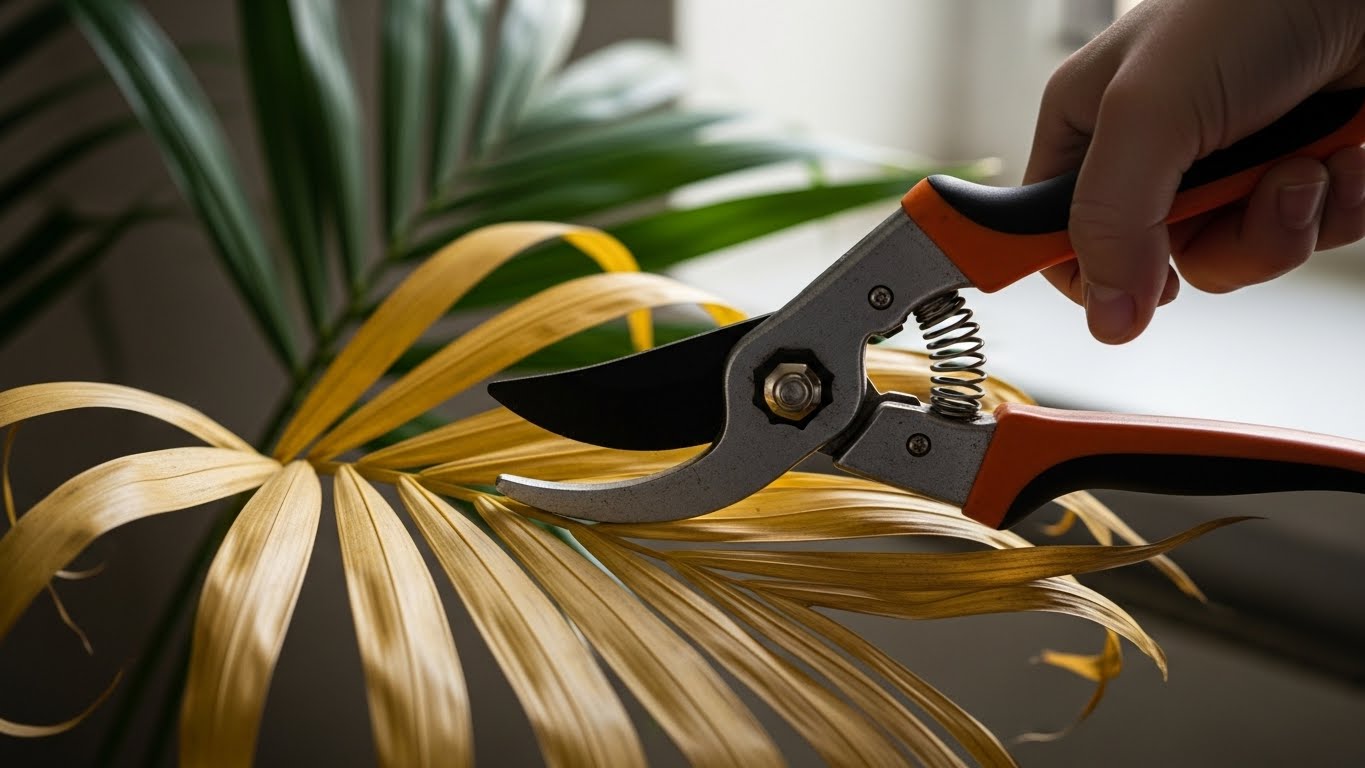
When pruning your Kentia Palm, focus on removing yellow or brown fronds, as these indicate dead or damaged growth. Leave healthy fronds that are rich green and upright, as they contribute to the palm’s overall importance. Trim at the base in a 45-degree angle to promote new growth, but be careful not to harm the trunk. Regular maintenance helps keep your palm looking its best, and there’s even more you can do to enhance its health!
Key Takeaways
💡 Understanding how long your Kentia Palm can thrive indoors is crucial for its care.
➜ Discover the lifespan of your Kentia Palm
- Trim yellow or brown fronds as they indicate dead or damaged parts that can detract from the palm’s health and appearance.
- Remove completely dead fronds at the base to promote vitality without harming the trunk or surrounding fronds.
- Avoid trimming healthy fronds; they should remain rich green and upright to support overall growth.
- Use sharp, clean pruning shears for precise cuts at a 45-degree angle to encourage new growth.
- Regularly inspect for damage, such as black spots or drooping leaves, and prune as necessary to address underlying issues.
Understanding the Kentia Palm
The Kentia palm, known scientifically as Howea forsteriana, is a stunning tropical plant that can bring a touch of the exotic right into your home or garden. When you immerse yourself in Kentia palm care, you’ll discover it thrives in bright, indirect light and prefers well-draining soil. Regular watering is key, but don’t overdo it; let the top couple of inches dry out between waterings. As for Kentia palm growth, this beauty can reach impressive heights, often growing up to 10 feet tall indoors. With patience and the right conditions, you’ll soon find that its elegant fronds add a soothing, tropical vibe to your space. A natural air purifier, it also enhances indoor air quality, making it a beneficial addition to your home. Embrace its charm, and your Kentia palm will flourish beautifully!
When to Prune Your Kentia Palm
When you notice your Kentia palm’s fronds starting to turn yellow or brown, it’s time to contemplate giving it a little trim. The best pruning time is typically in late spring or early summer, as this is when your palm is actively growing and can recover quickly. Seasonal considerations are key; avoid pruning during the colder months when your palm might be stressed. Keeping an eye on the overall health of your plant will guide you, too; if it looks tired, a little snip here and there can revitalize it. Remember, removing dead or damaged fronds not only improves appearance but also helps your palm thrive, so don’t hesitate to get started when the time is right!
Tools You’ll Need for Pruning
Pruning your Kentia palm can be a rewarding task, and having the right tools makes all the difference! To get started, you’ll need a few essential items to make your pruning techniques effective. Here’s a handy table to guide you:
Tool | Purpose | Maintenance |
|---|---|---|
Pruning Shears | For cutting fronds | Clean after use |
Loppers | For thicker branches | Sharpen regularly |
Rake | To collect fallen debris | Store dry and clean |
With these tools in hand, you’ll be ready to tackle any pruning job. Remember, keeping your tools in top shape is just as important as knowing how to use them. Happy pruning!
Identifying Dead or Damaged Fronds
When caring for your Kentia palm, it’s important to spot any dead or damaged fronds that might be dragging down the plant’s health. Look for brown fronds, as these are usually a sign of trouble, and keep an eye out for yellowing leaves that indicate stress. Checking for visible damage can help you decide which fronds to prune, ensuring your palm stays vibrant and strong!
Recognizing Brown Fronds
Recognizing brown fronds on your Kentia palm is essential for keeping it healthy and vibrant. When you spot those brown fronds, it’s a sign that something might be off. Common brown frond causes include underwatering, nutrient deficiencies, or even too much direct sunlight. To assess frond health, check if the browning is limited to the tips or if it spreads throughout the frond. If it’s just the tips, your palm might simply need a drink or some fertilizer. However, if you see extensive browning, it’s time to contemplate trimming. By identifying these signs early, you can help your Kentia palm thrive and maintain its lush appearance. Remember, a little attention goes a long way!
Spotting Yellowing Leaves
Spotting yellowing leaves on your Kentia palm is crucial for maintaining its health and beauty, as these signs can indicate underlying issues that need your attention. Yellow leaf causes can range from overwatering to nutrient deficiencies, so it’s important to observe your palm closely. If you see a few yellow leaves, don’t panic; it may just need a little TLC. For yellow leaf treatment, check your watering routine and verify it’s not sitting in soggy soil. You might also want to evaluate fertilizing to boost its nutrients. If more leaves turn yellow, it could signal a bigger problem, like pests or disease. Stay vigilant, and your Kentia palm will thrive!
Checking for Damage
After you’ve assessed the yellowing leaves on your Kentia palm, it’s time to check for damage, particularly dead or damaged fronds. This frond inspection is essential for a healthy plant. As you examine your palm, look for these signs:
- Fronds that are completely brown or crispy
- Leaves with black or mushy spots
- Broken or split fronds
- Leaves that droop limply
- Any signs of pests or disease
How to Trim Fronds Correctly
When you want your Kentia palm to look its best, trimming fronds correctly is essential, as it helps maintain the plant’s health and appearance. Start by examining the frond structure; healthy fronds are a rich green with a strong, upright position. Use sharp, clean pruning shears to cut fronds, making sure to trim at the base without damaging the trunk or surrounding fronds. Aim for a 45-degree angle to encourage new growth and protect frond health. Always remove fronds that are completely dead or severely damaged, as they drain energy from the plant. Remember, it’s not just about looks—proper trimming keeps your palm vibrant and thriving, creating a stunning focal point in your space.
Removing Yellowing or Browning Leaves
When you notice yellowing or browning leaves on your Kentia palm, it’s important to act quickly to keep your plant healthy. First, you’ll want to identify which leaves are affected and determine the cause, whether it’s overwatering, lack of nutrients, or something else. Once you know what’s going on, you can use proper pruning techniques to remove those leaves, helping your palm thrive once again!
Identifying Affected Leaves
Identifying which leaves to prune on your Kentia palm is essential for keeping your plant healthy and vibrant. Look for signs of distress to determine leaf discoloration causes, which can stem from various factors. Pay attention to the frond growth patterns, as they tell you a lot about your palm’s needs.
💡 Humidity plays a vital role in the health of your Kentia Palm, especially after pruning.
➜ Explore humidity essentials for Kentia Palms
Here’s what to watch for:
- Yellowing leaves that hang limply
- Browning tips that feel crispy
- Spots or patches on the leaf surface
- Leaves that are completely brown and dry
- New growth that seems stunted
Proper Pruning Techniques
💡 Pruning can sometimes lead to stress in your Kentia Palm, resulting in yellowing leaves.
➜ Learn how to revive yellowing leaves
To keep your Kentia palm looking its best, mastering proper pruning techniques for yellowing or browning leaves is key. Start by inspecting your plant regularly; this helps you identify which leaves need attention. When pruning, use clean, sharp scissors or shears to make precise cuts. Aim to remove only the affected leaves without disturbing the healthy ones. This encourages new growth and enhances your palm’s overall appearance—two important pruning benefits. As for pruning frequency, consider doing this every few months, or whenever you notice unsightly leaves. Remember, a little care goes a long way, and your Kentia will thrive with just the right amount of attention and love!
Cleaning & Sanitizing Your Pruning Tools
Before you plunge into pruning your Kentia palms, it’s essential to clean and sanitize your pruning tools. This simple step boosts tool maintenance and guarantees your plants stay healthy. Here’s how to get your tools ready:
Cleaning and sanitizing your pruning tools is crucial for maintaining plant health before pruning your Kentia palms.
- Wipe blades with a cloth to remove dirt and sap.
- Soak them in a mix of water and bleach for about 10 minutes.
- Rinse thoroughly to eliminate any bleach residue.
- Dry the tools completely to prevent rust.
- Store them in a dry place, perhaps hanging up, to keep them ready for your next pruning session.
Post-Pruning Care for Your Kentia Palm
After you’ve pruned your Kentia palm, it’s important to give it some extra care to help it thrive. You’ll want to adjust your watering and fertilization routine, ensuring that your palm gets what it needs to recover. Additionally, consider its light requirements, as these can change after pruning, so your palm stays healthy and vibrant.
Watering After Pruning
Once you’ve pruned your Kentia palm, giving it the right amount of water is crucial for its recovery and growth. You’ll want to keep an eye on the soil moisture to confirm it’s just right. Here are some tips for watering frequency after pruning:
- Water thoroughly, allowing excess to drain out.
- Check the top inch of soil; if it’s dry, it’s time to water.
- Avoid overwatering; soggy roots can lead to rot.
- Consider the season; palms may need more water in warmer months.
- Adjust your routine as your palm starts to grow back.
Fertilization Routine Adjustments
After you’ve given your Kentia palm a fresh look through pruning and made sure to water it properly, it’s time to think about how to support its recovery with the right fertilization routine. Start by choosing the right fertilizer types—opt for a balanced, slow-release formula that provides essential nutrients over time. This way, your palm gets what it needs without overwhelming it.
Nutrient timing is vital, too; fertilize about a month after pruning to give your palm a boost when it’s ready to grow again. Remember, a little goes a long way, so follow the package instructions closely. With these adjustments, your Kentia will thrive and look stunning in no time!
Light Requirements Post-Pruning
When you’ve just pruned your Kentia palm, understanding its light requirements becomes essential for helping it bounce back. After trimming, your palm needs the right light intensity to thrive and establish new growth patterns. Here’s how to guarantee it gets what it needs:
- Bright, indirect sunlight to stimulate healthy growth.
- Avoid direct sun exposure that can scorch the leaves.
- Rotate your palm occasionally for even light distribution.
- Watch for yellowing leaves, a sign it may need more light.
- Use sheer curtains if placing it near a window to diffuse harsh rays.
Signs Your Kentia Palm Needs More Attention
Your Kentia palm might be one of the most elegant plants in your home, but even the finest greenery needs a little extra care sometimes. If you notice yellowing fronds or browning tips, it’s a clear sign your palm care routine needs some adjustments. These symptoms can indicate that your Kentia isn’t getting enough water, light, or nutrients. Check for pests, too, as they can sap your plant’s energy and harm frond health. If the growth seems stunted or your palm looks droopy, it’s time to step up your efforts. Verify it’s in a bright spot, and consider fertilizing. With a little extra attention, your Kentia can thrive, adding beauty and elegance to your space!
Common Mistakes to Avoid While Pruning
Pruning can be a magical way to keep your Kentia palm looking its best, but it’s easy to stumble into some common pitfalls. To guarantee your palm thrives, here are five mistakes to avoid:
Pruning your Kentia palm can enhance its beauty, but beware of common mistakes that can hinder its growth.
- Ignoring pruning frequency: Too little or too much can harm leaf health.
- Cutting too close: Leave a bit of stem to promote healthy growth.
- Using dull tools: Sharp tools make cleaner cuts, reducing damage.
- Neglecting leaf condition: Don’t trim healthy leaves; focus on the damaged ones.
- Pruning at the wrong time: Always cut during the growing season for ideal recovery.
Conclusion
To sum up, taking care of your Kentia palm isn’t just about snipping away at fronds. It’s like giving your plant a little haircut—keeping it healthy and vibrant. Remember to prune wisely, using the right tools, and always keep an eye out for any signs that your palm needs extra love. With a bit of attention and care, your Kentia palm will thrive, reminding you of sunny days on a tropical beach. Happy pruning!
💡 After pruning, maintathisng clean fronds is essential for the health of your Kentia Palm.
➜ Master the art of cleaning palm fronds


