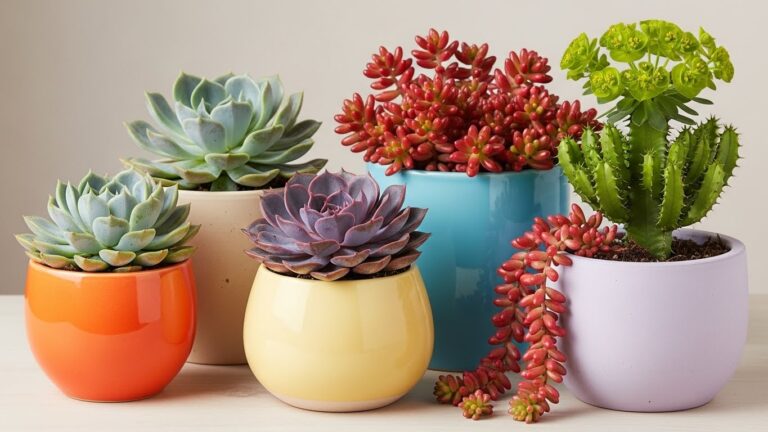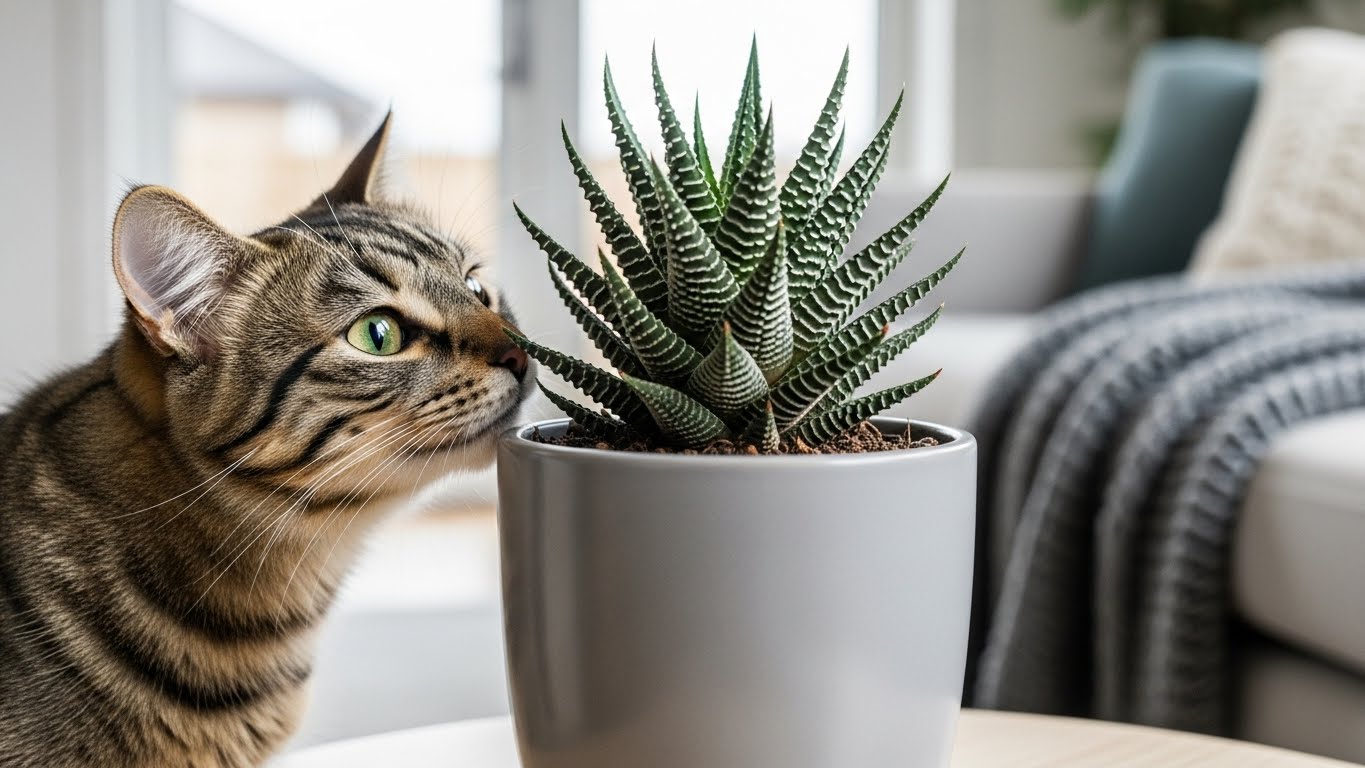
Not all succulents are pet-friendly, so it’s important to know which ones you can have at home without worrying about your furry friends. Safe options include Haworthia, Echeveria, and Ponytail Palm, which make lovely additions to your decor. However, some succulents like Aloe Vera and Jade Plant can be toxic, causing health issues for your pets. Stay tuned to learn more about keeping your home vibrant and safe for both your plants and pets!
Key Takeaways
- Many succulents, such as Haworthia and Echeveria, are non-toxic to pets, making them safe for households with animals.
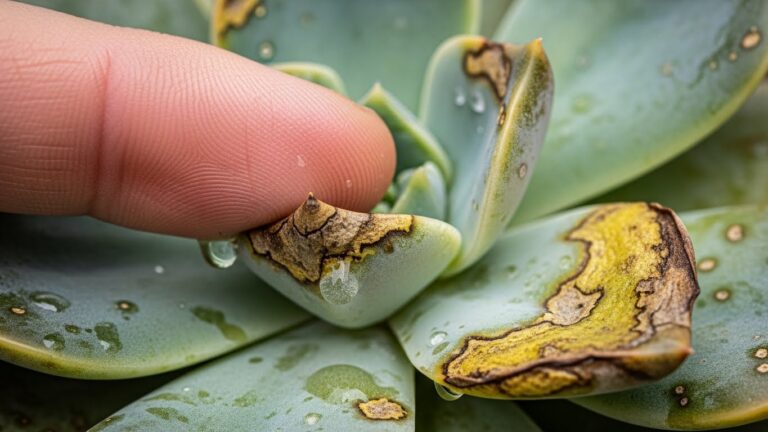
- Toxic succulents like Aloe Vera and Jade Plant can cause serious health issues in pets, such as vomiting and lethargy.
- Symptoms of plant poisoning in pets include vomiting, drooling, and unusual lethargy, requiring prompt veterinary attention.
- To ensure safety, place succulents in high or inaccessible areas and create barriers to keep pets away from them.
- Regularly monitor plants for pests and care for succulents with minimal watering and indirect sunlight to maintain their health.
Understanding Succulents and Their Characteristics
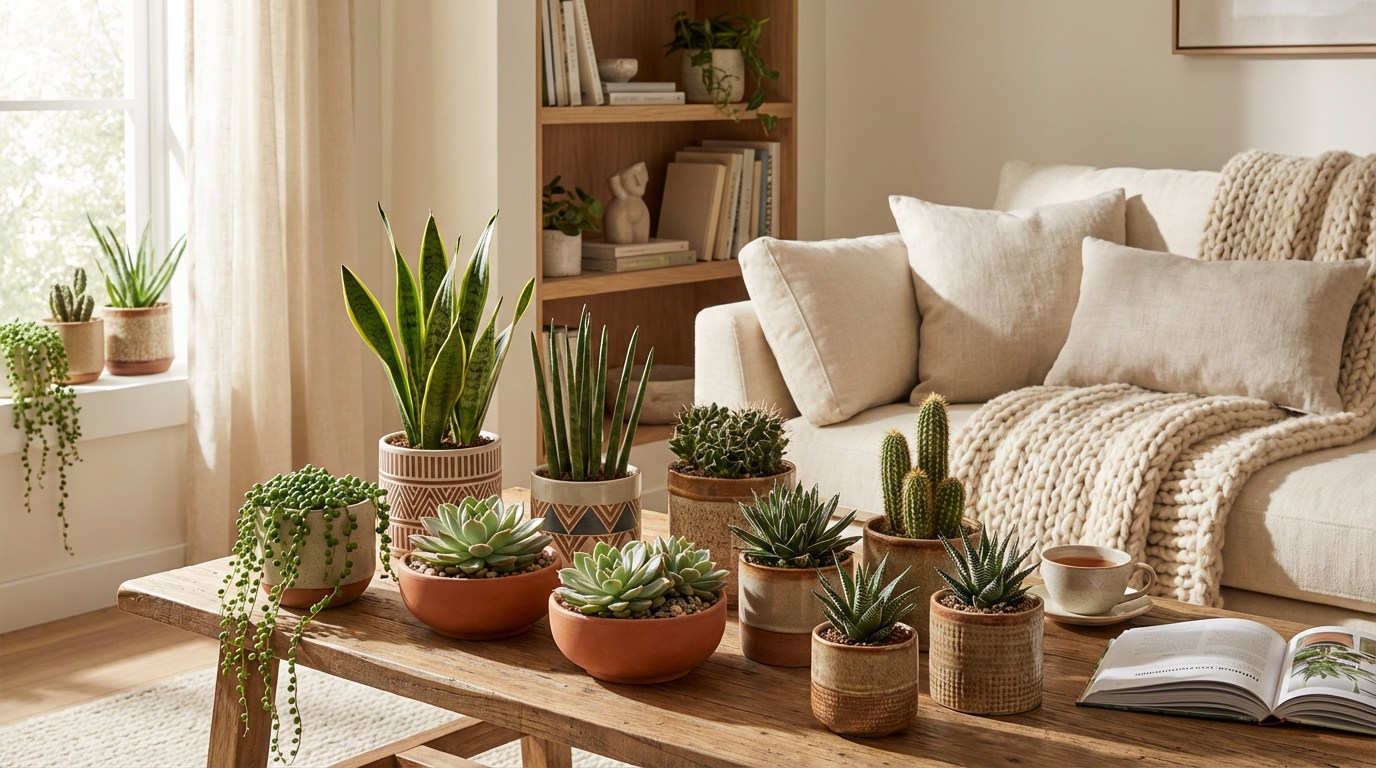
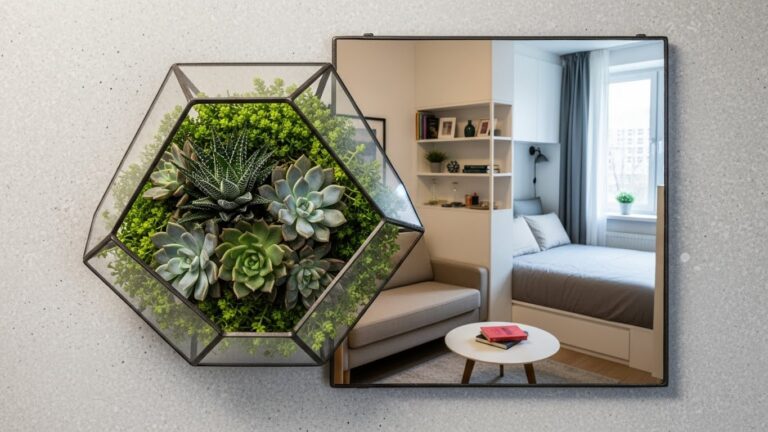
Succulents are fascinating plants that have captured the hearts of many plant enthusiasts, thanks to their unique characteristics and low-maintenance needs. With various succulent varieties, each offers a delightful mix of shapes, sizes, and colors, making them perfect for any space. You’ll love how they can thrive with minimal attention, as their thick leaves store water, letting them survive in dry conditions. When it comes to plant care, just remember to avoid overwatering and provide them with bright, indirect sunlight. These tough little beauties can adapt to different environments, so you can easily create a cozy corner in your home. Additionally, their ability to improve indoor air quality through photosynthesis benefits makes them an even more appealing choice for your living space. Immerse yourself in the world of succulents, and you’ll discover just how rewarding and enjoyable they can be!
Common Pet-Safe Succulents
When you’re looking to add some greenery to your home without worrying about your furry friends, you’ll be pleased to know that several succulents are perfectly safe for pets. Here are some popular pet-friendly succulents you can consider:
- Haworthia – Compact and easy to care for, this succulent thrives in indirect light.
- Echeveria – With its beautiful rosette shape, it’s a stunning addition to any space.
- Ponytail Palm – While not a true succulent, it’s a low-maintenance choice that’s safe for pets.
- Burro’s Tail – Its cascading leaves add charm and character.
These safe plant choices not only brighten your home but also keep your pets happy and healthy, allowing you to enjoy your green thumb worry-free!
Succulents That Are Toxic to Pets
While many succulents can brighten your home without worrying about your furry friends, some can be harmful to pets if ingested. It’s important to know which common toxic succulents to avoid so you can keep your pets safe and sound. In this section, we’ll explore these plants and the symptoms of toxicity you should watch out for.
Common Toxic Succulents
If you think all succulents are safe for your furry friends, you might want to think again! Some toxic plant varieties can pose serious pet health implications. Knowing which ones to avoid is essential to keep your beloved companions safe.
Here are some common toxic succulents to watch out for:
- Aloe Vera: Can cause vomiting and lethargy.
- Jade Plant: May lead to a drop in heart rate.
- Kalanchoe: Known to irritate the stomach and heart.
- Euphorbia: Its sap can be harmful if ingested.
- Sansevieria (Snake Plant): Can result in nausea and diarrhea.
Always double-check before bringing a new succulent home, and keep your pets safe and happy!
Symptoms of Toxicity
How can you tell if your pet has ingested a toxic succulent? Look for signs like drooling, vomiting, or diarrhea—these are common symptoms of toxicity. Toxic plant characteristics, such as sharp edges or milky sap, can be red flags for pet health risks. If your furry friend seems unusually lethargic or has trouble breathing, it’s essential to act fast. Keep an eye out for any unusual behavior, like pawing at their mouth or refusing food. These reactions can indicate they’ve nibbled on something harmful. Remember, not all succulents are dangerous, but knowing which ones are can help keep your pet safe and happy. If you suspect toxicity, don’t hesitate to contact your vet.
Signs of Plant Poisoning in Pets
It’s important to recognize the signs of plant poisoning in your pets, especially if they’ve nibbled on something they shouldn’t have. Keep an eye out for symptoms like vomiting, drooling, or unusual lethargy, as these can indicate something’s not right. If you notice any of these signs, acting quickly can make all the difference for your furry friend!
Common Symptoms to Watch
When you bring a new plant into your home, you might not realize that some can be harmful to your pets, leading to potential poisoning. Being aware of the signs can help you with symptom recognition and understanding your pet’s behavior. Here are some common symptoms to watch for:
- Vomiting or diarrhea
- Excessive drooling
- Lethargy or weakness
- Unusual vocalizations or restlessness
- Loss of appetite
If you notice any of these symptoms, keep a close eye on your furry friend. By being proactive and attentive, you’ll guarantee your pets remain safe and healthy while enjoying your beautiful plants. Remember, knowing what to look for can make all the difference in keeping your home a happy place for everyone!
Immediate Actions to Take
If you notice any of the symptoms we discussed earlier, it’s important to act quickly to guarantee your pet’s safety. First, stay calm and assess your furry friend. If they’re showing signs of distress, provide immediate care by removing any plant material from their mouth. Next, contact your veterinarian or an emergency animal clinic right away. It’s a good idea to have your emergency contacts saved on your phone, just in case. If possible, bring a sample of the plant for identification. Keep an eye on your pet’s behavior, and don’t hesitate to ask questions when you reach out for help. Your swift action can make all the difference in ensuring your beloved pet gets the care they need.
Tips for Keeping Your Pets Safe Around Succulents
Keeping your pets safe around succulents is essential, especially since some plants can be toxic if ingested. To guarantee your furry friends stay safe, consider these tips:
- Practice pet supervision: Always keep an eye on your pets when they’re near your plants.
- Choose safe placement: Position succulents out of reach, like on high shelves or hanging planters.
- Provide distractions: Offer your pets toys or treats to divert their attention from the plants.
- Educate yourself: Know which succulents are pet-friendly and which aren’t to make informed choices.
- Create a barrier: Use decorative fencing or plant stands to keep curious paws away.
Creating a Pet-Friendly Plant Environment
Creating a pet-friendly plant environment means making sure your home is a safe haven for both your pets and your beloved succulents. To achieve this, start by selecting a pet-friendly arrangement. Place your succulents on high shelves or in hanging planters, ensuring your curious pets can’t reach them. Keep a close eye on where you position your plants, opting for safe placements that minimize the risk of spills or accidents. Consider using decorative barriers to keep your pets at bay while adding charm to your space. Regularly check your plants for any signs of damage, and always be aware of your pet’s behavior around them. With these small adjustments, you can enjoy your greens without worry!
Resources for Pet and Plant Owners
When you’re balancing the joys of pet ownership with the beauty of houseplants, it’s vital to have the right resources to help you navigate this delightful challenge. By seeking out reliable information, you can guarantee safe gardening while keeping your furry friends happy. Here are some handy resources to take into account:
- Books on pet-friendly plants: Learn about the best options for your home.
- Online communities: Connect with fellow pet and plant lovers for tips and advice.
- Local nurseries: Ask for recommendations on safe plants.
- Veterinarian advice: Consult them about any toxic plants.
- Plant care apps: Track your plant’s needs while keeping pet safety in mind.
With these resources, you can create a harmonious environment for both your pets and your plants!
Conclusion
To sum up, while succulents can add a touch of green to your home, it’s essential to choose wisely for your furry friends. Some succulents are perfectly safe, while others can play a not-so-fun game of hide-and-seek with your pet’s health. By knowing which plants are safe and taking precautions, you can create a harmonious space where both plants and pets thrive together. So, let’s keep those little paws safe and enjoy the beauty of succulents in your home!