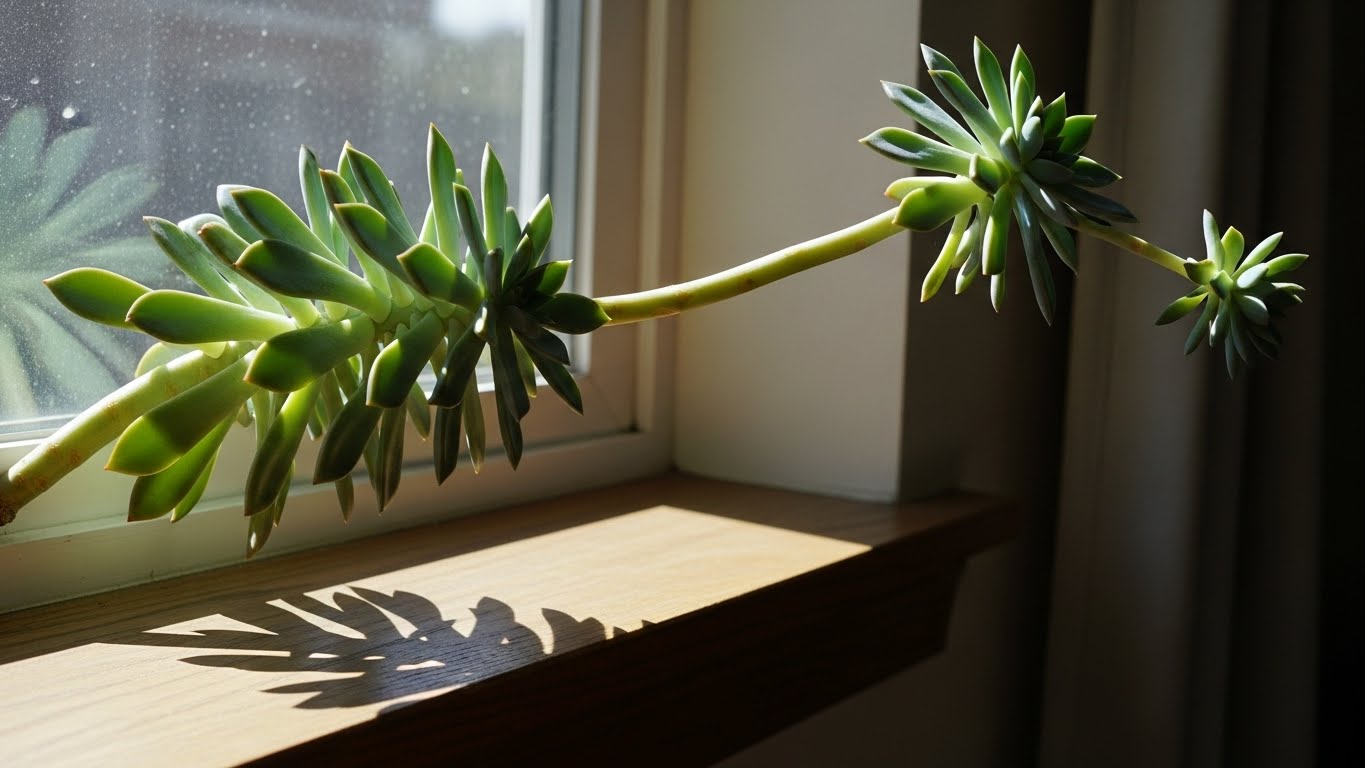
If your succulent is stretching, it’s likely due to etiolation caused by insufficient light. When plants don’t get enough sunlight, they elongate their stems and grow thinner to reach for the light. You might notice smaller, spaced-out leaves or a plant leaning towards a light source. To keep your succulent healthy and prevent this leggy growth, it’s essential to provide proper lighting conditions. Keep going to discover tips on correcting and caring for your stretching succulents!
Key Takeaways
- Succulents stretch (etiolate) due to insufficient light, causing elongated stems and spaced-out leaves as they reach for sunlight.
- Poor watering practices and temperature fluctuations can exacerbate stretching, leading to weak and unhealthy plant growth.
- Proper lighting, ideally bright, indirect sunlight, is crucial for preventing succulents from elongating and maintaining their health.
- Signs of stretching include leaning plants, drooping leaves, and slower growth patterns, indicating a need for improved light exposure.
- Correcting etiolation involves moving the plant to a sunnier location, implementing pruning, and propagating healthy cuttings for new growth.
What Is Etiolation?
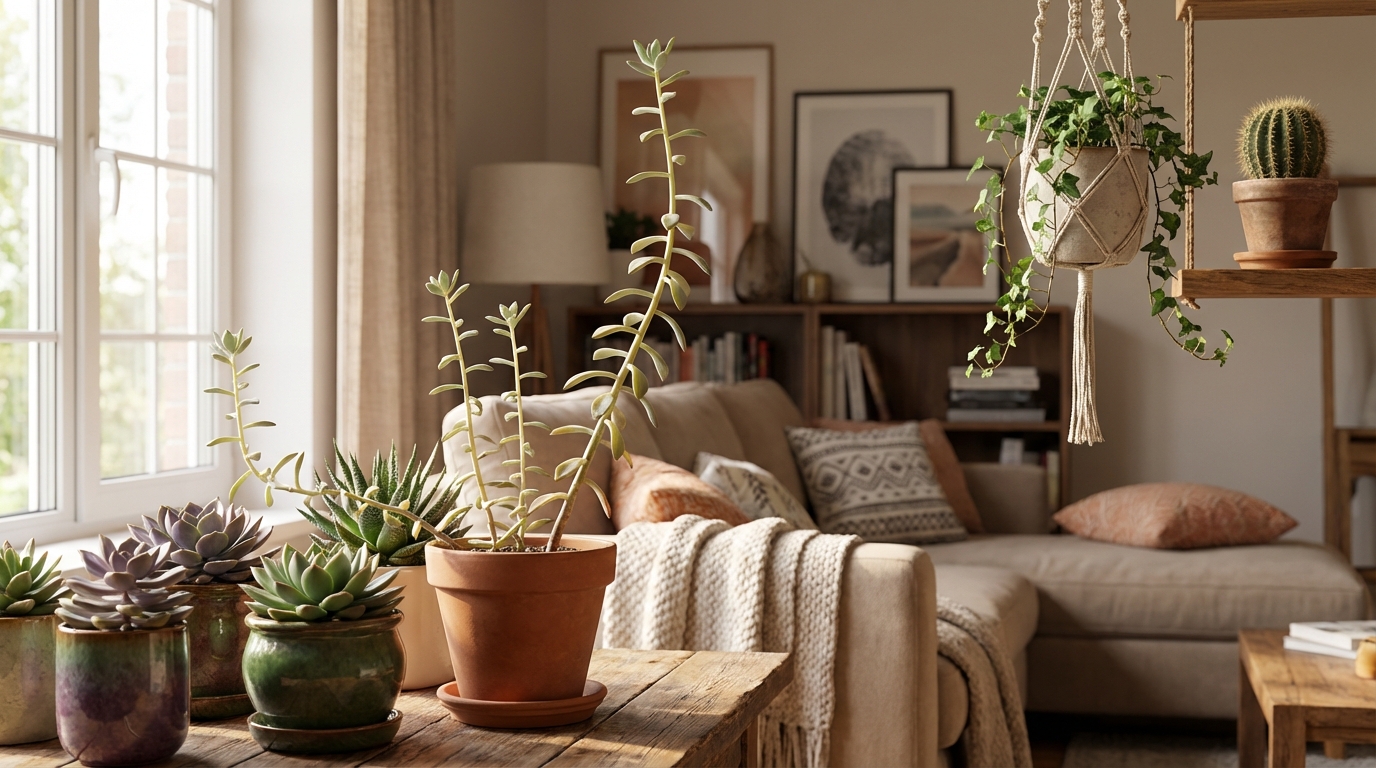
Etiolation is a fascinating phenomenon that often catches plant lovers by surprise, especially when it comes to succulents. This process happens when plants stretch toward light due to insufficient exposure, resulting in elongated, pale growth. The etiolation mechanisms rely on how plants perceive the light spectrum; they’ll reach out for the wavelengths they need. When a succulent doesn’t receive enough sunlight, it responds by growing taller and thinner, trying to capture more light. While this might seem like a natural survival tactic, it can lead to weak, unhealthy plants. To keep your succulents thriving, make sure they’re getting plenty of bright, indirect light. Understanding etiolation helps you nurture your green friends more effectively, keeping them beautiful and robust. Additionally, providing the right amount of light exposure is crucial for preventing this stretching and maintaining overall plant health.
Signs Your Succulent Is Stretching
Have you ever noticed your succulent looks a bit taller and skinnier than usual? That’s a sign of stretching, or etiolation, which can be a real concern for your plant’s health. One of the first things you might spot is elongated stems, reaching for sunlight, while the leaves appear smaller and spaced out. You might also see your succulent leaning to one side, as it tries to get closer to its light source. If you’re observing changes in the growth patterns, like slower development or drooping leaves, it’s time to pay attention. Remember, keeping an eye on these signs can help you maintain your succulent health and guarantee your little green friend thrives in its environment.
Common Causes of Etiolation
When your succulent starts stretching, it’s usually a sign that something’s off in its care routine. Common causes of etiolation include insufficient light exposure, improper watering practices, and temperature fluctuations, all of which can affect your plant’s health. Understanding these factors can help you create the perfect environment and keep your succulent happy and thriving!
Insufficient Light Exposure
If your succulent seems to be stretching toward the light, it’s likely begging for more sunlight! This stretching, known as etiolation, often happens when your plant isn’t getting enough light exposure. Succulents thrive in bright light, and if they’re not receiving it, they’ll reach out, trying to find that perfect spot. The light spectrum they need includes both blue and red wavelengths, which are essential for healthy growth. Pay attention to your plant’s orientation too; if it’s facing away from the window, it may not be getting the light it craves. Make sure to rotate your succulent regularly, allowing it to soak up as much sunlight as possible, so it stays beautiful and vibrant!
Improper Watering Practices
Improper watering practices can lead to your succulent stretching, and that’s not a good look! If you’re overwatering, your plant may become weak and leggy, desperately reaching for light. On the flip side, underwatering can also cause issues, as the roots struggle to absorb enough moisture. Finding the right watering frequency is key; check the soil moisture before you water. Stick your finger in the soil—if it feels dry an inch down, it’s time for a drink. Balance is essential! Remember, succulents love to dry out between waterings, so don’t drown them. By adjusting your watering habits, you’ll keep your succulents happy and healthy, preventing that unwanted stretch and ensuring they thrive.
Temperature Fluctuations
Temperature fluctuations can really throw your succulent off balance, causing it to stretch toward the light in a desperate attempt to survive. You might not realize how much temperature impacts your plant’s health, especially during seasonal changes. When the weather shifts, your succulent feels it deeply, often leading to that sad, elongated look.
- Your heart sinks as you see it reaching for the light.
- You wonder if it’ll ever return to its former glory.
- You may feel helpless, watching it struggle.
To keep your succulent happy, try to maintain a stable environment. Avoid placing it near drafty windows or heating vents. With a bit of love and attention, you can help your plant thrive, instead of just survive!
The Importance of Proper Lighting
When it comes to keeping your succulent healthy and happy, proper lighting is key. These plants thrive in natural light, so knowing how to position them can make all the difference. If you can’t get enough sunlight, don’t worry—artificial lighting solutions can help your succulent bloom beautifully, too!
Natural Light Requirements
Natural light is essential for keeping your succulent healthy and vibrant. When your plant doesn’t get enough sunlight exposure, it starts to stretch toward the light, resulting in that sad, elongated look. To avoid this, you need to guarantee it receives the right light intensity. Here are some key points to remember:
- Your succulent thrives in bright, indirect sunlight.
- A south-facing window usually provides the best conditions.
- Rotate your plant occasionally for even growth.
Artificial Lighting Solutions
If you’re unable to provide your succulent with enough natural sunlight, don’t worry—artificial lighting solutions can save the day! Using LED options and daylight bulbs can mimic the sun’s rays, helping your plant thrive. LED lights are energy-efficient and come in various spectrums, making them perfect for encouraging healthy growth. Daylight bulbs, on the other hand, emit a bright, white light that closely resembles natural sunlight, which your succulent craves.
To set up your lighting, place the bulbs about 12 to 18 inches away from your plants, ensuring they get about 12 to 16 hours of light daily. With the right artificial lighting, your succulent will grow strong and vibrant, leaving stretching behind!
How to Prevent Etiolation
To keep your succulent from stretching and becoming leggy, it’s crucial to provide the right conditions for growth. Focus on these key aspects:
- Light Intensity: Place your succulent in bright, indirect sunlight to promote healthy growth.
- Soil Quality: Use well-draining soil to prevent root rot and guarantee your plant thrives.
- Watering Routine: Allow the soil to dry out between waterings, as overwatering can lead to weak growth.
When you create a nurturing environment, your succulent will flourish with vibrant leaves and a robust structure. Remember, the right balance of light and care will keep your plant from reaching for the light too enthusiastically. By making these small adjustments, you’ll cultivate a happy and healthy succulent!
Correcting Etiolated Succulents
Correcting etiolated succulents can feel like a challenging task, but with the right approach, you can help your plant regain its healthy shape. Start by giving your succulent the light it craves—move it to a sunnier spot or adjust the grow light to guarantee it gets enough brightness. Next, embrace corrective pruning; trim away the stretched stems to encourage new growth. Don’t worry, your plant will bounce back stronger! After pruning, you might want to propagate the cuttings if they’re healthy. This way, you can create new plants while helping the original thrive. With patience and love, your succulent will be on its way to looking fuller and more vibrant in no time!
Best Practices for Succulent Care
After you’ve tackled the issue of etiolated succulents, it’s time to focus on the best practices that keep your plants thriving. Caring for your succulents isn’t just about watering; it’s about creating a loving environment for them. Here are some essential tips:
- Always check the soil moisture before watering—your succulents prefer to be dry rather than soggy.
- Keep an eye out for pests; a little diligence can save your plants from damage.
- Rotate your succulents occasionally to guarantee they receive even sunlight.
Choosing the Right Location for Your Succulent
Finding the perfect spot for your succulent can make all the difference in its growth and health. When choosing indoor placement, think about how sunlight angle hits your plant throughout the day. Ideally, place your succulent near a south-facing window where it can soak up bright, indirect light. If your space has limited sunlight, consider rotating your plant occasionally to guarantee even exposure. Avoid dark corners or areas where the sun doesn’t shine, as this can lead to stretching, or etiolation. Remember, your succulent thrives on warmth and light, so pay attention to how it responds to its surroundings. With the right location, you’ll foster a happy, healthy friend that brings joy to your home!
When to Repot Your Succulent
Knowing when to repot your succulent can be just as important as picking the right spot for it in your home. Your plant’s happiness relies on proper repotting timing and the right container selection. Here are some signs it’s time to give your succulent a new home:
- You see roots poking through the drainage holes.
- The soil dries out too quickly, leaving your plant thirsty.
- The leaves start to look crowded or cramped.
When you notice these signs, it’s time to act! Choose a container that’s just a bit larger, allowing your succulent to grow comfortably. Repotting not only gives your plant room to breathe, but it also refreshes its environment, helping it thrive and flourish.
Conclusion
In conclusion, safeguarding your succulent from stretching starts with smart strategies and sufficient sunlight. By understanding etiolation, you’ll be better equipped to provide proper care, ensuring your plants thrive in their cozy corners. Remember, a well-lit location leads to happy, healthy succulents. So, stay vigilant, check your plants regularly, and watch them flourish! With the right attention and affection, you can cultivate an enchanting collection of charming succulents that’ll brighten your space.