
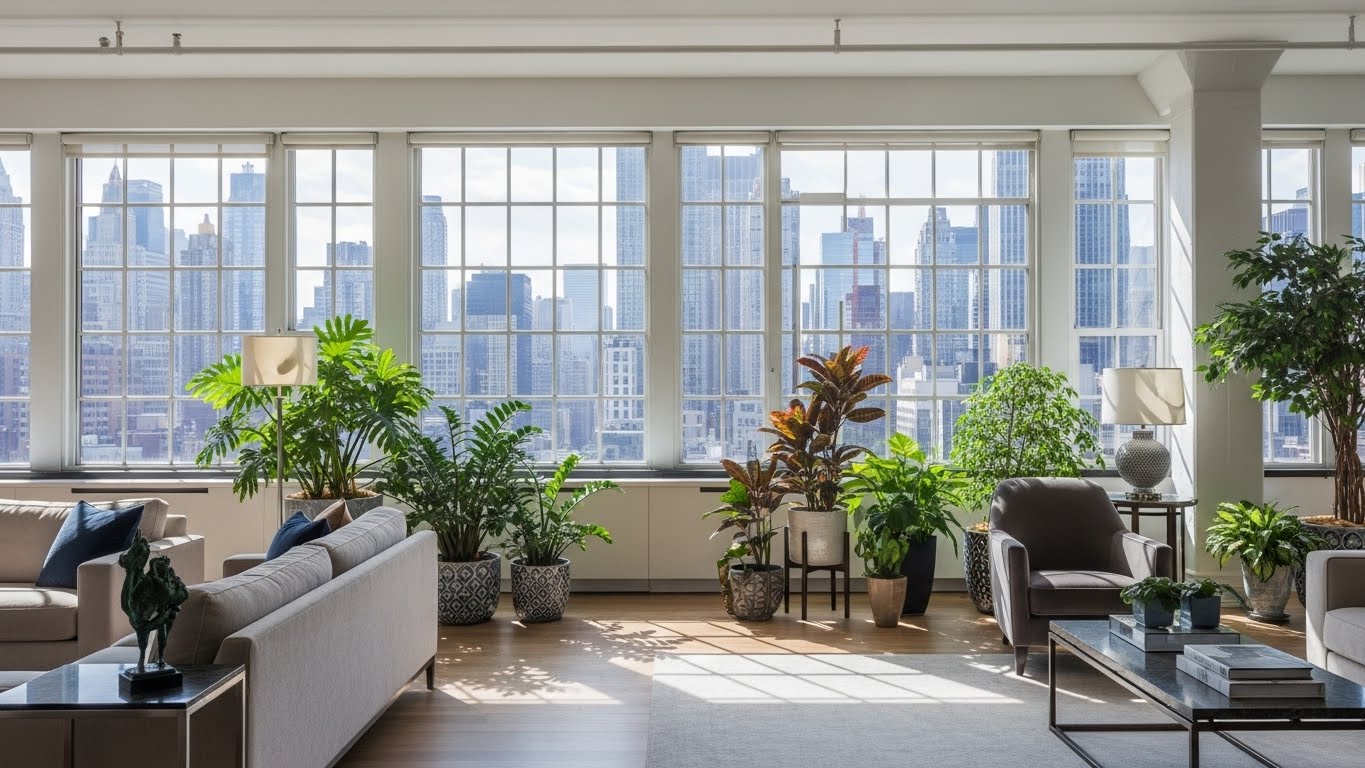
Introduction: Embracing Greenery in the Grid
The quintessential New York City apartment possesses a unique charm—the pre-war architectural details, the view of a neighboring brick facade, the compact yet clever use of every square inch. Within this urban grid, a universal desire emerges: to soften the hard lines and infuse the space with the vibrant, calming presence of living greenery. Yet, this ambition is often met with a distinct set of challenges. This guide serves as a masterclass in urban horticulture, designed to transform the constraints of city living—from the dim light of north-facing windows and the dry blast of radiator heat to the strict terms of a rental agreement—into opportunities for creating a lush, personalized sanctuary. It moves beyond simple plant lists to present a holistic system of strategic selection, damage-free display, and specialized care tailored for the urban environment.
💡 Understanding where to place your plants can transform your apartment’s ambiance.
➜ Discover proven techniques
This report is structured to empower the city dweller, covering four key areas: selecting plants based on their architectural form to maximize space, utilizing a data-driven matrix for foolproof decision-making, mastering damage-free installation techniques that protect a security deposit, and, finally, taming the unique indoor microclimate of a city apartment.
Part I: The Architectural Edit — Plants as Living Decor
Choosing a plant for a small apartment is as much an interior design decision as it is a horticultural one. The physical space a plant’s pot occupies is merely its starting point; its true impact is defined by its visual volume and the directional lines it creates. A plant’s form can manipulate the perception of a room: tall, vertical plants can make a low ceiling feel higher, cascading vines can soften hard corners and create a sense of movement, and micro plants can curate intimate, detailed focal points on a desk or shelf. Thinking in terms of this “aesthetic footprint” allows one to use plants as living sculpture to solve spatial challenges.
The Vertical Oasis — Maximizing Height in Minimal Square Footage
For the awkward, narrow corners and tight spaces common in city apartments, vertical plants are an unparalleled solution. They draw the eye upward, creating an illusion of height and grandeur without consuming precious floor space.
- Snake Plant (Sansevieria trifasciata): The undisputed champion of this category, the Snake Plant is celebrated for its architectural, sword-like leaves and exceptionally narrow footprint. Its remarkable tolerance for low light, dry air, and general neglect makes it perfectly suited for the challenging spots in an NYC apartment, such as a dim corner far from a window. While many varieties can reach up to 4 feet, compact cultivars like Sansevieria trifasciata ‘Hahnii’ (Bird’s Nest Snake Plant) grow in a short, 6-inch rosette, offering verticality on a smaller scale for shelves and tabletops.
- ZZ Plant (Zamioculcas zamiifolia): A close second to the snake plant, the ZZ Plant offers a lush, vertical presence with its glossy, dark green leaves arranged on upright stems. Its secret weapon is its system of underground rhizomes, which store water and make it exceptionally drought-tolerant and forgiving of forgotten waterings. It thrives in low to bright indirect light, making it another versatile choice for various apartment conditions. For smaller spaces, dwarf varieties like ‘Zenzi’ and ‘Zamicro’ offer the same hardy characteristics in a more compact form.
- Parlor Palm (Chamaedorea elegans): For a softer, more delicate vertical accent, the Parlor Palm is an excellent choice. Its feathery fronds evoke a classic, Victorian-era feel, adding timeless elegance to a room. It is a slow grower, adaptable to lower light conditions, and is non-toxic to pets, making it a safe, long-term addition to a home with furry companions.
Cascading Greenery — Activating Walls and Ceilings
Trailing plants are masters of activating unused vertical space. Draped over the top of a bookcase, hung from a curtain rod, or trained to climb a wall, their cascading vines soften the hard geometry of a room and create a dynamic, living tapestry.
- Pothos (Epipremnum aureum): Often hailed as one of the easiest houseplants to grow, Pothos is the ultimate beginner-friendly trailing plant. It is notoriously resilient, tolerating a wide spectrum of light conditions from low to bright indirect, and is very forgiving of infrequent watering. The aesthetic diversity within the species is vast, from the classic ‘Golden Pothos’ with its yellow variegation to the creamy white of ‘Marble Queen’ and the speckled ‘Pearls and Jade’.
- Heartleaf Philodendron (Philodendron hederaceum): A close relative of the Pothos, the Heartleaf Philodendron offers a similar trailing habit but with softer, velvety, heart-shaped leaves. It thrives in similar low-to-medium light conditions and is surprisingly tolerant of the dry air often found in centrally heated apartments. The ‘Brasil’ cultivar is particularly popular for its distinctive lime-green stripe down the center of each leaf.
- English Ivy (Hedera helix): A classic trailing vine that thrives in low light, English Ivy can add a touch of old-world charm. However, it comes with a specific warning for city dwellers: it dislikes drafts. Given the prevalence of drafty windows in many NYC buildings, it is best placed in a low-light area away from the direct source of a cold draft to prevent leaf drop and stress.
The Micro-Jungle — Curating Life on Desks, Sills, and Shelves
The art of small-space gardening is perfected in the micro-jungle—small, curated vignettes of plant life on desks, bookshelves, and windowsills. These plants are selected for their compact size, slow growth, and intriguing textures, adding a touch of nature to the most intimate spaces.
- Peperomia: This incredibly diverse genus is ideal for small spaces, as most varieties remain under 12 inches in height and width. Their forms range from the upright, succulent-like Peperomia obtusifolia (Baby Rubber Plant) to the richly textured Peperomia caperata (Ripple Peperomia). While they generally prefer bright, indirect light, some varieties are more tolerant of lower light conditions, and importantly, the genus is non-toxic to pets.
- Air Plants (Tillandsia): The ultimate space-savers, Air Plants require no soil at all, absorbing moisture and nutrients through their leaves. Their care is unique, involving regular soaking or misting rather than traditional watering. They can be displayed in glass terrariums, mounted on driftwood, or placed in magnetic planters on a refrigerator, offering endless creative possibilities. Greener, mesic varieties tend to tolerate lower light better than the silvery, xeric types, and all are pet-safe.
- Low-Light Succulents: While many succulents crave intense sun, a few hardy types are perfectly content in the lower light conditions of an apartment. The Haworthia (Zebra Plant) is a star performer, remaining small (under 6 inches), showcasing striking white stripes, and tolerating infrequent watering. Similarly, Gasteria (‘Little Warty’) is tough, low-light tolerant, and features unique, bumpy-textured leaves.
Part II: The Urban Grower’s Matrix
To prevent common mistakes and ensure success, this matrix synthesizes the critical data points for selecting the right plant. It is designed as a predictive tool; a plant with low light needs, low watering frequency, and high drought tolerance is a low-stakes choice for a busy beginner, while one requiring high humidity and low draft tolerance is a higher-maintenance option best suited for a more controlled environment. This allows for an informed decision based on an apartment’s specific conditions and an owner’s lifestyle.
Table 1: The Footprint & Resilience Matrix for NYC Apartments
Plant (Common Name) | Botanical Name | Category | Typical Footprint (W x H) | NYC Light Needs (Tolerates North-Facing?) | Watering Frequency | Drought Tolerance | Pet-Safe? (ASPCA) | Urban Warrior Notes |
Snake Plant | Sansevieria trifasciata | Vertical | 6-36 in. x 1-4 ft. | Yes | Every 2-3 weeks | High | No | The ultimate survivor. Tolerates radiator heat, low light, and neglect. Ideal for beginners and dark corners. |
ZZ Plant | Zamioculcas zamiifolia | Vertical | 2-4 ft. x 2-4 ft. | Yes | Every 2-3 weeks | Very High | No | Nearly indestructible. Stores water in rhizomes, making it perfect for forgetful waterers. |
Parlor Palm | Chamaedorea elegans | Vertical | 2-3 ft. x 2-6 ft. | Yes | Every 1-2 weeks | Low | Yes | Adds soft, elegant height. A great pet-safe option for a medium-light corner. |
Pothos | Epipremnum aureum | Trailing | 10 in. x 6-10 ft. vine | Yes | Every 1-2 weeks | High | No | Easy and versatile. Perfect for hanging or trailing from high shelves to activate wall space. |
Heartleaf Philodendron | Philodendron hederaceum | Trailing | Varies x 6-10 ft. vine | Yes | Every 1-2 weeks | Medium | No | A softer, velvety alternative to Pothos with similar care needs. Tolerates dry air well. |
Spider Plant | Chlorophytum comosum | Trailing | Up to 36 in. x 8-24 in. | Yes | Every 1-2 weeks | Medium | Yes | Fast-growing and easy to propagate. A classic, pet-safe choice for hanging baskets. |
Cast Iron Plant | Aspidistra elatior | Micro/Vertical | 1-2 ft. x 2-3 ft. | Yes | When soil is dry | High | Yes | Lives up to its name. Extremely tough, tolerates deep shade, drafts, and neglect. Pet-safe. |
Peace Lily | Spathiphyllum wallisii | Micro | 1-4 ft. x 1-4 ft. | Yes | Every 1-2 weeks | Medium | No | Famous for its white spathe flowers and air-purifying qualities. Will wilt dramatically to signal thirst. |
Air Plant | Tillandsia spp. | Micro | 2-5 in. x 2-5 in. | Bright, indirect | Soak weekly | Varies by species | Yes | The ultimate space-saver. Requires no soil. Perfect for terrariums or mounting. |
Peperomia | Peperomia spp. | Micro | 6-12 in. x 6-12 in. | Bright, indirect | Every 1-2 weeks | High | Yes | Huge variety of compact, pet-safe plants. Many have succulent-like leaves. |
Haworthia | Haworthiopsis fasciata | Micro | 4-6 in. x 4-6 in. | Yes | Every 2-3 weeks | High | Yes | A small, striking succulent that thrives in low light. Perfect for a desk or bookshelf. |
Bird’s Nest Fern | Asplenium nidus | Micro | Varies x 1-2 ft. | Yes | Keep soil moist | Low | Yes | A compact, non-trailing fern. Ideal for a humid bathroom with a north-facing window. |
Ekspor ke Spreadsheet
Part III: The Renter’s Toolkit — Damage-Free Cultivation
For renters, preserving walls and surfaces is paramount. This necessitates a toolkit of clever, non-destructive methods for displaying plants. Success with these tools requires understanding some basic principles of physics, particularly regarding weight and load-bearing capacity. The weight of a plant is not static; a freshly watered plant can be significantly heavier than a dry one. This “water weight” must be factored into any calculation to prevent hooks and shelves from failing.
Leveraging Tension — The Power of the Pole
💡 Create distinct spaces in your apartment using plants as natural dividers.
➜ Master this approach
Tension poles are the ultimate no-drill solution, using pressure between two surfaces (like the floor and ceiling) to create a stable, vertical support system.
- Floor-to-Ceiling Poles: These products create an entire plant tower, often with multiple adjustable arms or trays to hold several pots. They are ideal for corners and can transform a small amount of floor space into a multi-level garden without a single screw.
- Window & Nook Tension Rods: Smaller tension rods, like those used for shower curtains, can be fitted inside a window frame or between two cabinets. While they support less weight, they are perfect for hanging lightweight plants like Air Plants or small trailing vines in macramé hangers, activating window space without touching the walls.
The Art of Adhesion — A Practical Guide to Command™ Hooks
💡 Integrating plants with your decor can enhance your apartment’s aesthetic.
➜ See how to implement this
Adhesive hooks are a renter’s best friend, but they must be used correctly. Choosing the right hook for the job is critical. Command™ hooks are rated for specific weights, ranging from micro hooks holding under half a pound to jumbo hooks rated for 7.5 pounds. A large utility hook is typically rated for 5 pounds.
To use them safely for plants, one must account for water weight. A 6-inch terracotta pot with a small plant and dry soil might weigh 3 pounds. After a thorough watering, that weight can easily increase to 4.5 pounds or more, pushing the limits of a 5-pound hook. Always choose a hook with a weight capacity well above the estimated weight of the fully saturated plant. For best results, clean the wall surface with isopropyl alcohol, press the adhesive strip firmly for 30 seconds, and wait at least one hour before hanging the plant.
Inventing New Ground — No-Drill Shelving & Sill Extenders
For apartments with the notoriously narrow windowsills, several innovative products can create new surfaces for plants.
- Window Sill Extenders: These products are designed to widen a narrow sill. Some clamp onto the existing sill, while others use strong suction cups to attach a clear acrylic shelf directly to the window glass. This is a game-changing solution for maximizing the best light in the apartment.
- Adhesive Floating Shelves: Lightweight floating shelves that mount using strong adhesive strips are available for very light loads. While not suitable for heavy terracotta pots, they are perfect for displaying a collection of small Air Plants or a single tiny succulent, adding a design element without damaging the wall.
Part IV: Taming the Urban Microclimate
Beyond selection and display, thriving in an NYC apartment requires actively managing the unique environmental challenges it presents. The dry heat from a radiator, the low ambient humidity it creates, and the cold drafts from an old window form an interconnected system that can be hostile to many tropical houseplants. The solutions, therefore, must also be systemic.
Manufacturing Humidity — Beyond the Misting Bottle
While misting provides a temporary boost, it is often insufficient to combat the dry air produced by central heating. A more effective and passive solution is a DIY pebble tray. By filling a shallow, water-tight tray with a layer of pebbles and adding water until it sits just below the surface of the stones, a localized pocket of high humidity is created as the water evaporates. Placing the plant pot on top of the dry pebbles ensures the roots do not become waterlogged while the foliage benefits from the moist air. To prevent water damage to furniture or windowsills, a cork mat or other protective barrier should be placed underneath the tray.
The Radiator Reality — Coexisting with the Clank
The space above a radiator is often the sunniest spot in an apartment but also the most dangerous for a plant. The column of rising hot, dry air can quickly scorch leaves. The most effective strategy is to install a shelf over the radiator. This acts as a heat shield, deflecting the hot air away from the plants and into the room. This shelf can be a damage-free tension or clamp-on model. This newly viable space is best populated by plants from the matrix that are noted for their tolerance of dry air, such as the Snake Plant or ZZ Plant.
Harnessing Artificial Sun — A Beginner’s Guide to Grow Lights
For a windowless bathroom or a perpetually dark interior corner, a grow light is the only way to sustain plant life. Modern options are far from the industrial setups of the past and are designed with home aesthetics in mind.
- User-Friendly Setups: Look for slim, full-spectrum LED light bars that can be attached under cabinets with adhesive strips, or clamp-on lights with flexible gooseneck arms that can be positioned precisely over a plant. “Full-spectrum” light is designed to mimic the qualities of natural sunlight, supporting all stages of plant growth.
- The Importance of a Timer: Many consumer-grade grow lights come with a built-in timer, a critical feature for success. Plants require a consistent cycle of light and dark to photosynthesize properly. A timer automates this process, providing a steady 12-to-16-hour “day” and ensuring the plant receives the energy it needs to thrive, even in the darkest of spaces.
Conclusion: Your Thriving Urban Sanctuary
Cultivating a thriving indoor garden within the confines of a New York City apartment is not an insurmountable challenge but a creative endeavor. The limitations of space, light, and rental agreements are not barriers but prompts for ingenuity. By strategically selecting plants for their architectural form, using clever, damage-free installation techniques, and mindfully managing the unique indoor microclimate, any small urban dwelling can be transformed into a verdant, personal oasis. The key is a holistic approach that blends horticultural knowledge with design-savvy problem-solving. With the right plant in the right place, supported by the right tools, the concrete jungle can indeed become a sanctuary of green.
For those ready to delve deeper into the fundamentals of plant care, further resources are available on selecting the right containers and soil at /the-ultimate-potting-soil-container-guide/ and mastering the basics of hydration at .
💡 Maximize your limited space with creative plant displays tailored for studio apartments.
➜ Get the step-by-step guide


