

Indoor and outdoor bromeliads differ mainly in their light, temperature, and watering needs. Indoor bromeliads thrive in bright, indirect light and prefer warmer, humid environments, needing less water. Meanwhile, outdoor bromeliads enjoy more sunlight and cooler, humid conditions. They might need more frequent watering in the heat. Additionally, choosing the right type of bromeliad, like Guzmania for indoors or Aechmea for patios, is essential for success. Stick around to discover more tips on keeping your bromeliads healthy!
💡 For those looking to keep their bromeliads thriving, understanding their care throughout the year is essential.
➜ Get the step-by-step guide
Key Takeaways
💡 Understanding the year-round care for bromeliads is crucial for their health and vibrancy.
➜ Master the seasonal care techniques
- Indoor bromeliads thrive in bright, indirect light, while outdoor varieties may require full sun or shade depending on the species.
- Temperature for indoor bromeliads ranges from 60°F to 80°F; outdoor varieties can tolerate up to 90°F.
- Indoor bromeliads need less frequent watering, typically every 1-2 weeks, while outdoor bromeliads may require more frequent watering in hot weather.
- Soil for indoor bromeliads should be well-draining, often using orchid mix, whereas outdoor bromeliads benefit from raised beds to prevent overwatering.
- Indoor bromeliads may face fewer pests, while outdoor varieties require regular monitoring for pests and diseases due to environmental exposure.
Understanding Bromeliads: An Overview
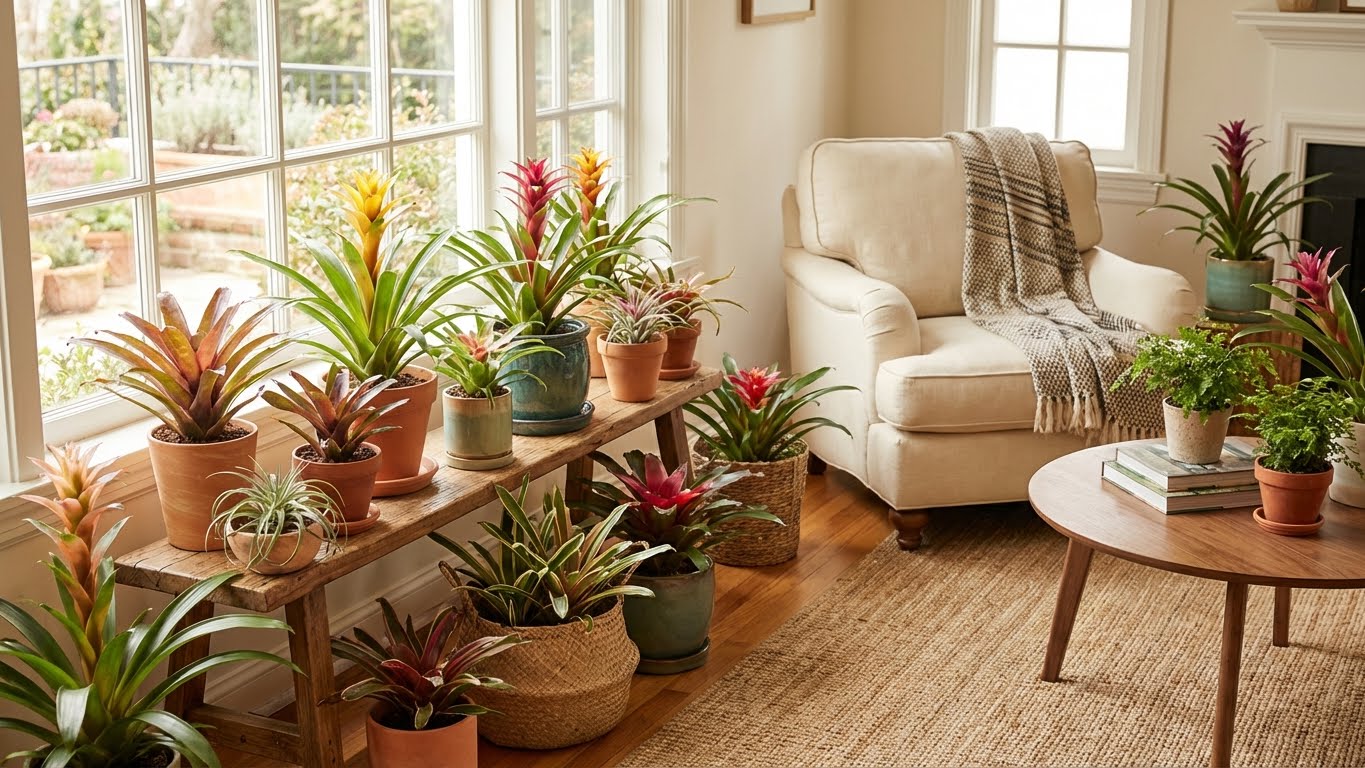
Bromeliads, those vibrant and unique plants that can brighten up any space, belong to a diverse family known as Bromeliaceae. You might be surprised to learn there are many bromeliad types, each with its own charm and characteristics. Some are epiphytic, thriving on trees, while others are terrestrial, growing in soil. Their growth habits vary too; some spread out wide, while others grow tall and upright. When you choose a bromeliad, you’re not just selecting a beautiful plant, but also inviting a bit of nature’s wonder into your home. Taking the time to understand these growth habits and types can deepen your appreciation for these fascinating plants and help you choose the perfect one for your space. Many bromeliads are epiphytes that absorb water from the air, showcasing their unique adaptability to different environments.
Light Requirements for Indoor Bromeliads
When it comes to growing bromeliads indoors, understanding their light requirements is key to keeping them healthy and vibrant. These tropical beauties thrive in bright, indirect light, so you’ll want to find a cozy spot near a window. While they can handle some direct sunlight, too much can scorch their delicate leaves. If natural light is limited, don’t fret! You can use artificial illumination to support their growth. Fluorescent or LED grow lights work wonders, providing the right spectrum of light without overheating. Remember to rotate your bromeliads occasionally, ensuring all sides receive equal exposure. By meeting their lighting needs, you’ll be rewarded with stunning blooms and lush foliage that liven up your indoor space. Happy growing!
Light Requirements for Outdoor Bromeliads
When it comes to outdoor bromeliads, understanding their light requirements is key to keeping them healthy and thriving. These plants have varying needs for sunlight exposure, with some loving the bright sun while others prefer a bit of shade to avoid getting scorched. Plus, seasonal changes can really affect how much light they get, so knowing how to adjust their placement throughout the year is super important!
Sunlight Exposure Needs
Finding the right sunlight exposure for outdoor bromeliads can be the key to their vibrant growth and stunning colors. Unlike indoor lighting, outdoor sunlight provides the essential energy these plants need. Too much direct sun can scorch their leaves, while too little can stunt their growth. Here are some tips to help you strike the perfect balance:
- Morning sun is best, offering gentle light.
- Avoid harsh afternoon rays that can burn the leaves.
- Partial shade during the hottest months is beneficial.
- Rotate your plants to guarantee even light exposure.
- Monitor their colors; healthier plants will show vibrant hues.
With the right sunlight exposure, your outdoor bromeliads will flourish, bringing joy and beauty to your garden!
Shade Tolerance Levels
Understanding shade tolerance levels is essential for growing outdoor bromeliads successfully, especially since these plants thrive in various light conditions. Many bromeliads boast impressive shade adaptability, allowing them to flourish in dappled sunlight or even partial shade. However, it’s vital to know their light sensitivity; too little sunlight can stunt their growth or lead to dull colors. You’ll find that some bromeliads, like Guzmania or Vriesea, do well in shady spots, while others may prefer more direct light. When choosing the right location, observe how much sun your garden gets throughout the day. By matching your bromeliads’ needs with your garden’s light conditions, you’ll create a beautiful, vibrant space that showcases these stunning plants at their best.
Seasonal Light Variations
As the seasons change, so do the light requirements for outdoor bromeliads, which means you’ll need to pay attention to how sunlight affects these colorful plants throughout the year. Different seasons can impact their seasonal growth and light adaptation, so keeping an eye on the light conditions is crucial. Here are some tips to help your bromeliads thrive:
- Spring: Increase light exposure as they wake up from dormancy.
- Summer: Protect them from harsh afternoon sun to prevent leaf burn.
- Fall: Gradually reduce light to prepare for cooler months.
- Winter: Verify they still get bright, indirect light, even if daylight hours are shorter.
- Monitor: Adjust their location based on sunlight changes to keep them happy.
Your attention to these details will guarantee vibrant blooms!
Temperature and Humidity Preferences
When it comes to temperature and humidity preferences, bromeliads are pretty particular about their living conditions. They thrive in warm, humid environments, making indoor humidity vital for their health. Ideally, you want to keep them in temperatures ranging from 60°F to 80°F indoors, while outdoor bromeliads prefer similar warmth but can handle a bit more fluctuation.
Here’s a quick comparison:
Environment | Temperature Range |
|---|---|
Indoor | 60°F – 80°F |
Outdoor | 60°F – 90°F |
Always remember that high humidity levels are essential indoors, as they mimic their natural tropical habitat. So, if you’re nurturing these beauties, keep an eye on these preferences to help them flourish!
💡 If you’re considering indoor bromeliads, understanding the role of grow lights can significantly enhance their growth.
➜ Discover proven techniques
💡 Proper lighting is key to the success of your bromeliads, whether indoors or outdoors.
➜ Discover how to optimize lighting conditions
Soil and Potting Needs
💡 Understanding the unique characteristics of bromeliads can enhance your appreciation and care for these plants.
➜ Learn the complete strategy
Soil and potting needs play an essential role in keeping your bromeliads happy and healthy, just like warm temperatures and humidity. Choosing the right potting materials and soil types can make a world of difference for these unique plants. Here are some key things to contemplate:
💡 Misting is a vital care technique that can differ significantly between indoor and outdoor bromeliads.
➜ Explore advanced misting techniques
Soil and potting choices are vital for thriving bromeliads, alongside warmth and humidity.
- Well-draining soil: Bromeliads thrive in soil that allows excess water to escape.
- Orchid mix: A potting mix designed for orchids often works well.
- Pine bark and sphagnum moss: These materials provide excellent aeration and moisture retention.
- Container choice: Use pots with drainage holes to prevent root rot.
- Repotting frequency: Check every couple of years to refresh the soil and guarantee healthy growth.
With the right soil mix, your bromeliads will flourish, bringing you joy and vibrant colors!
Watering Practices for Indoor vs. Outdoor Bromeliads
When it comes to watering bromeliads, understanding the differences between indoor and outdoor care is key to keeping them healthy and vibrant. You’ll need to take into account how often to water, the techniques you use, and the drainage needs for each setting, as these factors can vary greatly. Let’s explore how to give your bromeliads just the right amount of water they crave, whether they’re basking in your living room or soaking up the sun outside!
Frequency of Watering
Understanding how often to water your bromeliads can make a big difference in their health, whether they’re indoors or outdoors. The watering frequency will vary based on their environment, so keeping an eye on moisture retention is key.
- Indoor bromeliads usually need water every 1-2 weeks.
- Outdoor bromeliads may require more frequent watering, especially in hot weather.
- Always check the soil; if it feels dry, it’s time to water.
- Pay attention to the humidity levels; higher humidity means less frequent watering.
- Consider using a moisture meter for precise readings.
Watering Techniques Differences
Watering bromeliads goes beyond just frequency; the techniques you use can make a significant difference in their overall health. For indoor bromeliads, gentle watering techniques like using a spray bottle or a watering can with a narrow spout can help you reach those delicate leaves without flooding the plant. Outdoor bromeliads, on the other hand, often thrive with a deeper soak from a garden hose or a watering wand, allowing the roots to absorb water more effectively.
Indoor Bromeliads | Outdoor Bromeliads |
|---|---|
Use a spray bottle | Use a garden hose |
Water less frequently | Water more deeply |
Focus on the central cup | Soak the root zone |
Drainage Considerations Indoor/Outdoor
Choosing the right drainage method for your bromeliads can make all the difference in their growth and health. Whether you’re nurturing them indoors or outdoors, understanding drainage systems and container choices is key. Here’s what you should keep in mind:
- Use pots with drainage holes: This prevents water from sitting at the bottom.
- Opt for well-draining soil: A mix designed for epiphytes works wonders.
- Add a layer of rocks or gravel: This enhances drainage in containers.
- Monitor watering frequency: Indoor bromeliads need less water than outdoor ones.
- Adjust drainage for outdoor conditions: Rain can lead to overwatering, so consider using raised beds.
Pest and Disease Management
Even though bromeliads are known for their stunning colors and unique shapes, they can sometimes attract pests and suffer from diseases that threaten their health. To protect your plants, start with pest identification—common pests include mealybugs and aphids. Regularly check for disease symptoms like yellowing leaves or spots. Disease prevention is key, so guarantee proper watering and light conditions, as environmental factors play a huge role. If you spot an issue, consider organic treatments first; insecticidal soap works wonders! However, if the problem persists, chemical treatments might be necessary. Remember, some bromeliads have built-in pest resistance, which can be a lifesaver. By staying vigilant, you can keep your indoor or outdoor bromeliads thriving and beautiful!
Choosing the Right Bromeliads for Your Space
Have you ever wondered which bromeliads would thrive best in your home or garden? Choosing the right bromeliad varieties can make all the difference! To help you find the perfect match, consider these ideal placements:
- Guzmania: Prefers bright, indirect light indoors.
- Neoregalia: Enjoys shaded spots outdoors, like under trees.
- Aechmea: Thrives in vibrant sunlight, great for patios.
- Tillandsia: Loves air circulation, perfect for hanging displays.
- Vriesea: Does well in moderate light, ideal for living rooms.
Each variety has its own unique needs, so think about your space and light conditions. With a little planning, you’ll create a stunning bromeliad collection that brings joy to your surroundings!
Conclusion
In summary, whether you choose to grow bromeliads indoors or outdoors, understanding their unique needs can lead to vibrant, healthy plants. Did you know that there are over 3,000 species of bromeliads? That’s a lot of options! By ensuring you provide the right light, temperature, and care, you can create a stunning display that brightens up your space. So, explore the world of bromeliads, and enjoy the colorful adventure they bring to your home or garden!
💡 Fertilizing your bromeliads correctly is essential for their growth and vitality.
➜ Get the step-by-step fertilization guide
💡 Choosing the right bromeliad variety can make all the difference in your indoor space.
➜ Explore advanced methods


