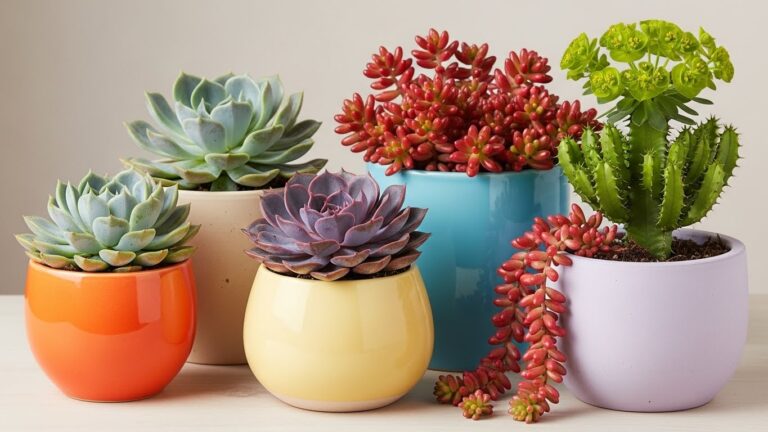
Soft, mushy leaves on your succulents usually mean trouble, like overwatering or pests. First, check the soil – if it’s soggy, let it dry out completely. Make sure your pot has drainage holes to prevent water from sitting. Look for pest signs like sticky residue or tiny webs. Also, verify your plant gets enough light but not too much direct sun. Want to rescue your plant? There are steps you can take to help it thrive again!
Key Takeaways
- Check soil moisture levels; allow soggy soil to dry completely to prevent root rot and improve leaf firmness.
- Remove any soft, mushy leaves to promote recovery and prevent disease spread.
- Ensure proper drainage by using pots with holes and well-draining soil designed for succulents.
- Inspect for pest infestations, such as mealybugs or spider mites, which can weaken the plant.
- Adjust watering frequency based on environmental conditions, ensuring soil is dry several inches down before watering again.
Understanding the Causes of Soft Leaves

When you notice your succulent’s leaves feeling soft and squishy, it can be a bit alarming, especially if you’ve been caring for it diligently. Understanding the causes of this change in leaf texture is essential for your plant’s health. Soft leaves often signal that something isn’t quite right. Check the watering schedule, as over or underwatering can lead to these issues. Additionally, insufficient sunlight can weaken your succulent, making its leaves feel mushy. Keep an eye out for pests, too, as they can sap your plant’s strength. By identifying these causes early, you can take action to restore your succulent’s energy, ensuring those leaves regain their firmness and beauty. Overwatering is the most common cause of succulent death, so monitoring your plant’s needs is crucial. Your plant deserves the best care!
The Role of Overwatering
Overwatering plays a significant role in the health of your succulent, and it’s often a sneaky culprit behind those soft, squishy leaves. When you give your plant too much water, it struggles with excessive moisture retention, leading to distress. Here are some common overwatering symptoms to watch for:
Overwatering can lead to distress in succulents, causing soft, squishy leaves and other concerning symptoms.
- Leaves become mushy and translucent.
- The base of the plant feels soft or squishy.
- Roots may start to rot, producing a foul smell.
- Your succulent’s growth slows down or stops altogether.
If you notice these signs, it’s essential to adjust your watering habits. Remember, succulents thrive in drier conditions, so let your plant dry out between waterings to keep those leaves firm and healthy!
Importance of Proper Drainage
Proper drainage is essential for keeping your succulents happy and healthy, especially since they prefer dry conditions. Without it, excess water can cause roots to rot, leaving you with those sad, mushy leaves. To avoid this, consider using drainage solutions like pots with holes or adding pebbles at the bottom. When it comes to soil types, choose a well-draining mix specifically designed for succulents. This type of soil allows water to flow through easily while holding just enough moisture. By ensuring proper drainage, you’ll create a thriving environment for your plants. Remember, a little effort in setting up drainage can save you from disappointment later on, so give your succulents the best chance to flourish!
Identifying Pest Infestations
When you notice your succulent looking a bit off, it might be time to check for pests. Common invaders like mealybugs and aphids can sneak in and cause trouble, so knowing how to spot them is essential. Let’s explore the signs of infestation and the treatment options that can help your plant bounce back!
Common Pest Types
While tending to your succulents, you might notice some unusual changes in their leaves, which can signal that pests have taken up residence. Identifying these pests early can save your plants, so let’s look at some common culprits:
- Mealybugs: These cottony pests suck sap, leading to wilting leaves. Effective mealybug management involves removing them with a cotton swab dipped in alcohol.
- Aphids: Tiny and green, they cluster on new growth, causing distortion. For aphid control, a gentle spray of water can dislodge them.
- Spider Mites: These tiny, spider-like pests thrive in dry conditions and leave webbing.
- Scale Insects: They appear as small, brown bumps on leaves and also suck sap.
Stay vigilant, and your succulents will thrive!
Signs of Infestation
How can you tell if your succulent has fallen victim to pests? Look out for some clear infestation indicators! First, check for tiny webs or sticky residue on the leaves—these often signal spider mites or aphids. You might notice small, dark specks on your plant, which could be the pests themselves or their droppings. Pay attention to unusual pest behavior, like leaves curling or discoloring; these changes can hint at a problem. If you see any yellowing or mushy spots, that’s a red flag too. A sudden drop in your plant’s health can mean pests are at play. By keeping an eye out for these signs, you can take action before it’s too late!
Treatment Options Available
Once you’ve identified the signs of pest infestation on your succulent, it’s time to take action with effective treatment options. Here are some ways to help your plant recover:
- Natural Remedies: Use a mixture of water and mild soap to gently wash off pests.
- Neem Oil: This natural pesticide works wonders to eliminate unwanted critters while being gentle on your plant.
- Remove Infested Leaves: If a leaf is too damaged, don’t hesitate to trim it away. This helps the plant focus on new growth.
- Nutrition Boost: After treating, provide a balanced fertilizer to support recovery, ensuring your succulent has the energy to bounce back.
These steps will help restore your succulent’s health and well-being, bringing a smile to both you and your plant!
Environmental Factors Affecting Succulents
When it comes to keeping your succulents healthy, environmental factors play a huge role in their well-being. You might not realize it, but light intensity, watering frequency, and temperature fluctuations can all impact how your plants look and thrive. Let’s explore these factors together so you can guarantee your succulents stay vibrant and happy!
Light Intensity Issues
Light intensity plays an essential role in the health and appearance of your succulents, as these fascinating plants thrive in bright environments. If their leaves are soft and mushy, check the light conditions. Here are some key factors to take into account:
- Light Spectrum: Succulents need a balance of blue and red light for ideal growth.
- Light Duration: Aim for 12-14 hours of light daily; this helps your plants flourish.
- Indirect vs. Direct Light: While they love sunlight, too much direct sun can scorch their leaves.
- Seasonal Changes: Be mindful that light intensity varies with seasons, requiring adjustments to their placement.
Watering Frequency Impact
Watering your succulents might seem simple, but it can have a huge impact on their health and appearance. Understanding the right watering techniques and how often to water is key to avoiding soft, mushy leaves. Too much water can lead to root rot, while too little can cause wilting.
Here’s a handy table to guide you:
Watering Frequency | Moisture Retention |
|---|---|
Once a week | High (in humid conditions) |
Every 10 days | Moderate (average humidity) |
Every 2 weeks | Low (dry environments) |
Once a month | Very low (arid climates) |
Adjust your watering schedule based on your succulents’ environment, and they’ll thrive, showcasing their beautiful, plump leaves.
Temperature Fluctuations Effects
Temperature fluctuations can greatly affect the health of your succulents, especially since these plants thrive in stable environments. When your succulents experience temperature extremes or sudden seasonal changes, they can become stressed, leading to soft, mushy leaves. Here’s what you should keep in mind:
- Avoid Direct Drafts: Position your succulents away from open windows or air conditioning vents.
- Monitor Day/Night Temps: Verify the temperature difference isn’t too drastic between day and night.
- Provide Shelter: During cold snaps, bring your plants indoors to protect them from frost.
- Adjust Gradually: When moving your succulents outside for summer, acclimate them slowly to prevent shock.
Assessing Soil Quality
When you’re caring for succulents, evaluating soil quality is essential because the right foundation helps your plants thrive. Start by checking the soil composition—look for a mix that includes sand, perlite, or pumice to guarantee excellent drainage. If the soil holds too much moisture, your succulents can suffer from mushy leaves. Next, consider the nutrient balance; your plants need a little boost, so a balanced fertilizer can help. Remember, too many nutrients can be just as harmful as too few, so finding that sweet spot is key. Regularly testing your soil can help maintain that perfect mix and keep your succulents healthy and happy. Your plants will reward you with vibrant growth!
Adjusting Watering Practices
Adjusting your watering practices is essential for keeping your succulents healthy and vibrant, especially since these plants are well-known for their ability to store water. To guarantee you’re providing the right care, consider these tips:
Proper watering techniques are crucial for succulent health, ensuring they thrive by storing water efficiently.
- Monitor watering frequency: Water your succulents only when the soil is dry several inches down.
- Check drainage: Make sure your pots have drainage holes to prevent water from pooling.
- Adjust for seasons: In winter, reduce watering as succulents enter dormancy; they need less moisture then.
- Evaluate moisture retention: Use well-draining soil that allows excess water to escape, keeping roots happy.
Reviving Your Succulent: Step-by-Step Guide
Reviving a struggling succulent can feel like an intimidating task, but with the right steps, you can bring your plant back to life! First, check the soil moisture; if it’s soggy, let it dry out completely. Next, gently remove any soft, mushy leaves—these can hinder succulent recovery. Once you’ve done that, consider repotting in fresh, well-draining soil. This will help improve leaf health. Place your succulent in a bright location but avoid direct sunlight for a few days. After that, gradually reintroduce it to sunlight. Water sparingly, allowing the soil to dry between waterings. With a little patience and care, your succulent can bounce back, showcasing its vibrant leaves once again!
Conclusion
Ultimately, soft, mushy succulent leaves may seem like the end of the world, but don’t panic! With a little detective work and some simple adjustments to your watering habits, drainage, and soil quality, you can bring your plant back from the brink of disaster. Remember, every succulent has a fighting spirit just waiting to thrive. So, roll up your sleeves, follow the steps, and watch your succulent bounce back like a superhero in a garden!