
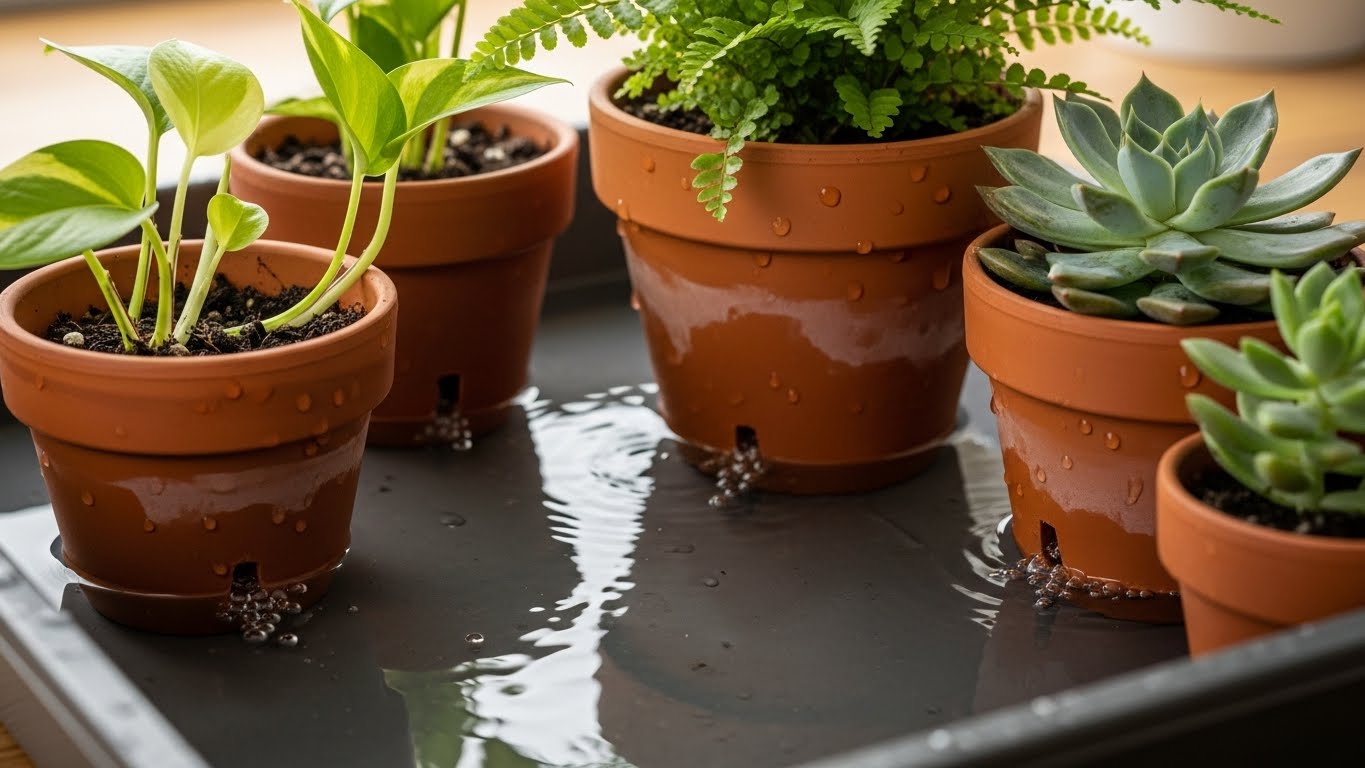
Should you bottom-water your plants? Absolutely! Bottom-watering helps keep your plants evenly hydrated, encouraging deeper root growth while reducing the risk of overwatering. This method also minimizes spills and makes watering easier. However, not every plant loves this approach, so you need to be cautious with how moist the soil stays. By monitoring your plants closely, you can find the perfect balance. Stick around to discover best practices and when to switch it up!
What Is Bottom-Watering?
💡 Understanding how to prevent root rot is crucial for healthy plants.
➜ Master this approach
Bottom-watering is a unique technique that can help your plants thrive, especially if you’re tired of the mess that comes with traditional watering methods. Instead of pouring water on top of the soil, you place your pot in a shallow tray of water. This allows the soil to soak up moisture from the bottom, ensuring even hydration. It’s one of those watering techniques that not only reduces spills but also promotes better moisture retention. Your plants will love it! By encouraging roots to grow deeper in search of water, you’ll foster healthier growth. Plus, it can save you time and hassle. So, give bottom-watering a try, and watch your greenery flourish like never before!
How Does Bottom-Watering Work?
When you place a pot in a shallow tray of water, you’re allowing the soil to absorb moisture from the bottom up. This method encourages water absorption through the drainage holes in the pot, letting the soil pull in the needed moisture. As it rises, the soil becomes evenly moist, promoting excellent moisture retention throughout, which is essential for your plant’s health. You’ll notice that the top layer of soil stays drier, preventing overwatering while ensuring your plant drinks as needed. Plus, this technique helps you avoid water pooling on the surface, which can lead to root rot. By using bottom-watering, you’re giving your plants the best chance to thrive, enjoying a beautiful, lush environment together.
Benefits of Bottom-Watering
Choosing to water your plants from the bottom offers a variety of benefits that can make a big difference in their health and growth. This method promotes better plant absorption, allowing roots to draw up moisture more efficiently. You’ll notice that your plants thrive with less frequent watering, as bottom-watering helps maintain consistent moisture levels.
Here’s a quick comparison of the benefits:
Benefit | Description |
|---|---|
Improved Plant Absorption | Roots absorb water more effectively from below. |
Reduced Water Waste | Minimizes runoff and keeps soil saturated longer. |
Less Frequent Watering | Encourages deeper root growth and less frequent care. |
Promotes Healthy Root Growth
Healthy root growth is essential for the overall well-being of your plants, and bottom-watering can greatly contribute to this important aspect. When you bottom-water, you’re encouraging your plant’s roots to expand downward, seeking moisture and nutrients from the bottom of the pot. This natural movement promotes strong, healthy roots, which are crucial for nutrient absorption. As roots reach deeper into the soil, they can access more minerals and water, helping your plants thrive. Plus, this method minimizes the risk of soil compaction at the surface, allowing for better airflow around the roots. Ultimately, when you prioritize root growth through bottom-watering, you’re setting your plants up for lasting health and vibrancy. Your green friends will thank you for it!
Reduces Risk of Overwatering
Bottom-watering not only promotes healthy root growth but also greatly reduces the risk of overwatering your plants. When you water from the bottom, you allow those roots to absorb just the right amount of moisture, keeping them happy and healthy. Overwatering signs, like yellow leaves or wilting, can be a real downer. By checking moisture levels in the soil, you can prevent these issues. With bottom-watering, the water rises slowly, letting your plants drink at their own pace. This method helps you avoid waterlogged soil, which can lead to root rot and other problems. So, if you want to keep your green friends thriving, consider bottom-watering as a simple solution to manage those moisture levels effectively!
Improves Soil Moisture Distribution
When you water your plants from the bottom, you’re not just giving them a drink; you’re also improving how moisture spreads throughout the soil. This method encourages better moisture retention and promotes soil aeration, which are essential for healthy plant growth. You’ll notice that the water gradually moves up through the soil, reaching even the deepest roots.
Here are some benefits of bottom-watering:
- Enhances moisture distribution across the soil
- Reduces dry spots, ensuring every root gets water
- Improves soil aeration, allowing roots to breathe
- Encourages deeper root growth as plants search for moisture
Drawbacks of Bottom-Watering
While bottom-watering has its perks, it’s important to recognize that this watering method isn’t without its drawbacks. For starters, you might run into water retention problems. If your potting mix doesn’t drain well, excess moisture can linger, leading to soggy soil that can stress your plants. Plus, some pots have drainage issues, which can trap water at the bottom and create an uneven moisture level throughout the soil. This means the top layer might stay dry while the roots sit in water, not ideal for your green friends! So, while bottom-watering can be a great technique, be sure to monitor your plants closely to avoid these potential pitfalls. Your plants will thank you for it!
Potential for Root Rot
💡 Proper watering is essential for plant health, and avoiding common mistakes can make a big difference.
➜ Discover proven techniques
If you’re not careful with bottom-watering, you might find yourself dealing with a sneaky enemy: root rot. This pesky problem can arise when moisture retention turns excessive, compromising your plants’ root health. It’s vital to strike the right balance. Here are some key points to take into account:
- Check the pot size: Larger pots can retain more water, increasing the risk of rot.
- Observe drainage holes: Verify they’re clear; they’re important for letting excess water escape.
- Watering frequency: Don’t water too often; let the topsoil dry out between sessions.
- Monitor plant health: Yellowing leaves or a sour smell can signal trouble.
Not Suitable for All Plant Types
💡 Brown leaves can indicate various issues, including improper watering techniques.
➜ See how to implement this
Not all plants thrive with bottom-watering, so it’s crucial to know which ones will benefit from this method. While bottom-watering can work wonders for certain species, it’s not always the best choice for every plant. For instance, succulents and cacti prefer well-draining soil and may suffer from excess moisture, leading to root rot. Similarly, plants like ferns or calatheas might demand more consistent moisture levels, making traditional watering techniques more suitable. Understanding plant compatibility with watering methods is key. So, before you plunge into bottom-watering, take a moment to research your plants. This way, you’ll guarantee they receive the right care, keeping them healthy and thriving, while also fostering a deeper connection with your green companions.
Best Practices for Bottom-Watering
When you’ve figured out which plants are suited for bottom-watering, it’s time to put that knowledge into action with some best practices. Start by ensuring the water temperature is lukewarm; this helps your plants absorb moisture more efficiently. It’s also essential to take into account humidity levels in your home since higher humidity can reduce water evaporation.
Here are a few tips to keep in mind:
- Choose a suitable container that allows for drainage.
- Fill the bottom with water and let your plants soak for about 30 minutes.
- Avoid overwatering; check if the soil feels moist before repeating the process.
- Monitor plant health regularly to adjust your watering schedule as needed.
Happy watering!
When to Consider Alternative Watering Methods
While bottom-watering is great for many plants, there are times when you might want to explore other methods. For instance, the type of soil you’re using, your plant’s specific watering needs, and the environment’s conditions all play an essential role in how well your plants thrive. Understanding these factors can help you decide when it’s time to switch things up for the best results.
Soil Type Matters
Soil type plays a crucial role in how well your plants absorb water, making it essential to contemplate alternative watering methods, especially if you’re struggling with thirsty foliage. Different soil compositions affect drainage capacity, which influences the moisture levels your plants can access. If you notice your plants aren’t thriving, consider these factors:
- Clay Soil: Holds moisture but can suffocate roots.
- Sandy Soil: Drains quickly, requiring more frequent watering.
- Loamy Soil: Offers a balance, retaining moisture while allowing drainage.
- Peaty Soil: Retains water well but may need aeration.
Understanding your soil type can help you decide if bottom-watering is the right choice, ensuring your beautiful plants get the hydration they crave.
Plant Watering Needs
Understanding your plants’ watering needs is essential for keeping them healthy and thriving, especially if you’re facing challenges with traditional watering methods. Your plants’ hydration techniques can vary, so knowing when to adjust your watering frequency is key. For instance, if you notice yellowing leaves or droopy stems, it might be time to rethink how you water. You might consider bottom-watering as a method, allowing your plants to absorb moisture directly from the roots up. This technique can be especially helpful if you struggle with overwatering or if your soil drains too quickly. By paying attention to your plants’ responses, you can create a tailored watering routine that meets their unique needs and keeps them flourishing.
Environment and Conditions
When you notice that your plants aren’t thriving despite your best watering efforts, it might be time to contemplate the environment and conditions affecting their hydration. Several environmental factors can impact your plants’ watering frequency and overall health. Consider these aspects before deciding on your watering method:
- Humidity levels: High humidity can reduce evaporation, while low humidity may require more frequent watering.
- Light exposure: Direct sunlight can dry out soil faster, influencing how often you water.
- Temperature fluctuations: Warmer temperatures often mean your plants need more water.
- Soil type: Different soils retain moisture differently, affecting how quickly they dry out.
Conclusion
Ultimately, bottom-watering can be a fantastic way to keep your plants healthy and thriving. By encouraging strong root growth and minimizing the risk of overwatering, it’s a method worth trying. But remember, it’s not the best fit for every plant. So, why not give it a shot and see how your greenery responds? With a little experimentation, you can discover the watering method that works best for your unique plant buddies!
💡 Fertilizing your plants correctly can enhance their growth and blooming potential.
➜ Get the step-by-step guide


