

Anthurium root rot is a serious issue that can stress your plant. Watch for symptoms like wilting or yellowing leaves, a foul smell from the soil, and mushy roots. Causes include overwatering, poor drainage, and using compact soil. To recover, gently remove the plant, trim damaged roots, and repot it in fresh, well-draining soil. Water sparingly and place it in a warm, bright spot. To keep your plant healthy, stick around to learn even more helpful tips!
Key Takeaways
💡 Choosing the right soil mix is crucial for your Anthurium’s health.
➜ Discover the perfect soil blend
- Root rot in Anthuriums is often caused by overwatering and poor drainage, leading to oxygen deprivation for the roots.
- Symptoms include wilting, yellowing leaves, foul odors from the soil, and mushy or discolored roots.
- Key factors contributing to root rot are heavy soil, incorrect pot size, and inadequate drainage holes.
- Recovery involves trimming damaged roots, repotting in well-draining soil, and adjusting watering habits.
- Prevention includes using pots with drainage holes, monitoring soil moisture, and ensuring good air circulation around the plant.
Understanding Root Rot in Anthurium Plants
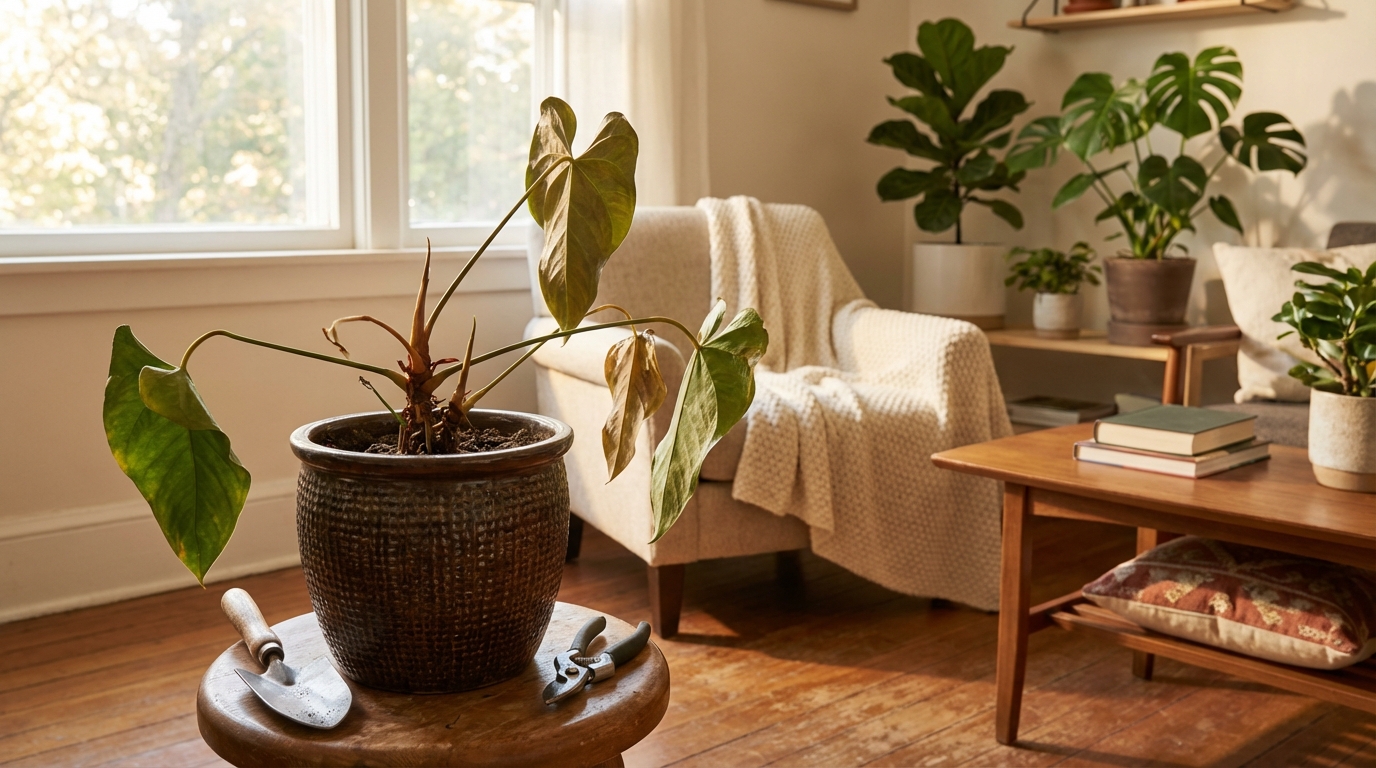
Root rot is a common issue that many Anthurium plant owners face, and understanding it can help you keep your beautiful plants thriving. When you care for your Anthurium, you must prioritize root health. This means ensuring your plant’s roots have the right balance of moisture and air. Overwatering is often the main culprit behind root rot, as it deprives the roots of oxygen and encourages harmful bacteria. Make sure your pot has good drainage and that you’re using a well-aerated potting mix. Regularly check the soil’s moisture level, allowing it to dry out slightly between waterings. By being attentive to your Anthurium’s needs, you’ll create an environment where it can flourish, and you’ll enjoy its stunning blooms for longer. Additionally, using a well-draining soil mix can greatly reduce the risk of root rot.
Common Symptoms of Root Rot
When your anthurium starts showing signs of trouble, you might notice its leaves wilting and turning yellow, which is a clear call for help. If you catch a foul odor coming from the soil, that’s another red flag that root rot could be lurking beneath the surface. Let’s explore these symptoms together so you can keep your plant healthy and happy!
Wilting and Yellowing Leaves
Anthuriums are stunning plants, but if you notice their leaves wilting and turning yellow, it’s a sign something’s not right. This leaf discoloration often indicates plant stress, usually caused by root rot. When your plant’s roots are compromised, they can’t absorb the water and nutrients it needs, leading to those sad, drooping leaves. You might also see yellowing edges or spots, which can be unsettling. Remember, your anthurium relies on you to keep it healthy, so it’s crucial to act quickly. Check the soil moisture, verify proper drainage, and be mindful of overwatering. By addressing these issues, you can help your beloved anthurium bounce back and thrive once more!
Foul Odor From Soil
Have you noticed a strange smell coming from your anthurium’s soil? That foul odor can be a warning sign of root rot, which can harm your plant’s soil health. It’s essential to pay attention to these scents because they can indicate serious issues. Here are some things to look out for:
- Sour or rotten smell: This often signals decaying roots, a sign of overwatering.
- Musty odor: This may suggest fungal growth, thriving in overly damp conditions.
- Chemical-like scent: This could indicate the breakdown of organic material, harming your plant’s well-being.
If you detect any of these odors, it’s time to take action and save your beloved anthurium! Check the roots, adjust watering habits, and improve drainage to keep your plant thriving.
Factors Contributing to Root Rot
Understanding the factors that contribute to root rot is essential for keeping your anthurium healthy and thriving. Several elements can lead to this issue, and being aware of them can make a big difference.
Factor | Description | Impact on Root Rot |
|---|---|---|
Water Quality | Poor quality water can introduce pathogens | Increases risk of root rot |
Pot Size | Using a pot that’s too big or small | Affects drainage and roots |
Soil Type | Heavy or compact soil retains moisture | Leads to soggy roots |
Drainage | Insufficient drainage holes | Causes water to pool |
Temperature | Extreme heat or cold can stress roots | Weakens root health |
Diagnosing Root Rot: How to Check Your Plant
To effectively diagnose root rot in your Anthurium, you’ll want to keep an eye out for some key visual symptoms, check the soil moisture, and inspect the roots themselves. Start by looking for signs like yellowing leaves or a wilting appearance, which can indicate trouble below the surface. Once you notice these signs, it’s time to assess the soil and take a closer look at the roots to determine the extent of the issue.
Visual Symptoms to Observe
💡 Proper fertilization can help your plant recover from root rot.
➜ Learn how to nourish your Anthurium
How can you tell if your anthurium is suffering from root rot? Look for these visual indicators that can reveal your plant’s health:
- Yellowing Leaves: If the leaves start turning yellow, it could mean the roots aren’t absorbing water properly.
- Wilting: Even after watering, if your plant looks droopy, it may be a sign that the roots are damaged.
- Dark, Mushy Roots: If you gently remove the plant from its pot and see dark, mushy roots, that’s a clear sign of root rot.
Keeping an eye on these symptoms will help you catch issues early. By staying vigilant, you can guarantee your anthurium stays healthy and vibrant for years to come!
💡 Brown leaves can be a sign of underlying issues like root rot.
➜ Understand leaf discoloration causes
Soil Moisture Assessment
When you notice those telltale signs of root rot on your anthurium, checking the soil moisture can help you confirm what’s going on beneath the surface. Start by sticking your finger about an inch into the soil; if it feels soggy or overly wet, that’s a red flag. Healthy soil moisture should feel slightly damp but not waterlogged. If the soil’s too wet, consider drainage solutions like adding perlite or switching to a pot with better drainage holes. Remember, your anthurium thrives in well-draining soil, so keeping an eye on moisture levels is essential. By doing this simple check, you’ll be one step closer to understanding your plant’s needs and nurturing it back to health!
Root Inspection Techniques
Inspecting your anthurium’s roots is a crucial step in diagnosing root rot, and knowing the right techniques can make all the difference. To guarantee your plant’s root health, follow these simple steps:
- Remove the Plant: Gently take your anthurium out of its pot, being careful not to damage the roots.
- Examine the Roots: Look for dark, mushy roots or any unpleasant odors, which indicate rot. Healthy roots should be firm and white or light tan.
- Clean and Trim: If you spot rot, trim away the affected roots with clean scissors. This promotes better recovery for your plant.
Steps to Recover a Plant From Root Rot
Recovering a plant from root rot is a journey that requires patience and care, especially since this common problem can often seem challenging. First, gently remove the plant from its pot and wash away the old soil. Inspect the roots, trimming away any mushy or brown parts to promote root recovery. Next, repot your plant in fresh, well-draining soil, which is essential for its health. Make sure the new pot has drainage holes to prevent water from pooling. Water the plant lightly, allowing the soil to dry out between waterings—overwatering is a major culprit in root rot. Finally, place your plant in a warm, bright area, and watch it thrive as you implement these effective plant techniques.
Preventative Measures to Avoid Root Rot
To keep your anthurium healthy and avoid the dreaded root rot, it’s essential to take a few simple preventative measures. Here are three key steps you can follow:
- Choose Proper Drainage Solutions: Use pots with drainage holes and well-draining soil to prevent standing water. This helps keep the roots dry and happy!
- Establish a Consistent Watering Schedule: Water your plant only when the top inch of soil feels dry. This helps maintain the right moisture level without overdoing it.
- Monitor Humidity Levels: Anthuriums thrive in humid environments, but too much humidity can lead to root issues. Make sure there’s good air circulation around your plant.
When to Seek Professional Help for Your Anthurium
Have you noticed your anthurium looking a bit under the weather? It might be time to reach out for a little help. If your plant’s leaves are wilting, turning yellow, or showing signs of rot, don’t hesitate to seek a professional diagnosis. They can pinpoint the issues affecting your plant’s health.
You should also consider when to transplant your anthurium; if the roots are overcrowded or if you suspect root rot, a professional can guide you on the right timing and techniques. Remember, it’s always better to ask for help than to risk losing your beloved plant. Your anthurium deserves the best care, and getting expert advice can make all the difference in its recovery!
Conclusion
Ultimately, keeping your anthurium healthy means staying vigilant against root rot, like a gardener on a treasure hunt. By recognizing the symptoms, understanding the causes, and taking proactive steps, you can help your plant thrive again. Remember, prevention is your best ally in this green adventure. If you ever feel overwhelmed, don’t hesitate to seek expert advice. With a little care and attention, your anthurium can flourish like a star in your indoor garden!
💡 Repotting correctly can help prevent further root damage.
➜ Get the step-by-step repotting guide


