
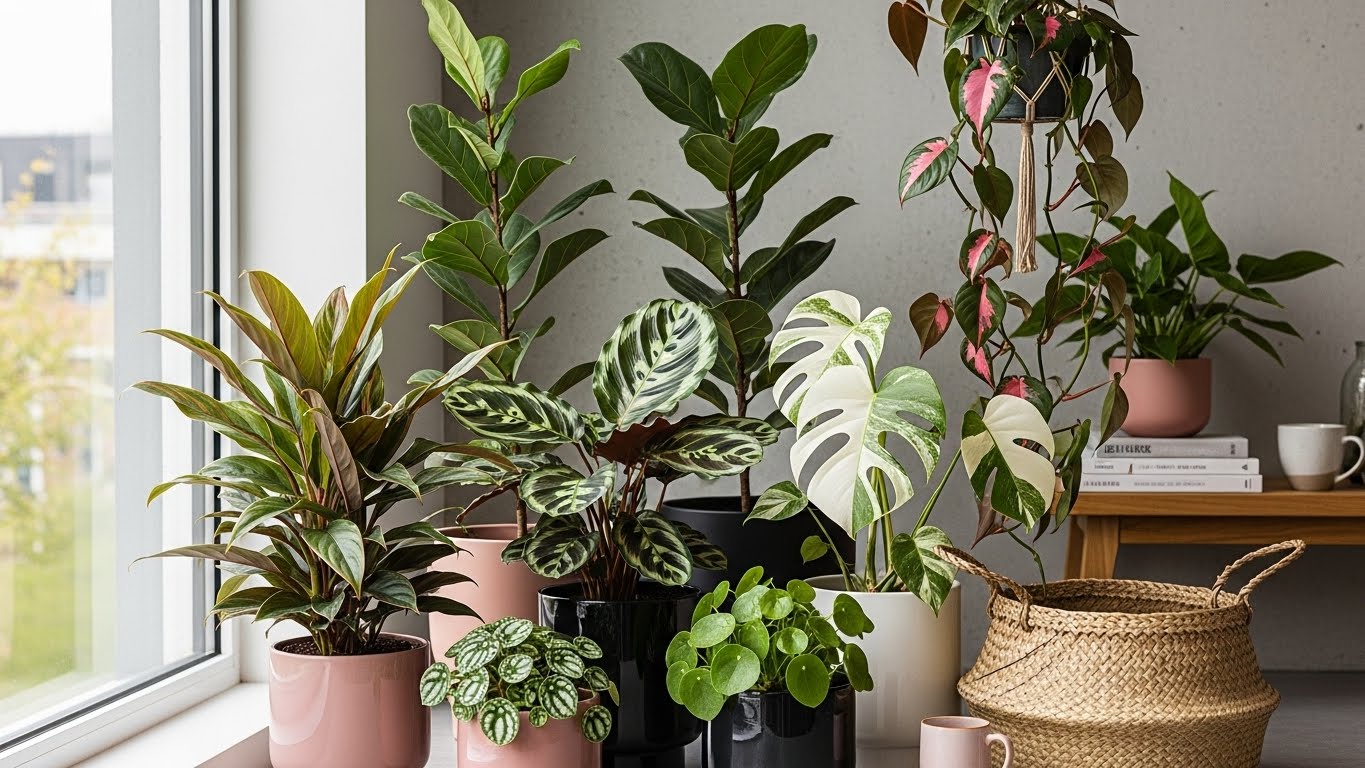
In 2025, the indoor plant scene features a fantastic mix of trending species. You’ll love the Monstera Deliciosa, known for its unique perforated leaves, and the stunning Fiddle Leaf Fig, perfect for bright rooms. If you’re looking for low-maintenance options, try the resilient Snake Plant or charming Pothos for beautiful trailing vines. Don’t forget the bold Rubber Plant and diverse Dracaena varieties! If you’re curious about more amazing plants for your space, stick around for more insights!
Monstera Deliciosa: The Iconic Swiss Cheese Plant
💡 If you’re looking to make a statement with your indoor garden, bold-leaved plants are the way to go.
➜ Discover bold-leaved plants that elevate your space
Monstera Deliciosa, often called the Swiss cheese plant, is a favorite among indoor plant enthusiasts, and it’s easy to see why! Its unique, perforated leaves add a touch of tropical flair to your space. Caring for a Monstera isn’t complicated, but knowing some monstera care essentials makes a big difference. Make sure it gets bright, indirect sunlight and water it when the top inch of soil feels dry.
If you’re looking to expand your collection, explore different monstera propagation methods. You can take cuttings with nodes and place them in water or soil. Just remember to be patient; roots take time to grow! With the right care and propagation, you’ll enjoy this stunning plant’s beauty for years to come.
Fiddle Leaf Fig: A Statement Piece for Any Room
When it comes to indoor plants that make a bold statement, the Fiddle Leaf Fig is hard to beat. This stunning plant boasts large, glossy leaves that instantly brighten any space, making it a favorite among plant lovers. For ideal fiddle leaf care, place it near a sunny window where it can soak up bright, indirect light. Regular watering is essential, but be careful not to overdo it—allow the top inch of soil to dry out between waterings. As for fiddle leaf placement, consider using it as a focal point in your living room or bedroom; its height adds drama and elegance. With the right care, your Fiddle Leaf Fig will thrive and bring joy to your home.
Snake Plant: The Ultimate Low-Maintenance Companion
While the Fiddle Leaf Fig captures attention with its dramatic presence, the Snake Plant stands out as the ultimate low-maintenance companion for those who want greenery without the fuss. You’ll love the snake plant benefits, like its ability to improve air quality and thrive in low light. With its striking upright leaves, this plant adds a touch of elegance to any space.
There are several snake plant varieties to choose from, including the popular ‘Laurentii’ and the unique ‘Moonshine’. Caring for your snake plant is easy—just water it every couple of weeks and let it bask in indirect sunlight. Its resilience makes it perfect for busy lifestyles, allowing you to enjoy nature’s beauty without the pressure of constant upkeep.
Pothos: The Versatile Trailing Beauty
Pothos, known for its stunning trailing vines and vibrant heart-shaped leaves, offers a fantastic way to bring life to any indoor space. Whether you’re a beginner or a seasoned plant parent, you’ll adore its easy-care nature. With various pothos color variations, like the classic green, neon, and marble queen, you can find the perfect match for your style.
Here are some popular pothos propagation methods:
Method | Description |
|---|---|
Water Cuttings | Place cuttings in water until roots grow. |
Soil Cuttings | Plant directly in soil for faster growth. |
Air Layering | Encourage roots to form while still attached to the parent plant. |
Division | Separate the root ball into smaller sections. |
Leaf Node Propagation | Use a leaf with a node for new growth. |
Embrace the beauty of pothos and watch your indoor garden thrive!
ZZ Plant: Resilient and Air-Purifying
The ZZ plant, with its glossy green leaves and sturdy stems, is a fantastic choice for anyone looking to brighten up their indoor space without the fuss of high maintenance. You’ll love the zz plant benefits, like its ability to purify the air and thrive in low light. It’s perfect for busy folks who may forget to water their plants regularly! If you’re feeling adventurous, zz plant propagation is a breeze; simply take a leaf or stem cutting, let it dry for a day, and then place it in soil. Within weeks, you’ll see new growth! This resilient plant not only enhances your home but also brings a sense of calm and connection to nature. So, why not invite a ZZ plant into your life?
Peace Lily: Elegant Blooms With Air-Cleansing Benefits
Get ready to explore the stunning Peace Lily, a plant that not only brightens up your space with its elegant blooms but also purifies the air around you! You’ll learn about its impressive air purification qualities, essential care and maintenance tips, and the ideal conditions for it to thrive. With just a bit of attention, you can enjoy the beauty and benefits this plant brings to your home.
Air Purification Qualities
When you think of bringing beauty and fresh air into your home, the Peace Lily stands out not just for its stunning white blooms but also for its impressive air-purifying abilities. This elegant plant isn’t just a pretty face; it actively contributes to better air quality.
Here’s why the Peace Lily should be your top plant selection:
- Removes toxins: It effectively filters harmful substances like formaldehyde and benzene.
- Increases humidity: By releasing moisture into the air, it creates a more comfortable environment.
- Enhances mood: Studies suggest that having plants like the Peace Lily can boost your overall well-being.
Care and Maintenance Tips
Caring for a Peace Lily is easier than you might think, especially when you know what it needs to thrive. Start with watering techniques; keep the soil moist but not soggy, and remember to let the top inch dry out between waterings. This helps prevent root rot!
When it comes to fertilizer options, choose a balanced houseplant fertilizer and apply it every 6-8 weeks during the growing season. Your Peace Lily will appreciate the extra nutrients for those lovely blooms.
Don’t forget to wipe the leaves occasionally to remove dust, allowing it to breathe better. With a little attention, your Peace Lily will flourish, showcasing its elegant blooms and purifying the air around you. Happy planting!
Ideal Growing Conditions
To help your Peace Lily thrive, understanding its ideal growing conditions is key. This lovely plant flourishes in a cozy indoor climate, where both light and humidity play essential roles. Here are some tips to keep your Peace Lily happy:
- Light: Place it in bright, indirect sunlight; too much direct light can scorch its leaves.
- Temperature: Keep your home between 65°F and 85°F (18°C to 29°C) for best growth.
- Humidity Levels: Peace Lilies adore humidity! Aim for around 50% to 60%; consider misting or using a pebble tray to boost moisture.
Calathea: Stunning Foliage That Stuns
When you think of indoor plants that grab attention, Calathea definitely tops the list with its unique leaf patterns that can make any space more vibrant. Caring for these beauties involves understanding their specific needs, like humidity and light, to keep them thriving. If you’re enthusiastic to create a stunning indoor garden, knowing the ideal growing conditions for Calathea is your first step!
Unique Leaf Patterns
💡 Large indoor plants can transform your living space and are trending in 2025.
➜ Explore the best large indoor plants for your decor
If you’re looking to add a splash of creativity to your indoor garden, the Calathea plant is a perfect choice, thanks to its breathtaking leaf patterns. These unique patterns not only showcase incredible leaf shape diversity but also carry pattern significance, making each variety a conversation starter.
Here are a few enchanting features of Calathea leaves:
💡 Adding a splash of color to your indoor garden can enhance its appeal.
➜ See the colorful plants that are trending today
- Intricate designs: From stripes to swirls, each leaf tells a story.
- Vibrant colors: You’ll find deep greens, purples, and even pinks, adding life to any room.
- Movement: Calathea leaves naturally open and close throughout the day, creating a dynamic display.
Embrace the beauty of Calathea and let its unique leaf patterns transform your space into a vibrant sanctuary!
Care Requirements
Caring for your Calathea doesn’t have to be complicated; with a few simple guidelines, you can keep this stunning plant thriving in your home. First, pay attention to its water requirements. Calatheas love moisture, so water them when the top inch of soil feels dry. Use distilled or rainwater, as tap water can be too harsh.
Next, let’s talk about soil types. A well-draining potting mix is essential; consider a blend of potting soil, perlite, and peat moss for the perfect balance. This helps keep the roots happy without drowning them.
Lastly, don’t forget about humidity—keeping your Calathea in a humid spot will enhance its vibrant foliage. With these tips, you’ll have a beautiful, healthy plant!
Ideal Growing Conditions
To create the perfect home for your Calathea, understanding its ideal growing conditions is key. This stunning plant thrives in environments that mimic its natural habitat.
- Ideal humidity: Aim for 50-60% humidity to keep those leaves looking vibrant and healthy.
- Optimal lighting: Place your Calathea in bright, indirect light; it loves the glow without the harsh sun.
- Temperature: Keep it cozy between 65°F and 80°F, avoiding cold drafts or sudden temperature changes.
String of Hearts: A Charming and Unique Trailing Plant
When you bring a String of Hearts into your home, you’re welcoming a truly enchanting plant that’s just as charming as its name suggests. This unique trailing plant, with its heart-shaped leaves, creates a beautiful aesthetic display that captures attention. It’s perfect for hanging baskets or draping over shelves, adding a touch of whimsy to your space. Plus, it’s easy to care for and propagate! With simple propagation techniques, you can grow new plants from cuttings, sharing the love with friends. Just guarantee it gets bright, indirect light and a well-draining potting mix. Soon, you’ll have a lush, cascading plant that not only brings joy but also connects you to nature’s beauty right at home.
Rubber Plant: Bold Foliage for a Modern Touch
The Rubber Plant, with its striking glossy leaves, stands out as a bold addition to any modern home. Not only does it enhance your décor, but it’s also relatively easy to care for. Engaging in rubber plant care will reward you with vibrant growth and lush foliage.
Here are a few rubber plant varieties you might consider:
- Ficus elastica: Known for its large, dark green leaves, it’s perfect for a dramatic statement.
- Ficus lyrata: The fiddle leaf fig has a unique, wavy leaf shape that adds character.
- Ficus robusta: This variety boasts thick, leathery leaves, ideal for a more rustic vibe.
With just a bit of attention, your rubber plant can thrive, bringing a modern touch to your space.
Dracaena: A Range of Varieties for Every Taste
Dracaenas are fantastic choices for anyone looking to brighten up their living space, as these hardy plants come in a variety of shapes and colors that can suit any taste. From the striking Dracaena marginata with its spiky leaves to the elegant Dracaena fragrans, there’s a perfect option for every plant lover. When it comes to Dracaena care, you’ll find they’re quite forgiving, thriving in indirect light and requiring minimal watering—just let the top inch of soil dry out between drinks. So, whether you want a tall, dramatic centerpiece or a small accent plant, Dracaena varieties are sure to add charm and life to your home. Embrace their beauty and enjoy their easy-going nature!
Spider Plant: Classic and Easy to Care For
If you want a plant that’s both classic and easy to care for, the Spider Plant is a fantastic choice! With simple care instructions that anyone can follow, you’ll find it a breeze to keep this vibrant greenery thriving in your home. Plus, it not only looks great but also helps purify the air, making your space healthier and more inviting.
Care Instructions Simplified
When you choose a Spider Plant for your indoor garden, you’re picking one of the easiest plants to care for, which makes it perfect for beginners and seasoned plant lovers alike. To keep your Spider Plant happy, follow these care instructions:
- Watering: Water when the top inch of soil feels dry. They appreciate a little drought!
- Soil Types: Use well-draining potting soil, preferably a mix designed for houseplants. This helps prevent root rot.
- Light Requirements: Place it in bright, indirect sunlight. It can handle lower light, but it won’t thrive as much.
With these simple tips, you’ll enjoy a thriving Spider Plant that brings life and joy to your indoor space. Happy planting!
Air Purifying Benefits
While many indoor plants are celebrated for their aesthetic appeal, the Spider Plant stands out thanks to its impressive air purifying benefits. This classic beauty not only enhances your space but also improves your air quality. It absorbs pollutants like formaldehyde and xylene, helping to create a healthier environment for you and your loved ones. Plus, it contributes to indoor humidity, making your home feel more comfortable.
Benefit | Description | Impact on Health |
|---|---|---|
Air Quality Improvement | Removes harmful toxins from the air | Reduces respiratory issues |
Humidity Regulation | Increases moisture levels | Alleviates dry skin and sinuses |
Easy Maintenance | Requires minimal care | Perfect for busy lifestyles |
Aesthetic Appeal | Adds greenery and color to your space | Boosts mood and well-being |
Succulents: A Diverse Collection for Every Space
Succulents are a fantastic choice for anyone looking to add some greenery to their space, and they come in an impressive variety of shapes, sizes, and colors. These charming plants not only brighten your home but also require minimal care. Here are a few popular succulent varieties you might love:
- Aloe Vera: Known for its healing properties and striking green leaves.
- Echeveria: With rosettes that look like flowers, they’re perfect for decorative pots.
- Jade Plant: A symbol of good luck, its thick leaves add a touch of elegance.
When it comes to care techniques, just remember to provide bright light, water sparingly, and guarantee a well-draining soil. You’ll find succulents to be delightful companions in your indoor garden!
Conclusion
As you explore these top trending indoor plants of 2025, remember that plants aren’t just pretty decorations—they can also improve your mood and air quality! In fact, studies show that having indoor plants can reduce stress by up to 60%. So, whether you’re drawn to the bold Fiddle Leaf Fig or the resilient ZZ Plant, adding greenery to your space can be a rewarding experience. Immerse yourself in the world of plants, and let nature brighten your home!
💡 For pet owners, choosing the right indoor plants is crucial for a safe environment.
➜ Learn about pet-aware plants that fit your lifestyle


