
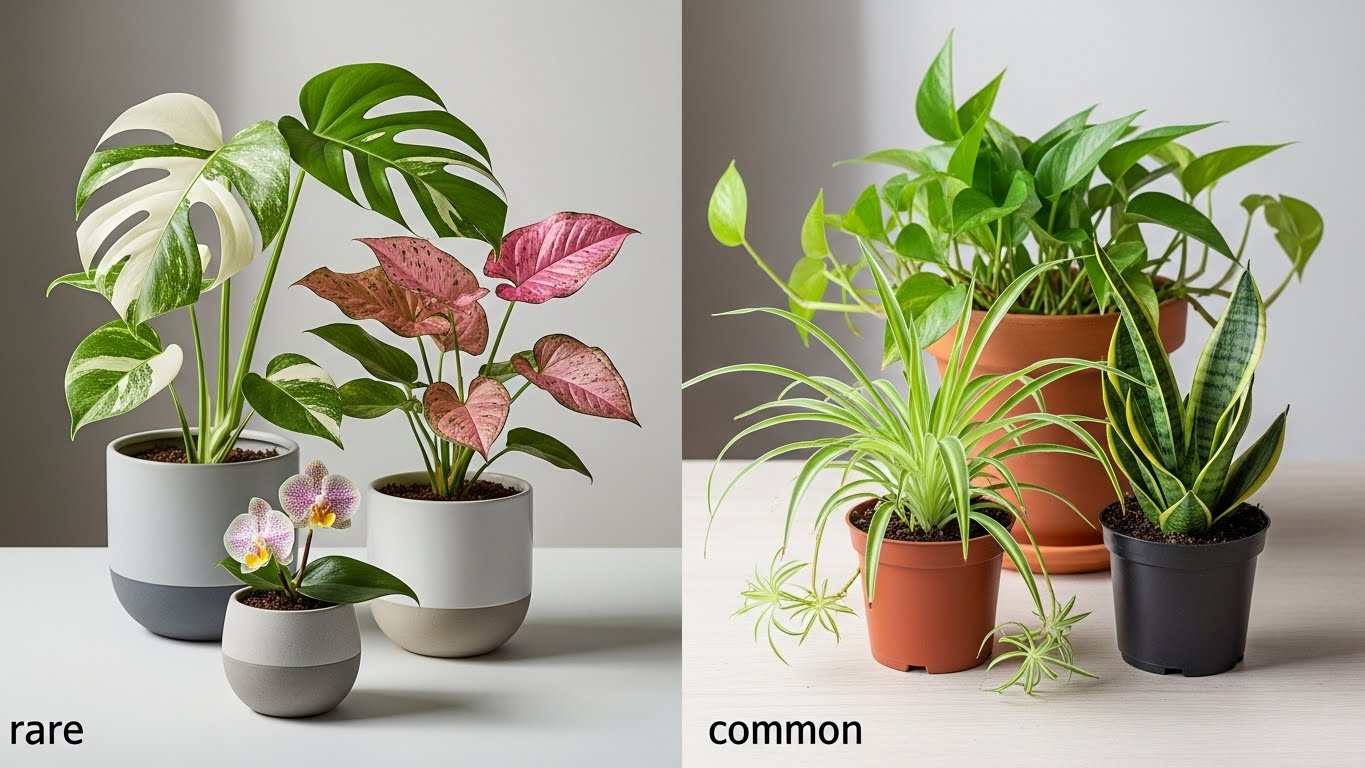
When it comes to houseplants, common varieties usually last longer than rare ones. Why? Common plants, like pothos, adapt easily to different environments, making them ideal for busy lifestyles. Rare plants, however, need specific care and conditions to thrive, which can affect their longevity. For example, rare orchids require precise watering and light. In contrast, common plants are forgiving, allowing for more resilience. Want to discover more on how to choose the best plants for your home?
Understanding Rare Houseplants
💡 If you’re curious about the longevity of rare houseplants, this article will guide you through the best options for collectors.
➜ Explore rare houseplants that thrive
When you think about houseplants, you might picture the common ones like pothos or spider plants, but rare houseplants can add a unique flair to your collection! These rare species often have striking colors or unusual shapes that make them stand out. You’ll find some, like the Monstera obliqua or the variegated monstera, can be quite the conversation starters. Plus, learning propagation techniques for these beauties can be a rewarding challenge. You can try methods like leaf cuttings or division, allowing you to share your rare finds with friends. Just remember, rare houseplants may require specific care, so be ready to nurture them with love and attention. Embrace the adventure of growing these extraordinary gems!
The Appeal of Common Houseplants
Common houseplants are popular for a reason; they’re not just easy to find, but they’re also budget-friendly! You’ll love how low-maintenance they can be, making them perfect for busy lives. Plus, their accessibility means you can easily fill your space with greenery and enjoy the benefits without breaking the bank.
Accessibility and Affordability
Many people find joy in decorating their homes with houseplants, especially when they can easily get their hands on the popular varieties. Common houseplants not only offer beauty, but they’re also budget-friendly, making them accessible to everyone. You’ll find that their availability in local stores or online makes them a go-to choice.
Here’s a quick look at some common houseplants, their average prices, and their popularity:
Plant Name | Average Cost |
|---|---|
Spider Plant | $10 |
Pothos | $15 |
Snake Plant | $20 |
ZZ Plant | $25 |
Peace Lily | $12 |
With cost considerations and plant availability in mind, these plants can brighten your space without breaking the bank!
Easy Care Requirements
Houseplants not only brighten your home but also offer a great way to add life to your space without demanding too much effort. Common houseplants, like pothos and snake plants, are perfect for you if you’re looking for easy care options. They thrive on minimal attention, allowing you to enjoy their beauty without the stress of complicated plant maintenance. These plants often need just a bit of water and indirect sunlight, making them ideal for busy lifestyles. By choosing easy-care varieties, you can create a vibrant atmosphere while spending less time worrying about your plants. So, go ahead and fill your space with these delightful companions; you’ll be amazed at how they effortlessly enhance your home!
Care Requirements: Rare vs. Common
When you start taking care of plants, it’s essential to understand that rare houseplants often need different care compared to their more common counterparts. Rare plants usually have specific care preferences that might involve unique soil types or particular humidity levels, while common plants are often more forgiving and adaptable. For instance, you might find that a rare orchid needs precise watering and light, while a pothos can thrive in a range of conditions. This means that your plant maintenance routine may vary greatly. Embracing these differences can help you nurture your plants better. So, whether you’re drawn to the exotic or the familiar, knowing their care requirements is key to keeping your green friends happy and healthy.
Environmental Adaptability and Longevity
💡 For those looking for houseplants that are not only beautiful but also durable, this article offers great insights.
➜ Discover stylish plants that last
Understanding how plants adapt to their environments can make a big difference in how long they thrive in your home. Environmental factors like light, humidity, and temperature greatly impact a plant’s longevity potential. Some plants are versatile, while others prefer specific conditions. Here’s a quick look at how different plants handle these factors:
Plant Type | Environmental Factors | Longevity Potential |
|---|---|---|
Common Plants | Tolerate various conditions | High |
Rare Plants | Require specific environments | Moderate |
Succulents | Thrive in dry, sunny spots | Very High |
Choosing plants that match your home’s environment can boost their longevity. So, pay attention to their needs, and you’ll enjoy their beauty for years to come!
Hardiness and Disease Resistance
When choosing houseplants, it’s essential to contemplate their hardiness and how well they resist diseases. Some plants are tougher than others, and understanding hardiness ratings can help you pick ones that thrive in your home environment, even under stress. Plus, knowing which varieties are disease-resistant means you can enjoy your greenery without worrying too much about unexpected problems!
Disease Resistance Factors
While you might think all houseplants are pretty much the same, their ability to resist diseases can vary greatly, making some species much hardier than others. Understanding how to choose plants with strong disease resistance can help you keep your green friends thriving. Here are some key factors to take into account:
- Strong plant immune systems: Some plants naturally fend off diseases better than others.
- Disease prevention strategies: Implementing proper care routines can boost your plant’s health.
- Environmental resilience: Hardier plants often tolerate a range of conditions without succumbing to pests or illness.
Hardiness Ratings Explained
Hardiness ratings are like a secret code that helps you pick the best houseplants for your home, especially when it comes to their ability to resist diseases. These ratings reflect a plant’s hardiness classification, which shows how well it can thrive in various conditions and bounce back from stress. Plants with high ratings typically demonstrate greater resilience, meaning they can survive pests and diseases more effectively. When you choose a houseplant, look for those with solid hardiness ratings, as they’re often more forgiving of mistakes and changes in care. By understanding these ratings, you’ll make smarter choices, ensuring your plant thrives. Embrace this knowledge, and you’ll enjoy a lush, green home filled with vibrant life!
Environmental Stress Adaptability
Understanding how plants respond to environmental stress is key to ensuring their health and longevity in your home. Stress resilience and adaptability traits can make a huge difference in how well your houseplants thrive. When choosing plants, consider these factors:
- Resistance to pests: Some plants naturally fend off insects, keeping them healthier.
- Tolerance to varying light: Adaptable plants can handle low or bright light without wilting.
- Drought tolerance: Plants that store moisture can survive longer between waterings.
Making the Right Choice for Your Indoor Garden
Choosing the right plants for your indoor garden can feel like a fun but intimidating task, especially when you consider the vast array of options available. To make your plant selection easier, think about your space and the growth potential of each plant. Do you have bright light or low light? Are you looking for a low-maintenance friend or something that thrives on attention? Rare plants may catch your eye, but common ones often adapt better and last longer. Remember, it’s not just about what looks pretty, but also what fits your lifestyle. Trust your instincts—pick plants that resonate with you, and you’ll create a cozy indoor garden that brings you joy and tranquility.
Conclusion
In the end, whether you choose a rare gem or a common favorite for your indoor garden, it’s all about what fits your lifestyle. Picture your home as a vibrant jungle, where each plant plays a role in creating a lively atmosphere. Common plants often thrive longer due to their hardiness, while rare ones might add that special touch. So, weigh your options, and let your green thumb flourish, turning your space into a botanical paradise!
💡 If you’re considering which plants to choose for lasting beauty, understanding classic options can be invaluable.
➜ Learn about classic plants for longevity


