
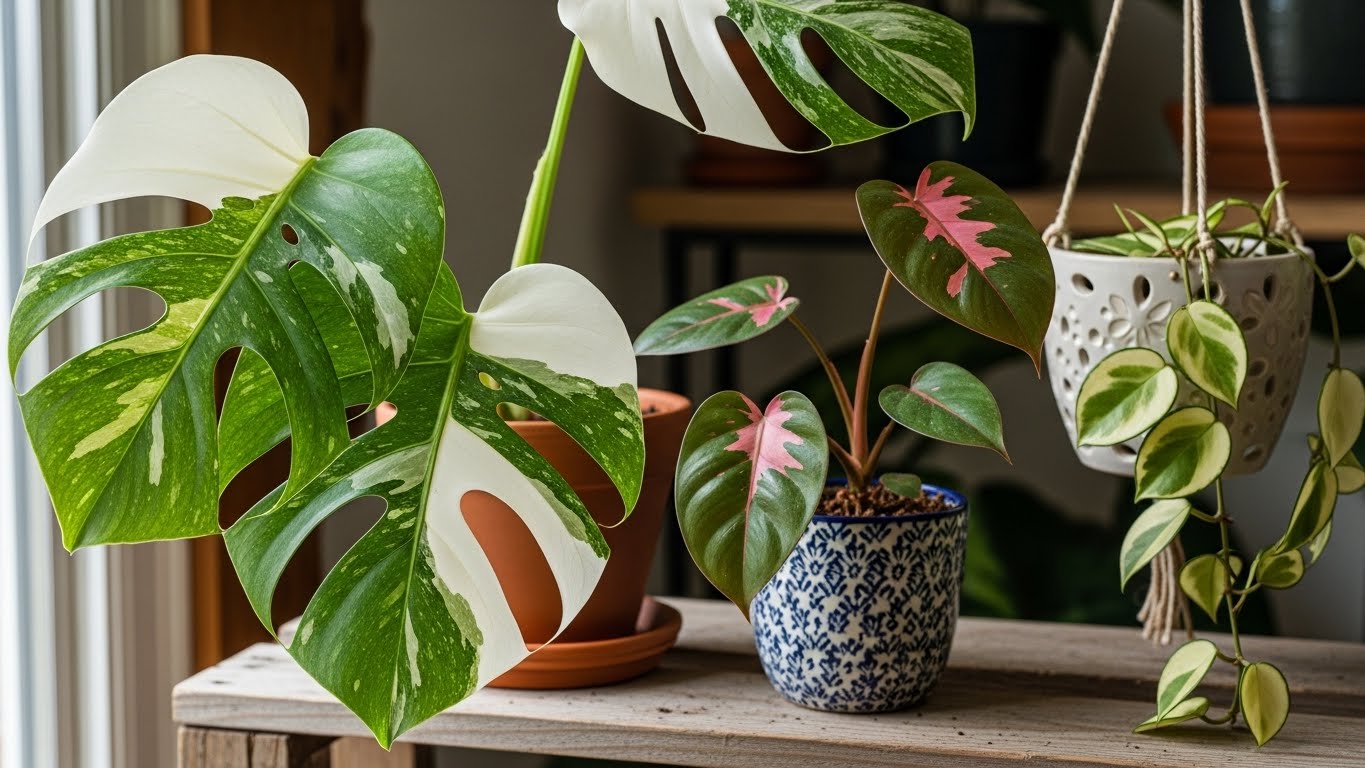
If you’re into rare houseplants, you’ll love the striking Monstera Variegata with its marbled leaves and the stunning Philodendron Pink Princess showcasing vibrant pink and green patterns. The elegant Alocasia Frydek, also known as the “Green Velvet Plant,” and the charming heart-shaped Hoya Kerrii make fantastic additions too. Don’t forget about collecting unique varieties like the Begonia Maculata and String of Hearts. Stick around to uncover even more exciting gems for your indoor jungle!
Monstera Variegata
Monstera Variegata is one of the most sought-after houseplants among collectors, and it’s easy to see why! With its stunning white and green marbled leaves, it adds a touch of elegance to any space. If you’re thinking about monstera propagation, you’ll be thrilled to know that this plant can be propagated easily through cuttings. Just make sure each cutting has a node, as that’s where new growth will emerge. With various monstera varieties available, including the classic Monstera Deliciosa, the Variegata stands out for its unique beauty. Caring for your Monstera Variegata requires bright, indirect light and well-draining soil. Don’t forget to keep the humidity high, as it thrives in tropical conditions, making your plant truly flourish!
Philodendron Pink Princess
The Philodendron Pink Princess is a showstopper with its stunning pink and green leaves that can really brighten up your space. Caring for this plant involves keeping it in bright, indirect light and ensuring the soil stays slightly moist but never soggy. As you learn more about its unique requirements, you’ll see why this rare beauty is a must-have for any collector!
Unique Leaf Coloration
When you first lay eyes on the Philodendron Pink Princess, it’s hard not to be captivated by its stunning leaves. The unique leaf coloration features an enchanting mix of deep green and vibrant pink, creating eye-catching color variations that are simply irresistible. Each leaf showcases distinct leaf patterns, with splashes of pink that look like nature’s artwork. As the plant matures, these colors can change, making each specimen feel like an exclusive treasure in your collection. You’ll find yourself admiring how each leaf unfolds its beauty, offering a delightful surprise with every new growth. This rare gem not only adds a pop of color to your space but also sparks joy and conversation among fellow plant lovers.
Care Requirements Essentials
Caring for a Philodendron Pink Princess isn’t just about keeping it alive; it’s about helping it thrive in your home! These beautiful plants love high humidity levels, so keep your humidity around 60% or higher. Water them when the top inch of soil feels dry, ensuring they never sit in soggy soil.
Here’s a quick guide to their care:
Care Aspect | Ideal Condition | Notes |
|---|---|---|
Light | Bright, indirect light | Avoid direct sunlight |
Humidity | 60% or higher | Use a humidifier if needed |
Watering | When top inch is dry | Don’t let them sit in water |
Propagation Techniques | Stem cuttings | Use soil or water methods |
With these essentials, your Pink Princess will flourish!
Alocasia Frydek
Alocasia Frydek, often called the “Green Velvet Plant,” is a striking houseplant that can turn any room into a tropical paradise. With its lush, dark green leaves and white veins, it adds a touch of elegance to your space. When it comes to Alocasia Frydek care, you’ll want to keep it in bright, indirect light and maintain humidity levels around 60%. Water it when the top inch of soil dries out, but avoid waterlogging. For those interested in Alocasia Frydek propagation, you can easily propagate it through division. Gently separate the offsets from the main plant, ensuring each has roots. With a little love and attention, your Alocasia Frydek will thrive, rewarding you with its stunning beauty!
Hoya Kerrii
After admiring the beauty of Alocasia Frydek, you might want to explore another enchanting houseplant: Hoya Kerrii. Known for its heart-shaped leaves, this succulent is perfect for adding a touch of love to your collection. To thrive, Hoya Kerrii needs bright, indirect light—too much sun can scorch its delicate foliage.
When it comes to propagation, you’ll find it’s quite simple! Cut a healthy stem with a few leaves, and place it in water or soil. Just remember to keep the cutting warm and humid, and soon, you’ll see roots forming. With a little patience and care, you’ll be rewarded with more beautiful Hoya Kerrii plants to cherish. Happy planting!
Anthurium Clarinervium
Anthurium Clarinervium, with its strikingly textured leaves and unique heart shape, is a must-have for any houseplant enthusiast. This beauty not only catches the eye, but it also brings joy to your space.
Here’s a quick guide to help you care for your Anthurium:
Care Aspect | Tips |
|---|---|
Propagation Techniques | Use stem cuttings or offsets. |
Pest Management | Check for pests regularly. |
With proper anthurium propagation techniques, you can expand your collection, while effective anthurium pest management guarantees your plant stays healthy. Make certain to provide bright, indirect light and keep the soil moist but not soggy. You’ll love watching this stunning plant thrive!
Rhipsalis Baccifera
Rhipsalis Baccifera, often referred to as the “mistletoe cactus,” stands out with its unique, trailing stems and a charmingly delicate appearance. If you’re looking to add a touch of whimsy to your plant collection, this is a perfect choice! Rhipsalis varieties thrive in bright, indirect light and love a bit of humidity, so misting them occasionally is a great idea. When it comes to Rhipsalis care, just remember they prefer well-draining soil and should be watered only when the top inch of soil feels dry. With their intriguing texture and soft green hues, these plants can truly become a conversation starter in your home. You’ll love nurturing your Rhipsalis Baccifera, watching it flourish over time.
Ficus Elastica ‘Burgundy’
Ficus Elastica ‘Burgundy’, also known as the rubber plant, brings a bold splash of color to any plant collection with its striking dark burgundy leaves. You’ll love how this plant not only enhances your space with its gorgeous burgundy aesthetics but also promotes a healthier environment.
Here are some ficus benefits you’ll find delightful:
- Air Purification: This plant helps clean the air, removing toxins and improving your indoor air quality.
- Low Maintenance: It’s easy to care for, thriving in indirect sunlight and requiring minimal watering.
- Unique Aesthetic: Its rich color adds a dramatic touch, making it an enchanting focal point in any room.
Adding Ficus Elastica ‘Burgundy’ to your collection is a choice you won’t regret!
Calathea Orbifolia
Calathea Orbifolia, often called the round-leaf calathea, is a fantastic addition for any houseplant collector looking to add a touch of elegance and drama to their collection. With its large, round leaves and striking patterns, you’ll fall in love with its beauty. For successful Calathea Orbifolia care, make sure it thrives in indirect light and stays in humid conditions. When it comes to propagation, consider dividing the root ball during repotting for new plants. Here’s a quick reference to help you:
Care Tip | Ideal Condition | Propagation Method |
|---|---|---|
Light | Indirect sunlight | Division |
Water | Keep soil moist | |
Humidity | High humidity | |
Temperature | 65°F to 80°F | |
Fertilizer | Monthly during spring |
Begonia Maculata
If you’re searching for a stunning houseplant to elevate your collection, search no further than the Begonia Maculata, commonly known as the polka dot begonia. This beauty captures hearts with its unique spotted leaves and charming growth habits.
When it comes to caring for your Begonia Maculata, consider these key points:
- Begonia propagation is easy—try leaf cuttings or division for new plants!
- Variety matters; explore different Begonia varieties to find your favorite.
- Keep the humidity high; your begonia will thrive in a moist environment.
With its enchanting foliage and manageable care, the Begonia Maculata is perfect for both beginners and seasoned collectors alike. You’ll love watching it grow and flourish in your home!
String of Hearts (Ceropegia Woodii)
Get ready to fall in love with the String of Hearts (Ceropegia Woodii), a stunning houseplant that’s not only beautiful but also easy to care for! With its charming heart-shaped leaves and trailing vines, it adds a unique touch to any room. Let’s explore how to keep this delightful plant thriving and appreciate its aesthetic appeal!
Care Requirements and Tips
Caring for a String of Hearts (Ceropegia woodii) can be a rewarding experience, especially when you see its charming, heart-shaped leaves trailing gracefully from their pots. To keep your plant thriving, pay attention to a few key aspects:
- Light: Provide bright, indirect sunlight for ideal growth.
- Water: Allow the soil to dry out between waterings—overwatering can lead to root rot.
- Humidity: Maintain moderate humidity levels; they prefer slightly more humidity than your average houseplant.
When it comes to propagation methods, consider using stem cuttings. Just place them in water until roots develop, then transfer them to soil. With a little love and attention, your String of Hearts will flourish beautifully!
Unique Aesthetic Appeal
The String of Hearts (Ceropegia woodii) is not just a plant; it’s a stunning piece of living art that can brighten up any space. With its trailing vines and heart-shaped leaves, this beauty showcases aesthetic diversity that captivates the eye and invites admiration. Imagine draping these delicate strands over a bookshelf or letting them cascade from a hanging pot; it’s like inviting nature’s own artwork into your home! The unique patterns on the leaves reflect a thoughtful design, highlighting botanical artistry that feels both modern and timeless. Caring for this plant becomes a rewarding experience, as you witness its growth and beauty evolve. Embrace the charm of the String of Hearts, and let it transform your space into a cozy, vibrant sanctuary.
Pilea Peperomioides
Pilea Peperomioides, often called the Chinese Money Plant, has captured the hearts of plant enthusiasts around the globe with its unique round leaves and easygoing nature. This charming plant is perfect for both beginners and seasoned collectors alike. You’ll love its ability to thrive with minimal care, making it an ideal choice for your home.
Here are some key points about Pilea:
- Pilea propagation is simple and rewarding; you can easily share your plant with friends.
- Discover various Pilea varieties that offer different leaf shapes and colors to enhance your collection.
- Its friendly vibe is said to bring good fortune, making it a favorite among plant lovers.
Embrace the joy of nurturing this delightful plant, and watch it flourish!
ZZ Plant (Zamioculcas Zamiifolia)
The ZZ Plant, or Zamioculcas zamiifolia, is a fascinating choice for any plant collector because of its unique leaf structure and glossy, deep green foliage that can brighten up any space. You’ll love how low maintenance it is, thriving in a variety of light conditions and requiring minimal watering—perfect for those who might not have a green thumb. This resilient plant not only adds a touch of elegance to your collection but also makes caring for houseplants feel easy and enjoyable!
Unique Leaf Structure
ZZ plants, or Zamioculcas zamiifolia, are known for their strikingly unique leaf structure that captivates plant enthusiasts everywhere. The leaf morphology of the ZZ plant is truly remarkable, featuring thick, glossy leaves that grow in a zigzag pattern. These fascinating textures not only make the plant visually appealing but also serve a purpose in water retention, allowing it to thrive in various conditions.
- The leaves can reach up to 3 feet long, creating a bold statement in any space.
- Each leaf has a shiny surface that reflects light beautifully, enhancing its charm.
- The unique arrangement adds depth, making it a perfect addition to your plant collection.
You’ll love how these features bring life and personality to your home!
Low Maintenance Care
When you’re looking for a houseplant that’s both stunning and easy to care for, the ZZ plant (Zamioculcas zamiifolia) is an excellent choice. This beauty thrives in low light, making it perfect for any room, even those without much sun. You don’t need to worry about constant attention, as it requires minimal watering. Just let the soil dry out between waterings, and your ZZ plant will flourish!
Here are a few care tips to keep in mind:
- Light: Low light is ideal, but it can handle brighter spots too.
- Watering: Water sparingly; it’s better to underwater than overwater.
- Humidity: It adapts well to various humidity levels.
With these simple steps, your ZZ plant will thrive!
Conclusion
In the world of rare houseplants, each unique specimen tells a story of beauty and dedication. You might think that collecting these plants is just a trend, but many enthusiasts believe they foster a deeper connection to nature and creativity. By nurturing these extraordinary plants, you’re not just growing greenery; you’re cultivating a passion that can brighten your space and inspire others. So, immerse yourself in the world of rare houseplants, and let your collection flourish!


