
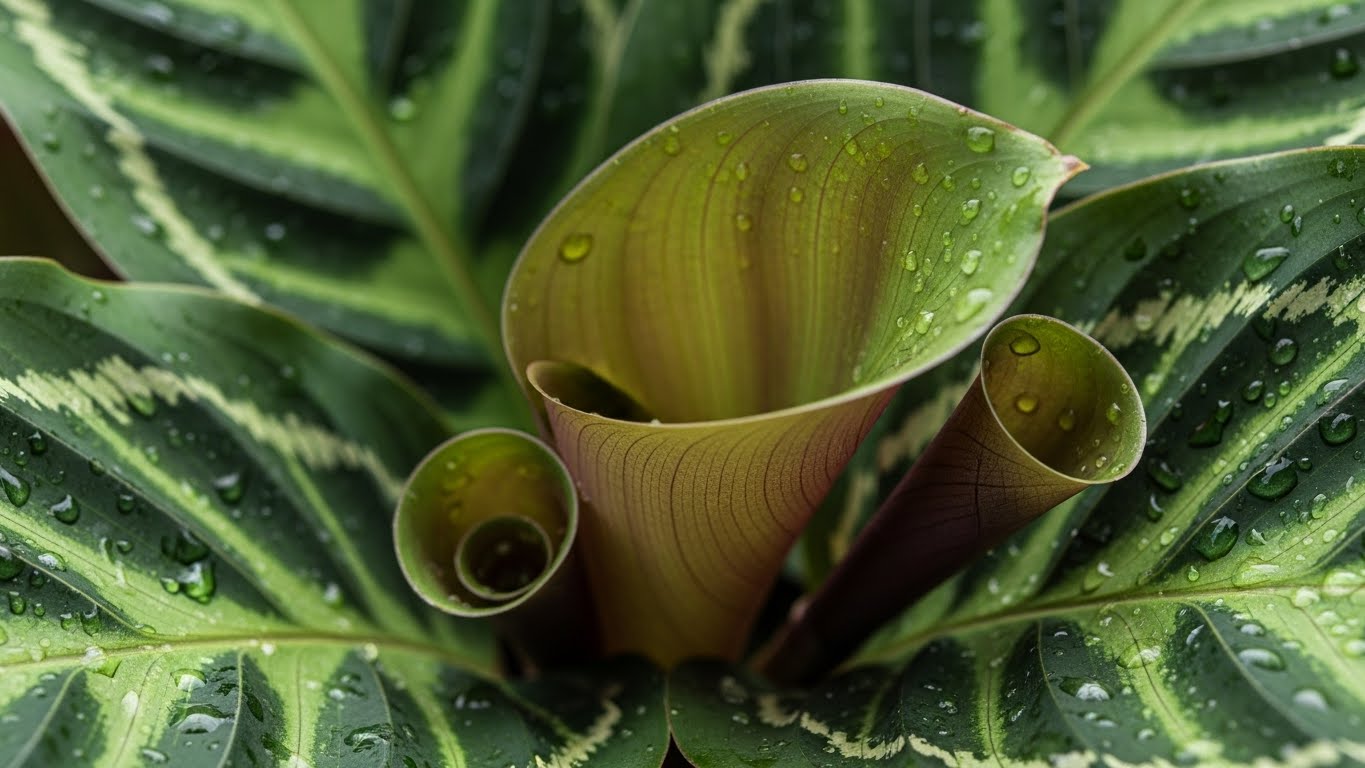
If your Calathea leaves are curling, it could be due to a few factors like low humidity, insufficient light, or pests. Calatheas love humidity levels around 50-60%, so misting or using a pebble tray helps. Make sure they’re in bright, indirect light since too much sun can burn their leaves. Don’t forget to check for pests like spider mites. Fixing these issues often leads to happier, healthier plants! Keep exploring to discover more about caring for your Calathea.
Key Takeaways
💡 Identifying signs of an unhappy Calathea can help you address issues before they escalate.
➜ Learn the complete strategy
- Leaf curl in Calathea can result from low humidity; maintain levels between 50% and 60% for optimal health.
- Temperature fluctuations and drafts stress the plant, leading to curled leaves; keep it in a stable, warm environment.
- Insufficient light can cause leaves to curl; ensure bright, indirect sunlight for healthy growth.
- Regular watering is crucial; check soil moisture weekly and use well-draining soil to prevent root rot.
- Pest infestations, like spider mites, can cause leaf curling; monitor for signs and treat promptly with insecticidal soap or neem oil.
Understanding Calathea Plant Characteristics
Calathea plants, often called prayer plants, are fascinating tropical beauties that can brighten up any home. With their stunning foliage and unique patterns, these plants come in various Calathea varieties, each bringing its own charm. You’ll find that caring for them can be quite rewarding!
When you focus on plant care, remember these key points: Calatheas thrive in indirect light and enjoy high humidity, so misting their leaves or placing them near a humidifier can work wonders. Watering them regularly, while ensuring the soil drains well, keeps those vibrant leaves looking their best. Plus, don’t forget that they’re known for their mesmerizing movement; their leaves fold up at night and open during the day, resembling a beautiful dance. Additionally, Goeppertia native to tropical rainforests requires specific environmental conditions to truly flourish.
Environmental Factors Affecting Leaf Curl
While you may not think of it at first, the environment plays an essential role in the health of your Calathea plant and can greatly impact its leaves. Temperature fluctuations can stress your plant, causing its leaves to curl. Keeping your Calathea in a stable, warm spot is vital—avoid placing it near drafts or heat sources.
Additionally, air circulation is another important aspect. If your plant is cramped in a corner without fresh air, it may struggle to thrive. Ensuring your Calathea has some space around it allows for better air movement, which helps keep those beautiful leaves flat and healthy. Remember, a happy environment leads to happy leaves, so pay attention to these details for your Calathea’s well-being!
The Importance of Humidity Levels
Humidity plays an essential role in keeping your Calathea happy and healthy. Ideally, these plants thrive in humidity levels between 50% and 60%, so if your home is too dry, you might notice those beautiful leaves curling up. Understanding how low humidity affects your plant can help you take the right steps to create a more suitable environment for it.
Ideal Humidity Range
Creating the perfect environment for your plants can make all the difference, and when it comes to Calathea, humidity is key. To thrive, these beautiful plants crave ideal humidity levels between 50% and 60%. When you provide this moisture, you’ll notice their vibrant leaves staying lush and healthy. If your home’s air is too dry, your Calathea might struggle, leading to curled leaves and an unhappy plant. You can easily boost humidity by misting their leaves, using a pebble tray with water, or placing a humidifier nearby. Remember, a happy Calathea not only looks stunning but also brings joy to your space. So, keep those humidity levels up, and watch your plant flourish!
Effects of Low Humidity
When the humidity drops below the ideal range, your Calathea can quickly show signs of distress, making it essential to understand the impacts of low humidity levels. You might notice your plant struggling with humidity stress, which can lead to curled leaves and reduced moisture retention. Here’s what to look for:
- Leaves curling or rolling up
- Brown, crispy edges on foliage
- Wilting or drooping leaves
- Slower growth or stunted development
- Increased susceptibility to pests
Light Conditions and Their Impact
When it comes to your Calathea, light conditions play an essential role in keeping those beautiful leaves healthy and vibrant. Too little light can lead to curling leaves, while too much direct sunlight can scorch them, causing even more damage. Finding that perfect balance is key, so let’s explore how to guarantee your plant gets the right amount of light it needs!
Insufficient Light Exposure
While you might think your Calathea plant is thriving, it could be suffering from insufficient light exposure, which is a common reason for its leaves to curl. Without the right light spectrum, your plant struggles to perform plant photosynthesis effectively, leading to curling leaves.
Here are some signs your Calathea needs more light:
💡 If you’re facing issues with yellowing leaves, understanding the causes can help you take effective action.
➜ Discover proven techniques
- Leaves curl or droop.
- Growth slows down or stops.
- Color fades or becomes dull.
- Leaves develop spots or patches.
- Stems elongate and become leggy.
To help your lovely Calathea, consider moving it closer to a bright, indirect light source. Remember, these plants thrive in well-lit spaces, so give them the light they crave for vibrant and healthy growth!
Direct Sunlight Damage
💡 Winter can bring unique challenges for Calathea care, and knowing what changes to make is crucial.
➜ Get the step-by-step guide
Calathea plants can be quite sensitive, and if you expose them to direct sunlight, you might end up with more than just curling leaves; you could face serious leaf damage too. The direct sunlight effects can be harsh, leading to leaf burn that causes unsightly brown spots and crispy edges. Instead of basking in bright light, these lovely plants thrive in bright, indirect light, which mimics their natural tropical habitat. If you suspect your Calathea is getting too much sun, try moving it to a shadier spot or using sheer curtains to filter the light. Remember, keeping your Calathea happy means protecting those beautiful leaves from the harsh rays of the sun, so treat them with the care they deserve!
Watering Practices to Prevent Curling
To keep your Calathea leaves from curling, you need to pay close attention to your watering practices. Finding the right balance in watering frequency is vital for moisture retention and overall plant health. Here are some tips to help you out:
- Water regularly: Check the soil moisture weekly.
- Use distilled or rainwater: Tap water can harm your plant.
- Water until it drains: Guarantee excess water escapes from the pot.
- Avoid soggy soil: Overwatering can lead to root rot.
- Adjust for seasons: Your plant may need less water in winter.
Soil Quality and Drainage Issues
When soil quality and drainage issues arise, your Calathea may start to curl its leaves, signaling distress. Poor soil can lead to a lower soil pH, which isn’t ideal for these beautiful plants. If the soil retains too much water, it creates the perfect environment for root rot, causing your plant to struggle. To keep your Calathea happy, use a well-draining potting mix designed for houseplants. Make sure the pot has drainage holes to prevent excess water from sitting at the bottom. Regularly check the soil’s moisture level, and if it feels soggy, consider repotting your plant into fresh soil. By giving your Calathea the right soil and drainage, you’ll help it thrive and keep those lovely leaves uncurling.
Nutrient Deficiencies and Fertilization
Nutrient deficiencies can sneak up on your Calathea, especially if it’s not getting the right fertilization. To keep your plant healthy, understanding nutrient absorption and the right fertilizer types is key. Here are some signs that your Calathea might need a boost:
- Yellowing leaves
- Stunted growth
- Leaf curling
- Brown tips
- Poor color vibrancy
Using balanced fertilizers, you can provide essential nutrients like nitrogen, phosphorus, and potassium. Liquid fertilizers are often the best choice, as they’re easily absorbed. Remember to fertilize during the growing season, which is usually spring and summer, to guarantee your Calathea gets the nutrients it craves. Regularly check for signs of deficiencies, and your plant will thrive beautifully!
Pest Infestations and Their Effects
Pest infestations can sneak up on your Calathea, causing significant stress to the plant and leading to curled leaves, among other issues. Common pest types, like spider mites and aphids, love to munch on your plant, draining its energy and leaving it weak. You might notice tiny webs or sticky residue on the leaves, which are clear signs of these unwelcome visitors.
To combat these pests, regular pest control is essential. You can use insecticidal soap or neem oil to keep them at bay. Make it a habit to check your Calathea regularly, as early detection means easier treatment. With a little love and attention, you can help your plant thrive and enjoy its vibrant leaves again!
Seasonal Changes and Leaf Behavior
As the seasons shift, your Calathea’s leaves can respond in surprising ways, showcasing a fascinating dance of adaptation. This seasonal behavior is influenced by temperature fluctuations, which can cause the leaves to curl or droop. Understanding these changes can help you keep your plant healthy and thriving.
Here are some common responses to seasonal changes:
- Reduced light: Leaves may curl when light decreases in winter.
- Higher humidity: Increased moisture can lead to fuller, vibrant leaves.
- Temperature drops: Cold drafts can cause stress, resulting in curled leaves.
- Growth spurts: Springtime warmth often brings new growth, changing leaf shape.
- Dormancy: In winter, growth slows, leading to changes in leaf appearance.
Being aware of these factors can help you nurture your Calathea better!
Conclusion
To sum up, keeping your Calathea healthy requires attention to various factors, from humidity to watering practices. If you notice those beautiful leaves curling, don’t fret; it’s just a sign that something needs tweaking. Remember, a little TLC goes a long way in nurturing your plant. By understanding and addressing these issues, you can help your Calathea thrive and keep it looking its best. So, roll up your sleeves and get ready to be a plant parent superstar!
💡 Understanding common problems can empower you to keep your Calathea thriving.
➜ Master this approach


