
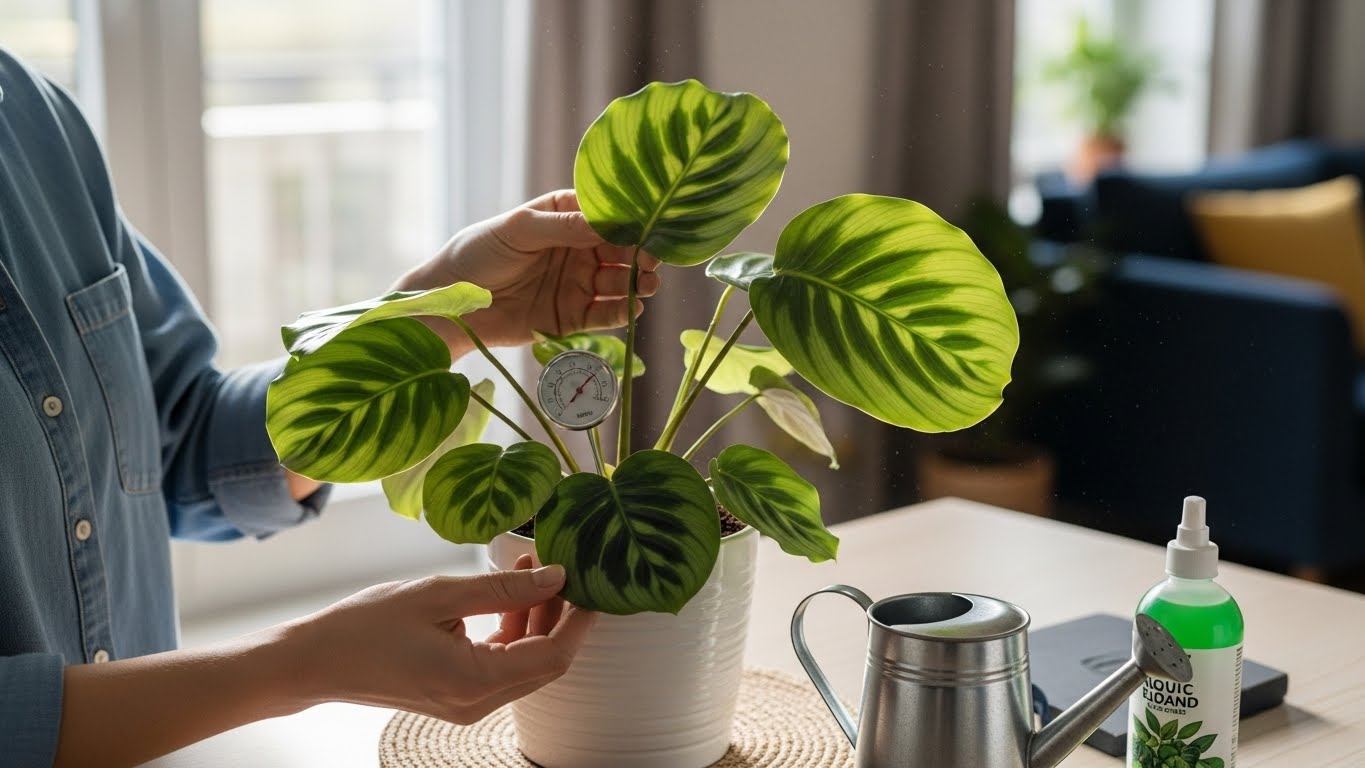
Calatheas are beautiful houseplants that can brighten your space! To care for them, provide bright, indirect light—too much sun can scorch their leaves. Keep the soil moist but not soggy, watering when the top inch feels dry. Maintain a humidity level of 50-60% using a humidifier or misting. Use a well-draining mix of potting soil, peat moss, and perlite for best results. By following these steps, your Calathea can thrive and look stunning—stick around to discover more tips!
Key Takeaways
💡 A comprehensive understanding of light, water, soil, and humidity is vital for Calathea care.
➜ Master this approach
- Provide bright, indirect light to prevent leaf scorching; avoid direct sunlight for optimal growth.
- Maintain humidity levels between 50% and 60% using humidifiers or pebble trays.
- Water when the top inch of soil is dry, using room-temperature, filtered water.
- Keep temperatures between 65°F and 80°F, avoiding drafts and heating vents for stability.
- Propagate through division or leaf cuttings, ensuring a warm, humid environment for new growth.
Understanding Calathea Varieties
Calatheas are like the colorful stars of the houseplant world, each variety boasting its own unique patterns and colors! You’ll find several calathea types, each with its own charm. For instance, the Calathea orbifolia has round leaves with striking silver stripes, while the Calathea zebrina displays bold zebra-like patterns that are sure to catch your eye. Immerse yourself in the enchanting world of calathea leaf patterns, where deep greens meet vibrant purples and pinks. As you learn about these varieties, you’ll appreciate how they can transform any space into a lush paradise. Don’t hesitate to explore each calathea type, discovering the wonderful differences that make them special. With the right care, these beauties will thrive and enchant you daily! Their care requirements are essential to keep them healthy and vibrant.
Ideal Lighting Conditions
When it comes to lighting for your Calathea, you’ll want to find that sweet spot of bright but indirect light. These plants flourish in well-lit areas, but direct sunlight can scorch their beautiful leaves, leaving you with a sad-looking plant. So, make sure to place your Calathea where it can soak up the light without getting burned!
Bright Indirect Light
Creating the perfect environment for your Calathea starts with understanding its lighting needs, and bright indirect light is essential for its health and vibrancy. You’ll want to place your plant near a window where it can soak up that lovely light intensity without being scorched. Think filtered sunlight or a spot that gets dappled light throughout the day. Aim for around 12 hours of light duration daily, as your Calathea thrives in those conditions. If you notice its leaves losing their color or becoming dull, it might not be getting enough brightness. Remember, the goal is to mimic its natural habitat, where it enjoys the gentle glow of filtered sunlight, helping it flourish beautifully.
Avoid Direct Sunlight
To keep your Calathea happy and healthy, it’s essential to avoid direct sunlight at all costs. Direct light exposure can lead to unsightly leaf burn, ruining the beautiful patterns on those stunning leaves you adore. Instead, place your plant in a spot with bright, indirect light. A north or east-facing window is perfect, allowing soft light to filter through without the harsh rays that can damage your plant. If you notice the leaves curling or turning brown, it’s a sign they’re getting too much sun. Remember, your Calathea thrives in a cozy, shaded nook, so keep it away from direct sunlight, and it’ll reward you with vibrant, lush foliage for years to come.
Watering Techniques
Watering your Calathea can feel a bit tricky, especially since these beautiful plants thrive in humidity and consistent moisture. To keep your Calathea happy, you’ll want to establish a regular watering frequency. Generally, water when the top inch of soil feels dry; checking moisture levels will help you avoid overwatering or underwatering. Using room-temperature, filtered water is best, as it protects your plant from shock. During warm months, you might find yourself watering more often—maybe once a week—while in cooler months, you can reduce it to every two weeks. Pay attention to how your Calathea responds; yellowing leaves may indicate you’re overdoing it, whereas wilting leaves signal that it’s thirsty. Your care makes all the difference!
Humidity Requirements
Humidity plays a significant role in keeping your Calathea healthy and vibrant. These lovely plants thrive in humidity levels between 50% and 60%, so it’s essential to create the right environment for them. If your home has dry air, consider using humidity sources like humidifiers, pebble trays, or even grouping your plants together. This helps maintain a cozy, moisture-rich atmosphere that your Calathea craves. You might also mist their leaves occasionally, but don’t overdo it; just a light spray will do the trick! Remember, the key is to keep that humidity consistent, as fluctuations can stress your plant. By monitoring the humidity levels, you’ll help your Calathea flourish and show off its stunning foliage.
Soil Preferences
When it comes to soil preferences, Calatheas thrive best in a well-draining potting mix that retains some moisture without becoming soggy. You’ll want to focus on the right soil composition, mixing equal parts potting soil, peat moss, and perlite. This blend helps meet their drainage requirements, preventing root rot while keeping your plant happy and hydrated.
💡 If you’re noticing droopy leaves on your Calathea, it’s crucial to understand the underlying causes.
➜ Discover proven techniques
Temperature Considerations
Calatheas flourish best in temperatures ranging from 65°F to 80°F, making it crucial to keep them in a cozy spot within your home. These lovely plants are sensitive to temperature fluctuations, so avoid placing them near drafty windows or heating vents. During colder months, you might need to make some seasonal adjustments, like moving them away from chilly areas to maintain their preferred warmth. On hotter days, make certain they’re not exposed to direct sunlight, which can stress them out. Keeping an eye on your Calathea’s leaves is a great way to gauge its comfort level; if they start curling or browning, it’s a sign to adjust their environment. Happy Calathea care brings vibrant, thriving plants!
💡 Understanding your Calathea’s needs is essential for its health and happiness.
➜ Learn the complete strategy
Fertilization Tips
Fertilizing your Calathea can make a significant difference in its growth and vibrancy. To keep your plant healthy, you’ll want to choose the right fertilizer types and apply it at the right times. Generally, a balanced, water-soluble fertilizer works well. Here’s a handy guide to help you out:
Fertilizer Type | Application Frequency | Notes |
|---|---|---|
Liquid Fertilizer | Every 4-6 weeks | Dilute as per package directions |
Slow-Release Pellets | Every 2-3 months | Provides nutrients gradually |
Organic Fertilizer | Every 6-8 weeks | Great for eco-friendly gardening |
Common Pests and Diseases
Even the healthiest Calathea can face challenges from pests and diseases, so it’s important to stay vigilant. Regular pest identification is key; watch for spider mites, aphids, and mealybugs. You might notice tiny webs or sticky leaves, signaling their presence. Don’t panic! Early detection helps in disease prevention.
For diseases, root rot is a common issue, usually caused by overwatering. Make certain your pot has drainage holes and let the soil dry between waterings. Fungal infections can also occur, so keep your leaves dry and maintain good airflow. If you spot any problems, act quickly with insecticidal soap or neem oil. Remember, a little attention goes a long way in keeping your Calathea thriving!
Pruning and Maintenance
When you want your Calathea to look its best, regular pruning and maintenance are essential. Start by using proper pruning techniques, like snipping off any yellow or brown leaves at the base. This keeps your plant healthy and encourages new growth. You can also trim back any leggy stems to promote a bushier appearance.
For maintenance tips, make sure to clean the leaves with a damp cloth to remove dust, allowing your plant to breathe. Keep an eye on the soil moisture—water when it’s slightly dry, but avoid soggy conditions. Regularly check for pests, too, since a healthy plant is less likely to attract them. With a little love and care, your Calathea will thrive!
Propagation Methods
After ensuring your Calathea is well-maintained and healthy through regular pruning, you might find yourself wanting to expand your plant collection. Propagation can be a fun and rewarding process! You can use two primary methods: division and leaf cuttings.
For division methods, gently remove the plant from its pot, and separate the roots into smaller sections, making sure each has a few leaves. Replant these sections in new pots with fresh soil.
If you’re feeling adventurous, try leaf cuttings! Snip a healthy leaf into sections and place them in water or directly in soil. Keep them warm and humid, and soon enough, you’ll see new roots forming. Happy propagating! Your collection will flourish in no time!
Conclusion
In conclusion, caring for your Calathea can be a rewarding experience! Remember, “A plant in the right place will thrive,” so pay attention to its lighting, humidity, and watering needs. With a little effort and understanding, you can keep your Calathea vibrant and healthy. Don’t hesitate to experiment and learn as you go; every plant is unique. Immerse yourself in this journey, and you’ll soon see just how beautiful and lively your Calathea can become!
💡 Fertilizing your Calathea correctly can significantly impact its growth and vitality.
➜ Get the step-by-step guide


