
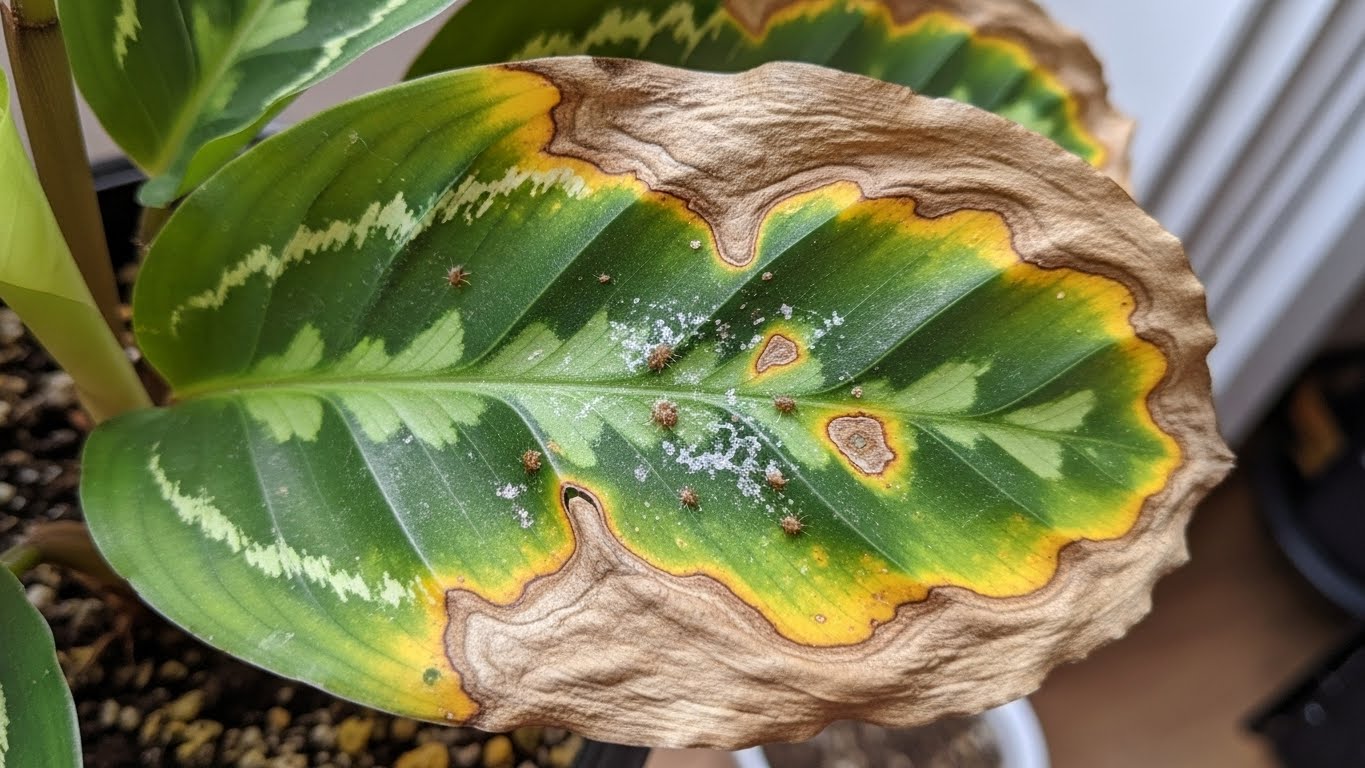
Calathea plants can face issues like drooping leaves, browning tips, and yellowing foliage. To fix these, make sure you provide high humidity, ideally between 50-70%, and keep the soil moist but not soggy. Water when the top inch feels dry. If you see curled leaves, it could mean you’re over or underwatering. Adjust light, aiming for bright, indirect sunlight. Don’t forget to check for pests too! There’s more you can do to keep your Calathea healthy and thriving!
Key Takeaways
💡 If you’re dealing with yellowing leaves on your Calathea, it’s essential to understand the underlying causes.
➜ Discover proven techniques
- Ensure high humidity levels (50-70%) with misting or a humidifier to prevent leaf curling and browning.
- Water only when the top inch of soil is dry; overwatering can lead to yellowing leaves and root rot.
- Use bright, indirect light and avoid direct sunlight to prevent scorched leaves.
- Regularly clean leaves to remove dust and check for pests, using insecticidal soap if necessary.
- Assess moisture levels regularly and maintain proper drainage to avoid wilting and growth stagnation.
Understanding Calathea Care Requirements
Caring for a Calathea plant can be a rewarding experience, but you need to know a few key requirements to keep it thriving. First, remember that Calathea varieties love humidity, so misting them or placing them near a humidifier can work wonders. Don’t forget to check the soil—keep it moist but not soggy, as overwatering can lead to trouble. Bright, indirect light is their best friend; too much direct sun can scorch those beautiful leaves. As for Calathea maintenance, be sure to clean the leaves regularly to remove dust, allowing the plant to breathe better. Additionally, it’s important to recognize that Calathea are sensitive to low humidity conditions, which can cause stress and lead to leaf curling or browning. By following these simple steps, you’ll enjoy the lush beauty of your Calathea for years to come, creating a cozy green sanctuary in your space.
Identifying Drooping Leaves
When you notice your Calathea’s leaves drooping, it’s a sign that something’s off. It could be due to factors like inconsistent watering or low humidity, and recognizing these causes is the first step in helping your plant bounce back. Let’s explore some effective recovery techniques to get your Calathea back to its vibrant self!
Causes of Drooping Leaves
Drooping leaves on your Calathea can be a sign that something’s not quite right, so it’s essential to pay attention and identify the cause. One major culprit is environmental stress; changes in temperature or humidity can affect your plant’s well-being. If your Calathea’s leaf structure appears limp or tired, it might be thirsty or overwatered. Make sure you’re using well-draining soil and checking moisture levels regularly. Additionally, inadequate light can also lead to drooping leaves, as these plants thrive in indirect sunlight. By understanding these factors, you can better care for your Calathea and create a healthier environment for it. Remember, a little TLC goes a long way in helping your plant bounce back!
Recovery Techniques for Plants
To help your Calathea recover from drooping leaves, you’ll first want to closely examine the plant’s environment and care routine. Start by checking the light conditions; Calatheas thrive in bright, indirect light. If your plant’s receiving too much or too little light, it’s time for a change. Next, inspect the soil moisture—overwatering or underwatering can lead to drooping. A soil amendment might be necessary to improve drainage or retain moisture better. Consider repotting if the current pot isn’t working. Finally, don’t forget to mist your Calathea regularly to boost humidity! With these steps, you’ll be on the path to plant rejuvenation, helping your beloved Calathea perk up and thrive once again.
Causes of Browning Tips
Browning tips on your Calathea can be frustrating, especially when you’re enthusiastic to see it thrive. Understanding the causes of browning leaves is essential for nurturing your plant. Often, it relates to moisture levels. Here are some common reasons for those pesky brown tips:
Cause | Symptoms | Solutions |
|---|---|---|
Low humidity | Browning tips | Increase humidity |
Underwatering | Dry, crispy leaves | Water regularly |
Over-fertilizing | Burnt edges | Reduce fertilizer |
Poor drainage | Wilting leaves | Improve pot drainage |
Reversing Yellowing Leaves
If your Calathea’s leaves are turning yellow, it’s time to take a closer look at its care routine. Often, yellowing can stem from watering issues, too much or too little light, or even a nutrient deficiency. Let’s explore how adjusting these factors can help your plant perk back up and thrive!
Watering Issues
Watering your Calathea the right way can make all the difference in keeping its leaves vibrant and healthy. If you notice yellowing leaves, it might be a sign of watering issues. Here’s how you can fix that:
- Check your watering schedule – Calathea prefers consistent moisture, but avoid overwatering.
- Ensure proper drainage – Make sure your pot has drainage holes so excess water can escape.
- Use room temperature water – Cold water can shock the roots, leading to stress.
- Monitor humidity levels – Calathea loves humidity, so consider misting or using a pebble tray.
Light Conditions
When your Calathea starts to show yellowing leaves, it’s not just about how much water it gets; light conditions play a significant role too. Your Calathea thrives in bright, indirect natural light. If it’s too close to a window, the direct sunlight can scorch those beautiful leaves, causing them to yellow. You might want to move it a bit further away or use sheer curtains to diffuse the light. On the other hand, if it’s only getting artificial light, it may not be enough. Consider supplementing with a grow light to guarantee your plant gets its daily dose of brightness. By adjusting its light exposure, you can help revive those yellowing leaves and keep your Calathea happy!
Nutrient Deficiency
Have you ever wondered why your Calathea’s leaves are turning yellow? This could be a sign of nutrient deficiency. Calatheas need specific nutrient sources to thrive, and when they’re lacking, you might notice those beautiful leaves losing their vibrancy. Here’s what to keep an eye on:
- Yellowing leaves can indicate nitrogen deficiency.
- Brown spots may signal a lack of potassium.
- Curling leaves could suggest insufficient calcium.
- Stunted growth often points to an overall nutrient imbalance.
To fix these deficiency symptoms, consider using a balanced, water-soluble fertilizer every few weeks during the growing season. This will help replenish essential nutrients and bring your Calathea back to life, ensuring those vibrant colors return to your lovely plant!
Addressing Leaf Curling
Leaf curling in Calathea plants can be a puzzling issue for many plant lovers, especially since these beautiful houseplants are known for their stunning foliage. When you notice your Calathea’s leaves curling, it’s often a sign of environmental stress. This can happen due to low humidity, improper watering, or temperature fluctuations. To help your plant, first check the humidity levels—you’ll want them to be around 50-60% for ideal leaf texture. Make sure you’re not over or under-watering, as both can lead to curling. Also, keep your Calathea away from cold drafts or direct sunlight. By addressing these factors, you’ll help your Calathea thrive and keep those lovely leaves looking their best!
Managing Pests and Infestations
Pests can sneak up on your Calathea, causing stress and damage if not managed promptly. To keep your plant healthy and thriving, start with pest identification. Look for signs like tiny webs, sticky residue, or holes in leaves. Once you spot a pest, act fast! Here are some effective infestation prevention tips to protect your beloved plant:
- Regularly check under leaves and along stems for pests.
- Keep humidity levels high; pests love dry conditions.
- Wipe leaves with a damp cloth to remove dust and potential eggs.
- Use insecticidal soap or neem oil as a natural treatment.
With these strategies, you can minimize pests and help your Calathea flourish, ensuring it stays vibrant and beautiful in your home.
Preventing Root Rot
Preventing root rot is essential for keeping your Calathea healthy and vibrant, especially since this condition can sneak up on you if you’re not careful. To guarantee effective root rot prevention, focus on moisture management. First, choose a well-draining potting mix that allows excess water to escape. This helps keep the roots from sitting in soggy soil. Next, water your plant only when the top inch of soil feels dry; this prevents overwatering, a common cause of root rot. Additionally, make sure your pot has drainage holes, allowing any extra water to flow out. Finally, consider using pots made of breathable materials to promote healthy roots. With these steps, you’ll keep your Calathea thriving and root rot at bay!
Ensuring Proper Humidity Levels
💡 Curling leaves can signal distress in your Calathea, but there are effective solutions.
➜ Get the step-by-step guide
To keep your Calathea thriving, ensuring the right humidity level is key. Ideally, they love humidity around 50-60%, so if you notice crispy edges on the leaves or they start curling, it might be a sign that the air is too dry. Let’s explore how you can create the perfect humid environment for your beautiful plant!
Ideal Humidity Range
💡 Brown leaf edges can be a frustrating issue for Calathea owners, but understanding the causes is key.
➜ Master this approach
Calatheas thrive best when humidity levels hover between 50% and 70%, making it vital to create a cozy environment for these beautiful plants. Achieving the ideal humidity isn’t just a luxury; it’s essential for their health and vibrancy. Consider these humidity sources to help your Calatheas flourish:
- Misting: Lightly mist leaves regularly to boost moisture.
- Humidity trays: Place your pot on a tray filled with water and pebbles.
- Grouping plants: Cluster your Calathea with other plants to create a mini-humid microclimate.
- Humidifiers: Use a room humidifier to maintain consistent humidity levels.
With these tips, you can guarantee your Calatheas are happy and thriving in their lush, humid paradise!
Signs of Low Humidity
When you notice your Calathea’s leaves curling or browning at the tips, it’s a clear sign that humidity levels might be too low for your plant’s comfort. These humidity indicators can be alarming, but don’t worry—there are humidity solutions to help your green friend thrive again. You might also see crispy edges or drooping leaves, which indicate your Calathea is struggling. One great way to boost humidity is by using a humidifier or placing a pebble tray filled with water near your plant. Misting your Calathea can help, too, but be careful not to overdo it! With a little attention, you can create a cozy environment that keeps your Calathea happy and healthy.
Adjusting Lighting Conditions
Finding the right lighting conditions for your Calathea can make all the difference in keeping this stunning plant healthy and vibrant. Calatheas thrive in bright, indirect sunlight, so it’s essential to make those light adjustments whenever needed. Too much direct light can scorch the leaves, while too little can cause them to lose their beautiful patterns.
Here are some tips to help you find the perfect calathea light:
- Place your Calathea near east or north-facing windows for gentle morning light.
- Use sheer curtains to diffuse harsh sunlight.
- Rotate your plant regularly to guarantee even light exposure.
- Monitor your plant’s leaves for signs of light stress, adjusting as necessary.
With the right light, your Calathea will flourish!
Choosing the Right Soil Mix
Have you ever wondered what makes the perfect soil mix for your Calathea? Choosing the right blend is essential for their happiness! Start with a mix that has a balanced soil pH, ideally around 6.0 to 6.5. You want good drainage properties to prevent soggy roots, so look for organic matter like peat moss or coconut coir. These ingredients help with moisture retention while ensuring your plant gets the nutrients it craves. You can use commercial mixes designed for tropical plants or whip up homemade blends that suit your needs. Remember, regular repotting frequency helps refresh the soil, maintaining that nutrient balance your Calathea loves. Happy planting!
Recognizing Overwatering vs. Underwatering
Recognizing the signs of overwatering versus underwatering is essential for keeping your Calathea healthy and thriving. Understanding moisture levels can help you nurture your plant with love and care. Here are some calathea signs to look out for:
- Overwatering: Yellowing leaves, root rot, and a musty smell.
- Underwatering: Crispy edges, drooping leaves, and a dry potting mix.
- Leaf Curling: Leaves curling inward may indicate either condition.
- Growth Stagnation: Lack of new growth can signify stress from improper watering.
Seasonal Changes and Their Effects
As you keep a close eye on your Calathea’s watering needs, don’t forget that seasonal changes can also impact its health and growth. During colder months, temperature fluctuations may lead to drier air, so you might need to make seasonal adjustments. This could mean misting your plant more often or placing it near a humidifier. In spring and summer, your Calathea may thrive with brighter light and slightly increased watering, but be careful not to overdo it. Keep an eye on its leaves; if they start curling or browning, it’s a signal to adjust. Understanding these seasonal dynamics helps you create the perfect environment for your beloved Calathea, ensuring it stays vibrant and healthy all year round.
Propagation Techniques for Healthy Growth
One fantastic way to expand your collection of Calatheas is through propagation, and there are several effective techniques you can try. By using these methods, you’ll not only grow your plant family but also guarantee your plants thrive. Here are some popular techniques:
Expand your Calathea collection through propagation techniques that ensure your plants thrive and grow beautifully.
- Calathea division: Separate the root ball into smaller sections, ensuring each piece has roots and leaves.
- Stem cuttings: Cut a healthy stem, making sure to include a node, and place it in water or soil.
- Leaf propagation: Take a healthy leaf, cut it into sections, and plant them in soil to develop roots.
- Root propagation: Remove roots from an existing plant and replant them in nutrient-rich soil.
With these techniques, your Calathea collection will flourish!
Tips for Reviving a Neglected Calathea
If your Calathea’s looking a bit sad, don’t worry—reviving it is totally possible! Start by checking how much water it needs, since too little or too much can really affect its health. Next, boost the humidity levels around your plant, and watch how quickly it perks back up!
Assess Watering Needs
Reviving a neglected Calathea starts with understanding its watering needs, which can be trickier than it seems. These beautiful plants thrive on consistent moisture retention, so you’ll want to keep an eye on their soil. Here are some key tips to help you get it just right:
- Check the top inch of soil; if it’s dry, it’s time to water.
- Use distilled or rainwater to avoid chemicals that can harm your Calathea.
- Water thoroughly until it drains from the bottom, ensuring even moisture.
- Maintain a regular watering schedule, ideally every week, adjusting for seasonal changes.
Improve Humidity Levels
Calathea plants thrive in humid environments, and without the right humidity levels, they can quickly show signs of distress. To revive your beloved Calathea, consider these tips:
Method | Description | Benefits |
|---|---|---|
Misting Techniques | Lightly mist your plant daily | Increases humidity quickly |
Humidity Trays | Place your plant on a tray with water and pebbles | Provides constant moisture |
Humidifier Options | Use a room humidifier | Maintains ideal humidity levels |
Plant Grouping | Group your plants together | Creates a microclimate |
Conclusion
Caring for your Calathea can feel like solving a puzzle, where each piece reveals the secret to a happy plant. By understanding its needs and addressing common problems like drooping leaves or browning tips, you’ll keep your Calathea vibrant and thriving. Remember, even when things seem tough, a little TLC can work wonders. So, roll up your sleeves, immerse yourself in plant care, and watch your leafy friend flourish like a star in the garden!
💡 Recognizing the signs of an unhappy Calathea can help you take timely action.
➜ See how to implement this


