
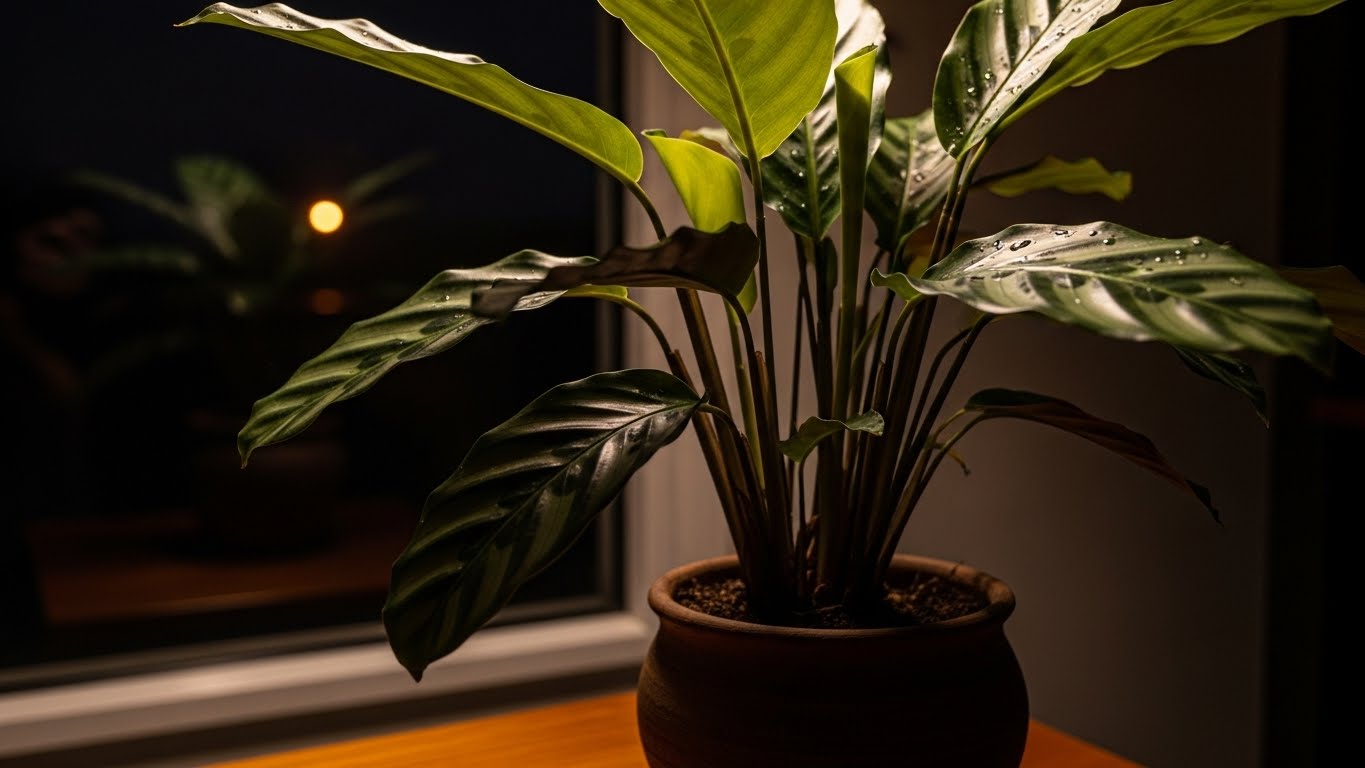
Calathea leaves close at night due to a natural movement called nyctinasty. This cool adaptation helps the plant conserve moisture and prepare for dark hours, just like people need rest. When evening comes, the leaves fold up, resembling hands in prayer, and open wide again in the morning. This unique behavior not only protects your plant but also connects you with its natural rhythms. Curious about how to care for this lovely plant? There’s more to explore!
Key Takeaways
💡 If you’re new to Calathea care, this guide is essential for your success.
➜ Get the step-by-step guide
- Calathea leaves exhibit nyctinasty, folding up at night to protect themselves and conserve moisture.
- This unique movement reflects the plant’s sensitivity to light and environmental changes.
- Leaves open wide in the morning and close by evening, signaling the plant’s circadian rhythms.
- The closing of leaves at night signifies the plant’s preparation for rest and energy conservation.
- Understanding this behavior enhances appreciation for Calathea and its natural instincts.
Understanding Calathea: An Overview
Calathea plants, known for their stunning foliage, are more than just pretty houseplants; they’re a fascinating part of the plant world! With dozens of Calathea varieties, each one showcases unique patterns and colors that can elevate your plant aesthetics. You might fall in love with the striking stripes of the Calathea orbifolia or the intricate designs of the Calathea medallion. These plants not only brighten your space but also spark joy with their vibrant, eye-catching leaves. Caring for them can feel like a rewarding journey, as you learn their preferences for humidity and light. Mimicking rainforest conditions is essential to keep your Calathea thriving. So, whether you’re a seasoned plant parent or just starting, exploring the world of Calathea plants can be an exciting adventure!
The Unique Movement of Prayer Plants
Have you ever noticed how prayer plants seem to move? This fascinating behavior, known as nyctinasty, is all about their sensitivity to light and environmental changes. As the sun sets, you’ll see their leaves fold up, showcasing their unique way of responding to the world around them!
Nyctinasty Explained
While you might not think of plants as having personalities, the unique movement of prayer plants, known as nyctinasty, shows us just how dynamic they can be. This fascinating plant behavior occurs as the sun sets, causing the leaves to fold up like hands in prayer. The nyctinasty significance lies in its role in protecting the plant, reducing moisture loss during the night. It’s almost like a beautiful dance, where the plant responds to environmental changes. By observing this nightly ritual, you get a glimpse into the plant’s needs and instincts. So, the next time you see your Calathea’s leaves close, remember you’re witnessing a remarkable expression of life, reminding us that plants, too, have their own ways of communicating.
Light Sensitivity
When it comes to light sensitivity, prayer plants like Calathea are true champions of adaptation. These beautiful plants showcase remarkable light adaptation skills, responding to their environment in fascinating ways. During the day, they stretch their leaves to soak up sunlight, but as night falls, they close up, showcasing their unique photoperiod sensitivity. This movement isn’t just for show; it helps them conserve energy and protect themselves from the cooler nighttime temperatures. Understanding this behavior deepens your appreciation for these plants and their needs. So, when you care for your Calathea, remember that its light sensitivity plays a crucial role in its health and happiness, making you feel even more connected to this stunning little miracle of nature.
Environmental Factors
Calathea plants, known for their enchanting leaves, exhibit a unique movement that’s not just a curious spectacle; it’s an essential adaptation to their environment. These lovely plants respond to light pollution and seasonal changes, adjusting their leaves to maximize sunlight exposure. Temperature fluctuations and humidity variations also play a significant role, as they thrive in consistent conditions. Make sure to reflect on soil composition and air circulation to keep your Calathea happy. Your watering frequency matters, too; too much or too little can stress them out. Don’t forget pest management and understanding their nutrient requirements, as environmental stressors can hinder their growth. By nurturing these factors, you’ll help your Calathea flourish and showcase its beautiful leaves.
The Science Behind Leaf Curling
Understanding why leaves curl can be fascinating, especially since it often signals something important about your plant’s health. Leaf curling in your Calathea can happen for various reasons, including moisture levels and temperature changes. When the air is too dry or the temperature dips, your plant might curl its leaves to conserve water. This nighttime behavior is a way for your Calathea to protect itself and adapt to its environment. It’s like your plant’s way of saying, “I need a little help here!” So, when you notice those curls, take a moment to check the humidity and warmth around your plant. With a bit of attention, you can help your Calathea thrive and return to its beautiful, lush form.
Circadian Rhythms in Plants
Just like you have a sleep cycle, plants do too! This sleep cycle, known as circadian rhythms, helps your Calathea respond to light and darkness throughout the day. By understanding how these rhythms work, you can better care for your plant and guarantee it thrives in its environment.
Plant Sleep Cycle
While most people think of sleep as a human need, plants also experience their own version of rest through a fascinating process called circadian rhythms. These plant sleep cycles guide their night behavior, helping them conserve energy during plant dormancy. Just like you might wind down, your Calathea prepares for nighttime by folding its leaves, as if saying goodnight.
Time of Day | Plant Behavior |
|---|---|
Morning | Leaves open wide |
Afternoon | Full leaf expansion |
Evening | Leaves start to close |
Night | Leaves fully closed |
Understanding this sleep cycle can deepen your connection with your plant, making you appreciate its nightly rituals and unique way of adapting to nature.
Light Sensitivity Response
Calathea plants are incredibly responsive to light, showcasing a remarkable phenomenon known as phototropism. You’ll notice how their leaves move to follow the sun, a beautiful dance that highlights their light sensitivity effects. This behavior is more than just a visual treat; it’s a clever plant behavior adaptation to optimize photosynthesis. As daylight fades, your Calathea instinctively prepares for night, closing its leaves to conserve energy and protect itself. This rhythmic response, guided by its internal clock, helps the plant thrive in its environment. By understanding this process, you can better appreciate the intricate ways your Calathea interacts with light, reminding you that nature’s wonders are all around us, even in the simplest of plants.
Adaptation to Native Environments
When you explore the fascinating world of Calathea leaves, you’ll quickly notice how these plants thrive in their native environments, primarily the lush, tropical rainforests of South America. Their habitat adaptation is remarkable; Calatheas have evolved to handle high humidity and varying light conditions. In these rainforests, they grow under tall trees, often receiving filtered sunlight. This unique setting fosters their environmental resilience, allowing them to withstand changes in temperature and moisture. As you care for your Calathea, remember that mimicking its natural habitat can help it flourish. By providing adequate humidity and warmth, you’re not just nurturing a plant; you’re embracing a piece of its vibrant, tropical world.
Light Sensitivity and Leaf Movement
Calathea plants have a fascinating way of responding to light, known as phototropism, which means they move their leaves to catch the best rays. You might notice their leaves changing position throughout the day, influenced by their internal circadian rhythm, almost like they’re dancing with the sun. Understanding how light impacts leaf movement can help you create the perfect environment for these beautiful plants to thrive!
Phototropic Plant Behavior
Plants, like the fascinating Calathea, have a unique way of interacting with their environment, particularly when it comes to light. This interaction is called the phototropic response, where the plant instinctively adjusts its leaf orientation to capture sunlight efficiently. You might notice how your Calathea’s leaves turn towards light sources, seeking out those rays to thrive. This behavior isn’t just practical; it’s an essential survival tactic. By optimizing their leaf orientation, they maximize photosynthesis, ultimately fueling their growth. So, next time you see your Calathea shifting its leaves, remember it’s not just a plant; it’s a lively being actively engaging with its surroundings, ensuring it gets the sunlight it craves. Isn’t nature amazing?
Circadian Rhythm Influence
As the day unfolds, the enchanting Calathea responds to the changing light around it, thanks to its internal clock known as the circadian rhythm. This fascinating plant behavior allows it to thrive, reflecting its deep connection to the environment. You might find it delightful to observe how its leaves gracefully close up at night, creating a peaceful moment for you to enjoy.
Here are three ways the circadian rhythm influences your Calathea:
- Light Sensitivity: It senses light levels, adjusting its movements accordingly.
- Rest and Recovery: At night, it conserves energy, preparing for the next day.
- Growth Patterns: It aligns its growth with day and night cycles, enhancing its beauty.
Embrace this rhythm, and nurture your special plant!
💡 Understanding why your Calathea leaves might be yellowing can help you prevent further issues.
➜ Discover proven techniques
Light and Leaf Movement
Light plays an essential role in how your Calathea interacts with its environment, as it uses this important resource to guide its leaf movements throughout the day. In bright light conditions, your plant’s leaves tend to orient themselves toward the light source, soaking up as much energy as possible. You might notice that during the evening, as light fades, the leaves gracefully fold up, a natural response to the dimming light. This movement helps conserve energy and protects the plant from stress. By understanding how your Calathea reacts to different light conditions, you can create an environment that helps it thrive. So, pay attention to the light in your space, and watch how your Calathea responds with its beautiful leaf orientation!
💡 If you’re noticing drooping leaves, it’s crucial to understand the causes and solutions.
➜ See how to implement this
Humidity and Its Role in Calathea Care
How do you guarantee your Calathea thrives in its environment? One of the most essential aspects is maintaining the right humidity levels. These plants adore moisture, and without it, their leaves can curl or brown, leaving you both worried and heartbroken. Here are three ways to create a humid haven for your Calathea:
- Misting: Lightly mist your plant daily to boost moisture retention and keep its leaves happy.
- Pebble Tray: Place your pot on a tray filled with water and pebbles; this creates a mini-ecosystem of humidity around your plant.
- Humidifier: Invest in a humidifier; it’s a game changer for keeping the air around your Calathea just right.
With these tips, your Calathea will flourish in a cozy, humid environment!
The Importance of Soil Moisture
Soil moisture plays a significant role in keeping your Calathea healthy and vibrant. It’s essential to strike the right balance between moisture retention and soil aeration. When your plant’s soil retains just enough moisture, it fosters a cozy environment for the roots, allowing them to absorb nutrients effectively. However, if the soil becomes too compact or soggy, it can suffocate those precious roots, leading to root rot. To keep things in check, use a well-draining potting mix that promotes aeration while retaining adequate moisture. Remember to check the soil regularly; it should feel slightly damp but not waterlogged. By nurturing the right soil moisture, you’re giving your Calathea the loving care it deserves, ensuring those beautiful leaves thrive!
Temperature Preferences for Calathea
When it comes to keeping your Calathea happy, you can’t overlook temperature preferences. These lovely plants thrive best when you provide them with the right environment. Aim for an ideal temperature range of 65°F to 80°F, and be mindful of temperature fluctuations that can cause stress. Here are some key points to remember:
To keep your Calathea thriving, maintain a cozy temperature between 65°F and 80°F, avoiding drafts and fluctuations.
- Warm Environment: Calatheas love warmth, so keep them away from chilly drafts and cool conditions.
- Nighttime Temperatures: While they enjoy a warm spot during the day, nighttime temperatures should not drop below 60°F.
- Temperature Monitoring: Regularly check temperatures, especially during seasonal changes, to guarantee peak growth and prevent temperature stress.
With these tips, your Calathea will flourish and shower you with its beauty!
Common Care Mistakes to Avoid
When caring for your Calathea, it’s easy to make a couple of common mistakes that can lead to unhappy leaves. Overwatering can create a soggy environment, while not providing enough humidity can leave your plant looking droopy and sad. Let’s explore these pitfalls so you can keep your Calathea thriving!
Overwatering Issues
While it might be tempting to give your Calathea a generous amount of water, especially when you see those vibrant leaves drooping, overwatering can actually do more harm than good. You need to be mindful of the signs of overwatering symptoms because too much moisture can lead to water retention, which suffocates the roots.
Here are three things to watch out for:
- Yellowing Leaves: If you notice your Calathea’s leaves turning yellow, it’s a warning sign.
- Mushy Roots: Gently check the roots; mushy ones mean overwatering is taking its toll.
- Fungal Growth: Spotting fungus is a clear indication that your plant’s too wet.
Keep your Calathea happy by watering wisely!
Insufficient Humidity Levels
Calathea plants thrive in high humidity, so if you’re not providing enough moisture in the air, you might be setting your leafy friend up for some serious trouble. These beauties have specific humidity requirements, usually preferring levels between 50% and 60%. When the air gets too dry, you’ll notice curling and browning leaves, which is a sign they’re struggling. To help with moisture retention, consider misting your Calathea regularly or placing a humidifier nearby. You can also group it with other plants to create a mini rainforest effect! Remember, a little extra humidity goes a long way in keeping your Calathea happy and healthy. Your attention to these details shows you care, and your plant will thank you!
Signs of Stress in Calathea Plants
Even the most dedicated plant lovers can find themselves puzzled when their Calathea plants show signs of stress. Recognizing these signs is essential for their well-being. Here are three indicators to watch for:
- Curling Leaves: If you notice the leaves curling, it could signal low humidity or a nutrient deficiency.
- Brown Edges: This often points to inconsistent watering or a need for pest management.
- Wilting: A wilting Calathea may be struggling with root issues or environmental stress.
Being attentive to these signs can help you address any problems before they escalate. By taking action, you’ll nurture your plant’s health and keep it thriving, ensuring your Calathea remains a vibrant part of your home.
How to Encourage Healthy Growth
To help your Calathea grow healthy and strong, it’s important to create the right environment and care routine. Start by placing your plant in a spot with bright, indirect light. Keep the humidity high, as Calatheas thrive in moist conditions. When it comes to watering, don’t let the soil dry out completely; consistency is key. For calathea propagation, try dividing the plant during repotting to encourage new growth. As for fertilizer options, use a balanced, water-soluble fertilizer every month during the growing season. This will nourish your plant and help it flourish. With these simple tips, you’ll enjoy vibrant, stunning leaves that bring joy to your space. Your Calathea will thank you!
The Benefits of Keeping Calathea Indoors
While many people may think of plants as mere decorations, keeping a Calathea indoors offers a plethora of benefits that go beyond aesthetics. You’ll be delighted to discover that these beautiful plants can enhance your home in various ways:
- Air Purification: Calatheas help cleanse the air, creating a healthier living environment.
- Indoor Humidity: They naturally increase humidity levels, making your space more comfortable, especially in dry seasons.
- Pet Friendliness: Unlike some houseplants, Calatheas are non-toxic to pets, allowing you to enjoy their beauty without worry.
With their stunning decorative foliage, low light tolerance, and therapeutic benefits, Calatheas not only reduce stress but also add aesthetic appeal to your home, making them perfect companions for your indoor sanctuary.
Celebrating the Beauty of Calathea Foliage
Have you ever noticed the mesmerizing patterns and colors on Calathea leaves? These stunning plants showcase an incredible array of foliage patterns that can transform any space into a vibrant oasis. From deep greens to rich purples, the color variations of Calathea leaves are truly enchanting. Each leaf tells a story, with intricate designs that can resemble brush strokes, stripes, or even polka dots. As the light shifts throughout the day, you’ll find these colors dance and change, inviting you to appreciate their beauty even more. By welcoming Calathea into your home, you’re not just adding a plant; you’re inviting a piece of art that breathes life and wonder into your surroundings. So, celebrate their beauty and let them inspire you!
Conclusion
To sum up, understanding why Calathea leaves close at night reveals the fascinating world of these prayer plants. Their unique movements aren’t just pretty; they’re a clever adaptation to their environment. By caring for these stunning plants, you can enjoy their beauty indoors while witnessing their natural rhythms. Isn’t it amazing how plants have their own routines, just like us? So, embrace your Calathea, and watch it flourish with the right love and attention!
💡 Recognizing signs of distress in your Calathea can help you take timely action.
➜ Master this approach


