
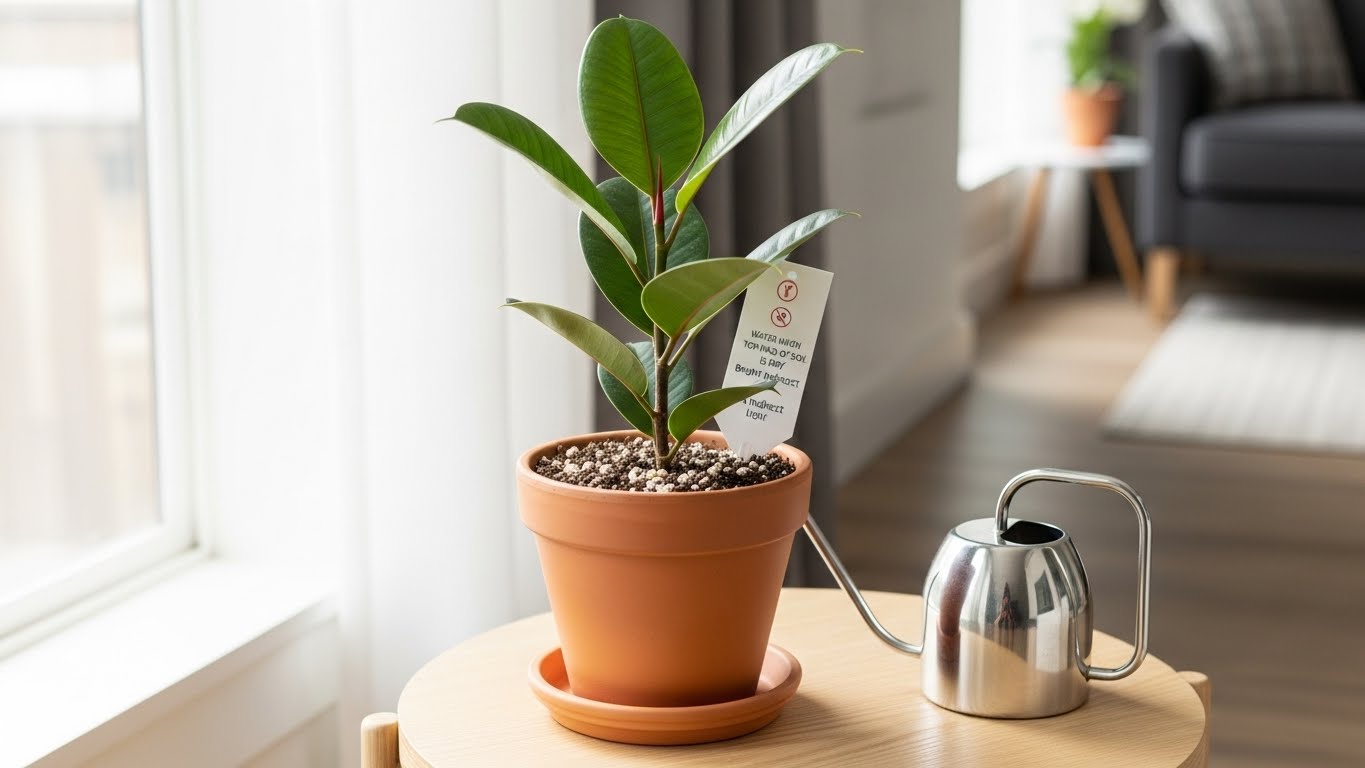
For beginner’s success with your rubber plant, start by placing it in bright, indirect sunlight, ideally near north or east-facing windows. Use a well-draining potting mix and water when the top inch of soil feels dry. Keep humidity between 40-60% and maintain a temperature of 65°F to 80°F. Fertilize every 4-6 weeks during the growing season and prune dead leaves to promote growth. Watch for pests like spider mites, and you’ll keep your plant thriving. There’s even more to explore about care tips!
Key Takeaways
- Position your rubber plant in bright, indirect sunlight, avoiding direct sunlight to prevent leaf scorching.
- Use well-draining potting mix with perlite or orchid bark to ensure proper aeration and prevent root rot.
- Water thoroughly when the top inch of soil feels dry, but avoid overwatering to prevent yellowing leaves and root rot.
- Fertilize every 4-6 weeks during the growing season with liquid or slow-release options for healthy growth.
- Monitor for pests like spider mites and mealybugs, and clean leaves regularly to maintain plant health.
Understanding Your Rubber Plant’s Needs
To help your rubber plant thrive, it’s essential to understand its unique needs, so you can create the perfect environment for it. First, let’s talk about light requirements. Rubber plants love bright, indirect sunlight, so place yours near a window but out of direct rays that can scorch its leaves. You’ll notice how happy it gets in the right light!
Next, consider soil preferences. Your rubber plant thrives in well-draining potting mix, which helps prevent root rot. A mix designed for houseplants often does the trick. By providing the right light and soil, you’re setting a solid foundation for your rubber plant’s growth, allowing it to flourish and bring joy to your space. Additionally, maintaining optimal temperature and humidity is crucial for its overall health and vitality. Keep these tips in mind, and watch your plant thrive!
Choosing the Right Potting Mix
Choosing the right potting mix is essential for your rubber plant’s health, so don’t overlook this step! You need a mix that offers excellent drainage to prevent root rot while also being rich in nutrients to keep your plant thriving. By selecting the right blend, you’re setting your rubber plant up for a successful growth journey!
Drainage Importance
When it comes to keeping your rubber plant healthy and thriving, the right potting mix is essential for ensuring proper drainage. You’ll want to choose a mix that allows excess water to flow away, preventing root rot. Look for drainage methods like perlite or orchid bark mixed in, which create air pockets and help moisture balance.
Also, your pot choices play a huge role; opt for pots with drainage holes to let water escape easily. If you pick a pot without holes, your plant’s roots may drown, leading to unhappy leaves. Remember, a well-draining potting mix and the right pot can keep your rubber plant smiling and growing strong, so take your time choosing wisely!
Nutrient-Rich Components
Selecting the right potting mix goes beyond just guaranteeing good drainage; it’s about providing your rubber plant with the nutrients it craves for vibrant growth. Start with a high-quality, well-draining potting mix, and consider adding soil amendments like perlite or vermiculite to boost aeration. Don’t forget about organic fertilizers! They’re fantastic for enriching your soil and preventing nutrient deficiencies. You can choose plant food specifically made for foliage plants, as this will guarantee your rubber plant gets the right balance of nutrients. Monitor your plant’s health closely, and if it shows signs of slow growth or yellowing leaves, it might need a nutrient boost. With the right mix, your rubber plant will thrive and flourish beautifully!
Ideal Lighting Conditions
To help your rubber plant thrive, it’s essential to provide the right lighting conditions, as this green beauty flourishes best in bright, indirect light. While your plant loves natural light, be careful not to expose it to direct sun, which can scorch those lovely leaves. If natural light isn’t available, don’t worry! You can use artificial light to keep your rubber plant happy and healthy.
Provide your rubber plant with bright, indirect light for optimal growth, avoiding direct sun to protect its beautiful leaves.
Here are some tips for perfect lighting conditions:
- Position your plant near a north or east-facing window for optimal light.
- Rotate your rubber plant every few weeks to encourage even growth.
- If using artificial light, aim for a full-spectrum bulb for the best results.
With the right light, your rubber plant will thrive beautifully!
Watering Guidelines
Watering your rubber plant can feel a bit tricky, but once you get the hang of it, your plant will reward you with stunning growth. Start by checking the soil moisture—stick your finger about an inch deep. If it feels dry, it’s time for a drink! But be careful; overwatering signs, like yellowing leaves or a mushy stem, indicate trouble.
Here’s a handy guide to help you:
Moisture Level | Action | Signs to Watch For |
|---|---|---|
Too Dry | Water thoroughly | Droopy leaves |
Just Right | Maintain routine | Healthy, vibrant leaves |
Too Wet | Let it dry out | Yellow leaves, root rot |
Keep your plant happy, and it’ll flourish!
Humidity and Temperature Preferences
While rubber plants are pretty adaptable, they thrive best in specific humidity and temperature conditions that mimic their natural tropical habitat. To keep your rubber plant happy, aim for humidity levels around 40-60%. This will help prevent leaf drop and keep it lush. As for temperature ranges, rubber plants love warmth, so keep them in a cozy spot between 65°F to 80°F (18°C to 27°C).
Rubber plants thrive in humidity levels of 40-60% and temperatures between 65°F to 80°F for optimal health.
Here are some tips to guarantee your plant feels right at home:
- Use a humidifier or pebble tray to maintain humidity.
- Avoid placing your plant near drafts or heating vents.
- Rotate your plant occasionally for even light exposure.
With these conditions, your rubber plant will thrive and grow beautifully!
Fertilizing Your Rubber Plant
Fertilizing your rubber plant is essential for keeping it vibrant and healthy, just like giving it a little extra boost to grow. You’ll want to choose the right fertilizer types, like liquid or slow-release options, that provide balanced nutrients. Generally, applying fertilizer every 4-6 weeks during the growing season works wonders.
Fertilizer Type | Application Frequency | Best Time to Apply |
|---|---|---|
Liquid | Every 4 weeks | Spring & Summer |
Slow-release | Every 6-8 weeks | Spring |
Organic | Every 4-6 weeks | Spring & Summer |
Pruning and Maintenance Tips
Now that you’ve got your rubber plant thriving with the right fertilizers, it’s time to focus on pruning and maintenance to keep it looking its best. You’ll learn about essential pruning techniques, how often to water, and effective pest management strategies that will help your plant flourish. Let’s jump into these tips so you can guarantee your rubber plant stays healthy and vibrant!
Pruning Techniques Explained
When it comes to keeping your rubber plant healthy and vibrant, understanding pruning techniques can make all the difference. Pruning helps your plant grow stronger and look great! Here are some essential tips to get you started:
- Use the right pruning tools: Sharp, clean shears are a must for precise cuts.
- Timing is key: Prune during the growing season, usually spring or early summer, to promote healthy growth.
- Focus on the dead and damaged leaves: Removing these will not only tidy up your plant but also encourage new growth.
Watering Frequency Guidelines
Watering your rubber plant is essential to its health, and getting the frequency just right can make a big difference. Generally, you should water every 1 to 2 weeks, but it depends on your plant’s environment. During warmer months, your rubber plant may thirst for more water, so keep an eye on the soil moisture. For watering methods, consider using the soak-and-dry technique—water thoroughly until it drains, then let the top inch of soil dry out before watering again. Don’t forget seasonal adjustments; in winter, your plant needs less water as it goes dormant. By tuning into your rubber plant’s needs, you’ll help it thrive and flourish beautifully!
Pest Management Strategies
Maintaining a healthy rubber plant involves more than just watering; effective pest management is essential to keeping your plant vibrant and thriving. Start by using pest identification techniques to catch any issues early. Look for signs like yellowing leaves or sticky residue, which could indicate pests like spider mites or aphids.
Here are some organic pest solutions to keep your plant safe:
- Spray neem oil or insecticidal soap on affected areas.
- Introduce beneficial insects like ladybugs to help control pests naturally.
- Regularly wipe leaves with a damp cloth to remove dust and potential pests.
Common Pests and How to Handle Them
Even though rubber plants are generally hardy and easy to care for, they can still fall victim to a few pesky pests that might try to invade your indoor jungle. Keep an eye out for common culprits like spider mites, mealybugs, and scale insects. Use these pest identification tips: check for webbing, sticky residue, or tiny cotton-like clusters. If you spot any intruders, don’t panic! There are natural remedies that can help. A simple mixture of water and mild soap works wonders—just spray it on the affected areas. You can also wipe the leaves with a damp cloth to remove any pests. With a little vigilance, your rubber plant will thrive, keeping the pests at bay!
Signs of a Healthy Rubber Plant
When you’re checking on your rubber plant, there are a few key signs you should look for to guarantee it’s thriving. A vibrant leaf color, firm stems, and noticeable growth can all indicate that your plant is happy and healthy. By paying attention to these details, you can help your rubber plant reach its full potential!
Leaf Color Vibrancy
A vibrant leaf color is one of the clearest indicators that your rubber plant is thriving, so it’s essential to keep an eye on those glossy, green leaves. When your plant’s leaves shine, it’s a sign of health and proper care. If you notice color fading, it could mean it needs a little extra attention.
Here are some things to watch for:
- Deep green: Rich shades indicate your plant’s getting enough nutrients.
- Glossy texture: A shiny surface shows your plant is well-hydrated and happy.
- New growth: Fresh leaves sprouting mean your plant is thriving and adapting well to its environment.
Keep nurturing your rubber plant, and those vibrant leaves will keep you smiling!
Stem Firmness
Stem firmness is a key indicator of your rubber plant’s overall health and importance. When you gently squeeze the stem, it should feel solid and robust, reflecting good stem health. A firm stem texture means your plant is thriving, while a soft or mushy stem could signal trouble. It’s crucial to regularly check this feature because a healthy stem supports the entire plant, helping it stand tall and proud. If you notice any signs of weakness, like wilting or drooping, it might be time to assess your care routine. Remember, your rubber plant relies on you for the right light, water, and nutrients, so keep an eye on that stem firmness to confirm your green friend stays happy and healthy!
Growth Rate Indicators
After ensuring your rubber plant’s stem feels firm and healthy, the next step is to observe its growth rate, which can reveal a lot about its overall well-being. Pay attention to its growth patterns, especially during seasonal changes. A thriving rubber plant will show signs of new leaves and extended stems. Here are a few key indicators to watch for:
- New Leaf Growth: Fresh, vibrant leaves signal your plant is happy.
- Leaf Size: Larger leaves indicate healthy growth and proper conditions.
- Color: Deep green leaves usually mean your plant’s thriving.
Troubleshooting Common Issues
Have you ever wondered why your rubber plant isn’t thriving as it should? If you’re noticing leaf drop, it might be time to check your plant’s environment. Too much direct sunlight can stress your plant, while insufficient light can lead to droopy leaves. On the other hand, if your rubber plant’s leaves are yellowing or wilting, you might be dealing with root rot. This occurs when the roots sit in waterlogged soil, so be sure to let the top inch of soil dry out between waterings. A well-draining potting mix is essential to prevent this issue. If you pay attention to these signs, you’ll be well on your way to enjoying a happy, healthy rubber plant!
Conclusion
By following this beginner’s checklist, you’re well on your way to becoming a rubber plant expert! With the right care, your plant can thrive and grow like a green giant in your home. Remember, each step you take—from choosing the right potting mix to spotting pests—helps guarantee your rubber plant stays healthy and vibrant. So grab your tools and get started; your new leafy friend is waiting to flourish under your care!


