
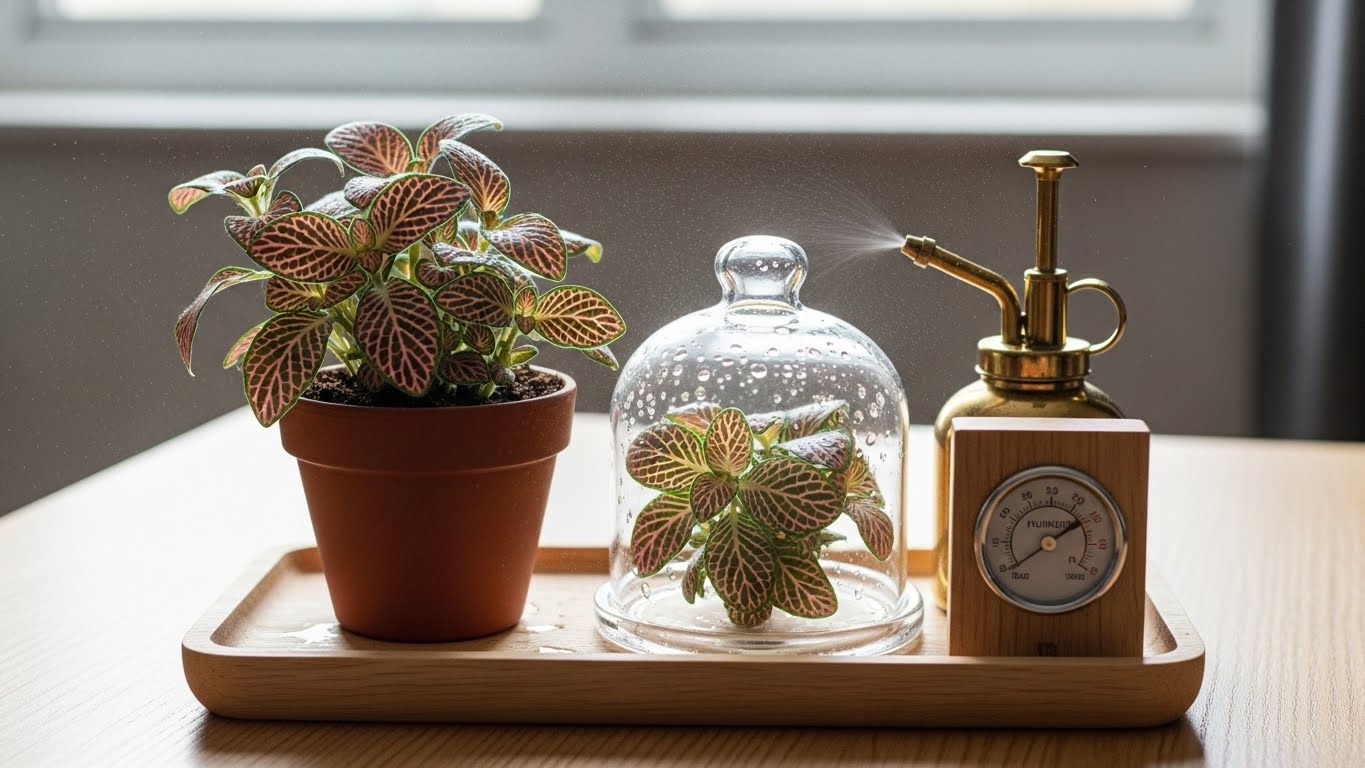
To care for your Fittonia, or nerve plant, start by giving it bright, indirect sunlight. Place it near an east-facing window, but avoid direct light that can burn its leaves. Water it regularly, ensuring the soil dries slightly between drinks, since overwatering can lead to root rot. Use a mix of peat moss, perlite, and orchid bark for good drainage. To keep those stunning colors vibrant and your plant healthy, keep exploring more care tips!
💡 For a comprehensive understanding of nurturing your Fittonia, this guide covers everything you need to know.
➜ Master the essentials of Fittonia care
Key Takeaways
💡 Understanding the light needs of your Fittonia is crucial for its health.
➜ Discover proven techniques
- Fittonias thrive in bright, indirect sunlight; place them near east-facing windows for optimal light conditions.
- Water regularly, ensuring soil dries slightly between waterings to prevent root rot.
- Use a soil mix of peat moss, perlite, and orchid bark for good drainage and moisture retention.
- Fertilize every 4-6 weeks with a balanced water-soluble fertilizer during the growing season for healthy growth.
- Maintain high humidity levels by misting leaves, using a humidifier, or grouping plants together.
Understanding Fittonia: A Brief Overview
Fittonia, often called the nerve plant, is a stunning addition to any indoor garden. With its vibrant leaves showcasing intricate patterns, you’ll quickly fall in love with its beauty. There are several fittonia varieties, each displaying unique colors like deep green, pink, and white, making them a perfect choice for your space. Plus, fittonia propagation is easy and rewarding—simply take stem cuttings and place them in water or moist soil. They’ll thrive as you nurture them, creating new plants to share with friends or expand your collection. Caring for these charming plants brings a sense of intimacy to your gardening journey, as they respond beautifully to your attention. You’ll find joy in watching them flourish! Additionally, maintaining optimal humidity levels is crucial for ensuring their vibrant growth and overall health.
Ideal Light Conditions for Fittonia
When it comes to light, fittonias thrive in bright, indirect sunlight, making them perfect for indoor spaces where they can soak up the glow without being scorched. You’ll want to find a spot with the right light intensity, as too much direct sunlight can cause their beautiful leaves to burn. An east-facing window is often ideal, providing gentle morning light. If you don’t have that, a few feet away from a south or west window can work, too. Just remember, best placement is key! If your fittonia starts to lose its vibrant colors or its leaves droop, it might be a sign it needs a little more light. Keep it cozy, and your plant will flourish!
Watering Your Fittonia: Frequency and Techniques
To keep your fittonia happy and healthy, watering it correctly is essential. These plants love their moisture levels just right, so you’ll want to monitor them closely. Here are some great watering techniques to guarantee your fittonia thrives:
- Check the soil: Stick your finger about an inch into the soil; if it feels dry, it’s time to water.
- Water thoroughly: When watering, soak the soil until water drains from the bottom, ensuring the roots get enough moisture.
- Avoid overwatering: Don’t let the plant sit in water, as this can lead to root rot.
Choosing the Right Soil Mix
Choosing the right soil mix for your fittonia is essential for its growth and overall health. You want a blend that offers the perfect soil texture, allowing your plant to thrive. A mix of peat moss, perlite, and orchid bark works wonders, providing the right balance for drainage requirements. Fittonias don’t like soggy roots, so good drainage is key to preventing root rot. When preparing your mix, aim for a light, airy texture that retains moisture without becoming waterlogged. This will create a cozy environment for your fittonia’s roots to spread and flourish. Remember, the right soil mix not only supports growth but also enhances the vibrant colors of your plant’s leaves, making it a stunning addition to your space!
Humidity Requirements for Optimal Growth
Humidity plays an essential role in the health and vigor of your fittonia, as these plants thrive in environments with high moisture levels. To guarantee your fittonia flourishes, aim for ideal humidity levels between 60% and 80%. Here are some tips for effective humidity control:
- Misting: Lightly mist your plant regularly to boost humidity, especially during dry seasons.
- Humidity trays: Place your fittonia on a tray filled with water and pebbles; this helps create a humid microclimate.
- Room placement: Keep your fittonia in naturally humid areas, like bathrooms or kitchens, where moisture levels are often higher.
Fertilizing Fittonia: When and How
When it comes to fertilizing your Fittonia, knowing the right type of fertilizer and how often to apply it is key for keeping your plant vibrant and healthy. You’ll want to look for a balanced, water-soluble fertilizer that supports its growth, while also being mindful of the signs that you might be overdoing it. Let’s explore the best practices for fertilizing your Fittonia to guarantee it thrives in your care!
Best Fertilizer Types
To keep your Fittonia thriving and colorful, using the right fertilizer can make all the difference. A good fertilizer will guarantee your plant gets the proper nutrient balance it craves. Here are some great options to reflect upon:
- Balanced liquid fertilizer: Look for a 20-20-20 mix that provides equal nutrients for healthy growth.
- Organic options: Choose compost or worm castings that naturally enrich the soil, promoting a healthier environment.
- Slow-release granules: These can feed your Fittonia over time, reducing the need for constant reapplication.
Using these fertilizers will help your Fittonia flourish and maintain its vibrant colors. Remember, a little care goes a long way in keeping your plant happy and healthy!
Frequency of Application
💡 Watering is another key element in keeping your Fittonia healthy.
➜ Get the step-by-step guide
💡 Choosing the right soil is crucial for your Fittonia’s health. Learn how to create the perfect mix.
➜ Discover the ideal soil mix
Fertilizing your Fittonia is essential for keeping it healthy and vibrant, so knowing when and how to apply nutrients can make a big difference. Aim for an application frequency of every 4-6 weeks during the growing season, which typically runs from spring to early fall. This timing helps your plant soak up the nutrients it craves while it’s actively growing. When you apply fertilizer, dilute it to half-strength to prevent overwhelming your Fittonia. Always water your plant a day before fertilizing, as this guarantees it’s hydrated and ready to absorb those goodies. By following these simple tips on nutrient timing, you’ll help your Fittonia flourish, showcasing its beautiful colors and lush leaves.
Signs of Over-Fertilization
💡 Understanding the light requirements of your Fittonia is essential for its growth. This article breaks down what you need to know.
➜ Explore Fittonia’s light needs
💡 Choosing the right soil mix can significantly impact your Fittonia’s growth.
➜ Master this approach
While feeding your Fittonia helps it thrive, too much fertilizer can lead to problems. Over-fertilization can cause nutrient imbalances that harm your plant, so it’s important to recognize the signs of this issue. Here are a few symptoms to watch for:
- Yellowing leaves, which indicate a potential nutrient overload
- Leaf burn, showing crispy edges or tips
- Wilting, even when the soil remains moist
Pruning and Maintenance Tips
Pruning your Fittonia is essential for keeping it healthy and vibrant, especially when you want to encourage bushier growth and remove any leggy or damaged stems. Start by using sharp, clean scissors or pruning shears to snip off any overgrown or unhealthy parts. Aim for just above a leaf node, which helps stimulate new growth. Incorporate these pruning techniques into your regular maintenance routines, doing this every few months. This not only helps your plant maintain its shape but also promotes a fuller appearance. Remember, your Fittonia thrives on attention, so don’t be afraid to give it some love by regularly checking for any unwanted growth and making those snips. Your plant will thank you!
Common Pests and Diseases
Now that you’ve got pruning and maintenance down, let’s tackle common pests and diseases that can affect your Fittonia. You’ll want to keep an eye out for pesky critters like spider mites and aphids, as well as signs of plant diseases that could harm your vibrant foliage. By learning to identify these issues early, you can take steps to prevent them from taking over your plant’s health!
Identifying Common Pests
Have you ever noticed tiny bugs crawling on your Fittonia and wondered what they are? Identifying these pests is essential for keeping your plant healthy. You can use some pest identification techniques to figure out what you’re dealing with.
Here are a few common pests you might encounter:
- Aphids: Small, green or black bugs that cluster on new growth.
- Spider Mites: Tiny, spider-like creatures that create fine webbing on leaves.
- Mealybugs: White, cottony spots that stick to stems and leaves.
Once you identify them, you can apply natural pest remedies like neem oil or insecticidal soap. Remember, a little diligence goes a long way in keeping your Fittonia thriving and beautiful!
Preventing Plant Diseases
After tackling common pests, it’s important to look out for plant diseases that can also affect your Fittonia. To guarantee disease prevention, focus on maintaining good plant hygiene. Start by regularly checking your plant for any signs of distress, like yellowing leaves or unusual spots. If you notice anything off, act quickly! Remove affected leaves and confirm your Fittonia has proper airflow around it.
Watering techniques matter too—overwatering can lead to root rot, so let the soil dry slightly between waterings. Additionally, using clean, sterile tools when pruning can help prevent introducing harmful pathogens. By keeping your plant clean and healthy, you’re taking essential steps to keep those pesky diseases at bay!
Troubleshooting Fittonia Issues
When you notice your Fittonia looking droopy or discolored, it can be a little concerning, but don’t worry—these plants often show signs when they need a bit of extra care. To help your leafy friend bounce back from fittonia leaf droop or fittonia leaf discoloration, check a few key factors:
- Watering: Make certain you’re watering regularly, but not overdoing it.
- Light: Verify your plant’s getting bright, indirect light; it thrives in that environment.
- Humidity: Fittonias love humidity, so consider misting them or placing a humidifier nearby.
Conclusion
With a little care and attention, your Fittonia can thrive like a vibrant forest in a fairy tale. Remember, providing the right light, water, and soil is key to its happiness. Keep an eye on humidity and pests, and don’t forget to give it some love through pruning and fertilizing. Embrace the journey of nurturing your plant, and soon you’ll have a lush, green companion that brings a splash of life to your space!
💡 Even with the best care, issues can arise with your Fittonia.
➜ Explore advanced methods
💡 Every plant owner faces challenges. This article provides solutions to the most common Fittonia problems.
➜ Get solutions for common issues


