
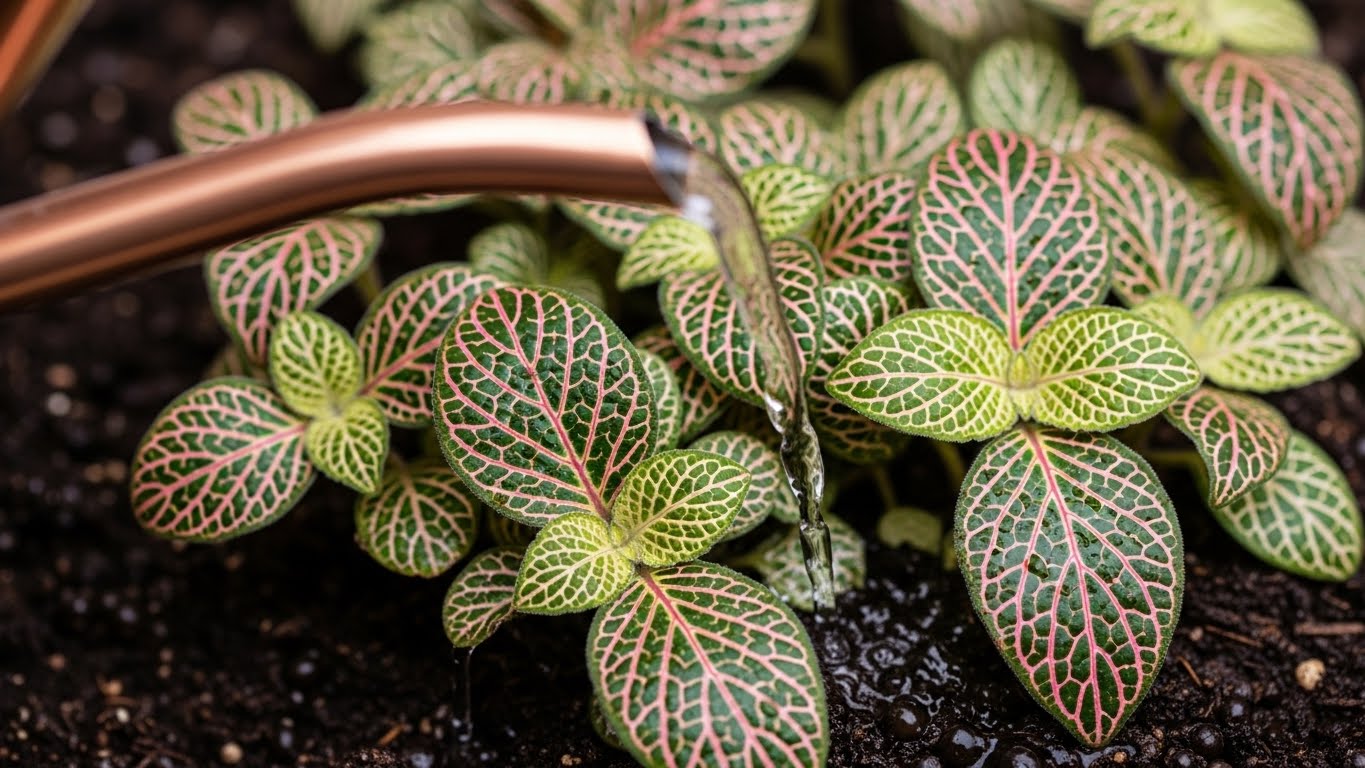
To keep your Fittonia thriving indoors, water it when the top inch of soil feels dry. Fittonias love moisture, so make sure not to let the soil dry out completely. It’s best to water thoroughly, letting excess water drain out to prevent root rot. Keep an eye on your plant’s leaves for signs of distress, like wilting or crispy edges. Want tips on humidity and other care essentials? There’s more to explore!
💡 Understanding the fundamental needs of your Fittonia is crucial for its health and vibrancy.
➜ Master the essentials of Fittonia care
Key Takeaways
💡 To ensure your Fittonia thrives, understanding its care is crucial.
➜ Master the essential care techniques
- Water your Fittonia when the top inch of soil feels dry to the touch.
- Check humidity levels; increase watering frequency in high humidity and decrease in dry conditions.
- Ensure thorough watering, allowing excess to drain out to avoid standing water.
- Regularly mist the leaves to maintain humidity and enhance moisture retention.
- Monitor leaf conditions for signs of distress, adjusting watering frequency accordingly.
Understanding the Fittonia Plant
Fittonia, often called the nerve plant, is a small yet stunning houseplant that thrives in the warm, humid environments of tropical rainforests. With its lush, vibrant leaves, Fittonia adds a touch of natural beauty to your space. To guarantee healthy growth, you’ll want to focus on Fittonia care—this means providing consistent moisture while avoiding soggy soil. Water it when the top inch of soil feels dry, but don’t let it completely dry out. If you’re feeling adventurous, consider Fittonia propagation! You can easily create new plants by taking cuttings and placing them in water until they develop roots. It’s a fun way to expand your collection or share with friends. Maintaining humidity is crucial for Fittonia’s health, as it thrives in environments with 50% humidity or higher. Embrace the joy of nurturing this delightful plant!
Ideal Growing Conditions for Fittonia
To create a thriving environment for your Fittonia, it’s essential to replicate the warm, humid conditions of its native tropical habitat. Start by ensuring your plant gets bright, indirect light, as this fulfills its light requirements. Direct sunlight can scorch those delicate leaves, so keep it cozy in a spot that’s well-lit but shielded. When it comes to temperature preferences, aim for a range between 65°F to 80°F (18°C to 27°C). Fittonias love humidity, so consider misting the leaves or placing a humidifier nearby. This not only boosts their health but also enhances the beautiful colors of their foliage. By providing these ideal conditions, you’re nurturing a happy, vibrant Fittonia that’ll thrive in your home!
Signs of Underwatering
When it comes to caring for your Fittonia, recognizing the signs of underwatering is super important. You might notice the leaves wilting, the soil feeling dry on the surface, or even a shift in leaf color, all hinting that your plant needs a drink. Catching these signs early can help keep your Fittonia healthy and vibrant!
Wilting Leaves Appearance
A common sign of underwatering your Fittonia is its leaves wilting and drooping, creating a sad, limp appearance. When you notice these wilting symptoms, it’s a clear signal that your plant needs a drink. Here are some key things to look for:
- Leaf droop: Leaves hang down instead of standing upright.
- Color changes: Leaves may turn yellow or brown.
- Crispy edges: The edges of the leaves feel dry and crunchy.
- Loss of vibrant patterns: Your Fittonia’s beautiful markings might fade.
- Overall weakness: The plant seems less sturdy and more fragile.
Pay attention to these signs, and you’ll help your Fittonia thrive with just a little extra care!
Dry Soil Surface
Noticing wilting leaves is just one indicator that your Fittonia might be thirsty. Another sign to pay attention to is the dry soil surface. If the top layer of soil feels dry to the touch, it’s a clear signal that your plant needs a drink. Fittonias thrive on moisture retention, so when the soil dries out, it can lead to stress for your plant. Take a moment to check the moisture level a couple of inches down; if it’s dry, it’s time to water. Remember, a consistent watering routine helps maintain that essential moisture, keeping your Fittonia vibrant and happy. Don’t let the dry soil surface fool you—your plant needs love and hydration to flourish!
Leaf Color Changes
Leaf color changes can be one of the most telling signs that your Fittonia needs water. When it starts to get thirsty, you might notice some shifts in leaf pigment, leading to color variations that aren’t typical for your plant. Here’s what to look for:
- Leaves may turn yellow or brown.
- The vibrant colors might fade or dull.
- Edges can become crispy or dry.
- Some leaves may droop or curl.
- New growth might be stunted or pale.
These changes are your Fittonia’s way of signaling distress. By paying attention to these signs, you can guarantee your plant stays healthy and vibrant, making your indoor space feel warm and welcoming. It’s all about nurturing your green companion!
Signs of Overwatering
When you’re caring for your Fittonia, it’s essential to watch for signs of overwatering, as too much moisture can harm your plant. Here are some common overwatering symptoms to look out for:
Symptoms | Description | Action to Take |
|---|---|---|
Yellowing Leaves | Leaves turn yellow and droop | Reduce watering |
Wilting | Leaves feel limp and soft | Allow soil to dry |
Mold Growth | White or fuzzy mold on soil | Improve drainage |
Root Rot | Roots turn dark and mushy | Repot in dry soil |
If you notice these signs, take action quickly! Overwatering can lead to root rot, which can be devastating for your Fittonia. Remember, balance is key!
Factors Affecting Watering Frequency
💡 Identifying and addressing problems early can save your plant.
➜ Discover proven solutions for common issues
💡 Identifying and addressing common problems can save your Fittonia from distress.
➜ Discover proven techniques to solve Fittonia issues
Understanding how often to water your Fittonia goes beyond just checking the soil moisture; several factors can influence your plant’s watering needs. By considering these elements, you can tailor your watering techniques to keep your plant happy and healthy.
- Humidity levels: Higher humidity means less frequent watering.
- Temperature: Warmer conditions can dry out the soil faster.
- Plant size: Larger plants generally need more water than smaller ones.
- Pot size: A bigger pot retains moisture longer.
- Soil type: Well-draining soil may require more frequent watering.
Seasonal Watering Adjustments
💡 Recognizing the signs of overwatering can help you adjust your watering routine effectively.
➜ Learn to identify overwatering signs
💡 Understanding the signs of overwatering is essential for maintathisng your Fittonia’s health.
➜ Learn to identify overwatering signs
Adjusting your watering routine for your Fittonia throughout the seasons is essential for keeping it thriving. Changes in seasonal temperature and light can greatly affect your plant’s needs. During warmer months, your Fittonia will likely need more water due to increased evaporation and growth. In cooler months, reduce watering as the plant goes into a resting phase.
Here’s a simple guide to help you adjust your watering:
Season | Watering Frequency | Notes |
|---|---|---|
Spring | Every 1-2 weeks | Increased growth |
Summer | Weekly | Higher evaporation |
Fall/Winter | Every 2-3 weeks | Reduced light & growth |
Best Practices for Watering Fittonia
To keep your Fittonia healthy and vibrant, knowing the best practices for watering is key. You want to make certain you’re using the right watering techniques, which will help maintain the perfect soil moisture. Here are some tips to guide you:
- Check the top inch of the soil; if it’s dry, it’s time to water.
- Water thoroughly, allowing excess to drain out.
- Avoid letting the plant sit in standing water; this can cause root rot.
- Mist the leaves regularly to maintain humidity, as Fittonia loves moisture.
- Consider using a moisture meter for precise readings, so you can perfect your watering routine.
Choosing the Right Potting Mix
When you’re choosing the right potting mix for your Fittonia, it’s essential to contemplate its unique needs, since this plant thrives in conditions that mimic its natural tropical habitat. Look for potting materials that provide a balance of moisture retention and aeration. A mix containing peat moss, perlite, and orchid bark is a fantastic choice. These ingredients help meet the drainage requirements Fittonia demands to prevent root rot. Remember, a well-draining mix will keep your plant happy and healthy, allowing it to flourish. It’s all about creating that cozy environment that feels just right. So, when you pot your Fittonia, make sure it’s snugly nestled in its new home, ready to show off those beautiful leaves!
Humidity and Its Impact on Watering
Humidity plays an essential role in how often you water your Fittonia, so it’s important to know the ideal levels for these plants. If the air is too dry, you might notice signs like wilting or browning leaves, which means it’s time to adjust your watering routine. By keeping an eye on humidity, you can guarantee your Fittonia stays happy and healthy!
Ideal Humidity Levels
Finding the perfect humidity level for your Fittonia is essential, since these vibrant plants thrive in moist environments. Ideally, they prefer humidity levels between 60% and 80%. To guarantee your Fittonia feels at home, consider these humidity sources and humidity measuring tips:
- Use a humidity meter to check levels regularly.
- Mist your Fittonia daily for an extra moisture boost.
- Group plants together to create a humid microclimate.
- Place a pebble tray filled with water under the pot.
- Keep your Fittonia in a bathroom or kitchen, where humidity tends to be higher.
Signs of Low Humidity
Low humidity can be a sneaky thief when it comes to your Fittonia’s health, and spotting the signs early can make all the difference. If you notice the leaves curling or browning at the edges, that’s your plant whispering for more moisture. A lack of humidity levels can also lead to wilting, which might make you feel anxious about its well-being. Additionally, if the soil dries out too quickly, it’s a sign that moisture retention isn’t happening effectively. Keep an eye on these symptoms, as they can help you create a cozy environment for your Fittonia. Remember, your plant thrives in humidity, so stay vigilant to guarantee it stays happy and healthy!
Adjusting Watering Frequency
When it comes to keeping your Fittonia thriving, adjusting your watering frequency is essential, especially since humidity plays a significant role in how often you should water your plant. You’ll want to monitor the moisture levels and adapt your watering techniques accordingly. Here are some tips to help you out:
- Check humidity levels regularly.
- Water more often in high humidity.
- Reduce watering in dry conditions.
- Use a moisture meter for accurate readings.
- Observe your plant’s leaves for signs of distress.
Common Mistakes to Avoid
Caring for a Fittonia can be a rewarding experience, but it’s easy to make some common mistakes that might hinder your plant’s growth. One of the most frequent issues is overwatering. Remember, too much water can lead to root rot, so always let the top inch of soil dry out before you water again. Another common watering mistake is not paying attention to environmental changes. If the humidity drops or the temperature rises, your plant might need more water. Finally, don’t forget to check your pot’s drainage. Poor drainage can exacerbate overwatering concerns. By avoiding these pitfalls, you’ll keep your Fittonia thriving and vibrant, and that’s the goal, right?
Conclusion
To conclude, watering your Fittonia plant requires attention and care to keep it thriving. Remember, these plants enjoy moist soil but can suffer if overwatered or underwatered. Curiously, studies show that a Fittonia can absorb up to 90% of its water from the air around it, highlighting the importance of humidity. By following the best practices outlined, you’ll cultivate a healthy, vibrant plant that brings life to your indoor space. Happy gardening!
💡 A consistent watering routine is key to a healthy Fittonia.
➜ Get the step-by-step watering routine
💡 The right soil mix can significantly impact how often and how much you need to water your Fittonia.
➜ Explore advanced soil strategyes for Fittonia


