
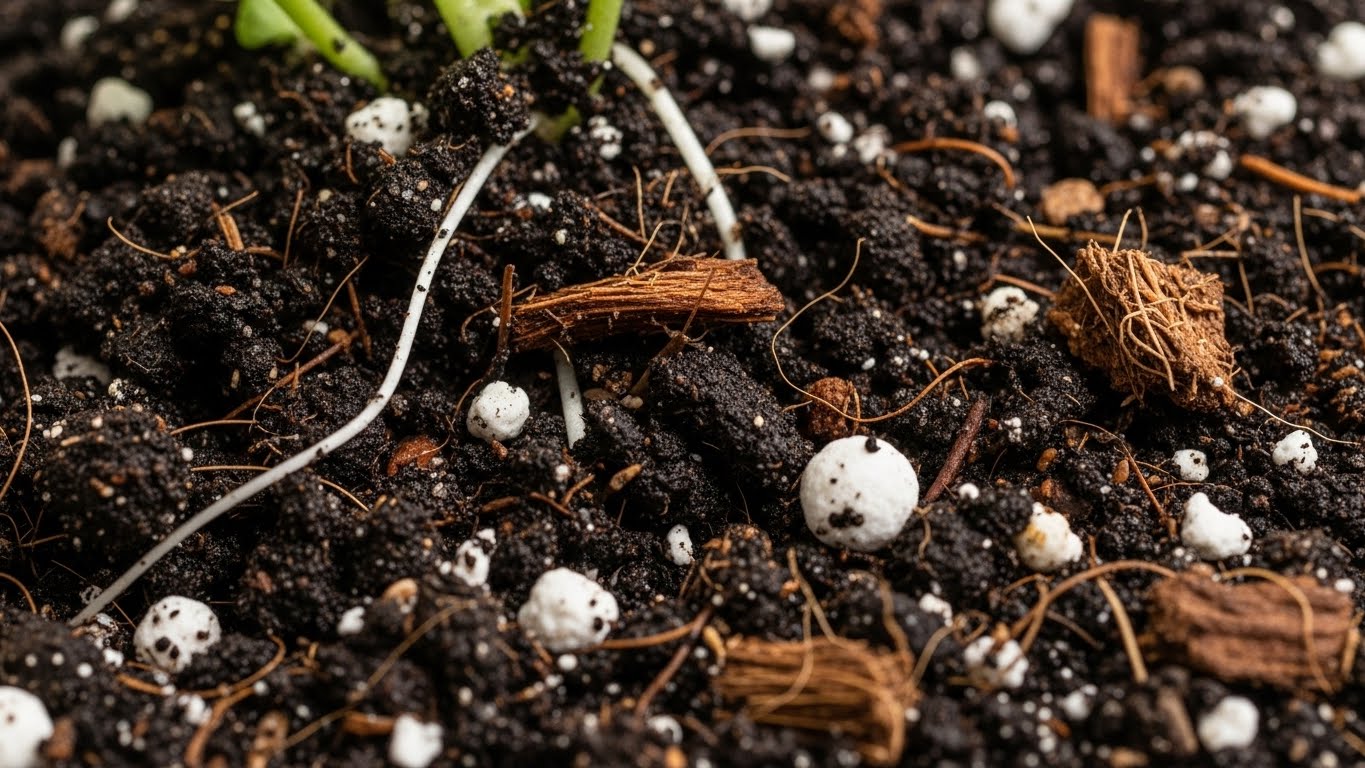
To keep your Fittonia thriving, use a well-draining soil mix that mimics its rainforest roots. Combine peat moss, coconut coir, perlite, and a bit of orchid bark for moisture retention and aeration. Aim for a slightly acidic pH between 5.5 to 6.5 for best nutrient absorption. This blend provides the cozy home Fittonia loves while preventing root rot. Want to know more about caring for your Fittonia? There’s plenty of fantastic info ahead!
💡 Understanding the basics of Fittonia care is crucial for a thriving plant.
➜ Master the essential care techniques
Key Takeaways
💡 Understanding the basics of Fittonia care is crucial for its thriving health.
➜ Master the essential care techniques
- Use a peat-based potting mix that retains moisture while providing essential nutrients for vibrant foliage.
- Incorporate organic matter like compost to enhance soil health and nutrient availability.
- Add perlite or vermiculite to improve drainage and prevent soil compaction.
- Maintain a slightly acidic pH of 5.5 to 6.5 for optimal nutrient absorption.
- Regularly check for signs of poor soil conditions, such as yellowing leaves or stunted growth, to ensure plant health.
Understanding Fittonia’s Natural Habitat
When you think about Fittonia, or the nerve plant as it’s often called, it’s fascinating to realize that this vibrant little beauty hails from the tropical rainforests of South America. In its natural habitat, you’ll find that Fittonia thrives in warm, humid conditions, making it essential to replicate those humidity levels in your home. These plants grow best when you maintain a humidity level of around 60% to 80%, mimicking the rainforest environment. When you provide adequate moisture, you’ll notice the lush, colorful foliage flourishing, showcasing the stunning patterns that make Fittonia so beloved. Keeping your Fittonia happy means understanding its needs, so don’t underestimate the importance of creating a cozy, humid atmosphere for ideal fittonia growth. Additionally, using a peat-based potting mix will help retain moisture and provide the necessary nutrients for healthy growth.
Key Soil Characteristics for Fittonia
To keep your Fittonia thriving, you need to pay close attention to its soil characteristics, since the right mix plays an essential role in its overall health. First off, maintaining proper soil moisture is vital; Fittonias prefer well-draining soil that retains some moisture without becoming soggy. This balance helps prevent root rot, which can be a real concern.
Next, focus on nutrient balance. Fittonias thrive in nutrient-rich soil that supports their vibrant foliage. You’ll want to guarantee the mix has organic matter, like compost, to provide those essential nutrients.
Recommended Soil Mix Ingredients
When you’re mixing soil for your Fittonia, it’s essential to think about a few key ingredients that will help your plant thrive. You’ll want to include plenty of organic matter, guarantee good drainage and aeration, and pay attention to the pH level of your mix. Getting these elements right will create a happy environment for your Fittonia to flourish!
Organic Matter Importance
Creating the perfect soil mix for your Fittonia is essential, especially because this plant thrives in environments rich in organic matter. Incorporating organic compost into your mix offers fantastic benefits. It boosts nutrient retention, ensuring your Fittonia receives the essential nutrients it craves. Organic compost not only enriches the soil but also improves its structure, making it easier for roots to spread and access moisture. Plus, it encourages beneficial microorganisms, creating a lively ecosystem in your pot. When you blend in organic matter, you’re setting your Fittonia up for success, helping it flourish with vibrant leaves and healthy growth. So, don’t underestimate the power of that compost—your Fittonia will thank you with its beautiful, lush foliage!
Drainage and Aeration Needs
Finding the right balance of drainage and aeration is essential for keeping your Fittonia healthy and happy. Too much soil compaction can suffocate roots, while good drainage helps manage moisture retention. Here are some ingredients that will create the perfect mix:
- Coconut coir: Retains moisture while allowing air flow.
- Perlite: Increases drainage and prevents soil compaction.
- Orchid bark: Adds texture and promotes aeration.
- Peat moss: Helps with moisture retention without becoming soggy.
- Sand: Improves drainage and keeps the mix light.
Combining these ingredients will guarantee your Fittonia thrives, offering you vibrant leaves and stunning colors. Don’t forget to check your soil regularly, as a little care goes a long way toward a happy plant!
Ph Level Considerations
Understanding the pH level of your soil mix is essential for the well-being of your Fittonia, as it directly affects nutrient availability and overall plant health. Aim for a slightly acidic pH, ideally between 5.5 and 6.5. To achieve this, you can include peat moss or coconut coir, which help create that perfect environment. Don’t forget about pH testing! Regular checks guarantee your Fittonia gets the nutrients it craves. If the pH drifts too high or low, you might see signs of nutrient imbalance, like yellowing leaves. Mix in perlite for drainage and a balanced fertilizer to keep your plant thriving. With these ingredients, you’ll have a happy Fittonia that flourishes in your care!
Pre-made Potting Mixes for Fittonia
When you’re looking to give your Fittonia the best chance to thrive, choosing the right pre-made potting mix can make all the difference. There are several reputable potting brands that offer pre-made options specifically designed for tropical plants like your Fittonia. These mixes often contain the right balance of nutrients and moisture retention, ensuring your plant stays happy. Here are some great choices to evaluate:
- Miracle-Gro Indoor Potting Mix
- FoxFarm Ocean Forest Potting Soil
- Black Gold All-Purpose Potting Soil
- Espoma Organic Potting Mix
- Pro-Mix HP Mycorrhizae
Each of these blends can provide a solid foundation, allowing your Fittonia to flourish while you enjoy its vibrant colors and beautiful leaves.
💡 Repotting your Fittonia correctly is vital for its health and growth.
➜ Get the step-by-step repotting guide
💡 Repotting is an essential part of maintathisng a healthy Fittonia.
➜ Get the step-by-step repotting guide
How to Create Your Own Soil Mix
💡 Even with the best soil mix, problems can arise. Being prepared is key.
➜ Discover proven solutions to common issues
Creating your own soil mix for Fittonia can be both fun and rewarding, especially since it allows you to tailor the ingredients to meet your plant’s specific needs. Start with a base of high-quality potting soil, then add soil amendments like coconut coir for moisture retention and perlite for aeration. Mixing techniques are key here; combine equal parts potting soil, coir, and perlite to guarantee a balanced mix. You might also consider adding a handful of worm castings for extra nutrients. Remember, the goal is to create a light, well-draining mix that keeps your Fittonia happy and thriving. Enjoy the process, and don’t hesitate to experiment until you find the perfect blend that works for you!
💡 Humidity plays a vital role in the health of your Fittonia.
➜ Discover the ideal humidity levels
Importance of Drainage for Fittonia
When it comes to keeping your Fittonia healthy, proper drainage is key. If water sits in the soil, it can lead to root rot, which is a serious issue for these beautiful plants. You’ll want to think about the soil composition and explore some effective drainage techniques to guarantee your Fittonia thrives!
Soil Composition Matters
Soil composition plays an essential role in the health of your Fittonia, and ensuring proper drainage is one of the most important factors to take into consideration. The right soil texture helps maintain a balance between moisture and air circulation, which is crucial for your plant’s roots. When you choose a mix that allows for good drainage, you’ll also enhance nutrient retention, supporting your Fittonia’s vibrant growth.
Here are some key elements to contemplate for your soil mix:
- Well-draining potting soil: Keeps roots dry yet nourished.
- Perlite or pumice: Adds aeration and prevents compaction.
- Coconut coir: Retains moisture while offering drainage.
- Worm castings: Provides nutrients without waterlogging.
- Sand or bark: Improves soil texture for healthy roots.
Excess Water Risks
Excess water can spell trouble for your Fittonia, leading to root rot and other serious issues if you’re not careful. It’s essential to keep an eye out for overwatering symptoms. If you notice your plant’s leaves turning yellow or wilting despite moisture, you might be giving it too much love! Preventing root rot is all about balance; make sure your soil mix drains well to avoid standing water. Remember, Fittonia loves humidity but hates soggy roots. By watching for those telltale signs and adjusting your watering routine, you can keep your plant happy and thriving. So, nurture your Fittonia wisely, and it’ll reward you with vibrant, colorful leaves that bring life to your space!
Drainage Techniques Explained
To keep your Fittonia thriving, understanding the importance of drainage techniques is crucial. Good drainage prevents root rot and guarantees your plant absorbs the right amount of moisture. Here are some effective drainage methods and materials you can use:
- Use a pot with drainage holes to allow excess water to escape.
- Incorporate perlite or vermiculite into your soil mix for improved aeration.
- Add a layer of gravel at the bottom of the pot to help with water flow.
- Choose a well-draining potting mix specifically designed for tropical plants.
- Elevate the pot slightly using pot feet to encourage airflow beneath.
Signs of Poor Soil Conditions
When you’re caring for a Fittonia, keeping an eye on the soil is essential, because poor soil conditions can lead to unhappy plants. You might notice some soil symptoms that signal trouble, like yellowing leaves, which often means your plant isn’t getting enough nutrients. If you see stunted growth or tiny, discolored spots, it could indicate nutrient deficiencies. A Fittonia craving nourishment may also start dropping leaves, leaving you feeling concerned. It’s vital to act quickly, as these signs show your plant is struggling. Remember, happy soil equals a happy plant, so stay vigilant! Regularly check for these clues, and your Fittonia will thrive, bringing vibrant life to your space. Keep nurturing that connection!
Tips for Repotting Your Fittonia
Repotting your Fittonia can feel like a big task, but it’s actually a great opportunity to give your plant a fresh start! To make this process smoother, keep these tips in mind:
- Choose the Right Time: Spring is the ideal timing for repotting, as your Fittonia is just waking up.
- Prepare Your Soil: Use a well-draining mix to guarantee your plant thrives.
- Gently Remove: Use repotting techniques that minimize root damage; gently loosen the roots from the old pot.
- Size Up: Choose a pot that’s only one size larger to avoid overwhelming your plant.
- Water Wisely: After repotting, water thoroughly but let the soil dry out slightly before the next watering.
Follow these steps, and your Fittonia will thank you!
Conclusion
To summarize, giving your Fittonia the right soil mix is like providing it with a cozy blanket—essential for its happiness! By understanding its natural habitat, focusing on drainage, and using the right ingredients, you’ll guarantee your plant thrives. Whether you choose a pre-made mix or whip up your own, your Fittonia will thank you with vibrant leaves and a cheerful presence. Remember, a little care goes a long way in nurturing your green friend!
💡 Identifying problems early can save your Fittonia from distress.
➜ Explore common issues and solutions
💡 If you’re considering Fittonia for your workspace, knowing how to care for it is essential.
➜ Explore advanced office care tips


