
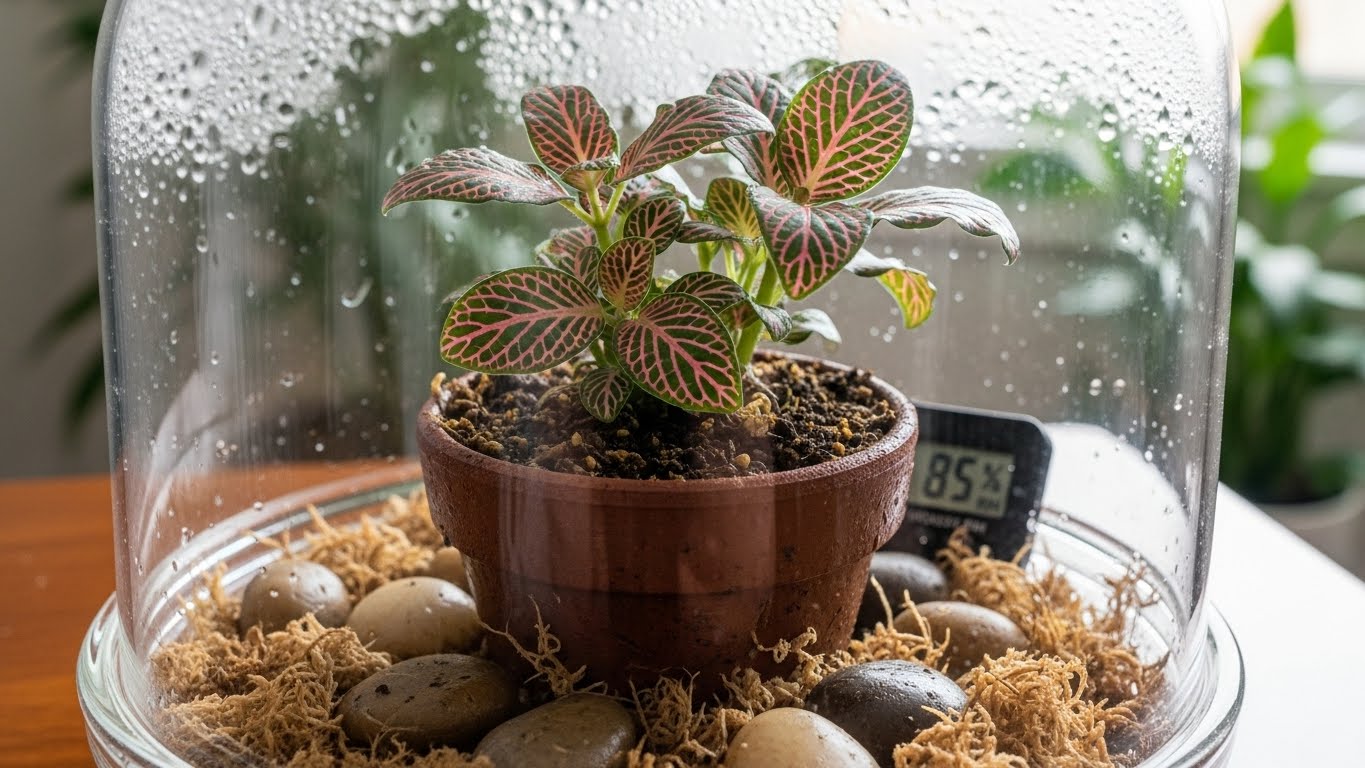
Fittonia loves high humidity, thriving best when levels are between 50% and 70%. This mimics its tropical rainforest home, where moisture is plentiful. If your Fittonia’s leaves start to brown or curl, it’s a sign it needs more humidity. You can boost the humidity around your plant by misting it, grouping it with other plants, or using a humidifier. Want to know the best spots in your home for your Fittonia? Let’s explore!
💡 Understanding the basics of Fittonia care is crucial for maintathisng its health and vibrancy.
➜ Master the essentials of Fittonia care
Key Takeaways
💡 Understanding the basics is crucial for your Fittonia’s health.
➜ Master the essentials of Fittonia care
- Fittonia thrives in humidity levels between 50% and 70%, with optimal growth occurring at 60% to 80%.
- Low humidity symptoms include browning leaf edges, wilting, and crispy leaf textures.
- Misting daily, using pebble trays, and grouping plants can effectively increase humidity.
- Ideal locations for Fittonia are bright, humid areas like bathrooms or kitchens, avoiding direct sunlight.
- Soil types like peat-based mixes help retain moisture, supporting the plant’s humidity needs.
Understanding Fittonia’s Natural Habitat
Fittonia, often called the nerve plant, thrives in the lush, tropical rainforests of South America, particularly in areas like Peru and Colombia, where humidity levels soar and the air feels like a warm, damp hug. In these vibrant tropical environments, fittonia growth is truly remarkable, as the plant flourishes under the sheltered canopy of taller trees, soaking up the filtered light and moisture. The rich, loamy soil provides essential nutrients, while the constant humidity keeps the plant’s delicate leaves from wilting. Imagine the lush greens and intricate patterns on fittonia’s leaves, a demonstration of its adaptation to such a nurturing habitat. To help your fittonia flourish, it’s essential to replicate these conditions at home, ensuring it feels loved and cared for. Maintaining a humidity level of 50% or higher is crucial for Fittonia’s health and vitality.
Ideal Humidity Levels for Fittonia
When caring for your Fittonia, it’s essential to know the ideal humidity levels it thrives in. Typically, these plants love humidity between 50% and 70%, so if your home is too dry, you might notice some warning signs. Let’s explore how to recognize low humidity symptoms and ways to boost moisture levels for your lovely Fittonia!
Optimal Humidity Range
Creating the right atmosphere for your Fittonia is essential, and it thrives best in a humidity range of 60% to 80%. To guarantee your plant feels cozy and loved, consider using humidity measurement techniques and humidity monitoring tools. Here are some ways to create that perfect environment:
- Misting: Lightly mist your Fittonia daily to boost humidity.
- Pebble Tray: Place a tray filled with water and pebbles underneath its pot for gentle moisture.
- Humidity Dome: Use a clear plastic dome to trap humidity around your plant.
- Room Placement: Keep your Fittonia in a naturally humid area, like the bathroom or kitchen.
Symptoms of Low Humidity
If your Fittonia isn’t getting enough humidity, you might start to notice some telltale signs that it’s not feeling its best. Common humidity indicators include browning leaf edges, wilting, and a general droopy appearance. These symptoms are all signs of plant stress, as your Fittonia struggles to maintain its vibrant, lush look. If you see the leaves curling inward or becoming crispy, it’s a clear message that the air around it is too dry. You’ll want to pay attention to these signs, as they can help you identify when your plant needs a little extra love. Remember, keeping the right humidity levels is key to ensuring your Fittonia thrives and remains a beautiful addition to your home.
Increasing Humidity Levels
To keep your Fittonia looking its best, maintaining the right humidity levels is essential. You’ll want to create a cozy environment for your plant, and here are some effective ways to increase humidity:
- Misting Techniques: Gently mist your Fittonia daily to provide a revitalizing moisture boost.
- Humidity Trays: Fill shallow trays with water and pebbles, placing your pot on top to let evaporation work its magic.
- Grouping Plants: Surround your Fittonia with other plants; their combined humidity can create a lovely microclimate.
- Room Placement: Keep your Fittonia in a naturally humid area, like a bathroom or kitchen, where steam can help keep things moist.
With these tips, your Fittonia will thrive in the humidity it craves!
Signs Your Fittonia Needs More Humidity
If you notice your Fittonia’s leaves curling or developing brown tips, it might be a sign that it needs more humidity. These issues can be pretty common when the air in your home is too dry for this tropical plant. Let’s explore what these signs mean and how to keep your Fittonia happy and thriving!
Leaf Curling Issues
When your Fittonia starts curling its leaves, it’s a clear sign that it’s not getting enough humidity. This leaf curling can lead to humidity stress, affecting their overall leaf health. Here are some signs to look out for:
- Crispy edges that seem to dry out.
- Tightly curled leaves that lose their vibrant shape.
- Drooping stems that struggle to hold up the foliage.
- Pale or washed-out colors that lack the usual richness.
These symptoms indicate your plant is begging for a more humid environment. To guarantee your Fittonia thrives, consider misting it regularly or placing it near a humidifier. Remember, a little extra moisture can make a big difference in keeping your beloved plant happy and healthy!
Brown Leaf Tips
One of the most noticeable signs that your Fittonia is craving more humidity is the appearance of brown tips on its leaves. When you see this leaf discoloration, it’s a clear signal that your plant isn’t getting the moisture it needs. These brown edges can make your beautiful Fittonia look sad and unhealthy, but don’t worry! With a little extra care, you can help it thrive.
To improve its humidity, consider misting the leaves regularly or placing the pot on a tray filled with pebbles and water. Always remember that proper plant care is essential for keeping your Fittonia vibrant and happy. By addressing the humidity issue, you’ll help your plant bounce back to its lush, colorful self!
Tips for Increasing Humidity Around Your Fittonia
💡 A consistent care routine is key to a healthy Fittonia, especially regarding humidity and watering.
➜ Get the step-by-step guide for Fittonia care
💡 Humidity can lead to various problems; knowing how to address them is key.
➜ Discover solutions to common Fittonia issues
To keep your Fittonia thriving and vibrant, boosting the humidity around it is essential, especially since these tropical plants love a moist environment. Here are some tips to create that cozy, humid atmosphere your plant craves:
💡 Humidity plays a significant role in preventing leggy growth, making this guide essential for Fittonia enthusiasts.
➜ Learn how to maintain Fittonia’s lush appearance
- Misting Technique: Lightly mist your Fittonia daily to simulate its natural rainforest habitat.
- Pebble Tray: Fill a shallow tray with pebbles and water, placing your pot on top. As the water evaporates, it’ll elevate humidity.
- Group Plants: Cluster your Fittonia with other houseplants; they’ll share moisture and create a mini ecosystem.
- Humidifier: Consider using a humidifier nearby for a consistent humidity boost, making your space feel tropical.
With these simple methods, your Fittonia will flourish and bring life to your home!
💡 Proper humidity plays a role in preventing leggy growth.
➜ Learn how to maintain a compact Fittonia
Best Locations in Your Home for Fittonia
Finding the best locations in your home for your Fittonia is essential, as these plants thrive in specific environments that mimic their natural tropical habitat. The best room for your Fittonia is often a bright, humid spot—like a bathroom or kitchen—where it can soak in the moisture. Consider placing it near a window with filtered light, protecting those vibrant leaves from harsh direct sunlight. You might also want to group your Fittonia with other plant companions, creating a mini indoor jungle that enhances humidity. Just remember, avoid cold drafts and keep it away from air conditioning vents. By choosing the right spot, you’ll not only help your Fittonia flourish but also create a cozy green corner in your home!
The Role of Temperature in Humidity Levels
Temperature plays a vital role in maintaining the right humidity levels for your Fittonia. When the temperature is too high or too low, it can impact how much water your plant needs, making it essential to keep it in an ideal range. Understanding this connection helps you provide the best care for your vibrant little friend!
Optimal Temperature Range
When caring for a Fittonia, understanding its ideal temperature range is essential for maintaining the right humidity levels. You want to keep your plant cozy, ideally between 65°F to 80°F (18°C to 27°C). Temperature fluctuations outside this range can stress your Fittonia, affecting its health and humidity needs. Here are some tips to remember:
- Daytime warmth: Aim for temperatures around 75°F (24°C).
- Nighttime coolness: Let it dip to around 65°F (18°C).
- Avoid drafts: Keep it away from chilly windows or air vents.
- Monitor humidity: Higher temperatures mean higher humidity, so adjust accordingly.
Impact on Water Needs
Understanding how temperature affects your Fittonia’s water needs is essential for keeping it healthy and vibrant. When temperatures rise, your plant’s water absorption can increase, leading to a greater demand for moisture. In warm conditions, the air tends to hold less humidity, which can throw off the humidity balance your Fittonia craves. You might notice the leaves curling or wilting if it doesn’t get enough water. On cooler days, your plant may require less water, as the lower temperatures help retain moisture in the air. So, keep an eye on the thermometer and adjust your watering routine accordingly. By understanding these dynamics, you’ll guarantee your Fittonia thrives, showcasing its beautiful, lush foliage.
Choosing the Right Soil for Humidity Retention
Choosing the right soil for your Fittonia can make a big difference in keeping its humidity levels just right. You’ll want to focus on soil types that enhance moisture retention, helping your plant thrive. Consider these options:
- Peat-based mixes – They hold moisture well and provide essential nutrients.
- Coconut coir – This natural material retains water and allows for good air circulation.
- Perlite – When mixed in, it improves drainage while maintaining moisture levels.
- Vermiculite – This lightweight mineral absorbs moisture and releases it slowly, keeping the soil consistently damp.
Benefits of Using a Humidifier
Using a humidifier can greatly enhance the environment for your Fittonia, especially if you live in a dry climate or during the winter months when indoor air tends to lose its moisture. A humidifier helps maintain the right humidity levels, promoting healthy growth and vibrant leaves. Here’s a quick benefits overview highlighting different humidifier types:
Humidifier Type | Benefits | Best For |
|---|---|---|
Cool Mist | Increases humidity gently | Large spaces |
Warm Mist | Warms air and adds moisture | Cold climates |
Ultrasonic | Quiet operation, energy-efficient | Small rooms |
Evaporative | Self-regulating humidity | Moderate humidity needs |
Impeller | Produces cool mist | Budget-friendly option |
Choosing the right humidifier can make all the difference for your beloved plant!
Common Mistakes to Avoid With Fittonia Care
When it comes to caring for your Fittonia, what common pitfalls should you watch out for? Avoiding these mistakes will help keep your plant thriving and happy:
- Overwatering Issues: It’s easy to drown your Fittonia, so always check the soil before watering.
- Ignoring Humidity: Fittonias love moisture, so don’t neglect their humidity needs.
- Poor Light Conditions: They prefer bright, indirect light—too much sun can scorch their leaves!
- Neglecting Soil Quality: Use a well-draining potting mix to prevent root rot.
Seasonal Considerations for Fittonia Humidity Needs
As the seasons change, so do your Fittonia’s humidity needs, which means you’ll need to pay attention to how the environment around your plant shifts. During the warmer months, your Fittonia craves higher humidity, so consider misting the leaves or placing a humidifier nearby. However, as temperatures drop in winter, humidity levels can also decrease, leading to dryness. You might notice your plant looking less vibrant during these cold months. Keep an eye on humidity fluctuations; aim for at least 50-60% humidity year-round. To help your Fittonia thrive, create a cozy microclimate by grouping plants together or using pebble trays filled with water. Embracing these seasonal changes will keep your Fittonia happy and healthy!
Conclusion
To sum up, keeping your Fittonia happy and healthy is all about the right humidity. Remember, these tropical treasures thrive in moist environments, so don’t skimp on the moisture! By following the tips we discussed, you can create a cozy, comforting habitat that’ll help your Fittonia flourish. With just a little effort, you’ll see vibrant colors and lush leaves, bringing a lively touch to your space. So, let’s get growing and give your Fittonia the humidity it craves!
💡 A consistent care routine, including humidity, is essential for beginners.
➜ Get the step-by-step Fittonia routine
💡 Identifying and addressing common problems can help maintain the right humidity levels for your Fittonia.
➜ Discover proven techniques to troubleshoot Fittonia issues


