To keep your Dracaena healthy indoors, water it when the top inch of the soil feels dry, usually every 1-2 weeks. Make sure to check the soil moisture regularly, as factors like light, temperature, and pot size can affect how often you need to water. Be careful not to overwater—yellow leaves or a musty smell mean it’s getting too much! Stick around, and you’ll discover more tips about caring for your Dracaena!
Key Takeaways
💡 Understanding the basics of light, water, and soil is crucial for your Dracaena’s health.
➜ Master the essentials of Dracaena care
- Water a Dracaena when the top inch of soil feels dry to the touch.
- Frequency varies based on light, temperature, and humidity levels in your home.
- Typically, indoor Dracaenas need watering every 1-2 weeks.
- Always ensure excess water drains from the bottom to prevent root rot.
- Use a moisture meter for more accurate soil moisture readings.
Understanding Dracaena Plant Needs
When it comes to caring for a Dracaena plant, understanding its needs is key to helping it thrive. You’ll want to pay attention to its light requirements; Dracaenas love bright, indirect sunlight. If you place it too close to direct light, it might get scorched, and nobody wants that!
Next, think about soil preferences. A well-draining potting mix is your best friend here. It helps keep the roots healthy without drowning them in excess water. Remember, Dracaenas prefer to be on the dry side, so don’t rush to water after a few days. With the right light and soil, your Dracaena will flourish, bringing life and vibrancy into your space. Additionally, be cautious of overwatering, as it is the most common care mistake that can lead to yellow leaves. Happy planting!
Signs of Over-Watering
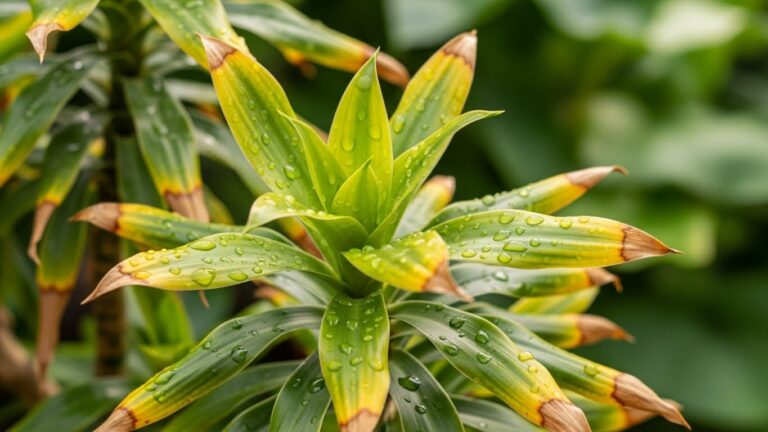
If you’ve been giving your Dracaena a little too much love in the watering department, it might start showing some clear signs that it’s not happy. Look out for leaf yellowing, which can signal distress. When plants get over-watered, their roots can suffocate, leading to root rot. This means the roots can’t absorb nutrients properly, and your plant may start drooping or even develop a mushy texture. Another sign to watch for is a lingering, musty smell coming from the soil, indicating it’s too wet. If you notice these symptoms, it’s time to cut back on that watering love. Trust me, your Dracaena will appreciate the extra care in getting it just right!
Signs of Under-Watering
While over-watering can cause some serious issues for your Dracaena, under-watering is just as problematic and can leave your plant feeling thirsty and neglected. You might notice your plant’s leaves starting to droop or feel a bit brittle, which means it’s time to pay attention. Checking the soil is essential; if it’s dry, your Dracaena is begging for water.
💡 Water quality can significantly impact your Dracaena’s health. Learn whether tap water is suitable for your plant.
➜ Discover the best watering practices
Signs of Under-Watering | What to Look For |
|---|---|
Leaf Droop | Leaves bend downward |
Dry Soil | Soil feels completely dry |
Brown Tips | Leaf tips turn brown |
Stunted Growth | New leaves grow slowly |
Responding quickly can help your Dracaena bounce back and thrive again!
Factors Affecting Watering Frequency
Several factors can influence how often you should water your Dracaena, so understanding these elements is key to keeping your plant healthy and happy. First, consider the soil moisture; if the top inch feels dry, it’s time to water. Next, think about light exposure. If your Dracaena gets bright, indirect light, it’ll likely need more water than one in low light. Temperature and humidity also play a role; warmer, drier air can cause the soil to dry out faster. Finally, the pot size matters too; smaller pots dry out quicker than larger ones. By keeping an eye on these factors, you’ll be better equipped to give your Dracaena just the right amount of water it craves!
Ideal Watering Techniques
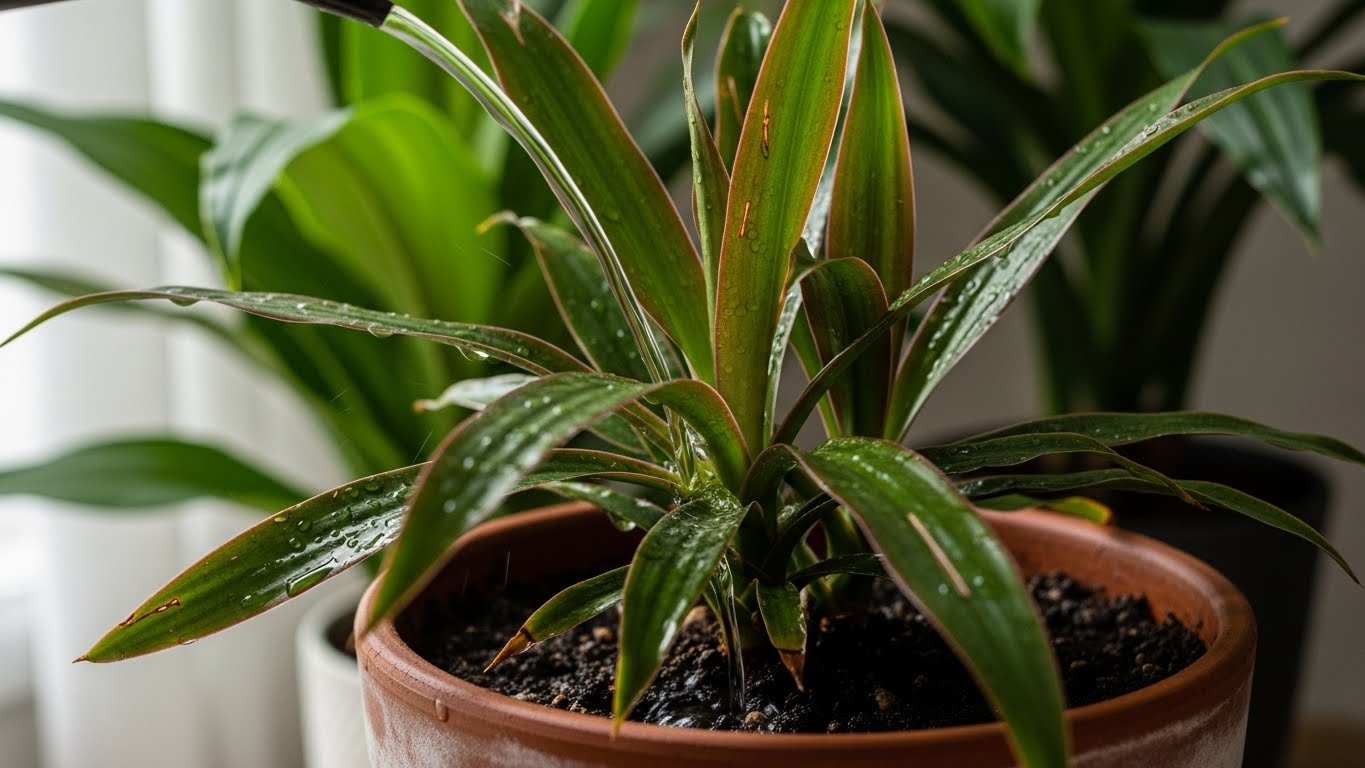
When it comes to watering your Dracaena, using the right techniques can make all the difference in keeping your plant thriving. First, check the dracaena soil moisture before watering; the top inch should feel dry. When it’s time to water, use ideal watering methods—water thoroughly, allowing it to drain from the bottom. This guarantees the roots get enough moisture without sitting in water, which can lead to rot. Remember, Dracaenas prefer slightly dry conditions, so avoid overwatering. You might even want to use a moisture meter for extra confidence. By following these techniques, you’ll create a nurturing environment, enabling your Dracaena to flourish beautifully in your home. Happy watering!
Seasonal Adjustments for Watering
As the seasons change, so should your watering routine for your Dracaena. During spring, when growth kicks in, you’ll want to make some spring adjustments. Increase your watering frequency, allowing the top inch of soil to dry out between sessions. In contrast, winter needs differ; your plant is resting, so reduce watering to avoid over-saturation. Here’s a quick guide to help:
Season | Watering Frequency | Soil Moisture Level |
|---|---|---|
Spring | Every 1-2 weeks | Dry 1 inch |
Summer | Every week | Slightly dry |
Winter | Every 2-3 weeks | Dry 2 inches |
Conclusion
So, remember, watering your dracaena isn’t like hosting a pool party—more isn’t always better! Keep an eye on the soil, and let it dry out a bit between drinks. Adjust for seasons like a wardrobe change; your plant doesn’t want to wear a heavy winter coat in summer! With the right care, your dracaena will thrive, adding a splash of green glam to your space. Just don’t drown it, or it might start demanding a lifeguard!
💡 If you’re experiencing leaf drop, understanding watering habits could be key to resolving the issue.
➜ Explore solutions for common Dracaena issues