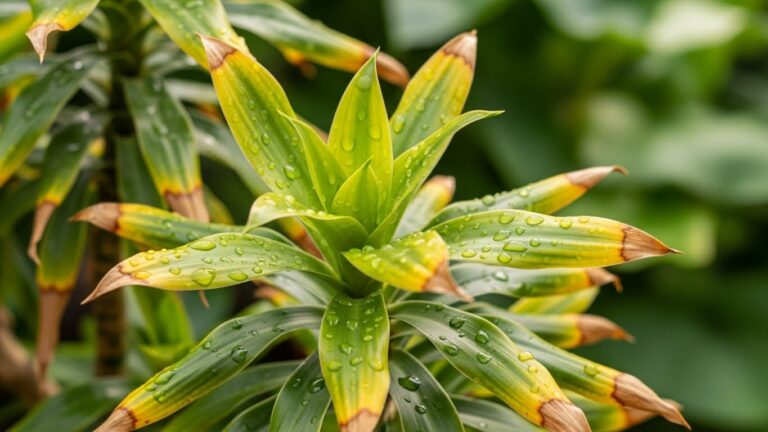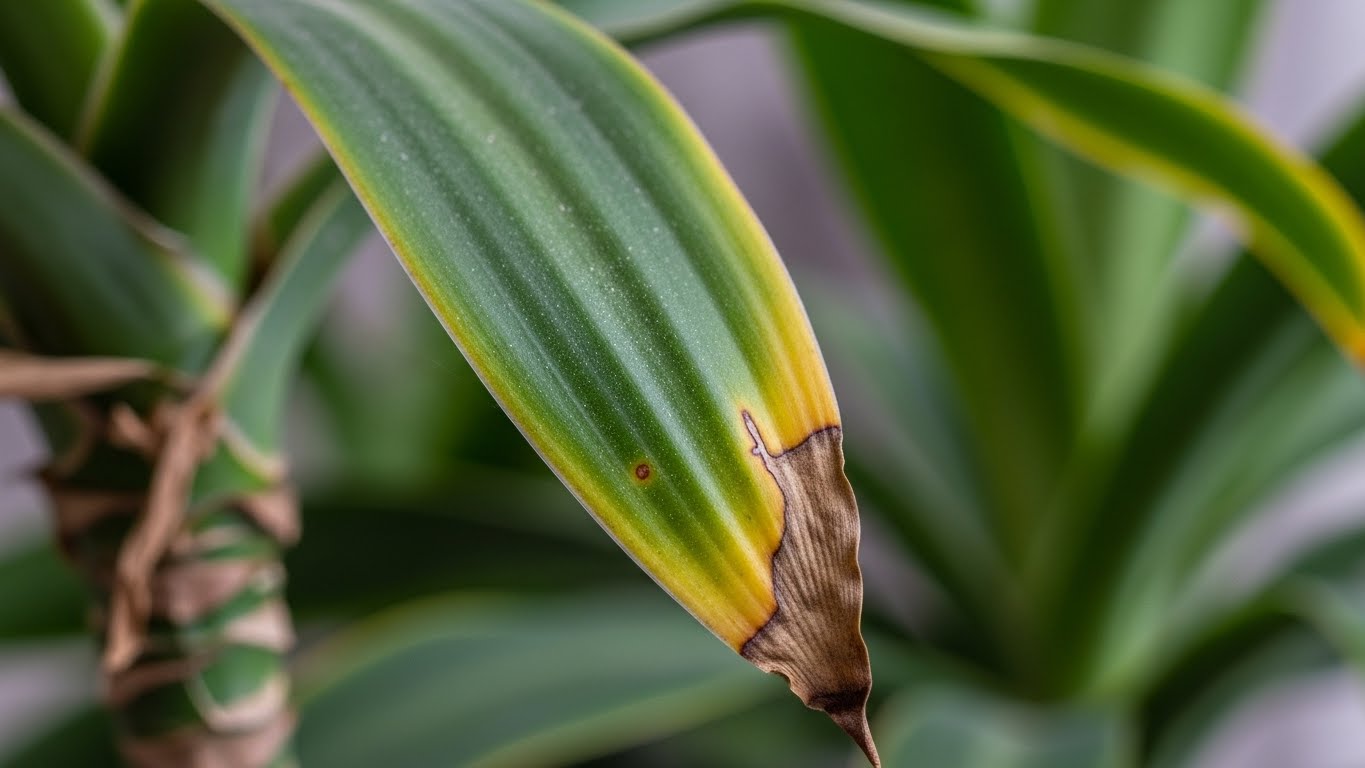
If your Dracaena is dropping leaves, it could be due to overwatering, underwatering, or environmental stress. Overwatering causes yellowing leaves and soggy soil, while underwatering leads to dry, crumbling soil and brown tips. Keep your plant in a stable temperature range of 65°F to 80°F and maintain humidity levels of 40% to 60%. Don’t forget to check for pests and feed your plant regularly. If you’re curious about more solutions, keep exploring!
Key Takeaways
💡 If you’re dealing with leaf drop, understanding proper care is crucial.
➜ Get the step-by-step guide
- Leaf drop in Dracaena often indicates stress from temperature fluctuations or inadequate light; ensure bright, indirect light conditions.
- Overwatering can cause yellowing leaves and soggy soil; adjust your watering schedule to prevent root rot.
- Underwatering leads to dry, crumbly soil and droopy stems; water thoroughly to restore plant health.
- Maintain humidity levels between 40% and 60% to prevent leaf drop; mist leaves or use a humidifier if necessary.
- Regularly check for pests like spider mites and mealybugs; treat infestations promptly with neem oil or insecticidal soap.
Understanding Dracaena Leaf Drop
When you notice your Dracaena dropping leaves, it can be a bit concerning, but understanding why it happens can help you take better care of your plant. Leaf health is essential, and sudden leaf drop often signals plant stress. This stress might stem from changes in environment, like temperature fluctuations or inadequate light. Your Dracaena thrives in bright, indirect light, so keep it cozy! Also, be mindful of humidity levels; a dry atmosphere can lead to unhappy leaves. Regularly check for pests, too, as they can sap your plant’s energy. By addressing these factors, you’ll create a nurturing space where your Dracaena feels secure and flourishes, ensuring those beautiful leaves stay vibrant and healthy! Additionally, maintaining the right humidity levels is crucial, as low humidity can lead to brown leaf tips and further stress your plant.
Overwatering: The Silent Killer
When you notice your Dracaena’s leaves dropping, overwatering might be the culprit lurking in the background. It’s vital to recognize symptoms like yellowing leaves and soggy soil, which signal that your plant’s roots are drowning. By adjusting your watering schedule to give your plant a chance to dry out, you can help it thrive again!
Recognizing Overwatering Symptoms
Have you ever wondered why your dracaena’s leaves are turning yellow and dropping off? Overwatering can be the sneaky culprit behind this issue. Recognizing the symptoms early can save your plant from further distress. Keep an eye out for these signs of overwatering:
- Leaf discoloration, particularly yellowing
- Soft or mushy stems
- Soil moisture that feels consistently wet
- A musty smell coming from the soil
- Root rot, which may appear as blackened roots
If you notice any of these symptoms, it’s vital to act quickly. Your dracaena deserves the best care, and understanding these signs helps you provide the right environment for it to thrive. Remember, a little attention goes a long way!
Adjusting Watering Schedule
Adjusting your watering schedule can make a world of difference in keeping your dracaena healthy and happy. Overwatering is often the silent killer, leading to leaf drop and stress. To avoid this, focus on your water frequency. Instead of a strict weekly routine, check the soil for moisture retention. Stick your finger in the soil about an inch deep; if it feels damp, wait a few more days before watering. This simple practice helps you gauge when your dracaena truly needs a drink, preventing soggy roots. Remember, it’s better to underwater than overwater! By fine-tuning your watering habits, you’ll nurture a vibrant, thriving plant that brings joy to your space. Your dracaena will thank you!
Underwatering: Signs and Solutions
When your Dracaena starts showing signs of distress, it might be due to underwatering rather than overwatering. You might notice yellowing leaves or crispy tips, signaling that your plant isn’t getting enough water. Let’s explore how to recognize these symptoms and adopt effective watering techniques to keep your Dracaena thriving!
Identifying Underwatering Symptoms
If you notice your Dracaena’s leaves turning yellow and dropping, it’s essential to act quickly, as these signs often point to underwatering. Understanding the symptoms can help you revive your plant and restore its vibrancy. Here are some clear indicators of underwatering:
- Leaves lose their bright green leaf color
- The soil feels dry and crumbly
- Tips of the leaves may begin to brown
- Stems appear weak or droopy
- New growth is stunted or absent
Effective Watering Techniques
To keep your Dracaena healthy and vibrant, mastering effective watering techniques is vital. First, check the dracaena soil; it should feel slightly damp, not soggy. If it’s too dry, your plant might be thirsty! Use a pot that’s the right size—too small, and the roots can’t absorb enough moisture; too large, and the soil may retain excess water, causing root rot.
When you water, do it thoroughly, letting excess drain from the bottom. This guarantees the roots get what they need. Remember, consistency is key! Watering every week or two works well, but always adjust based on your home’s humidity and temperature. With these tips, your Dracaena will thrive and show off its stunning leaves!
Temperature Fluctuations: Keeping It Stable
Maintaining a consistent temperature for your Dracaena is essential, as sudden changes can stress the plant and lead to leaf drop. To keep your leafy friend thriving, aim for temperature stability between 65°F and 80°F (18°C and 27°C). Here are some tips to help you achieve that:
- Avoid drafts: Keep your Dracaena away from open windows or doors.
- Watch the thermostat: Sudden heating or cooling can create temperature extremes.
- Use a thermometer: This guarantees you know the actual temperature in the room.
- Keep it indoors: Dracaenas prefer a stable indoor climate.
- Group plants: They can help create a microclimate that maintains warmth.
Low Humidity: Creating the Perfect Environment
To keep your Dracaena thriving, you need to create a humid environment that mimics its tropical origins. Ideal humidity levels range from 40% to 60%, so it’s essential to know some humidity-boosting techniques and find the right location for your plant. By making a few adjustments, you can help prevent leaf drop and keep your Dracaena happy and healthy!
Ideal Humidity Levels
💡 If your Dracaena is struggling, quick action can make all the difference.
➜ Discover proven techniques
When it comes to keeping your Dracaena healthy and happy, understanding humidity levels is essential, especially if you live in a dry climate. The right humidity measurement is vital for your plant’s well-being. Ideally, Dracaena thrives in humidity levels between 40% and 60%. Here’s how you can create the perfect environment for your humidity plants:
- Use a hygrometer to check humidity levels regularly.
- Group your plants together to create a microclimate.
- Place your Dracaena in naturally humid areas, like bathrooms or kitchens.
- Avoid placing it near heating vents or drafty windows.
- Mist the leaves occasionally to keep them hydrated.
Humidity-Boosting Techniques
💡 Understanding leaf discoloration can help you tackle leaf drop effectively.
➜ Learn the complete strategy
Creating a comfortable habitat for your Dracaena can be a fun challenge, especially in low humidity environments. To boost humidity, think about misting leaves regularly, as this adds moisture without making things overly soggy. You can also use pebble trays or humidity trays filled with water; just place your plant on top, and the evaporation will create a cozy microclimate around it. If you want a more consistent solution, room humidifiers work wonders by maintaining the ideal moisture levels. Another effective technique is grouping plants together, allowing them to share humidity and create a lush, inviting atmosphere. With these simple methods, your Dracaena will thrive, and you’ll feel like a true plant parent!
Choosing Right Location
Finding the right location for your Dracaena can make all the difference in its health, especially in a low humidity environment. To help your plant thrive, consider the following tips for light exposure and pot placement:
- Bright, indirect light: Dracaenas love it but avoid direct sunlight.
- Temperature consistency: Keep it away from drafts and heat sources, like radiators.
- Stable humidity: If possible, use a humidifier or place a pebble tray nearby.
- Accessibility: Position it where you can easily check on its needs.
- Pot placement: Guarantee it has room to grow without being cramped against walls or furniture.
With the right location, your Dracaena will flourish and bring joy to your space!
Pest Infestations: Identifying and Treating
Pest infestations can be a real headache for any plant lover, especially when you notice your Dracaena dropping leaves. First, let’s focus on pest identification. Check for common culprits like spider mites, mealybugs, or aphids. Once you spot them, you can take action! For pest prevention, keep your plant clean by wiping its leaves regularly and ensuring good air circulation. If pests appear, consider natural remedies like neem oil or insecticidal soap—both are effective treatment options. Apply these solutions weekly until the pests are gone. Remember, quick action is key! With a little effort, you can protect your Dracaena and keep it thriving, so it brings you joy for years to come.
Nutrient Deficiencies: Feeding Your Dracaena
While keeping an eye out for pests is important, another factor that can lead to leaf drop in your Dracaena is nutrient deficiencies. Ensuring a proper nutrient balance is crucial for your plant’s health. Different fertilizer types can help address specific needs. Here’s what to reflect on:
Nutrient deficiencies can cause leaf drop in Dracaena; maintaining a proper balance is vital for plant health.
- Nitrogen: Promotes healthy leaf growth.
- Phosphorus: Supports root development.
- Potassium: Aids in overall plant strength.
- Micronutrients: Iron, magnesium, and calcium are essential.
- Slow-release fertilizers: Provide consistent nourishment over time.
Regularly feeding your Dracaena with the right mix will not only prevent leaf drop but also keep it thriving. Don’t forget to check the soil and adjust your watering routine, too, as both play key roles in nutrient uptake!
Seasonal Changes: Adjusting Care
As the seasons change, your Dracaena’s care needs can shift, too, so it’s important to adjust your routine accordingly. In spring and summer, when growth thrives, increase watering and consider feeding your plant regularly to support its vibrant growth. Watch for signs of stress as temperatures drop in fall and winter; you might need to scale back on watering since the plant’s metabolism slows down. Keep an eye on humidity levels, too—especially during the dry winter months. You can even mist your Dracaena to keep it happy. Embrace these seasonal adjustments in your care routines, and you’ll help your Dracaena flourish throughout the year, ensuring it stays healthy and beautiful.
Root Bound: Signs and Remediation
If you’ve noticed your Dracaena’s growth slowing down or its leaves turning yellow, it might be trying to tell you something important—it’s root bound! This means it’s time to pay attention to its root health and consider pot selection. Here are some signs to look out for:
- Roots growing out of the drainage holes
- Stunted growth despite proper care
- Soil drying out too quickly
- Leaves drooping or turning yellow
- The pot feels too light when lifted
To remedy this, gently remove your Dracaena from its pot, trim any overly long roots, and repot it in a slightly larger container. This will give your plant the space it needs to thrive and grow happily again!
Proper Pruning: Encouraging Healthy Growth
After addressing the issue of root binding, it’s time to think about how proper pruning can promote healthy growth in your Dracaena. Using the right pruning techniques not only encourages growth stimulation but also helps maintain its lovely shape. Trim away any yellowing or dead leaves, as this allows your plant to focus energy on new growth.
Here’s a quick guide to help you:
Pruning Action | Purpose |
|---|---|
Remove dead leaves | Redirect energy |
Trim overgrown stems | Encourage bushiness |
Cut back leggy growth | Promote fullness |
Shape for aesthetics | Enhance visual appeal |
Regular pruning is essential for a thriving Dracaena, so grab those shears and give your plant the care it deserves!
Conclusion
In summary, if you keep an eye on your dracaena’s needs, you can prevent leaf drop and help it thrive. Remember, just like a plant needs the right conditions to grow, it’s all about finding that balance. By tackling issues like overwatering or low humidity, you’ll have your dracaena back on its feet in no time. So, roll up your sleeves, and give your plant the care it deserves—you’ll be rewarded with vibrant leaves and a happy home!
💡 Proper nutrition is key to preventing leaf drop and promoting lush growth.
➜ Master this approach