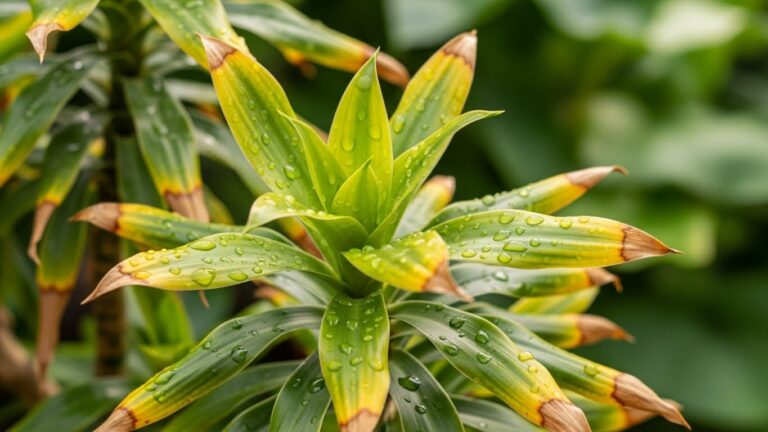
Yes, Dracaena is toxic to both cats and dogs. These popular houseplants can cause vomiting, excessive drooling, and loss of appetite if ingested. Since Dracaena contains compounds that upset your pet’s stomach, it’s important to keep them out of reach. If your furry friend gets into one, contact your vet right away. They can help assess the situation and recommend the best actions to take. Plus, there are many pet-friendly plants you might enjoy!
Key Takeaways
💡 Understanding the fundamental care requirements for Dracaena plants is crucial for their health.
➜ Master the essential care techniques
- Dracaena plants are moderately toxic to cats and dogs if ingested.
- Ingestion may lead to symptoms like vomiting, nausea, and excessive drooling.
- Loss of appetite and lethargy can indicate distress from Dracaena consumption.
- It’s essential to keep Dracaena out of pets’ reach for safety.
- If ingestion occurs, contact a veterinarian or poison control immediately.
Understanding Dracaena and Its Popularity as a Houseplant
When you think about houseplants, Dracaena might just pop into your mind as one of the most popular choices. Known for its striking leaves and easy houseplant care, Dracaena comes in several varieties, each with its unique charm. The Dracaena marginata, with its tall, slender stems and spiky leaves, adds a modern touch to any space. Meanwhile, the Dracaena fragrans, or corn plant, brings a lush, tropical feel to your home. These plants thrive in a variety of light conditions, making them perfect for beginners. Plus, their low maintenance needs mean you can enjoy their beauty without worrying too much. With the right care, your Dracaena can flourish, becoming a vibrant part of your indoor garden. Additionally, Dracaenas are known for their air-purifying abilities, effectively removing toxins like formaldehyde and benzene from the air.
Toxicity Levels of Dracaena for Cats and Dogs
While Dracaena plants can brighten up your home with their stunning foliage, it’s important to know that they come with a hidden danger for your furry friends. The toxicity levels of Dracaena are moderate, meaning they can cause some health issues for both cats and dogs if ingested. Compounds found in these plants can lead to gastrointestinal upset, affecting your pet’s health. If your curious cat or dog decides to nibble on a leaf, it’s essential to monitor them closely. Remember, even a small bite could lead to discomfort. Keeping these plants out of reach is a wise choice, ensuring your home remains a safe haven for your beloved pets. Prioritize their well-being and enjoy your greenery responsibly!
Symptoms of Dracaena Poisoning in Pets
If your pet happens to munch on a Dracaena plant, you’ll want to be aware of the signs that could indicate poisoning. The symptoms can vary in severity, so keep an eye out for:
- Vomiting or nausea
- Excessive drooling
- Loss of appetite
- Lethargy or weakness
If you notice any of these symptoms, it’s essential to act quickly, as the severity can escalate. Treatment options may include supportive care, medication to ease symptoms, or even a visit to the vet, depending on how serious the situation is. Remember, staying alert and informed can help you keep your furry friend safe and healthy, so don’t hesitate to reach out for help if needed!
💡 Keeping your Dracaena free from pests is essential for both plant health and pet safety.
➜ Discover proven pest control methods
What to Do If Your Pet Ingests Dracaena
Ingesting a Dracaena plant can be alarming, especially after spotting symptoms like vomiting or excessive drooling. Your first step is to stay calm and assess the situation. Contact your veterinarian or an animal poison control hotline immediately for emergency response guidance. They’ll ask about your pet’s symptoms, size, and how much they might have eaten.
Treatment options may include inducing vomiting or administering activated charcoal, but only under professional advice. Keep your pet hydrated, and monitor them closely for worsening symptoms. Remember, acting quickly can make a difference in your pet’s recovery. Always have your vet’s contact information handy, so you’re prepared if this happens again. Your furry friend depends on you!
Alternative Pet-Friendly Plants for Your Home
When decorating your home, choosing pet-friendly plants is a smart move for any animal lover. You want your space to be beautiful and safe for your furry friends. Here are some great options to contemplate:
- Spider Plant – These lovely greens are easy to care for and thrive in various light conditions.
- Boston Fern – A lush, vibrant fern that adds a touch of nature to your home while being safe for pets.
- Pet Safe Herbs – Basil, mint, and rosemary not only look great but also add flavor to your meals!
- Non-Toxic Succulents – Think about jade plants or haworthia; they’re low maintenance and add charm to any room.
With these plants, you can create a cozy haven for both you and your pets!
Conclusion
To sum up, keeping your pets safe is like being a guardian of a treasure chest; you want to protect what’s valuable to you. Dracaena plants may beautify your home, but they can be harmful to your furry friends. By knowing the risks and spotting symptoms early, you can act quickly if your pet gets into trouble. Consider choosing pet-friendly plants instead, so you can enjoy a vibrant home without worrying about your pets’ health. Stay informed and keep your companions safe!
💡 Choosing the right Dracaena can help ensure a safe environment for your pets.
➜ Explore the best Dracaena varieties