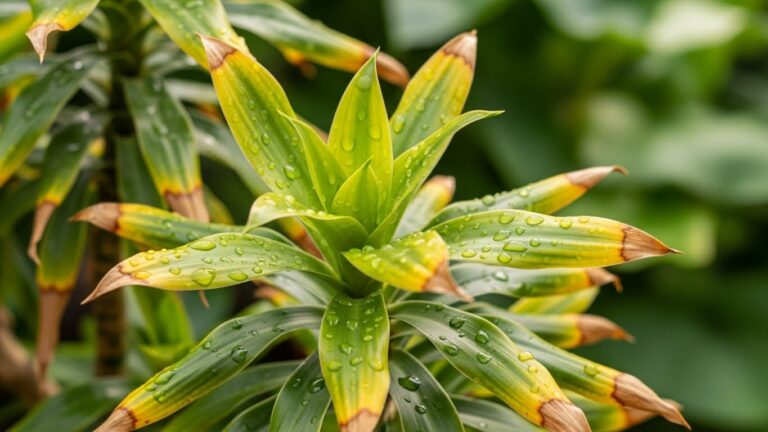
Dracaenas can get pests like spider mites, mealybugs, and scale insects, but don’t worry! You can tackle these troublemakers naturally. For spider mites, try making insecticidal soap from dish soap and water. If you spot mealybugs, use rubbing alcohol on a cotton swab to wipe them away. Maintaining proper humidity and regularly cleaning leaves can help keep your plant strong and less appealing to pests. Want to discover more tips on keeping your Dracaena healthy?
Key Takeaways
💡 If you’re looking to keep your Dracaena healthy and thriving, this comprehensive care guide is essential.
➜ Get the step-by-step guide
- Spider mites, mealybugs, and scale insects are the most common pests affecting Dracaena plants.
- Regularly inspect leaves and stems for signs like webs, white spots, or sticky residue.
- Natural treatments include homemade insecticidal soap, which suffocates spider mites effectively.
- Wipe mealybugs with rubbing alcohol on a cotton swab and check for scale insects regularly.
- Maintain proper watering, light, and humidity to enhance plant resilience against pests.
Identifying Common Pests That Affect Dracaena
When you care for your Dracaena, it’s important to keep an eye out for pests that can sneak in and cause trouble. Common pests like spider mites, mealybugs, and scale insects can be a real headache! To identify these little invaders, check for tiny webs, fuzzy white spots, or sticky residue on your plant. Regularly inspecting your Dracaena’s leaves and stems helps you catch these issues early. Remember, the sooner you spot a pest, the easier it is to manage. Keeping your plant healthy with proper watering and light can also boost its resistance to pests. Additionally, maintaining higher humidity levels is vital for reducing the risk of pest infestations. By staying vigilant and practicing good Dracaena care, you can enjoy a thriving, pest-free plant that brightens your space!
Understanding Spider Mites and Their Impact
Spider mites can be tiny but they pack a big punch when it comes to your Dracaena plants. These pests suck the sap from leaves, leading to discoloration and even leaf drop if left unchecked. In this section, you’ll learn how to identify them and discover natural treatment options to keep your plants healthy and thriving!
Identifying Spider Mites
Identifying spider mites can be tricky, especially since these tiny pests often hide on the undersides of leaves, making them hard to spot. For effective spider mite identification, look for fine webbing, particularly in the leaf axils or between stems. You might also notice tiny yellow or white spots on the leaves, which are spider mite symptoms as they feed on your plant’s sap. If you shake a leaf and see small, moving specks, you’ve likely found them! Keep an eye out for any discoloration or leaf drop, too. By familiarizing yourself with these signs, you’ll be better equipped to act quickly and protect your beloved dracaena from these sneaky intruders.
Natural Treatment Options
Understanding how to tackle spider mites naturally can be quite a game-changer for your dracaena’s health. One effective method is using homemade insecticidal soap. Mix a few drops of dish soap with water in a spray bottle, and gently mist your dracaena, focusing on the undersides of leaves where these pests love to hide. This soapy solution suffocates the spider mites without harming your plant.
Another fantastic approach is companion planting techniques. By placing plants that repel spider mites, like marigolds or garlic, near your dracaena, you create a protective barrier. These natural methods not only help manage spider mites but also boost your dracaena’s resilience. Embrace these options, and watch your plant thrive!
Dealing With Mealybugs on Your Dracaena
When you notice those pesky mealybugs clinging to your Dracaena, don’t panic—there are effective ways to tackle them! First, gently wipe the bugs off with a cotton swab dipped in rubbing alcohol. This method not only removes the mealybugs but also helps protect your plant’s health. If you spot mealybug infestations spreading, consider spraying your Dracaena with a mixture of water and a few drops of dish soap. This solution can disrupt their life cycle without harming your beloved plant. Keep an eye on your Dracaena’s leaves and continue monitoring for any signs of these bugs. With these simple steps, you’ll help guarantee your Dracaena stays healthy and vibrant, free from those unwelcome mealybugs!
💡 Understanding leaf drop can be crucial in identifying underlying pest issues.
➜ Discover proven techniques
Managing Scale Insects Effectively
Scale insects can be quite the troublemakers for your Dracaena, but don’t worry—managing them is easier than you might think! Understanding scale insect biology is your first step. These pests suck the sap from your plant, weakening it over time. Their life cycle involves both mobile and stationary stages, so keep an eye out for both.
💡 Healthy plants are less susceptible to pests, so proper fertilization is key.
➜ Explore advanced methods
To manage them effectively, start by inspecting your plants regularly. If you spot them, you can gently wipe them off with a damp cloth or use a soft-bristled brush. Maintaining proper air circulation and avoiding overwatering also helps keep them at bay. By staying proactive and attentive, you can guarantee your Dracaena remains healthy and thriving, free from these pesky invaders!
Natural Remedies for Pest Control
Natural remedies for pest control can be a fantastic way to keep your Dracaena healthy while avoiding harsh chemicals. You might want to start with organic insecticides, like neem oil or insecticidal soap, which can effectively tackle pests without harming your plant. Just mix them with water and spray your Dracaena, focusing on the affected areas.
Another fun method is companion planting. Consider placing your Dracaena next to plants like marigolds or basil, which naturally repel pests. This not only helps protect your plant but also creates a beautiful, thriving garden.
Preventative Measures to Keep Pests Away
To keep pesky pests at bay, you can adopt several preventative measures that will help your Dracaena thrive. Start with regular plant hygiene; wipe down leaves to remove dust and debris, making it harder for pests to settle in. Don’t forget to check your plant’s soil for any signs of insects. Practicing preventative care also means ensuring proper watering and light conditions, as stressed plants attract unwanted visitors. Consider rotating your Dracaena to get even light exposure, promoting healthy growth. Ultimately, keep your indoor space clean, as clutter provides hiding spots for pests. By staying proactive, you’ll create an environment where your Dracaena can flourish, free from annoying invaders. Your plant will thank you for it!
When to Seek Professional Help
Even if you’ve taken all the right steps to protect your Dracaena, there are times when seeking professional help becomes necessary. If you notice signs of urgency, like persistent pest infestations despite your efforts or severe leaf damage, it’s time to act. Don’t hesitate; a professional assessment can reveal underlying issues you might miss.
Additionally, if your plant’s health continues to decline, and the pests seem to multiply, calling an expert can save your beloved Dracaena. They have the tools and knowledge to tackle tough infestations effectively. Remember, it’s always better to seek help early rather than watching your plant suffer. Caring for your Dracaena means knowing when you can’t handle it alone.
Conclusion
In summary, keeping your dracaena healthy and pest-free is totally doable! By recognizing common pests and using natural solutions, you can enjoy a thriving plant without harsh chemicals. It might feel overwhelming at first, but remember, you’ve got this! With a little patience and the right methods, you’ll become a pest-fighting pro. So, don’t hesitate to jump in and take action—your dracaena will thank you with vibrant growth and beauty! Happy gardening!
💡 If your Dracaena is struggling, it could be due to pest damage; learn how to revive it.
➜ Master this approach