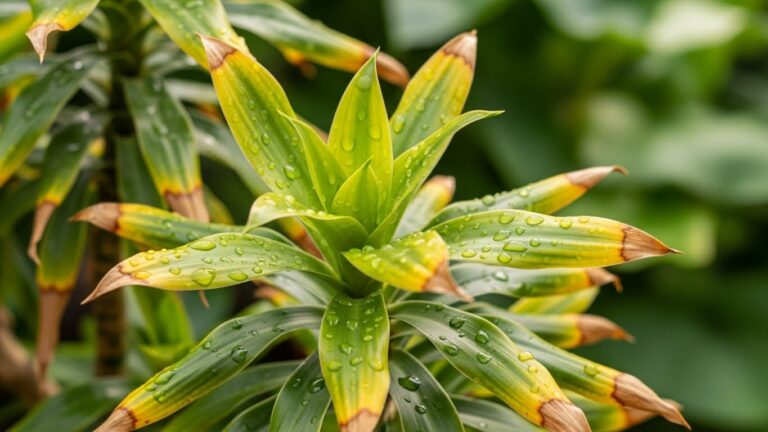
To keep your Dracaena happy and healthy, it needs bright, indirect light. Too much direct sunlight can scorch its leaves, while too little light may cause the plant to stretch and lose its vibrant colors. Position your Dracaena near a window with filtered sunlight, and make adjustments if you see yellowing leaves or leggy growth. Remember to monitor its light needs, as changes with the seasons can help your plant thrive. Curious about enhancing your plant care even more?
Key Takeaways
💡 Understanding the fundamental needs of your Dracaena is crucial for its health.
➜ Master the essential care techniques
- Position dracaena near windows with filtered sunlight to provide bright, indirect light for optimal growth.
- Avoid direct sunlight, as it can scorch leaves and cause damage.
- Monitor for signs of inadequate light, such as leggy growth or leaf discoloration.
- Rotate the plant regularly to ensure all sides receive equal light exposure.
- Adjust light exposure seasonally to maintain healthy growth throughout the year.
Understanding Dracaena Light Requirements
When it comes to understanding Dracaena light requirements, you’ll discover that these popular houseplants thrive best in specific lighting conditions. Different dracaena varieties have unique preferences, but most enjoy bright, indirect light. While some can tolerate lower light, you’ll notice their leaf color may fade or become less vibrant without proper exposure. Position your dracaena near a window with filtered sunlight, and you’ll see those stunning greens and variegated patterns really pop. Avoid placing them in direct sunlight, as that can scorch their beautiful leaves. Remember, the right light helps them grow strong and healthy, so take a moment to observe how your plants respond to their environment. Additionally, they are sensitive to excess sunlight, so careful placement is key to preventing leaf burn. Happy gardening!
Signs of Inadequate Light
If you notice your dracaena looking a bit sad or sluggish, it might be a sign that it’s not getting enough light. You may see leaf discoloration, with yellowing or browning edges, which can indicate stress. Additionally, check its growth patterns; if your dracaena is stretching toward a light source, it’s craving more brightness.
Signs of Inadequate Light | Possible Symptoms | What to Look For |
|---|---|---|
Leaf Discoloration | Yellow or brown edges | Leaves losing their vibrancy |
Weak Growth | Long, leggy stems | Stretching toward light |
Dropping Leaves | Leaves falling off | A sign of distress |
Optimal Light Conditions for Dracaena
To keep your dracaena thriving, it’s important to provide it with the right light conditions. These beautiful plants love bright, indirect light, so placing them near a window with filtered natural sunlight is perfect. Too much direct sunlight can scorch their leaves, leading to unsightly burns, while too little light can cause them to stretch awkwardly. If you’re using indoor lighting, choose fluorescent or LED bulbs that mimic natural sunlight, keeping them about 12 to 24 inches away from your dracaena. This setup guarantees your plant gets the energy it needs to grow strong and healthy. By understanding these ideal light conditions, you can create a cozy home for your dracaena, helping it flourish beautifully in your space.
Tips for Positioning Your Dracaena
Positioning your dracaena correctly can make all the difference in keeping it happy and healthy. Start by choosing the right dracaena placement; it thrives best in bright, indirect light. If possible, place it near a window where it can soak up that gentle glow. Be mindful of lighting direction, as south-facing windows often provide the brightest conditions. Avoid spots where direct sunlight can scorch its leaves; instead, aim for filtered light. If you can, rotate your dracaena occasionally to guarantee all sides receive equal light. This simple act can help prevent stretching and promote balanced growth. By paying attention to these details, you’re setting your dracaena up for success, allowing it to flourish beautifully in your space.
💡 Healthy light conditions can sometimes attract pests; knowing how to handle them is essential.
➜ Discover proven techniques to combat pests
Adjusting Light Exposure Throughout the Seasons
As the seasons change, so do your dracaena’s light needs, and adjusting its exposure can help keep it thriving year-round. You’ll want to watch for light fluctuations and make seasonal adjustments to guarantee your plant gets the right amount of sunlight.
💡 Knowing what to expect in terms of growth can help you adjust light conditions accordingly.
➜ Get the step-by-step guide to growth expectations
As seasons shift, so do your dracaena’s light requirements; adjust its exposure to ensure it thrives year-round.
- Spring: Increase light gradually as days lengthen.
- Summer: Place it in bright, indirect sunlight but avoid harsh rays.
- Fall: Monitor for reduced light and adjust to a brighter spot if needed.
- Winter: Keep it near a window where it can soak up as much light as possible.
Common Issues Related to Light and How to Fix Them
While your dracaena may seem like a low-maintenance plant, light-related issues can sneak up on you and negatively impact its health. One common problem is leaf discoloration, which can stem from various causes. If you notice yellowing leaves, it might be due to too much direct sunlight, while dark green leaves could indicate insufficient light. Understanding light intensity effects helps you adjust your plant’s placement. If your dracaena starts stretching towards the light, it’s a sign it’s craving more brightness. To fix these issues, simply move your plant to a spot with the right balance of indirect light. Regularly check for changes, and your dracaena will thrive, showcasing its vibrant beauty for years to come!
Creating a Balanced Lighting Environment for Your Dracaena
Creating a balanced lighting environment for your dracaena is essential to keep it healthy and thriving. These beautiful plants love indirect sunlight, which provides the right light intensity without overwhelming them. Here are some tips to create that perfect atmosphere:
Creating the ideal lighting for your dracaena ensures its health and vitality, as these plants thrive in indirect sunlight.
- Choose the right spot: Find a location that gets filtered light, like near a window with sheer curtains.
- Rotate your dracaena: This helps it grow evenly, ensuring all sides get equal light.
- Monitor light intensity: If the leaves start to yellow or burn, it’s a sign to adjust its position.
- Use artificial light: In low-light areas, consider grow lights to supplement natural light.
Conclusion
By understanding your dracaena’s light needs, you can nurture a vibrant, thriving plant that brightens your space like a little green sun. Remember, finding the right balance is key—too much light can scorch its leaves, while too little can make it stretch for the sun like a sleepy cat. With careful positioning and seasonal adjustments, you’ll keep your dracaena happy and healthy, creating a lively atmosphere that both you and your plant can enjoy together!
💡 Choosing the right type of Dracaena can significantly influence its light needs and overall growth.
➜ Explore the best Dracaena varieties