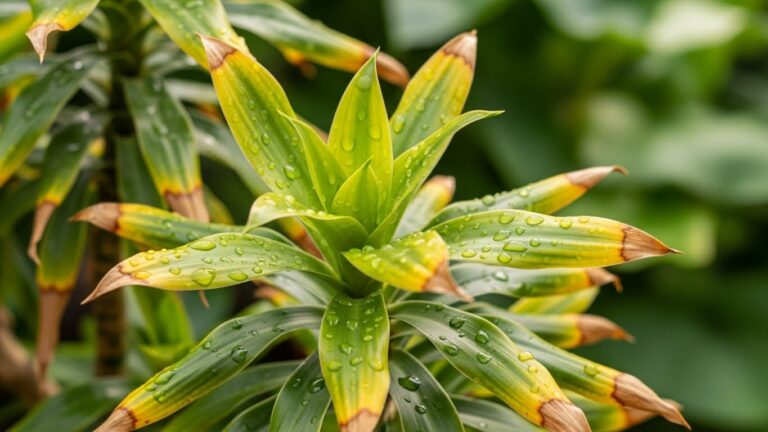
If your Dracaena is leaning, it might be looking for more light, dealing with watering issues, or feeling cramped in its pot. Check if it’s getting enough bright, indirect sunlight and adjust its spot if necessary. Make sure you’re not over or underwatering; the soil should be slightly dry between waterings. Finally, if roots are crowding out of the pot, it may need repotting. Let’s explore these causes to keep your plant strong and healthy!
Key Takeaways
💡 If you’re looking to ensure your Dracaena thrives, this comprehensive guide is essential.
➜ Get the step-by-step guide
- Leaning may indicate insufficient light; move your Dracaena closer to a window for better exposure.
- Overwatering or underwatering can cause instability; check soil moisture and maintain a consistent watering schedule.
- If roots are growing out of drainage holes, repot the plant to provide more space for healthy root growth.
- Nutrient deficiencies or over-fertilization can lead to leaning; use balanced fertilizer during the growing season for optimal health.
- Environmental factors like temperature and humidity fluctuations can stress the plant; maintain a stable environment for best results.
Understanding the Anatomy of a Dracaena
When you look at a Dracaena, you might notice its tall, slender stalk and long, arching leaves, which can make it quite an impressive houseplant. Understanding the anatomy of your Dracaena helps you appreciate its unique charm. The leaf structure is designed to capture sunlight efficiently, allowing the plant to thrive indoors. These vibrant leaves are often glossy and can vary in color, adding character to your space. Meanwhile, the stem strength plays an essential role in supporting that beautiful foliage. A sturdy stem can withstand the weight of the leaves, preventing your plant from leaning or toppling over. By recognizing these features, you can better care for your Dracaena and guarantee it stays healthy and upright in your home. Additionally, Dracaenas are known for their air-purifying abilities, effectively removing toxins like formaldehyde and benzene from the air.
Insufficient Light Conditions
How can you tell if your Dracaena isn’t getting enough light? If your plant’s leaning, it might be searching for brighter spots. Here are some signs to watch for:
Observe your Dracaena for signs of light deficiency, like leaning or pale leaves, and adjust its placement for better sunlight.
- Pale Leaves: Your Dracaena’s leaves lose their vibrant color and start fading.
- Stunted Growth: It might stop growing or grow very slowly, missing that usual upward stretch.
- Leggy Appearance: If the stems look long and sparse, it’s a clear sign of insufficient light intensity and duration.
To help your Dracaena thrive, try moving it closer to a window where it can soak up more bright, indirect sunlight. Remember, the right light can transform your plant’s health and happiness!
Overwatering or Underwatering
If you notice your Dracaena leaning, it might not just be searching for light; it could also be a sign that you’re overwatering or underwatering it. Keeping a consistent watering schedule is key. Overwatering can lead to soggy roots, while underwatering dries them out. Both conditions can make your plant unstable, causing it to lean.
To find the right balance, check the moisture levels in the soil. Stick your finger about an inch deep; if it’s dry, it’s time to water! If it’s still wet, hold off. Remember, Dracaenas prefer slightly dry soil between waterings. Adjusting your watering routine can help your plant stand tall and healthy again, so don’t hesitate to make those changes.
Root Bound Issues
Root bound issues can sneak up on your Dracaena, especially if you haven’t repotted it in a while. When the roots grow too tightly packed, your plant may lean or show signs of stress. To keep your Dracaena healthy, perform regular root inspections and guarantee proper pot maintenance. Here are three signs your Dracaena might be root bound:
- Roots growing out of the drainage holes – This indicates they’re searching for more space.
- Soil dries out quickly – Root-bound plants can’t absorb water effectively, leading to rapid drying.
- Stunted growth – If your plant isn’t thriving, it might be time for a bigger pot.
Don’t neglect your Dracaena; give it the room it needs to flourish!
Inadequate Pot Size
When your dracaena starts leaning, it might be crying out for more room! If it’s in a pot that’s too small, the roots can feel cramped, leading to stability issues that make your plant tip over. Providing a larger pot not only gives those roots space to grow but also offers better support, helping your dracaena stand tall and proud.
Root Space Constraints
A healthy dracaena thrives in a spacious pot that allows its roots to spread and grow. When you limit your plant’s root space, it can lead to serious issues like leaning. Here are three signs that your dracaena may be struggling with space limitations:
- Roots are visible: If you see roots poking out of the drainage holes, it’s time for a bigger pot.
- Stunted growth: Your dracaena isn’t growing as it should, indicating it’s cramped and can’t achieve proper root growth.
- Soil dries out too quickly: Limited space means the soil may dry out faster, stressing your plant.
Stability and Support
Inadequate pot size can lead to a lack of stability and support for your dracaena, making it more susceptible to leaning. When your plant doesn’t have enough room, its roots can struggle to anchor itself properly, affecting its overall growth stability. Think of your pot as a support system; if it’s too small, your dracaena can’t thrive.
To fix this, choose a pot that’s at least a few inches wider than the current one. This gives the roots space to spread out and strengthens the plant. A stable base will help your dracaena stand tall and proud. Regularly check your plant’s growth, and don’t hesitate to repot when needed—your dracaena will thank you for it!
Improper Fertilization
If your Dracaena is leaning, improper fertilization might be the culprit lurking in the shadows. You might notice signs of nutrient deficiency, like yellowing leaves or stunted growth, while too much fertilizer can lead to burnt roots and drooping stems. Timing your fertilizer application is essential, so let’s explore how to keep your plant thriving and upright!
Nutrient Deficiency Symptoms
💡 If your Dracaena is showing signs of distress, it’s crucial to act quickly.
➜ Discover proven techniques
When your Dracaena starts leaning, it might be trying to tell you something about its nutrition! A nutrient deficiency could be the culprit, and recognizing the symptoms is key to helping your plant thrive. Here are some signs to look out for:
- Yellowing Leaves: If the lower leaves fade to yellow, it may need more nitrogen.
- Stunted Growth: A lack of essential nutrients can slow down growth, leaving your plant looking sad.
- Brown Leaf Tips: This could indicate a potassium deficiency, signaling that your Dracaena needs some extra care.
Over-Fertilization Effects
💡 Proper nutrition is key to maintathisng a healthy Dracaena.
➜ Explore advanced methods
Over-fertilization can lead to significant issues for your Dracaena, often making the plant lean or appear unhealthy despite your best intentions. You might notice over fertilization symptoms like yellowing leaves or leaf drop, which can make you worry. Too much fertilizer can damage root health, causing your plant to struggle to absorb water and nutrients effectively. This stress can lead to a weak, leaning plant, and that’s definitely not what you want! To help your Dracaena bounce back, try flushing the soil with water to wash away excess fertilizer. Then, give it some time to recover, and watch as it regains its strength. Remember, moderation is key when it comes to fertilizing. Your Dracaena will thank you!
Fertilizer Application Timing
Applying fertilizer at the wrong time can throw your Dracaena’s health off balance, leading to a lean and floppy appearance. Timing matters, so let’s get it right! Here are a few key points to keep in mind:
- Growing Season: Fertilize during spring and summer when your Dracaena is actively growing. This is when it needs nutrients the most.
- Fertilizer Types: Use a balanced fertilizer, like 10-10-10, to guarantee your plant receives all essential nutrients.
- Application Methods: Water-soluble fertilizers provide quick nourishment, while slow-release options offer longer-lasting benefits.
Pests and Diseases
Even though your Dracaena might look stunning, it can still fall victim to pests and diseases that cause it to lean or appear unhealthy. If you notice yellowing leaves or unusual spots, those could be disease symptoms. Pests like spider mites or mealybugs can lead to pest infestations, sucking the life from your plant and making it weak. To help your Dracaena stand tall again, inspect it regularly. If you spot pests, gently wipe them off with a damp cloth or use insecticidal soap. For diseases, remove any affected leaves and guarantee proper watering to promote recovery. By staying vigilant, you can keep your Dracaena healthy and vibrant, ready to flourish in your space.
Environmental Factors
When it comes to your dracaena leaning, environmental factors play a big role in its health. If your plant isn’t getting the right amount of light or is experiencing sudden temperature changes, it might start to lean in search of better conditions. Understanding how these elements affect your plant can help you create a more stable environment for it to thrive.
Light Exposure Issues
Have you ever noticed your Dracaena leaning to one side, and wondered if it’s getting the right amount of light? Your plant might be reaching for sunlight, and it’s important to guarantee it gets the proper light intensity and light duration for healthy growth. Here are three things to ponder:
- Light Intensity: Too little light can cause your Dracaena to stretch awkwardly, making it lean. Aim for bright, indirect sunlight.
- Light Duration: Confirm your plant gets about 10-12 hours of light daily. If it’s less, it may start to lean toward the light source.
- Rotation: Regularly rotate your plant to keep it balanced and encourage even growth.
Keeping these in mind can help your Dracaena stand tall and proud!
Temperature Fluctuations Impact
While light plays a significant role in your Dracaena’s growth, temperature fluctuations can also impact its stability. If your plant experiences temperature extremes, like sudden cold drafts or excessive heat, it might start leaning as it struggles to adapt. These shifts can stress the plant, affecting its overall health and balance.
Additionally, humidity levels play an essential role, too. Dracaenas enjoy a humid environment, and if the air is too dry due to extreme temperatures, it may weaken and lean. To help your plant thrive, aim to keep it in a stable environment, avoiding rapid temperature changes, and maintain consistent humidity. By doing this, you’ll guarantee your Dracaena stands tall and proud!
Seasonal Changes
As the seasons change, your Dracaena might start leaning, and that can be a bit puzzling. During seasonal growth, your plant experiences shifts due to temperature changes and light availability. Here are three reasons why that leaning might occur:
- Light Direction: As days get longer or shorter, your Dracaena may stretch toward the light source, causing it to lean.
- Temperature Fluctuations: Warmer or cooler temperatures can affect how your plant grows, making it seek balance.
- Humidity Levels: Changes in humidity can stress your plant, affecting its stability and causing it to lean.
Understanding these seasonal changes can help you support your Dracaena in maintaining its beautiful upright posture. Keep an eye on its needs, and you’ll enjoy a thriving plant!
Tips for Preventing Leaning in Dracaenas
When you want to keep your Dracaena standing tall and proud, there are several practical tips you can follow to prevent leaning. First, make sure you provide adequate plant support, especially for taller varieties. A simple stake can work wonders. Next, establish a consistent watering schedule; overwatering or underwatering can weaken roots and cause leaning.
Here’s a quick reference table:
Tip | Benefit | Implementation |
|---|---|---|
Use plant support | Keeps plant upright | Add a stake or trellis |
Consistent watering | Strong root development | Water every 1-2 weeks |
Rotate your plant | Even light exposure | Turn it every few weeks |
Prune regularly | Encourages growth | Trim dead leaves |
Check soil drainage | Prevents root rot | Use well-draining soil |
With these tips, you’ll nurture a healthy, upright Dracaena!
Conclusion
In summary, if your Dracaena’s leaning, don’t fret! By understanding its needs and adjusting factors like light, water, and pot size, you can help it stand tall again. Notably, studies show that around 30% of indoor plant problems stem from improper watering, highlighting just how vital this factor is. With a little care and attention, your Dracaena can thrive, bringing beauty and freshness to your space. So, let’s get your plant back on track!
💡 Winter can be particularly challenging for indoor plants like Dracaena.
➜ Master this approach