To keep your Dracaena’s foliage healthy, choose a balanced fertilizer like 20-20-20 and apply it every four to six weeks during the growing season. Make sure the soil is loose and well-draining, and mix the fertilizer into the top inch of soil before watering thoroughly. Watch for signs of over-fertilization, like yellowing leaves, or nutrient deficiencies, like drooping. With these tips, your Dracaena will thrive, and there’s more to learn about nurturing your plant successfully!
Key Takeaways
💡 If you’re looking to enhance your Dracaena’s health, understanding its overall care is essential.
➜ Get the step-by-step guide
- Use well-draining, organic-rich soil to support healthy root development for your Dracaena.
- Choose a balanced fertilizer like 20-20-20 for even nutrient distribution and strong foliage growth.
- Fertilize every four to six weeks during spring and summer for optimal growth; reduce frequency in fall and winter.
- Mix fertilizer into the top inch of soil and water thoroughly to enhance nutrient absorption.
- Monitor leaves for signs of over-fertilization or nutrient deficiency to adjust care as needed.
Understanding Nutritional Needs of Dracaena
When you think about caring for your Dracaena, understanding its nutritional needs is key to keeping it healthy and thriving. First, the soil composition plays a crucial role; it should be well-draining and rich in organic matter to provide the necessary nutrients. You want to avoid heavy, compact soils that can suffocate your plant’s roots. Next, consider its light requirements. Dracaenas prefer bright, indirect light, but they can adapt to lower light conditions. However, if they don’t get enough light, they’ll struggle to absorb nutrients effectively. By ensuring the right soil and lighting, you create a nurturing environment where your Dracaena can flourish, reflecting your care and attention in its vibrant growth. Additionally, remember that Dracaenas are sensitive to fluoride and chlorine, which can affect their health if present in high concentrations in the water used for irrigation.
Choosing the Right Fertilizer
Choosing the right fertilizer for your Dracaena can make a world of difference in its growth and health. You’ll want to evaluate both organic options and liquid fertilizers. Organic fertilizers, like compost or fish emulsion, provide nutrients slowly, promoting strong, healthy foliage. They’re gentle and safe, making them a great choice for nurturing your plant. On the other hand, liquid fertilizers deliver quick nutrients, giving your Dracaena an instant boost when it needs it most. Look for a balanced formula, like 20-20-20, which includes equal parts of nitrogen, phosphorus, and potassium. Remember, it’s all about finding what works best for your plant. So, experiment a little and watch your Dracaena thrive! Your efforts will surely pay off!
How to Apply Fertilizer Effectively
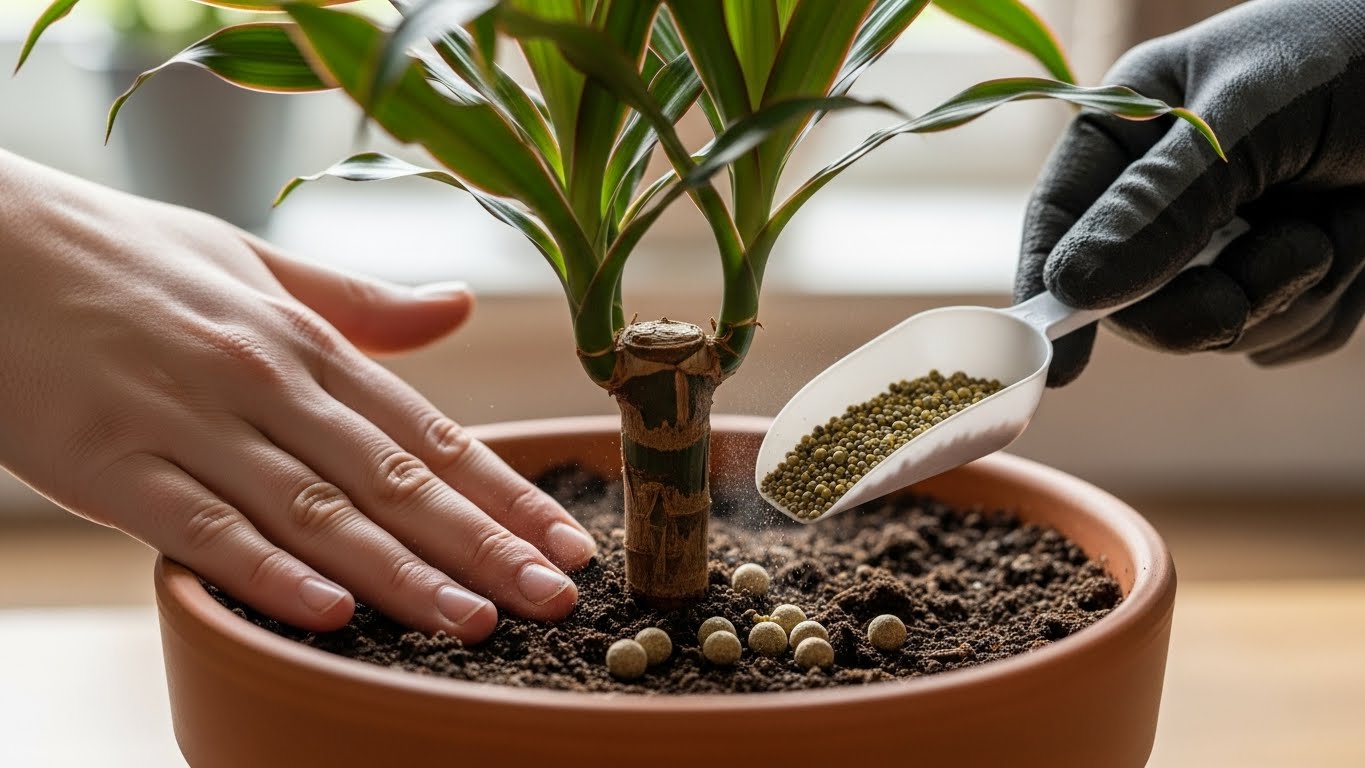
Applying fertilizer effectively to your Dracaena is essential for promoting its health and growth, so it’s important to follow a few key guidelines. First, prepare the soil by loosening it with a fork or trowel to help the nutrients reach the roots better. Next, measure out the recommended amount of fertilizer according to the package instructions—too much can harm your plant! Mix the fertilizer into the top inch of soil, ensuring even distribution. After this, water your Dracaena thoroughly to help the nutrients soak in. Finally, keep an eye on your plant’s response; it’ll let you know if it’s getting the right care. With these simple steps, you’ll nurture your Dracaena toward vibrant, healthy foliage!
💡 The right potting mix can significantly impact your Dracaena’s nutrient absorption and overall health.
➜ Discover proven techniques
Frequency of Fertilization
Fertilizing your Dracaena regularly can make a huge difference in its growth and overall health. To keep your plant thriving, create a fertilization schedule that aligns with its growth cycle. During the growing season, typically spring and summer, you should fertilize every four to six weeks. As the seasons change, remember to make seasonal adjustments. In fall and winter, when your Dracaena’s growth slows down, reduce fertilization to once every two to three months, or even pause altogether. This helps prevent over-fertilization, which can harm your plant’s roots. By sticking to this schedule and adjusting based on the seasons, you’ll guarantee your Dracaena gets the nutrients it needs to flourish beautifully.
Signs of Over-Fertilization and Nutrient Deficiency
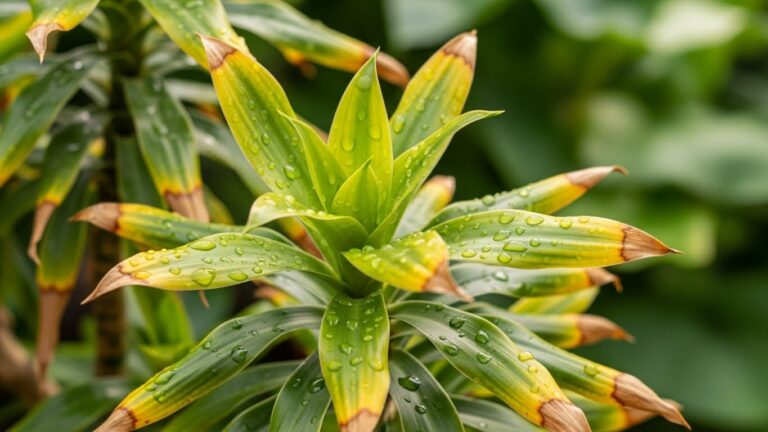
When your Dracaena starts showing unusual signs, it’s essential to pay attention, as these can indicate either over-fertilization or nutrient deficiency. Over-fertilization symptoms often include yellowing leaves, browning tips, or stunted growth. If you notice these changes, it might be time to reduce your fertilizer usage. On the other hand, nutrient deficiency signs can manifest as pale, droopy leaves or slow growth, indicating your plant might crave more nutrients.
To keep your Dracaena thriving, regularly inspect its foliage and adjust your care routine. Ensuring the right balance of nutrients will help your plant shine, so embrace these signs as helpful hints from your leafy friend, guiding you to a healthier, happier Dracaena!
Conclusion
In the end, keeping your dracaena happy with the right fertilizer is a bit like cooking—too much salt can ruin the dish! So, remember, balance is key. By understanding their nutritional needs and applying fertilizer correctly, you’ll have those vibrant leaves thriving in no time. And who knew that a little bit of dirt and a dash of nutrients could turn your plant into the star of the room? You’ve got this, green thumb!
💡 Understanding your Dracaena’s growth rate can help you tailor your fertilization strategy for optimal results.
➜ Explore advanced methods