
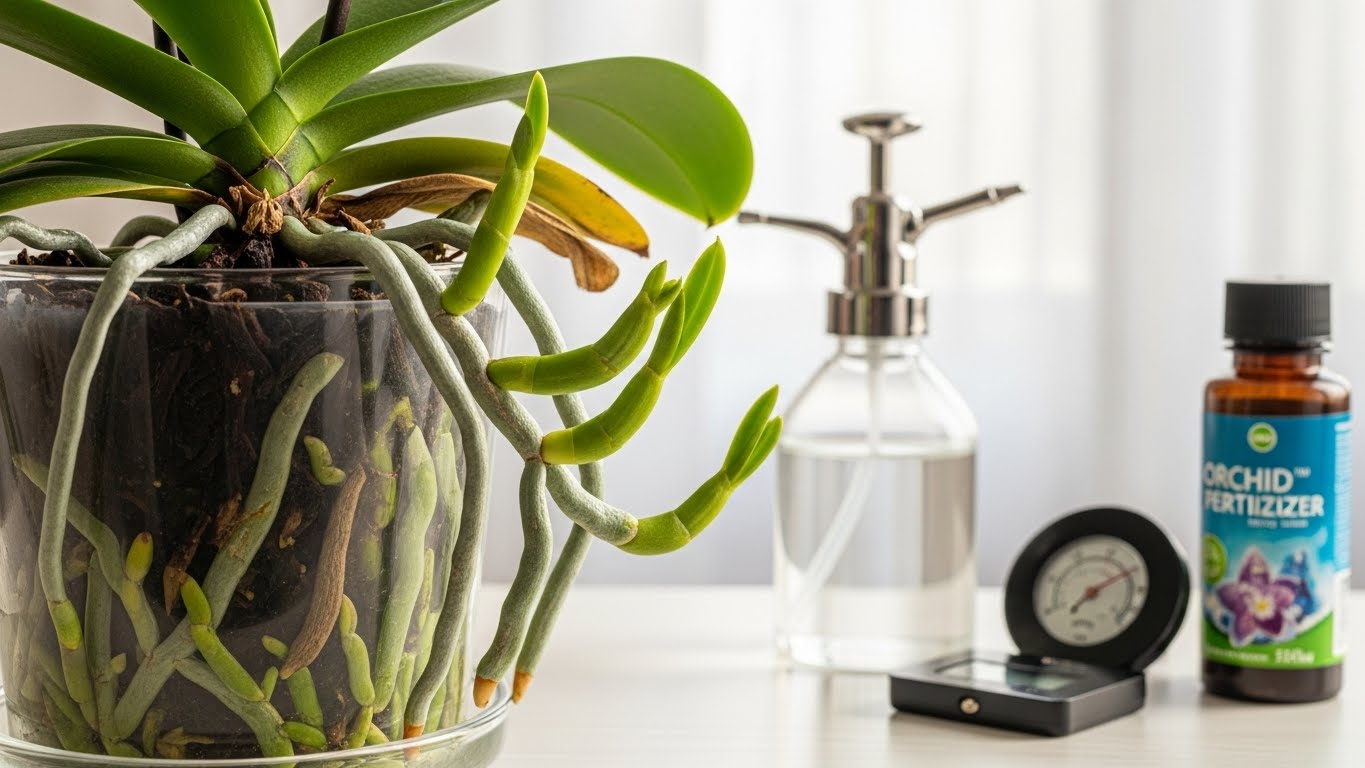
To save a dying orchid, start by checking its condition—look for yellowing leaves or mushy roots. If it has healthy roots, use a well-draining potting mix, water it thoroughly, and provide bright, indirect light. If it has no roots, trim dead parts and place it in water, keeping the leaves dry. Create a humid environment and water regularly. With these steps, you’ll help your orchid bounce back, and there’s even more helpful info ahead!
Key Takeaways
- Assess the orchid’s condition by checking for yellowing leaves, wilting flowers, and root health to determine stress levels.
- For orchids with healthy roots, use a well-draining potting mix and provide bright, indirect light to stimulate growth.
- Trim away dead or damaged parts for orchids with no roots and propagate in water, ensuring leaves remain dry.
- Maintain humidity levels between 50-70% and water once a week, allowing the potting mix to dry out between waterings.
- Use a balanced fertilizer like 30-10-10 every 2-4 weeks during growth to support blooming and overall health.
Assessing the Condition of Your Orchid
How can you tell if your orchid is struggling? Start by identifying common symptoms. If you notice yellowing leaves or wilting flowers, it’s a sign your orchid needs attention. Evaluating leaf health is essential—healthy leaves are firm and vibrant, while soft or brown ones indicate stress. Check the roots, too; if they’re brown and mushy, your orchid might be drowning. Don’t forget to observe the potting medium; it should be moist but not soggy. Pay close attention to your plant’s environment, like light and temperature, as these factors can impact its well-being. By carefully reviewing these elements, you can gain insight into your orchid’s condition, allowing you to make informed decisions for its care. Additionally, understanding the ideal temperature range for your orchid can help prevent stress and promote recovery.
Reviving an Orchid With Healthy Roots
Reviving an orchid with healthy roots can be an exciting journey, especially if you’ve already taken the time to assess its condition. With strong root health, your orchid stands a great chance of flourishing again. Start by ensuring it’s in a well-draining potting mix, which promotes root regeneration and prevents rot. Water it thoroughly, then let the excess drain away; this keeps the roots hydrated without drowning them. Place your orchid in bright, indirect light to stimulate growth. Regularly check the roots, looking for signs of new growth, which indicates your care is paying off. Ultimately, be patient! With the right attention, your orchid can thrive, bringing beauty and joy back into your space.
Reviving an Orchid With No Roots
When you find yourself with an orchid that has no roots, don’t lose hope—reviving it is still possible! Start by trimming away any dead or damaged parts. Then, you can use a method called orchid propagation to encourage root regeneration. Place your orchid in a glass of water, ensuring the base of the plant is submerged but the leaves stay dry. Change the water weekly to keep it fresh. After a few weeks, you might see tiny roots starting to form! Once you see some growth, transfer it to a pot with orchid mix, which helps provide stability. Keep a watchful eye, and soon enough, your orchid can thrive again, bringing beauty back into your space!
Creating the Ideal Environment for Your Orchid
To create the perfect environment for your orchid, you’ll need to focus on a few key factors that keep these beautiful plants thriving. Light, humidity, and temperature all play essential roles in their health, so understanding each one can make a big difference in how well your orchid grows. Let’s explore how you can adjust these elements to give your orchid the best chance at bouncing back!
Light Requirements for Orchids
Have you ever wondered what makes the perfect light for your orchid? To thrive, orchids need bright, indirect natural light. Placing them near a window with filtered sunlight helps create that cozy atmosphere they crave. Too much direct sunlight can scorch their delicate leaves, so keep an eye on them! If natural light isn’t an option, don’t worry—artificial light can work wonders too. Use LED or fluorescent grow lights, providing 12-16 hours of light daily. Position the lights about 12 inches above your orchid to mimic those sunny spots they love. Remember, every orchid is unique, so observe how yours responds and adjust as needed. With the right light, your orchid will flourish and bring joy to your space!
Humidity and Watering Needs
Creating the right humidity and watering routine is essential for your orchid’s health and happiness. Orchids thrive in a humid environment, so aim for 50-70% humidity. You can achieve this with a humidity tray or a room humidifier. Don’t forget to check the moisture levels regularly!
When it comes to watering frequency, your orchid will typically need water every 1-2 weeks, but this can vary based on conditions. Always check the potting medium; if it feels dry a couple of inches down, it’s time to water. Remember, overwatering can be just as harmful as underwatering. By controlling humidity and fine-tuning your watering schedule, you’ll create a cozy home for your orchid to flourish!
Optimal Temperature Conditions
While orchids are often celebrated for their stunning blooms, they also require specific temperature conditions to truly thrive. To create an ideal environment for your orchid, keep these tips in mind:
- Daytime Temperatures: Aim for 75-85°F (24-29°C) during the day.
- Nighttime Temperatures: Lower the temperature to 60-70°F (15-21°C) at night to encourage healthy growth.
- Temperature Fluctuations: Provide gentle fluctuations between day and night temperatures, mimicking natural conditions.
Remember to watch for seasonal changes, as different seasons may require slight adjustments. By maintaining these ideal temperature conditions, you’ll help your orchid flourish, ensuring it stays vibrant and healthy. With a little care, you can create the perfect home for your beautiful plant friend!
Proper Watering and Fertilization Techniques
When it comes to reviving your dying orchid, understanding proper watering and fertilization techniques is crucial for its recovery. You’ll want to water your orchid thoroughly but infrequently, allowing the potting mix to dry out slightly between waterings. Typically, watering every 7-10 days is a good rule of thumb, but adjust based on your environment.
For fertilization, choose a balanced fertilizer type, like a 30-10-10 mix, and feed your orchid every 2-4 weeks during the growing season. Here’s a quick reference table:
Watering Frequency | Fertilizer Types | Signs of Improvement |
|---|---|---|
7-10 days | 30-10-10 | New growth |
5-7 days | 20-20-20 | Healthier leaves |
10-14 days | Organic options | Blooms returning |
14 days | Slow-release pellets | Root importance |
As needed | Liquid orchid food | Stronger stems |
Nurture your orchid, and it’ll thrive!
Long-term Care Tips for a Thriving Orchid
To keep your orchid thriving, you’ll need to pay attention to its light, water, and nutrient needs. Finding the perfect spot with just the right amount of light can make all the difference, while proper watering techniques guarantee your plant stays hydrated without drowning. Plus, understanding the nutrients your orchid craves will help it bloom beautifully for years to come!
Ideal Light Conditions
Getting the right amount of light is essential for your orchid’s health, as it directly affects its growth and blooming potential. Orchids thrive best in bright, indirect light, so you’ll want to find that sweet spot. Here are some tips for achieving ideal light conditions:
- Natural Light: Place your orchid near a window with filtered sunlight to avoid burning its leaves.
- Artificial Light: If natural light’s scarce, use grow lights, ensuring they’re on for about 12-14 hours a day.
- Monitor: Keep an eye on your orchid; if the leaves turn yellow, it might be getting too much light.
Watering Techniques Explained
Once your orchid is basking in the right amount of light, the next big step in keeping it healthy is mastering the art of watering. You’ll want to water your orchid about once a week, allowing the potting mix to dry out between waterings. Too much moisture can lead to overwatering signs, like yellowing leaves or mushy roots. When you water, do it thoroughly, letting excess water drain out of the pot. Pay attention to your plant’s needs; if the leaves appear wrinkled, it might need a drink sooner. Remember, each orchid is unique, so adjust your watering frequency based on factors like humidity and temperature. With practice, you’ll develop a loving rhythm that keeps your orchid thriving!
Nutrient Requirements Overview
While your orchid may seem like a low-maintenance houseplant, it actually thrives on a balanced diet of nutrients to keep its roots healthy and flowers vibrant. To guarantee your orchid flourishes, pay attention to the following nutrient types:
- Nitrogen – Essential for leaf growth and overall well-being.
- Phosphorus – Supports root development and enhances blooming.
- Potassium – Aids in water regulation and strengthens the plant’s defenses.
Watch for signs of nutrient deficiencies, like yellowing leaves or stunted growth. Feeding your orchid with a balanced fertilizer every few weeks can help prevent these issues. Remember, a well-nourished orchid not only survives but flourishes, delighting you with its beauty. So give it the love it needs!
Conclusion
Reviving your orchid, whether it has roots or not, is like giving a friend a second chance. With the right care, patience, and a little love, you can watch it bloom again, just like a sunflower turning toward the sun after a storm. Remember, creating the ideal environment, watering properly, and keeping up with long-term care are the keys to success. So roll up your sleeves, and let’s get your orchid back to thriving!


