
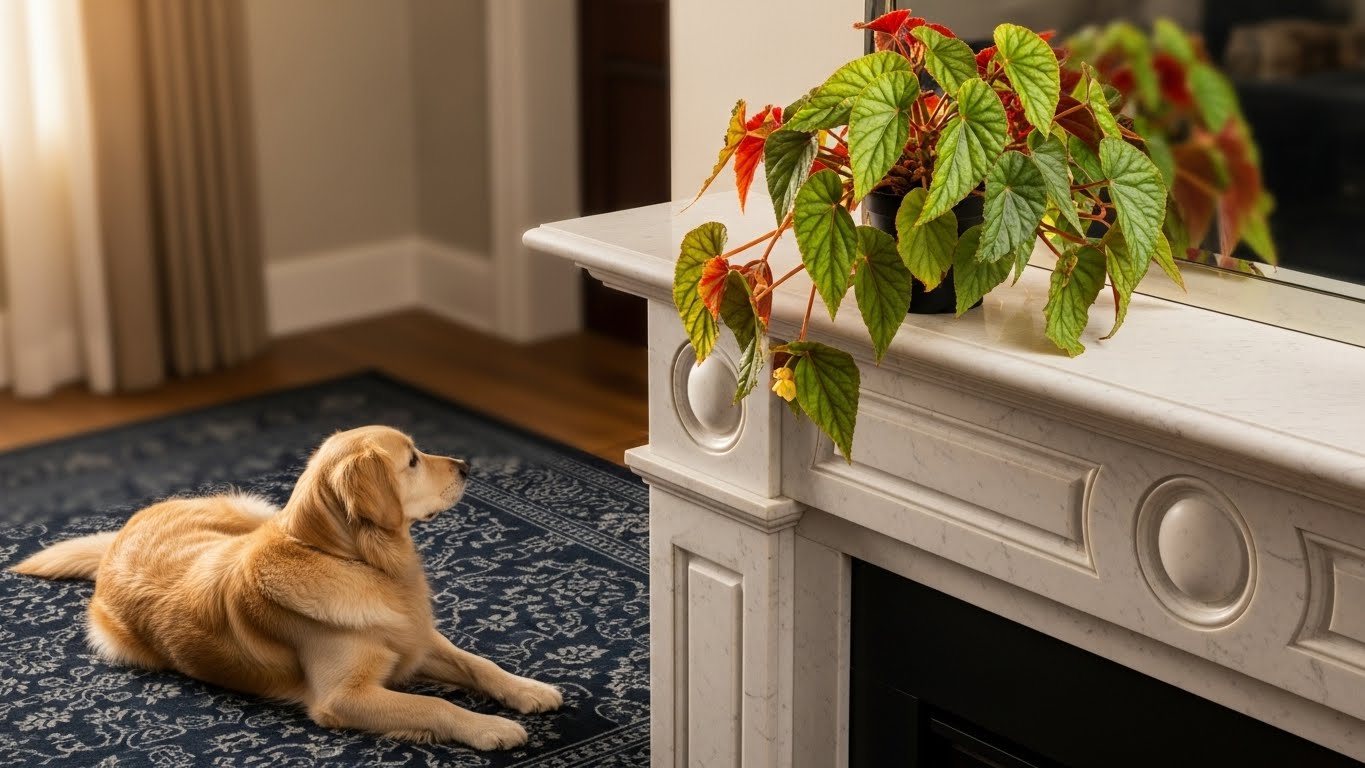
Begonias aren’t safe for pets because they contain calcium oxalate, which can cause mouth and stomach irritation if ingested. Symptoms of poisoning include drooling, vomiting, diarrhea, and lethargy. Dogs, especially curious breeds like Labradors and Beagles, and cats are most at risk. If you think your pet has eaten a begonia, contact a vet right away for advice. To keep your pet safe around plants, it’s important to know what alternatives you can choose instead.
Key Takeaways
💡 If you’re looking to keep your begonias thriving all year round, this guide is essential.
➜ Get the step-by-step guide
- Begonias contain calcium oxalate, which is toxic if ingested by pets, causing mouth and stomach irritation.
- Symptoms of begonia poisoning in pets include drooling, vomiting, diarrhea, and lethargy.
- Dogs and cats, especially curious breeds, are most at risk of ingesting begonias.
- If ingestion occurs, contact a veterinarian immediately for guidance on managing the situation.
- To protect pets, place begonias out of reach, such as on shelves or in hanging baskets.
Understanding Begonias: Types and Characteristics
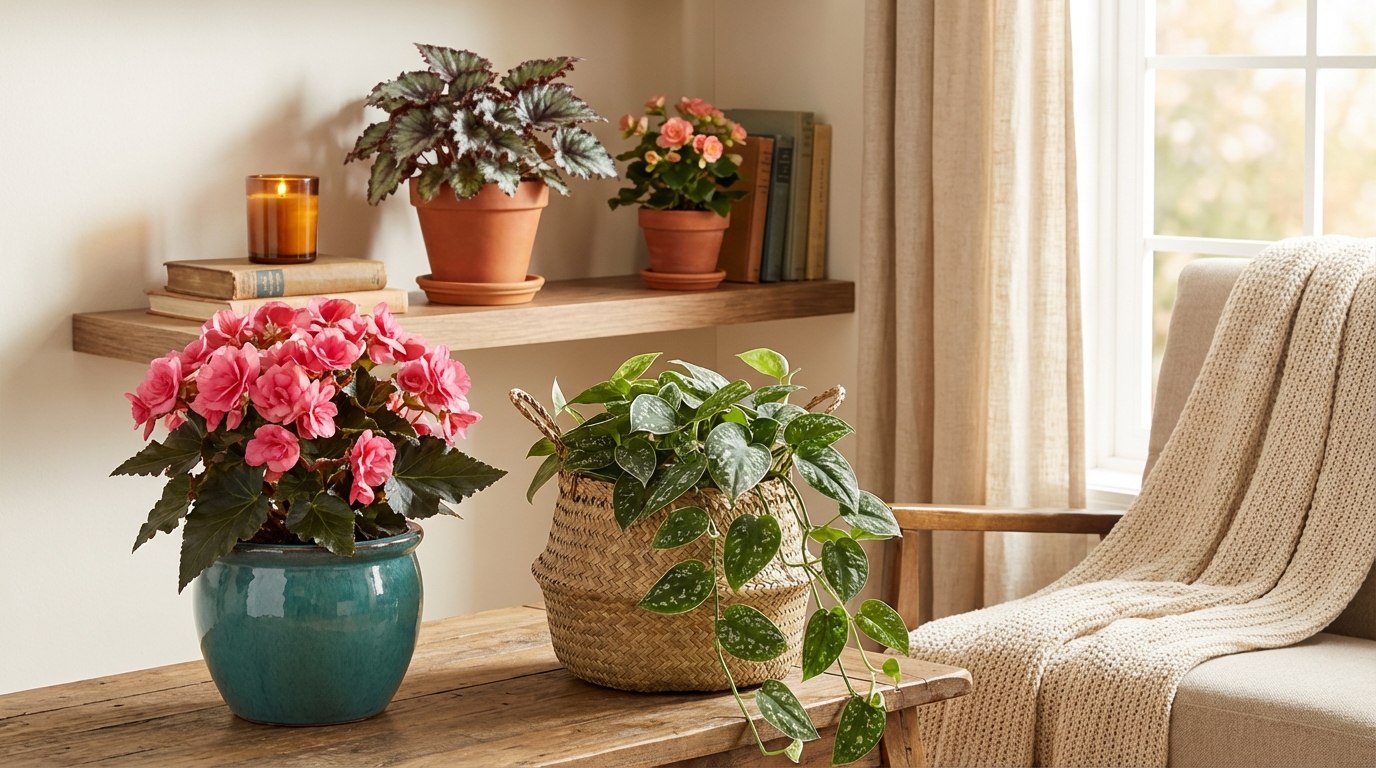
Begonias are fascinating plants that come in a variety of shapes, sizes, and colors, making them a popular choice for homes and gardens alike. You’ll find begonia varieties that range from the classic wax begonia with its glossy leaves to the stunning tuberous varieties that burst with vibrant blooms. Each type has its unique charm and care requirements, so getting to know them is essential. When caring for begonias, keep in mind they thrive in well-draining soil and prefer indirect light. Water them when the top inch of soil feels dry, ensuring they don’t sit in soggy conditions. With a little attention, these lovely plants can add warmth and beauty to your space, making your home feel even cozier. Additionally, understanding the main types of begonias can help you select the right variety for your indoor gardening needs.
Common Symptoms of Begonia Poisoning in Pets
Have you ever wondered what happens if your pet decides to nibble on a begonia? It’s important to recognize the symptoms of begonia poisoning so you can act quickly. Watch for signs like drooling, vomiting, or diarrhea. You might notice your furry friend seems more lethargic or restless than usual, displaying unusual pet behavior. Some pets may even experience swelling in their mouths or difficulty swallowing. If you see any of these symptoms, don’t wait—seek veterinary help right away! Quick symptoms recognition can make a big difference in your pet’s recovery. Keeping a close eye on your pet’s behavior around plants can help keep them safe and healthy, ensuring a happy home for you and your beloved companion.
What Makes Begonias Toxic to Pets?
When you think about the beauty of begonias, it’s easy to overlook their hidden dangers for pets. These lovely plants have unique Begonia characteristics, like vibrant leaves and colorful flowers, but they also contain substances that can be harmful. The main culprit is calcium oxalate, which can cause irritation in your pet’s mouth and stomach if ingested. This toxicity can lead to symptoms like drooling, vomiting, and difficulty swallowing. For pet safety, it’s essential to keep begonias out of their reach. If you have curious furry friends, consider choosing pet-friendly plants instead. By being aware of these risks, you can enjoy the beauty of begonias while ensuring your beloved pets stay safe and healthy.
Which Pets Are Most at Risk?
Certain pets are more vulnerable to the toxic effects of begonias, so it’s important to know which ones to keep an eye on. Dogs and cats can both be affected, but some dog breeds and cat behaviors make them particularly at risk. Here’s what you should consider:
- Curious Dog Breeds: Breeds like Labrador Retrievers and Beagles love to sniff and chew on plants, making them more likely to nibble on begonias.
- Playful Cat Behaviors: Cats often bat at plants, increasing their chances of ingesting toxic leaves or stems.
- Small Pets: Animals like rabbits or guinea pigs might also explore begonias out of curiosity, putting them at risk too.
Keeping these pets away from begonias can help guarantee their safety!
How to Identify If Your Pet Has Ingested Begonias
How can you tell if your furry friend has nibbled on a begonia? First, keep an eye on their pet behavior. If you notice signs like drooling, vomiting, or diarrhea, it might indicate plant toxicity from ingesting begonias. Your pet may also appear lethargic, showing little interest in their usual activities. Watch for any unusual pawing at their mouth, as they might be trying to relieve discomfort.
Additionally, if they seem more restless or anxious than normal, it could be a sign something’s off. Always trust your instincts—if your gut tells you something isn’t right, it’s best to consult your vet. Being observant will help keep your beloved pet safe and healthy!
Immediate Steps to Take If Your Pet Eats a Begonia
If your pet munches on a begonia, the first thing you should do is assess how they’re feeling—look for signs like drooling, vomiting, or lethargy. Once you’ve got a good sense of their condition, it’s essential to contact your veterinarian right away for guidance. Quick action can make all the difference, so don’t wait too long!
Assess Pet’s Condition
When your pet munches on a begonia, it’s vital to spring into action right away. Start by evaluating your furry friend’s condition. Keep a close eye on them to spot any signs of distress that could indicate a reaction. Remember, your pet’s health is your priority.
Here’s what you should look for:
- Drooling or Vomiting: These could be early signs of toxicity.
- Lethargy: If your pet seems unusually tired or unresponsive, it’s time to take note.
- Difficulty Breathing: Any trouble with breathing is a serious concern and needs immediate attention.
Taking these initial steps can help you gather valuable information before seeking vet advice. Stay calm and attentive, as your observations are essential for your pet’s well-being.
💡 Understanding how to prevent and treat diseases can help you maintain healthy begonias.
➜ Discover proven techniques
Contact Veterinarian Immediately
As soon as you suspect your pet has eaten a begonia, don’t hesitate—contact your veterinarian immediately! Time is vital in these situations. When you call, share details about your pet’s condition and the suspected plant they ingested. This will assist your vet in evaluating the situation better.
💡 Choosing the right begonia variety can enhance your indoor space while keeping it safe for pets.
➜ Explore advanced methods
If you have some, take a photo of the begonia for toxic plant identification; it could help in determining the best course of action. Meanwhile, remember your pet first aid knowledge. You might need to induce vomiting or monitor for symptoms, but don’t take any action without your vet’s guidance. Stay calm and focused; your quick response could make all the difference in ensuring your furry friend gets the care they need!
Safe Alternatives to Begonias for Pet Owners
Choosing plants for your home can be tricky, especially if you share your space with furry friends. You want to create a beautiful environment while ensuring your pets stay safe. Luckily, there are plenty of non-toxic plants that are perfect for pet-friendly gardening! Here are some delightful alternatives to begonias:
- Spider Plant: These resilient beauties thrive in various conditions and are safe for your pets.
- Boston Fern: With its lush foliage, it adds a touch of elegance and is completely non-toxic.
- Bamboo Palm: This charming plant not only purifies the air but also keeps your furry pals safe.
Tips for Maintaining a Pet-Friendly Home With Plants
Creating a pet-friendly home filled with plants can be a rewarding experience, especially when you know how to keep both your greenery and furry friends safe. Start by selecting pet-friendly plants like spider plants, Boston ferns, and African violets. These beauties not only brighten your space but also guarantee your pets stay safe.
When you’re indoor gardening, place plants out of reach to prevent curious paws from knocking them over or munching on leaves. Use sturdy pots and secure any climbing plants on shelves. Regularly check your plants for pests, and keep your home clean to avoid any potential hazards. By being mindful of your choices, you can enjoy a vibrant, pet-friendly sanctuary where both plants and pets thrive together!
Consulting a Veterinarian: When to Seek Help
When you’re surrounded by vibrant plants, it’s easy to forget that some can be harmful to your pets. If you suspect your furry friend has ingested a begonia or shows unusual symptoms, it’s essential to seek veterinary advice right away. Here are some signs that warrant a trip to the vet:
- Vomiting or diarrhea
- Lethargy or unusual behavior
- Excessive drooling or difficulty breathing
Your vet can guide you through emergency procedures and help determine the best course of action. Even if you’re unsure, it’s better to err on the side of caution. Your pet’s health is worth the call, so don’t hesitate to reach out for help when you need it.
Final Thoughts on Keeping Pets and Begonias Together
When it comes to keeping pets and begonias together, safe plant placement is key to ensuring your furry friends stay out of trouble. Make sure to put your beautiful begonias in spots that are hard for your pets to reach, like high shelves or hanging baskets. Plus, keeping an eye on your pet’s behavior can help you catch any signs of curiosity before it turns into a problem!
Safe Plant Placement
Finding the perfect spot for your begonias can be a bit of a puzzle, especially if you have pets roaming around. To keep both your plants and furry friends safe, consider these indoor plant placement and outdoor safety tips:
- Elevate your begonias: Keep them on shelves or hanging baskets out of your pet’s reach.
- Designate a pet-free zone: Create an area where your plants can thrive without interference from curious paws.
- Observe sunlight needs: Make sure your begonias get the right amount of light, while still being safe from playful pets.
Monitor Pet Behavior
Monitoring your pet’s behavior around your begonias is essential for creating a harmonious home where both plants and pets can thrive. Start with simple pet observation; watch how your furry friend interacts with your beautiful plants. Are they sniffing, pawing, or even trying to nibble? These behavior changes can signal curiosity or potential issues.
If you notice your pet acting differently—like excessive drooling, vomiting, or lethargy—take it seriously. It’s better to be cautious! Establish a routine to check in on their behavior regularly, ensuring they’re safe and sound. Remember, a little attention today can prevent bigger problems tomorrow. By being proactive, you can enjoy both your vibrant begonias and the loving companionship of your pets without worry.
Conclusion
In summary, while begonias are beautiful plants, they can pose a risk to your furry friends. Did you know that about 70% of pet owners unknowingly have toxic plants in their homes? It’s essential to be aware of what’s safe for your pets and to take into account alternatives that won’t harm them. By keeping an eye on your plants and choosing wisely, you can enjoy a vibrant home without compromising your pets’ safety. Stay informed and keep your pets happy!
💡 Avoiding common mistakes is key to successful indoor gardening.
➜ Learn the complete strategy


