

To keep your begonias thriving indoors all year, start by knowing the different varieties like Rex and Angel Wing. Adjust their light exposure based on the seasons—bright light in winter and filtered sunlight in summer. Water regularly in spring and summer but cut back in fall and winter. Fertilize every 4-6 weeks during growth and prune as needed. Watch out for pests and maintain good humidity. You’ll find more helpful tips on managing seasonal changes!
💡 Understanding the right fertilization schedule is crucial for the health of your begonias.
➜ Master the fertilization schedule
Key Takeaways
💡 Avoid common pitfalls that can hinder your Begonia’s growth.
➜ Discover proven techniques
- Place begonias near south-facing windows in winter for maximum light exposure and rotate them every few weeks.
- Water consistently during spring and summer, allowing soil to dry slightly between waterings, and reduce frequency in fall and winter.
- Fertilize every 4-6 weeks during the growing season with diluted balanced nutrients, and minimize feeding in winter.
- Prune in spring or early summer to encourage growth, removing dead leaves and trimming above leaf nodes.
- Regularly inspect for pests and diseases, maintaining a well-ventilated area and promptly removing debris to prevent issues.
Understanding Begonia Varieties
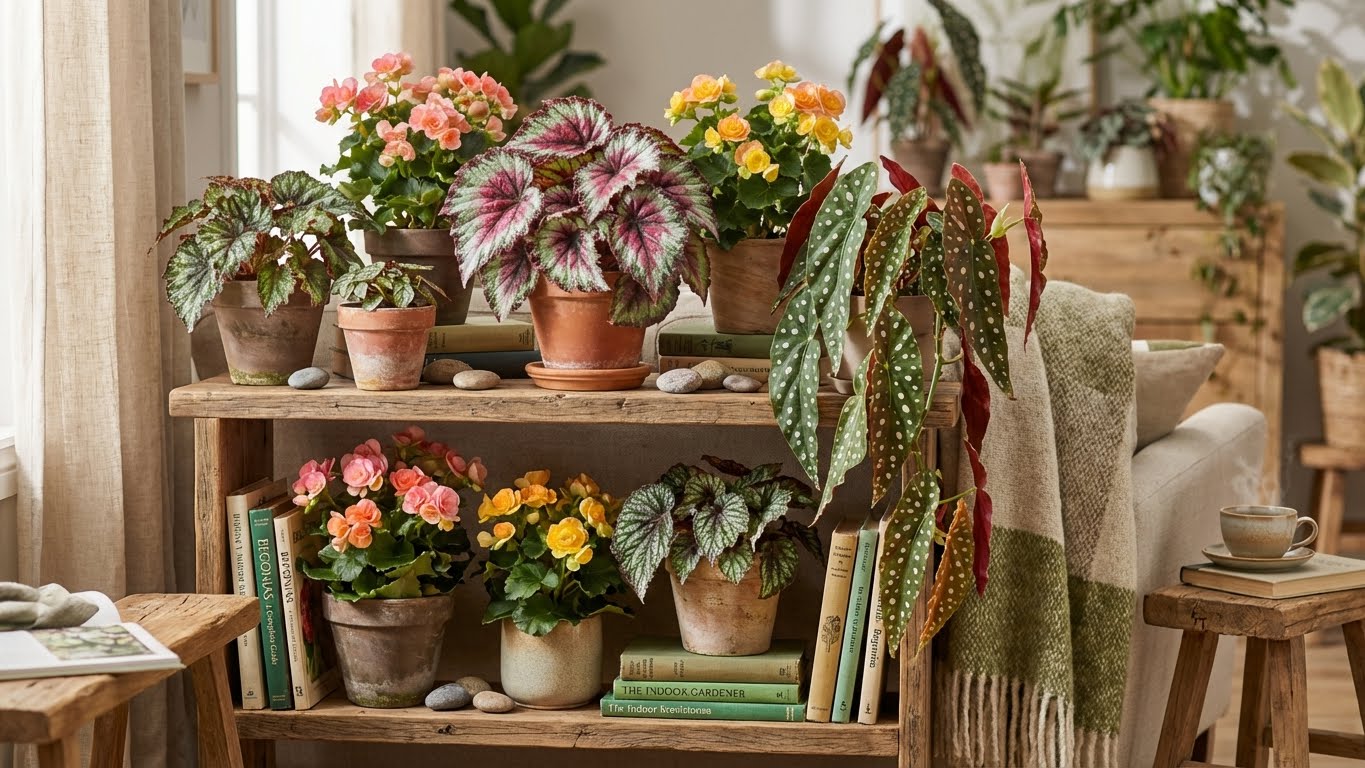
When you immerse yourself in the world of begonias, you’ll discover a vibrant array of varieties that each bring their own unique charm to your indoor garden. You’ll find begonia types like the Rex, known for its stunning foliage, and the Angel Wing, which boasts beautiful, elongated leaves. Each type showcases a dazzling range of color variations—from deep greens and silvers to shades of pink and red. As you explore these intriguing plants, you’ll notice how their distinctive shapes and patterns can transform any room into a lush paradise. Embracing different begonia varieties allows you to express your personal style, creating a cozy space that reflects your taste and love for nature. Proper watering is essential for maintaining the health of these plants, ensuring they thrive in your collection. So immerse yourself and enjoy the vibrant beauty!
Seasonal Light Requirements
When it comes to caring for your indoor begonias, understanding their seasonal light requirements is key to keeping them vibrant and healthy. In winter, your plants will need less light, while spring brings the perfect conditions for growth, and summer demands careful sun exposure to prevent leaf burn. Let’s explore how to adjust your lighting routine throughout the year to help your begonias thrive!
Winter Light Needs
Although winter days can be shorter and cloudier, your indoor begonias still need plenty of light to thrive. To keep them happy and healthy, consider these tips for winter light needs:
- Place your begonias near south-facing windows for maximum natural light.
- Rotate your plants every few weeks to guarantee even light exposure.
- Use sheer curtains to filter harsh sunlight while still providing brightness.
- If natural light is limited, supplement with artificial light sources, like grow lights.
- Monitor your plants for signs of low light, such as leggy growth or yellowing leaves.
Spring Growth Conditions
As winter fades and spring approaches, your indoor begonias will start to awaken and grow, enthusiastic for the brighter days ahead. They’ll need plenty of indirect sunlight to thrive, so find a cozy spot near a window that filters the light. This is the perfect time for spring care; keep an eye on their growth and be ready to rotate them weekly for even light exposure. You’ll also want to start spring fertilization, using a balanced, water-soluble fertilizer every four to six weeks. This will give your begonias the nutrients they crave after a long winter. Remember, a little extra care now can lead to lush foliage and vibrant blooms that brighten your indoor space all season long!
Summer Sun Exposure
To keep your begonias healthy and happy during the summer, you’ll need to adjust their light exposure as the days grow longer and brighter. Your indoor lighting plays a pivotal role in their growth, so let’s guarantee they’re getting the right amount of sunlight exposure.
- Place them near bright, indirect light.
- Avoid direct afternoon sun, which can scorch their leaves.
- Rotate your pots weekly for even growth.
- Monitor their leaves; yellowing might mean too much sun.
- Consider using sheer curtains to filter harsh rays.
Watering Needs Throughout the Year
Watering your indoor begonias is like tuning a musical instrument; you need to find the right balance to keep them thriving throughout the year. During spring and summer, increase your watering frequency as the warmth encourages growth. Aim to keep the soil consistently moist but not soggy, ensuring good moisture retention. In fall and winter, scale back; begonias need less water during their dormant phase. Check the top inch of soil with your finger—if it feels dry, it’s time to water. Remember, overwatering can be just as harmful as underwatering, so pay attention! By adjusting your watering routine throughout the seasons, you’ll help your begonias flourish and bring vibrant life to your indoor space.
Fertilization Schedule for Optimal Growth
Once you’ve got your watering routine down, it’s time to focus on the next essential factor for your begonia’s health: fertilization. Providing the right nutrients is vital for vibrant growth. Here’s a simple fertilization schedule to enhance your indoor garden:
After mastering watering, prioritize fertilization for vibrant begonias and optimal indoor growth.
- Choose the right fertilizer types: Liquid or slow-release options work well.
- Opt for balanced nutrient ratios: A 20-20-20 formula is ideal for overall health.
- Fertilize every 4-6 weeks: During the growing season, this keeps your begonia thriving.
- Dilute your fertilizer: Always mix it to half strength to prevent root burn.
- Adjust in winter: Cut back on fertilization as your plant’s growth slows.
With this routine, your begonia will flourish, showcasing its stunning leaves and blooms!
💡 Humidity plays a vital role in the overall health of your indoor begonias.
➜ Discover proven humidity-boosting techniques
💡 Learn how to maintain the ideal shape and health of your Begonias.
➜ Get the step-by-step guide
Ideal Temperature and Humidity Levels
💡 Proper overwintering techniques can make a significant difference in the health of your begonias.
➜ Get the essential overwintering tips
When it comes to keeping your begonia happy, the right temperature and humidity levels play a crucial role in its overall health. Ideally, your begonia thrives in temperatures between 65°F and 75°F. It’s important to avoid drastic temperature fluctuations, as they can stress your plant. For humidity levels, aim for around 50% to 70%. If your home feels dry, especially during winter, consider using a humidifier or placing a tray of water near your plant to boost moisture. Remember, begonias love a cozy atmosphere, so keep them away from drafts and heating vents. By maintaining these ideal conditions, you’ll guarantee your begonia flourishes, showcasing its vibrant leaves and stunning blooms all year long.
Pruning and Repotting Tips
When it comes to keeping your begonia healthy, pruning and repotting are essential tasks you shouldn’t overlook. You’ll want to master ideal pruning techniques to encourage new growth and keep your plant looking its best. Plus, learning the best practices for repotting will help guarantee your begonia has plenty of room to thrive!
Optimal Pruning Techniques
Pruning your indoor begonias is like giving them a revitalizing haircut, helping them grow healthier and look their best! To guarantee you’re practicing ideal pruning techniques, focus on the right timing techniques and cutting methods. Here’s what to keep in mind:
- Trim during spring or early summer for vibrant growth.
- Use sharp, clean scissors to avoid damaging the plant.
- Cut just above a leaf node to encourage new growth.
- Remove any dead or yellowing leaves to boost liveliness.
- Don’t be afraid to prune back leggy stems for a fuller appearance.
Repotting Best Practices
After giving your begonias a fresh look with pruning, it’s time to focus on their roots by repotting. You should repot your begonias every 1-2 years, especially when you notice roots poking through the drainage holes. When it comes to soil selection, choose a well-draining potting mix that retains moisture but doesn’t stay soggy. Mixing in perlite or orchid bark can help with drainage, ensuring your begonias thrive.
When you’re ready to repot, gently remove the plant from its old pot, teasing out any crowded roots. Place your begonia in the new pot, adding soil around it to secure it. Remember, a healthy root system is essential for your begonia’s growth, so treat it with care!
Pest and Disease Management
Managing pests and diseases in your indoor begonias is essential not just for their health but also for keeping your home environment vibrant. By practicing pest identification and disease prevention, you can guarantee your plants thrive. Here are some tips to help you:
- Regularly inspect leaves for signs of pests, like tiny webs or spots.
- Use insecticidal soap or neem oil if you spot unwanted visitors.
- Keep your begonias in a well-ventilated area to prevent fungal diseases.
- Water your plants correctly—avoid letting them sit in soggy soil.
- Remove any dead leaves or debris promptly to minimize disease risk.
With a little vigilance and care, your begonias will flourish and bring joy to your space!
Preparing for Seasonal Changes
As the seasons change, your indoor begonias need a little extra attention to thrive in their new environment. During this seasonal shift, it’s essential to monitor their light and watering needs closely. As daylight hours decrease or increase, adjust their location accordingly, ensuring they get just the right amount of sunlight.
When temperatures alter, be mindful of drafts and humidity levels, as your begonias require stable conditions for ideal growth. Consider using a humidity tray or misting them during dry months.
Conclusion
Caring for your indoor begonias is like tending to a vibrant dance, where each season brings a new rhythm to their growth. By understanding their light, water, and temperature needs throughout the year, you’ll keep these lovely plants thriving. Remember to prune, repot, and check for pests regularly, ensuring your begonias stay healthy and beautiful. With a little effort and attention, you can enjoy the colorful charm of begonias in your home all year long!
💡 Prevent and treat common diseases that can affect your Begonias.
➜ Master this approach
💡 Learn about the most common mistakes that can hinder your begonias’ growth.
➜ Avoid common pitfalls


