
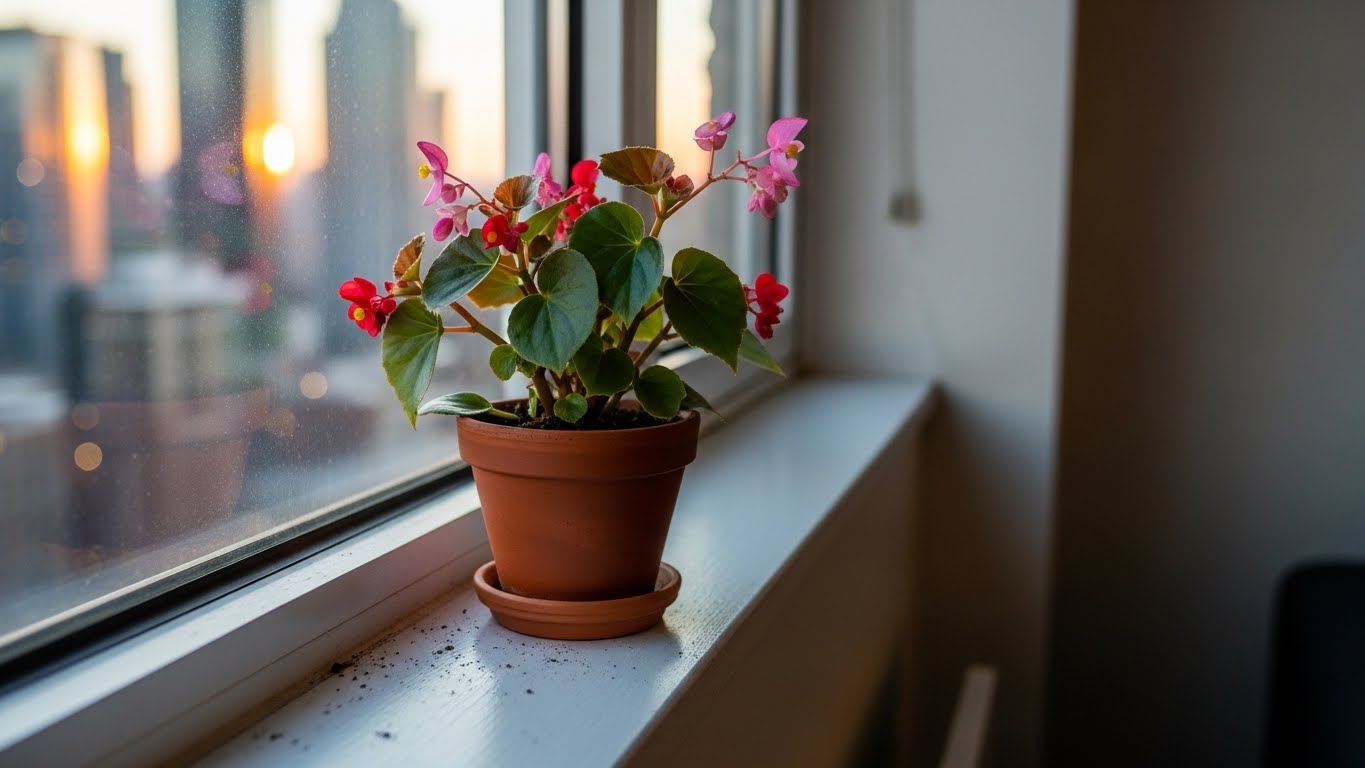
Caring for begonias in apartments with limited light is easy and fun! Choose varieties like Rex begonia or Begonia maculata, which love lower light. Place them near east-facing windows with sheer curtains for gentle sunlight. Water them weekly, checking the topsoil for dryness, and use well-draining soil for healthy roots. Fertilize every few weeks during the growing season, and keep humidity up with misting or pebble trays. Excited to learn some handy pest control tips next?
Key Takeaways
💡 Maintathisng a bushy and compact shape is essential for indoor begonias, especially in limited light conditions.
➜ Master this approach
- Opt for low-light begonia varieties like Rex begonia, Begonia maculata, or Begonia ‘Angel Wing’ for better adaptation in dim apartments.
- Position begonias a few feet from east-facing windows or use sheer curtains to filter gentle sunlight for optimal growth.
- Water begonias weekly during the growing season and check the top inch of soil for dryness to prevent overwatering.
- Use a well-draining potting mix, incorporating perlite or orchid bark, and ensure pots have drainage holes to avoid root rot.
- Maintain humidity with pebble trays or misting to support begonia health in limited light conditions.
Understanding Begonia Varieties for Low Light
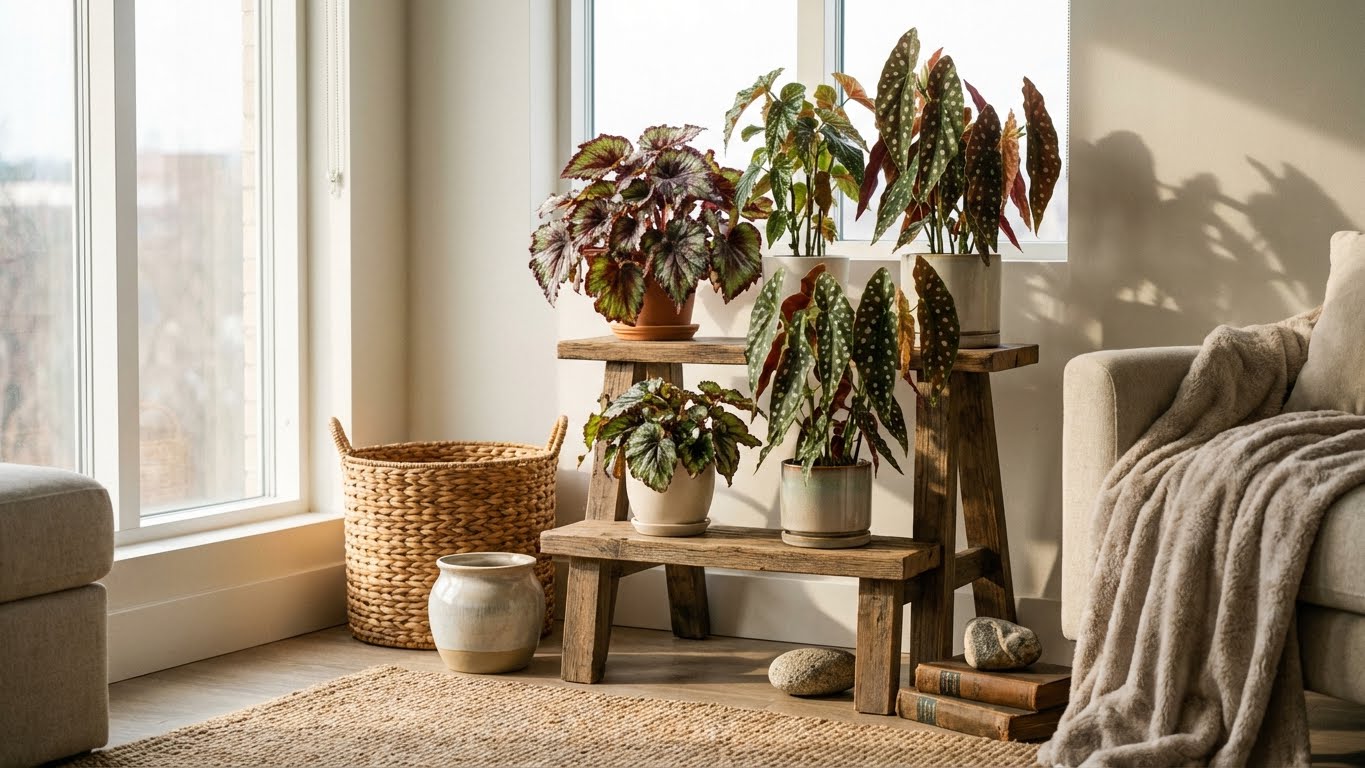
When you’re choosing begonias for low light conditions, it’s essential to know which varieties thrive in those shady spots. Some begonia types, like the Rex begonia, are perfect for dim areas, showcasing stunning foliage that keeps your space lively. Another great option is the Begonia maculata, known for its unique polka-dot leaves and ability to adapt to lower light. These plants don’t need direct sunlight, as their light requirements are minimal. The Begonia ‘Angel Wing’ also flourishes in indirect light, adding a touch of elegance with its graceful leaves. By selecting the right varieties, you can create a vibrant indoor garden, even in the coziest corners of your home. Embrace these beauties, and watch your space come alive! Additionally, ensuring proper watering practices is crucial to prevent issues like root rot in lower light conditions.
Ideal Locations for Your Begonias
Finding the right spot for your begonias is essential to keep them thriving in low light. You’ll want to place them in bright indirect light, ideally near east-facing windows, where they can soak up the gentle morning sun without getting scorched. Remember, avoiding direct sunlight is key, as too much can harm these beautiful plants!
Bright Indirect Light
To guarantee your begonias thrive, it’s essential to place them in bright, indirect light, as this helps them develop vibrant colors and healthy leaves. Begonias are known for their light tolerance, so finding the right spot can make all the difference in their growth patterns. Consider placing them near a window covered with sheer curtains, which filter the sunlight, allowing your plants to bask in the gentle glow without getting scorched. You can also position them on a shelf or table a few feet away from a bright window, ensuring they still receive that crucial light. By creating the perfect environment, you’ll not only enhance their beauty but also promote strong growth and lush foliage. Happy planting!
Near East-Facing Windows
Placing your begonias near east-facing windows can be a game-changer for their growth and overall health. This location offers east-facing benefits, like gentle morning sunlight that energizes your plants without overwhelming them. You’ll love how this bright, indirect light allows your begonias to thrive, encouraging vibrant leaves and beautiful blooms.
Keep an eye on how much light your plants receive, as you may need to make light adjustments throughout the seasons. If it feels too bright, consider using sheer curtains to filter the sunlight. This way, your begonias can enjoy the warmth and energy they crave, while you enjoy their lush beauty as they flourish in your cozy home. Happy growing!
Avoid Direct Sunlight
When it comes to caring for begonias, avoiding direct sunlight is essential for their well-being. These delicate plants thrive in indirect light, so be mindful of their light exposure. Look for spots in your apartment where sunlight filters through sheer curtains or is softened by nearby trees. Ideal plant placement could be near a north-facing window or a few feet back from an east-facing window. This way, your begonias can soak up the brightness without suffering from harsh rays. If you notice the leaves curling or turning brown, it’s a sign they need a cozier spot. Remember, a little love and attention to their lighting needs will keep your begonias healthy and vibrant!
Watering Tips for Begonias in Low Light
Now that you’ve found the perfect spot for your begonias, let’s talk about how to keep them happy with the right watering routine. It’s important to know when to water and how to check if your plant needs moisture, especially in low light conditions. With a little attention to soil moisture indicators, you’ll help your begonias thrive!
Watering Frequency Guidelines
To keep your begonias thriving in low light, mastering the right watering frequency is key. Start by checking the water quality—filtered or distilled water is best, as it keeps your plants happy and healthy. In general, water your begonias every week during the growing season, but don’t forget to make seasonal adjustments. In winter, when growth slows down, you can reduce watering to every two weeks. Always feel the top inch of the soil before watering; if it feels dry, it’s time to give your begonias a drink. Remember, overwatering can lead to root rot, so it’s better to err on the side of caution. Your begonias will thank you for your care!
Soil Moisture Indicators
Understanding soil moisture indicators can make a big difference in caring for your begonias in low light. To guarantee your plants thrive, consider using moisture meters or soil sensors. These handy tools help you gauge the moisture level in the soil, so you don’t have to guess when it’s time to water.
When you stick the sensor into the soil, it’ll give you a reading that tells you whether your begonias are thirsty or well-hydrated. If the reading is low, it’s time for a drink.
Soil Selection and Potting Techniques
💡 If you’re struggling to keep your begonias vibrant in low light, this article is a must-read.
➜ Discover proven techniques
When it comes to potting your begonias, you’ve got to pick the right soil to help them thrive in low light conditions. A good potting mix is vital for their health, so here’s what you should consider:
- Well-draining mix: Choose a potting mix specifically designed for houseplants to guarantee proper drainage.
- Add aeration: Consider mixing in perlite or orchid bark to improve air circulation around the roots.
- Choose the right pot: Make sure your pot has drainage holes to prevent water from accumulating, which can lead to root rot.
With the right soil and potting techniques, your begonias will flourish, even in the coziest corners of your apartment! Happy planting!
Fertilizing Your Begonias
Fertilizing your begonias is like giving them a delicious meal that helps them grow strong and vibrant, even in low light conditions. To keep your plants happy, consider using organic fertilizers, which are gentle and beneficial for their health. These fertilizers provide essential nutrients without overwhelming them.
You might want to look into slow-release options, too. These types slowly deliver nutrients over time, ensuring your begonias get what they need without requiring constant attention. Aim to fertilize your begonias every 4-6 weeks during the growing season, but remember to reduce feeding in winter. By nurturing them with the right fertilizers, you’ll create an environment where your begonias can thrive, bringing joy to your apartment space.
Managing Humidity Levels
Managing humidity levels is essential for keeping your begonias happy and healthy, especially in low light conditions. These beautiful plants thrive in a humid environment, so let’s explore some simple ways to achieve humidity control using common humidity sources.
- Pebble Tray: Fill a shallow tray with pebbles and water, placing your begonia pot on top. As the water evaporates, it’ll create moisture in the air.
- Misting: Lightly mist your begonias a few times a week. Just be careful not to overdo it, as soggy leaves can lead to rot.
- Humidifier: If you can, invest in a small humidifier. This can help maintain a consistent humidity level that’s perfect for your plants.
With these tips, your begonias will flourish!
Pruning and Maintenance Practices
To keep your begonias thriving, regular pruning and maintenance practices are key. Start by using simple pruning techniques; snip away any yellow or wilted leaves to encourage new growth. A sharp, clean pair of scissors works wonders. As you maintain your routine, check for overcrowded stems and trim them back to allow light to reach all parts of the plant. This promotes airflow, reducing the risk of mold. Don’t forget to clean the leaves with a damp cloth, removing dust to maximize photosynthesis. Finally, keep an eye on their watering schedule, ensuring the soil stays moist but not soggy. By staying consistent with these practices, your begonias will reward you with vibrant blooms and lush foliage.
Common Pests and How to Handle Them
Have you ever noticed tiny bugs on your begonias and wondered what to do about them? Don’t worry; pest identification and treatment methods can help you tackle these pesky invaders. Here’s how to handle common pests:
Noticing tiny bugs on your begonias? Don’t fret! Learn how to identify and treat common pests effectively.
- Aphids: These tiny green or black bugs suck plant sap. Spray them off with water or use insecticidal soap.
- Mealybugs: Look for fluffy white spots. Dab them with a cotton swab soaked in rubbing alcohol to kill them.
- Spider mites: These little red or brown dots leave webbing. Increase humidity around your plant and mist it regularly.
Keeping an eye on your begonias guarantees your plants stay healthy and thriving. Let’s keep those pests at bay together!
Propagating Begonias Indoors
Propagating begonias indoors can be a fun and rewarding experience, especially after keeping pesky bugs away from your beloved plants. To start, you can use cutting techniques like leaf propagation, which involves taking a healthy leaf and placing it in water or soil.
Here’s a simple table to guide you:
Method | Steps |
|---|---|
Leaf Propagation | 1. Cut a healthy leaf. |
2. Place it in water or soil. | |
3. Wait for roots to form. |
Remember to keep the cutting in a warm, bright spot but out of direct sunlight. With a bit of patience, you’ll be amazed at how quickly your begonias multiply, adding joy to your indoor garden!
Conclusion
To sum up, caring for begonias in low-light apartments can be a rewarding adventure. By choosing the right varieties and placing them in ideal spots, you can watch them thrive. With proper watering, soil, and fertilization, along with attention to humidity and pests, your begonias will flourish. Imagine vibrant colors lighting up your space as you master the art of indoor gardening. So, grab your tools and get ready—your green thumb journey is just beginning!
💡 Proper fertilization is key to keeping your begonias healthy, especially when light is limited.
➜ Get the step-by-step guide


