
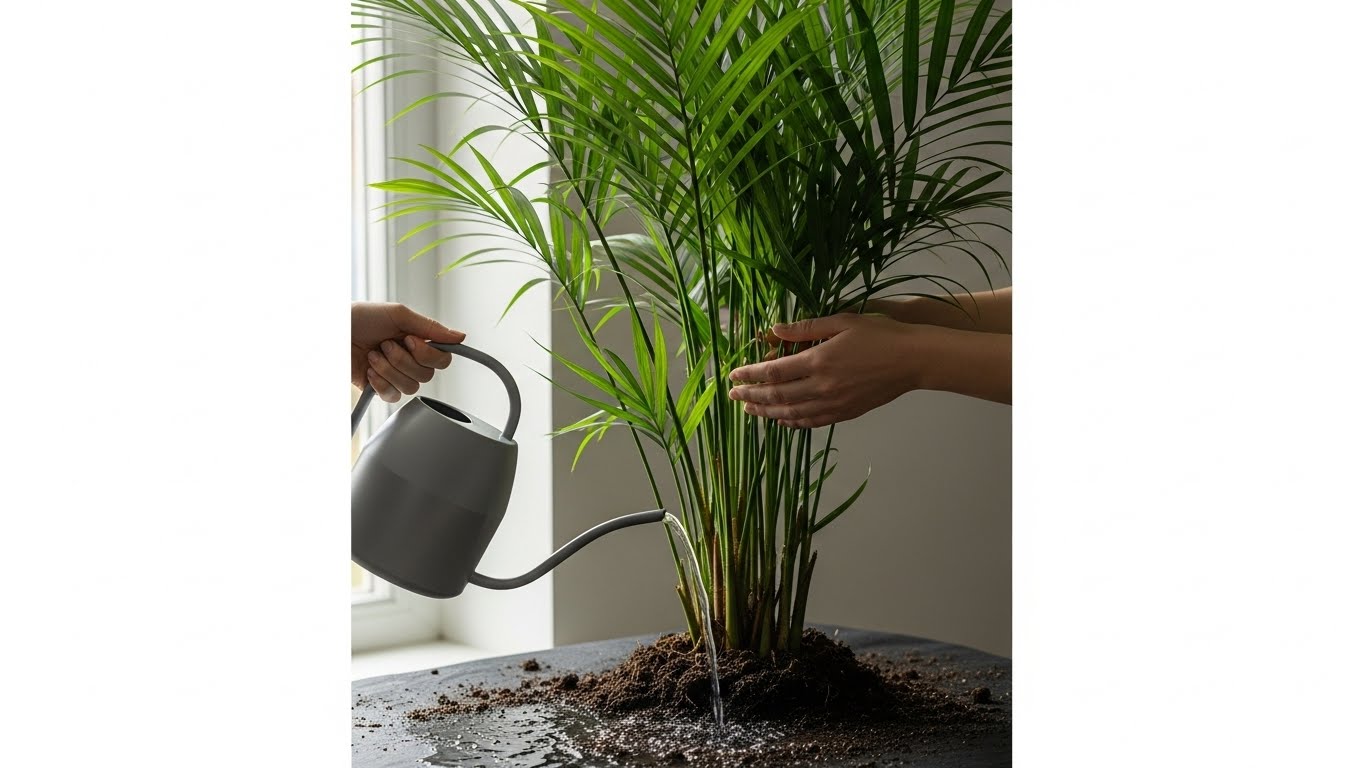
Watering your Areca palm too often can lead to root rot and other serious problems. A key rule to follow is to water only when the top inch of soil feels dry. During warmer months, you might need to water every 1 to 2 weeks, but slow down in winter. Look for signs like wilting leaves or yellowing fronds; these indicate your plant needs water. Want to keep your palm thriving? There’s more to discover about its care!
Key Takeaways
💡 To ensure your Areca Palm thrives, it’s essential to understand its care requirements.
➜ Discover proven techniques
- Water when the top inch of soil feels dry; overwatering occurs if the soil remains consistently wet.
- Yellowing leaves and drooping indicate potential overwatering; check soil moisture immediately.
- Ideal watering frequency is every 1 to 2 weeks, adjusting for seasonal changes and temperature.
- Use well-drained soil to prevent root rot; ensure containers have proper drainage holes.
- Monitor for musty smells in the soil, which indicate excessive moisture and possible root issues.
Understanding the Watering Needs of Areca Palms
When you think about caring for your Areca palm, understanding its watering needs is key to keeping it healthy and happy. These tropical beauties thrive in well-drained soil, so you’ll want to use specific watering techniques to avoid overwatering. A good rule of thumb is to water your Areca palm when the top inch of soil feels dry to the touch. This helps guarantee the roots receive enough moisture without drowning. During warmer months, you might find yourself watering more frequently, while in winter, cut back a bit. Always check the pot for excess water, as stagnant moisture can lead to root rot. Additionally, using filtered, distilled, or rainwater can help prevent chemical sensitivity that may harm your palm. Keep a close eye on your palm, and you’ll both enjoy a flourishing relationship!
Signs Your Areca Palm Needs Water
Recognizing the signs that your Areca palm needs water is just as important as knowing when to water it. Keep an eye out for a few key indicators:
Sign | Description | Action Needed |
|---|---|---|
Wilting Leaves | Leaves droop and lose their perkiness. | Water immediately! |
Yellowing Fronds | Fronds turn yellow and lose vibrancy. | Check soil moisture! |
Dry Soil | Soil feels dry to the touch. | Time to water! |
Browning Edges | Leaf edges turn brown and crispy. | Increase watering! |
If you notice any of these signs, it’s a good idea to give your palm some water. Keeping your Areca palm happy and hydrated will help it thrive!
Indicators of Overwatering
It’s essential to recognize the indicators of overwatering your Areca palm, as too much water can be just as harmful as not enough. One clear sign is drooping leaves; if their vibrant green starts to sag, it’s time to investigate. You might also notice yellowing foliage, which screams for attention. Another serious concern is root rot, a sneaky villain that develops from excessive moisture. If you pull the plant out and see dark, mushy roots, it’s a sure sign your palm is struggling. Additionally, a musty smell in the soil can signal trouble. By keeping an eye out for these signs, you can help your Areca palm thrive, ensuring it stays healthy and happy in your home.
Ideal Watering Schedule for Your Areca Palm
To keep your Areca Palm thriving, a consistent watering schedule is key, but it also requires some flexibility. You’ll want to monitor the soil moisture closely, adjusting your watering habits with the changing seasons. Let’s explore how to find that perfect balance to keep your palm happy and healthy!
Soil Moisture Monitoring
When it comes to keeping your Areca palm healthy, monitoring soil moisture is key to figuring out the ideal watering schedule. You can easily check the soil moisture by sticking your finger about an inch deep into the soil. If it feels dry, it’s time to water. For more precise readings, consider using moisture sensors, which provide real-time data on the soil’s moisture level. These handy tools can help you avoid overwatering, ensuring your palm thrives without soggy roots. Remember, Areca palms prefer slightly moist soil, so keeping a close eye on moisture helps you maintain that perfect balance. By tuning into your plant’s needs, you’ll be rewarded with a vibrant, happy palm!
💡 Understanding light requirements is crucial for your Areca Palm’s health.
➜ Explore advanced methods
Seasonal Watering Adjustments
As the seasons change, so do the watering needs of your Areca palm, making it essential to adjust your schedule accordingly. During the warmer months, your palm craves more moisture, so you might need to water it once a week. However, as the temperature drops in fall and winter, cut back to every two weeks, since the plant uses less water. Pay attention to seasonal changes and your local climate impact, as they can affect humidity levels and soil dryness. Always check the top inch of soil before watering—if it’s dry, it’s time to hydrate. By being attentive to your Areca palm’s needs, you’ll help it thrive through every season, keeping it lush and vibrant all year long!
Tips for Proper Watering Techniques
When it comes to watering your Areca Palm, checking the soil moisture is key to keeping your plant healthy and happy. Make sure you’re familiar with the best watering frequency to avoid over or under-watering, which can harm your palm. Let’s explore some straightforward techniques that will help you master the art of watering!
Check Soil Moisture
How do you know when your Areca palm needs a drink? Checking the soil moisture is key to keeping your palm happy and healthy. You want to make certain the soil has good drainage while still retaining some moisture. Stick your finger about an inch into the soil; if it feels dry, it’s time to water. If it’s still moist, give it a little more time. Here’s a quick reference to help you:
Soil Condition | Action Needed | Notes |
|---|---|---|
Dry | Water thoroughly | Guarantee good drainage |
Slightly moist | Wait a few days | Check again soon |
Wet | Delay watering | Prevent root rot |
Very dry | Water slowly | Avoid shock |
Watering Frequency Guidelines
Finding the right watering frequency for your Areca palm is essential for its growth and overall health, so don’t just rely on guesswork! Aim to water your palm every 1 to 2 weeks, but always check the soil moisture first. Remember, different watering methods can affect how quickly the soil dries. If you’re using a pot with drainage holes, water until it seeps out, ensuring the roots get enough moisture without sitting in water. During the growing season, you might need to water a bit more often, while in the winter, reduce frequency. Keeping an eye on your palm’s health will guide you in adjusting your routine, helping your Areca thrive beautifully!
Maintaining Optimal Humidity Levels
Maintaining ideal humidity levels for your Areca palm is essential for its health, especially since these tropical beauties thrive in moist environments. To create the perfect atmosphere, consider adding humidity sources like a humidifier or placing your palm near a pebble tray filled with water. This not only helps keep the air moist but also enhances your space’s aesthetic.
You can also mist your Areca palm regularly to increase humidity, especially during dry seasons. Remember to check the leaves for signs of dryness or browning, as this indicates your plant needs more moisture. With a little care and attention, your Areca palm will flourish, bringing a touch of the tropics to your home!
Conclusion
To sum up, finding the right watering balance for your Areca palm is essential for its health and beauty. For example, imagine a student named Jamie who overwatered their palm, leading to yellowing leaves and root rot. Once they adjusted their watering routine, their palm thrived, showcasing vibrant green fronds. By paying attention to your plant’s needs and maintaining proper watering techniques, you can keep your Areca palm looking lush and lively, adding charm to any space!
💡 If you’re noticing issues with your Areca Palm, it might be due to watering or other factors.
➜ Get the step-by-step guide


