
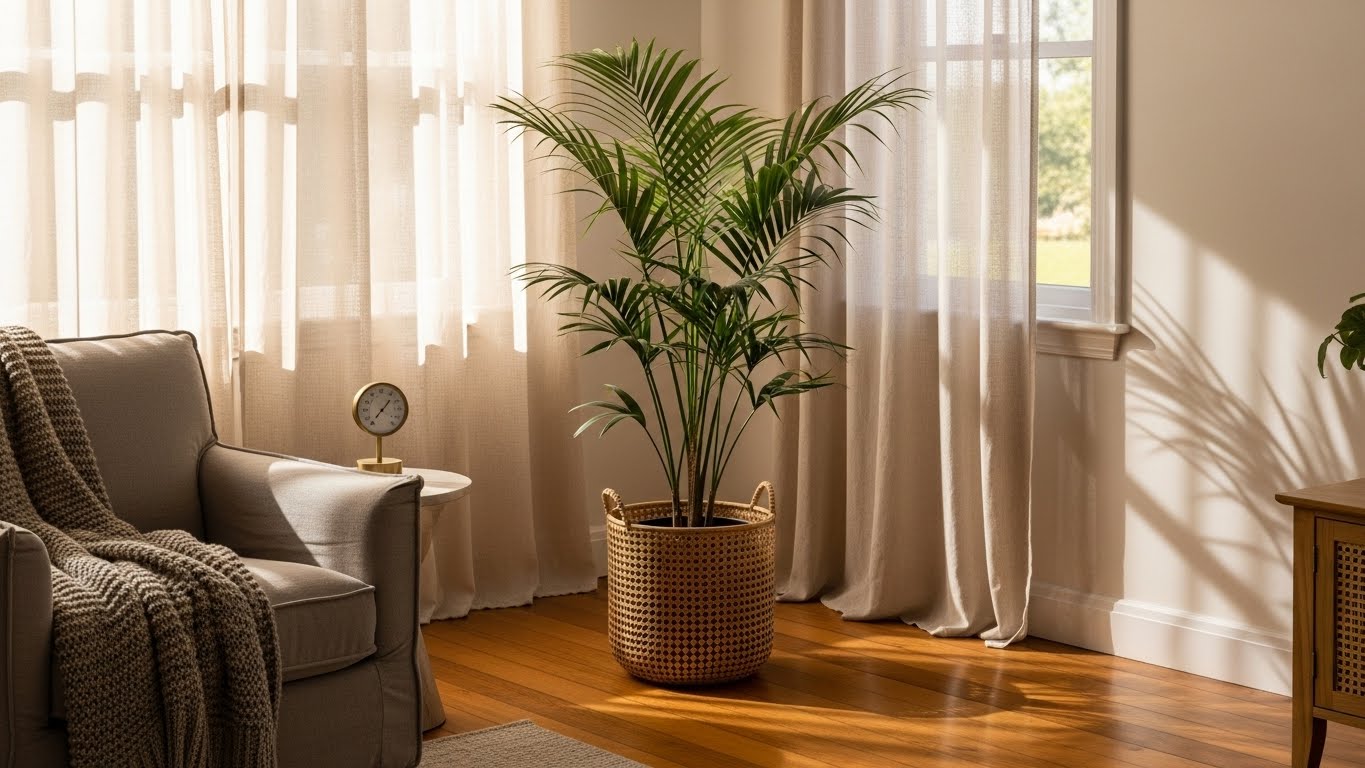
To keep your Areca palms lush year-round, give them bright, indirect sunlight for 6 to 8 hours a day. Water every 7-10 days, but let the soil dry an inch deep to avoid overwatering. Maintain humidity with regular misting or a humidifier, and use balanced fertilizer every couple of months. Prune dead fronds in spring, and always check for pests. With these tips, your palms will thrive, and you’ll uncover more secrets to their success soon!
Key Takeaways
💡 If you’re looking to enhance your office environment with Areca Palms, this article offers essential tips on light, water, and placement.
➜ Discover proven techniques
- Maintain consistent humidity levels through misting or using a humidifier to mimic the Areca palm’s tropical environment.
- Water every 7-10 days, adjusting frequency based on seasonal temperature and humidity to prevent wilting or root rot.
- Provide bright, indirect sunlight for 6-8 hours daily, avoiding direct sunlight which can scorch the leaves.
- Fertilize every couple of months with a balanced NPK fertilizer after watering to support lush foliage growth.
- Regularly dust leaves to enhance air purification and inspect for pests to ensure the overall health of the palm.
Understanding Areca Palm Needs

When you decide to bring an Areca palm into your home, it’s essential to understand its specific needs to keep it thriving all year round. First, focus on areca palm care by providing the right amount of water. These palms love moisture, but overwatering can lead to root rot, so find that sweet spot. Next, consider the soil; it should be well-draining to keep your palm happy. The benefits of an Areca palm are plenty, as it not only purifies the air but also adds a tropical touch to your space. Regularly dusting the leaves will help them breathe better. Additionally, maintaining ideal humidity levels is crucial for preventing brown leaf tips and ensuring overall health. With a little attention, your Areca palm will flourish, bringing joy and greenery into your home!
Ideal Lighting Conditions
To keep your Areca palm thriving, you need to pay attention to its lighting needs. These palms love bright, indirect sunlight, so make sure to find a spot that gives them that perfect glow without the harsh rays beating down on them. Whether you’re placing them indoors or outdoors, understanding their light requirements is key to keeping them lush and vibrant all year long!
Natural Light Requirements
Areca palms thrive best in bright, indirect light, making them perfect for those sunny spots in your home. To guarantee your palm flourishes, focus on light intensity and light duration:
- Choose a bright location: Place your areca palm near a window that receives plenty of light, but shield it from harsh rays.
- Rotate your plant: Every few weeks, turn your palm to expose all sides to light evenly.
- Monitor light duration: Aim for around 6 to 8 hours of indirect sunlight daily.
- Use sheer curtains: These can help filter light while still allowing enough brightness to reach your palm.
With the right light, your areca palm will stay lush and vibrant, enhancing your living space beautifully!
Avoid Direct Sunlight
While bright light is essential for your areca palm’s growth, avoiding direct sunlight is just as crucial for keeping it healthy. These lovely plants thrive best in indirect lighting, which mimics their natural habitat under the shade of taller trees. When you place your areca palm in a spot with filtered light, it will flourish and maintain its vibrant green fronds.
Indoor Vs Outdoor Placement
When considering the ideal lighting conditions for your palm, think about where you’ll place it—indoors or outdoors. Each option has its perks and pitfalls. Indoor placement offers several benefits, such as:
- Controlled Environment: You can manage temperature and humidity easily.
- Reduced Pests: Fewer outdoor critters mean a healthier palm.
- Consistent Light: Soft, filtered light keeps your palm happy.
- Decorative Touch: Adds a tropical vibe to your home.
However, outdoor placement presents challenges like extreme weather and fluctuating sunlight. If you choose this route, make certain your palm gets indirect light and protection from harsh elements. Understanding these factors can help you nurture your Areca palm beautifully, keeping it lush and vibrant all year round!
Proper Watering Techniques
When it comes to keeping your Areca palms happy and healthy, proper watering techniques are key. You’ll want to pay attention to how often you water, the best methods to use, and the signs that might indicate you’re giving them too much. Let’s explore these important points so your palms can thrive all year long!
Watering Frequency Guidelines
To keep your Areca palms thriving and lush, it’s essential to get their watering schedule just right. You’ll want to observe the watering indicators closely, ensuring your palm gets just enough moisture without overdoing it. Here are some guidelines to help you:
- Check Weekly: Aim to water every 7-10 days, adjusting for temperature and humidity.
- Feel the Soil: Stick your finger an inch into the soil; if it feels dry, it’s time to water.
- Watch for Wilting: Droopy fronds are a sign your palm needs water.
- Consider Pot Type: Different pots retain moisture differently, so adjust your watering frequency accordingly.
Optimal Watering Methods
Watering your Areca palms properly is essential for keeping them healthy and vibrant, so let’s explore some effective techniques that’ll make your job easier. First, gather your watering tools—like a watering can or a hose with a spray nozzle. These let you control the flow, ensuring your palms get just the right amount. Next, consider using moisture meters; they’re great for checking the soil’s dampness before watering. Stick the meter into the soil, and when it reads dry, it’s time to water! Aim to soak the soil thoroughly, but avoid letting water sit at the bottom. With these methods, you’ll help your Areca palms thrive, creating a lush and welcoming atmosphere in your space.
Signs of Overwatering
Recognizing the signs of overwatering is essential for keeping your Areca palms healthy and thriving. If you notice any of these symptoms, it’s time to adjust your watering routine:
- Wilting Leaves: Though it seems counterintuitive, overwatered palms can have droopy, wilting leaves.
- Yellowing Fronds: If the fronds start turning yellow, it’s a clear signal that your plant’s roots may be drowning.
- Mushy Stems: Check for soft, mushy stems; this indicates root rot is setting in.
- Foul Odor: A bad smell from the soil often means there’s excess moisture, which can lead to root issues.
Soil Selection and Repotting
When you’re ready to give your Areca palms a fresh start, choosing the right soil and knowing when to repot are significant steps. A well-draining potting mix is vital for maintaining root health, as it prevents soggy soil that can lead to rot. Aim to repot your palm every 2-3 years or when you notice growth slowing down.
💡 Understanding potential pests is crucial for keeping your Areca Palms healthy. This article details the pests to watch out for.
➜ Learn the complete strategy
Here’s a quick guide to help you:
Soil Type | Benefits | When to Repot |
|---|---|---|
Potting Mix | Good drainage | Every 2-3 years |
Perlite | Improves aeration | Roots outgrowing pot |
Coconut Coir | Retains moisture | Soil appears compacted |
Peat Moss | Holds nutrients | Plant shows signs of stress |
Sand | Enhances drainage | Roots visible from pot |
Making these choices keeps your Areca palms thriving!
💡 Pruning is essential for the health and aesthetics of your Areca Palms. This guide provides clear steps on how and when to prune.
➜ Get the step-by-step guide
Humidity Requirements
To keep your Areca palms looking their best, you’ll want to pay close attention to their humidity needs, since these tropical plants thrive in environments that mimic their natural habitat. Maintaining proper humidity levels is essential for their growth and wellness. Here are some humidity sources you can use to create the perfect environment:
- Mist your palms regularly to increase moisture in the air.
- Place a humidifier nearby, especially during dry seasons.
- Group your plants together, as they create a microclimate with increased humidity.
- Use a pebble tray filled with water beneath the pot to promote evaporation.
Fertilization Schedule
Fertilizing your Areca palms is just as important as providing the right humidity, helping them thrive and maintain their vibrant green appearance. To achieve a good nutrient balance, you’ll want to use the right fertilizer types. Here’s a simple fertilization schedule to follow:
Month | Fertilizer Type |
|---|---|
January | Balanced NPK Fertilizer |
April | Slow-Release Fertilizer |
July | Liquid Fertilizer |
October | Organic Fertilizer |
December | Balanced NPK Fertilizer |
Using a balanced fertilizer every couple of months will keep your palms happy. Just remember to water them after applying fertilizer, ensuring they can absorb those essential nutrients. Your Areca palms will thank you with lush foliage!
Pruning and Maintenance
Keeping your Areca palms healthy means knowing how to prune and maintain them properly. You’ll want to use the right techniques for trimming dead or yellowing fronds, as this helps the plant focus its energy on new growth. Plus, sticking to a regular maintenance schedule will guarantee your palms stay lush and vibrant throughout the year!
Proper Pruning Techniques
Pruning your Areca palms at the right time and in the right way can make a big difference in their health and appearance. To guarantee your palms thrive, follow these proper pruning techniques:
- Timing: Prune in late winter or early spring, just before the growing season kicks in.
- Tools: Use clean, sharp shears to avoid damaging the plant and to make precise cuts.
- Cutting Techniques: Remove dead or yellowing fronds first, cutting close to the base without harming healthy leaves.
- Moderation: Avoid over-pruning; removing too many fronds can stress the palm and hinder growth.
Using these pruning methods will help your Areca palms stay lush and vibrant all year round, making your space feel more inviting!
Regular Maintenance Schedule
To keep your Areca palms thriving, establishing a regular maintenance schedule is key, especially after you’ve pruned them for ideal growth. Aim for a maintenance frequency that suits your plants’ needs, typically every two to four weeks. During this time, check for any yellowing fronds or pests that might have snuck in. Don’t forget to make seasonal adjustments—your palms will need a bit more attention during the growing season. Water them more frequently, and consider fertilizing every month to boost their health. As temperatures drop, you might reduce watering and fertilization, allowing your palms to rest. By staying consistent with these practices, you’ll nurture lush, vibrant Areca palms that brighten your space year-round!
Pest and Disease Management
When you notice your Areca palms starting to look a little less vibrant, it’s important to act quickly, since pests and diseases can spread rapidly and cause significant damage. To keep your palms healthy, focus on pest identification and disease prevention. Here are some steps to help you manage any issues:
- Inspect your palms regularly for signs of pests like spider mites or mealybugs.
- Remove any infested leaves and consider using insecticidal soap for treatment.
- Make certain your palms have proper air circulation and light to prevent fungal diseases.
- Keep the soil clean and avoid overwatering, which can lead to root rot.
Seasonal Care Adjustments
Keeping your Areca palms thriving throughout the seasons requires some thoughtful adjustments to your care routine. As temperatures change and humidity fluctuates, you’ll want to tweak your watering and placement practices. Here’s a simple guide to help you navigate seasonal care:
Season | Temperature Range | Watering Frequency |
|---|---|---|
Spring/Summer | 70°F – 85°F | Weekly |
Fall | 60°F – 75°F | Every 10 days |
Winter | 50°F – 65°F | Every 2 weeks |
During spring and summer, make sure your palms receive ample light and moisture, while in fall and winter, reduce watering to prevent root rot. By staying attentive, you’ll keep your Areca palms lush and vibrant all year!
Propagation Tips for Areca Palms
Propagation of Areca palms can be an exciting adventure, and with the right techniques, you can easily grow your own beautiful plants. Here are some tips to get you started:
- Seed Propagation: Gather fresh seeds from ripe fruit. Soak them overnight, then plant them in a well-draining mix.
- Division Methods: When your palm grows, gently separate the clumps of stems, ensuring roots are intact for each section.
- Timing: Propagate during the spring, when growth is more vigorous.
- Care: Keep the soil moist but not soggy, and place your new plants in indirect sunlight to encourage healthy growth.
With patience and care, you’ll soon have a thriving collection of Areca palms to brighten your space!
Conclusion
By following these tips, you can keep your Areca palms thriving all year long, bringing a touch of tropical beauty to your space. You might think it’s too much work, but once you establish a routine, it becomes second nature. Just remember, a little effort in understanding their needs pays off with lush, vibrant foliage that brightens any room. So, grab your watering can and get started on your journey to becoming an Areca palm pro!
💡 Areca Palms not only beautify your space but also purify the air. Discover the benefits of incorporating them into your home.
➜ Explore advanced methods


