
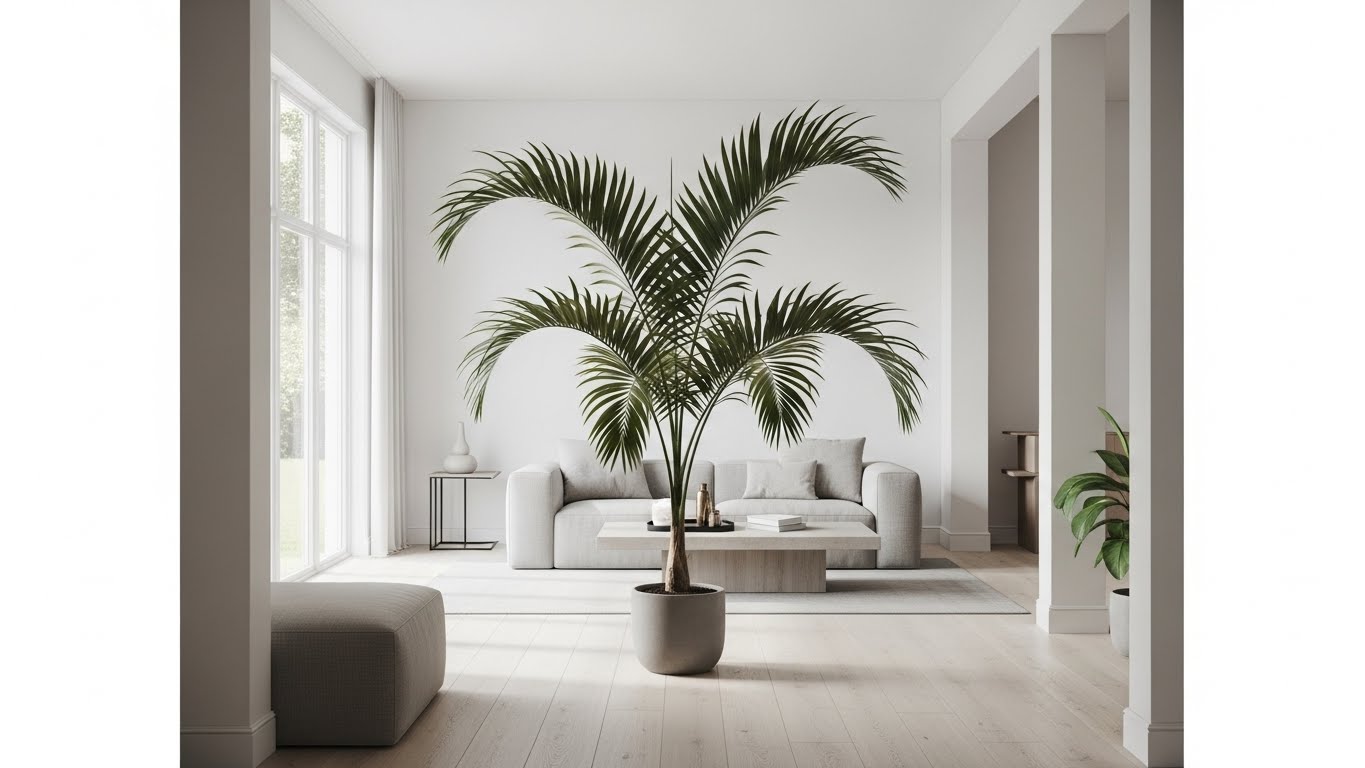
Areca Palms are tall with feathery fronds and love bright light, while Bamboo Palms are shorter, with wide leaves and thrive in low light. Both improve air quality, but the Areca adds elegance to bright spaces, whereas the Bamboo is perfect for darker rooms. When caring for them, Areca likes slightly moist soil, while Bamboo prefers consistent moisture. Each plant has its unique traits, making your choice depend on your home’s needs—keep exploring to discover more!
Key Takeaways
💡 If you’re looking to maintain the vibrancy of your Areca Palm, this article provides essential tips.
➜ Discover proven techniques
- Areca Palms thrive in bright, indirect light, while Bamboo Palms can tolerate low light, making them suitable for dim rooms.
- Areca Palms grow taller (6-10 feet) and bushier, whereas Bamboo Palms are shorter (4-6 feet) and more slender.
- Areca Palms prefer slightly moist soil, while Bamboo Palms like consistently moist soil to prevent root rot.
- Areca Palms have glossy, feathery fronds, while Bamboo Palms feature rougher, wider leaves, adding different aesthetics to indoor spaces.
- Areca Palms require a potassium-rich fertilizer, while Bamboo Palms benefit from a nitrogen-rich mix for optimal growth.
Overview of Areca Palm
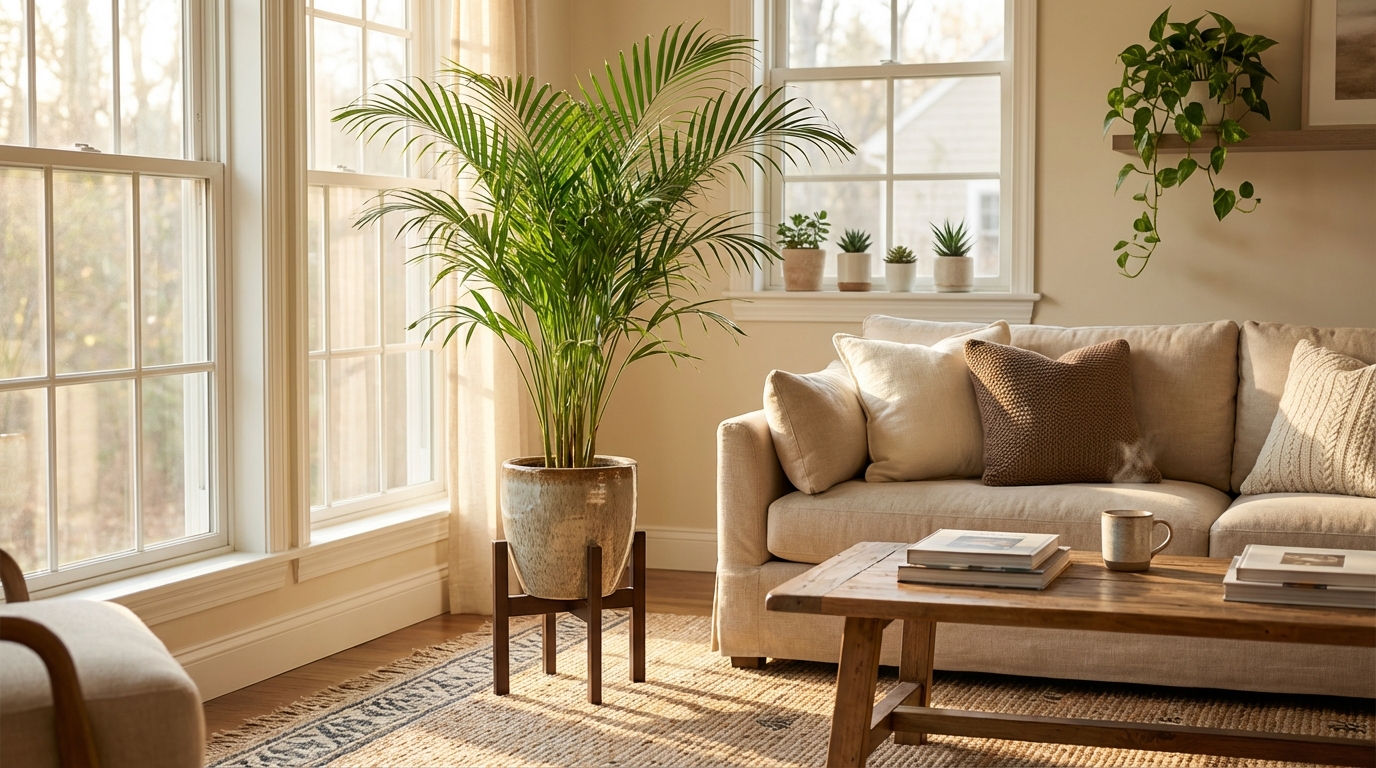
The Areca Palm, also known as Dypsis lutescens, is a popular houseplant that brings a touch of the tropics right into your home! Taking care of your Areca palm can be a delightful experience. This vibrant plant thrives in bright, indirect sunlight and loves a bit of humidity, so misting the leaves occasionally helps keep it happy. As you nurture it, you’ll enjoy several benefits. Areca palms improve indoor air quality by filtering toxins, making your space feel fresher and more inviting. Plus, their feathery fronds create a calming atmosphere, perfect for relaxation. With a little love and attention, your Areca palm will flourish, adding beauty and serenity to your daily life! Additionally, Areca Palms are recognized for their air-purifying capabilities, effectively filtering VOCs like formaldehyde and benzene.
Overview of Bamboo Palm
Bamboo Palm, or Chamaedorea seifrizii, is an enchanting houseplant that adds a touch of tropical flair to any indoor space. Known for its graceful fronds, it’s not just pretty; it’s also beneficial! Here are some key points about bamboo palm care and its benefits:
- Low Light Tolerance: It thrives in low light, making it perfect for dim rooms.
- Air Purification: It helps purify the air, removing toxins and improving indoor air quality.
- Humidity Boost: The bamboo palm increases humidity, which is great for your skin and respiratory health.
- Pet-Friendly: It’s safe for pets, so you don’t have to worry if your furry friends get curious!
With simple care, you can enjoy all these benefits while brightening up your home!
Appearance Comparison
When you compare the appearance of the Areca Palm and the Bamboo Palm, you’ll notice some striking differences that set them apart. The leaf structures vary, with the Areca’s feathery fronds contrasting against the Bamboo’s more upright, slender leaves. Plus, their heights and growth rates differ greatly, and you’ll even find variations in stem thickness that contribute to their unique looks!
Leaf Structure Differences
Leaf structure is like a fingerprint in the plant world, showcasing unique traits that help identify each species. When you compare the Areca palm and the Bamboo palm, you’ll notice some key differences in their leaf characteristics:
- Leaf Shape: Areca palms have long, arching fronds, while Bamboo palms feature shorter, wider leaves that grow more upright.
- Leaf Texture: The Areca’s leaves are smooth and glossy, creating a vibrant appearance, while the Bamboo’s leaves are slightly rougher and more textured.
- Leaf Arrangement: Areca palms display a clustered arrangement, giving them a bushy look, while Bamboo palms have a more spaced-out, airy feel.
- Color: Areca leaves are often a brighter green, whereas Bamboo leaves can be a deeper shade.
These traits make each palm unique and beautiful in its own right!
Height and Growth Rate
After appreciating the unique leaf structures of the Areca and Bamboo palms, let’s explore how their heights and growth rates contribute to their overall appearance. The Areca palm typically grows taller, reaching heights of up to 6 to 10 feet, while the Bamboo palm usually stays shorter, around 4 to 6 feet. This height comparison makes a significant difference in how each palm fits into your space. In ideal growth conditions, Areca palms can grow faster, often adding a foot or more each year, while Bamboo palms grow at a more moderate pace. Both palms bring a tropical vibe, but their heights and growth rates can influence the mood and aesthetic of your home.
Stem Thickness Variations
Although both the Areca and Bamboo palms are stunning additions to any indoor space, their stem thicknesses set them apart with respect to appearance and overall impact. You’ll notice that the Areca palm has slender, graceful stems, while the Bamboo palm features thicker, sturdier stems. These variations can enhance your decor, depending on your style preference.
Here are a few key growth factors affecting stem thickness:
- Watering: Consistent moisture encourages thicker stems.
- Light: Bright, indirect sunlight promotes healthy growth.
- Soil Quality: Nutrient-rich soil supports robust stem development.
- Fertilization: Regular feeding helps achieve ideal thickness.
Understanding these differences can help you choose the perfect palm for your home!
Growth Habits and Size
When you look at the Areca Palm and the Bamboo Palm, you’ll notice their growth habits and sizes vary quite a bit. The Areca Palm typically grows taller and has a bushier appearance, while the Bamboo Palm tends to stay shorter and more slender, giving each a unique charm. Understanding these differences can help you choose the right palm for your space, whether you want a dramatic statement or a subtle touch.
Growth Patterns Comparison
Both the Areca Palm and the Bamboo Palm have unique growth habits that make them fascinating additions to your indoor plant collection. Their growth rate and propagation methods vary, giving you options to explore. Here’s a quick comparison of their growth patterns:
- Areca Palm: Grows quickly, reaching heights of up to 6-7 feet, and loves bright, indirect light.
- Bamboo Palm: Slower growing, typically maxing out around 4-5 feet, thriving in low light.
- Propagation: Areca Palms are best propagated through division, while Bamboo Palms can be grown from seeds.
- Maintenance: Both need regular watering, but Be careful not to overwater the Bamboo Palm!
Choosing between them can add variety and charm to your indoor oasis!
Size Variations Explained
Understanding the size variations of the Areca Palm and Bamboo Palm helps you choose the right plant for your space. Each palm has distinct size specifications and growth dimensions that cater to different environments.
💡 Understanding the benefits of Areca Palms can enhance your appreciation for these plants.
➜ Explore advanced methods
Plant Type | Height (ft) |
|---|---|
Areca Palm | 6 to 10 |
Bamboo Palm | 4 to 8 |
Growth Rate | Moderate (1-3 ft/yr) |
Leaf Width | Up to 2 ft |
Pot Size | 10-14 inches |
The Areca Palm tends to grow taller, reaching up to 10 feet, while the Bamboo Palm stays more compact. Knowing these differences guarantees you pick the perfect palm that fits your space, bringing a touch of nature indoors. Happy planting!
Light Requirements
💡 If you’re considering the best conditions for your Areca Palm, understanding lighting needs is crucial.
➜ Get the step-by-step guide
Light plays an essential role in the growth and health of both the Areca Palm and Bamboo Palm, so it’s important to know their specific needs. Here’s a quick guide to help you understand their light requirements:
- Sunlight Exposure: Areca Palms thrive in bright, indirect light, making them perfect for well-lit rooms.
- Shade Tolerance: Bamboo Palms are more forgiving with low light, tolerating shade better than their Areca counterparts.
- Optimal Conditions: Both palms prefer filtered light, avoiding harsh direct sunlight that could scorch their leaves.
- Indoor Placement: When positioning your palms, consider keeping them near windows but out of direct sun to guarantee they flourish beautifully.
Watering Needs
How often should you water your palms to keep them healthy and vibrant? For both the Areca and Bamboo Palms, you’ll want to maintain a consistent watering frequency. Typically, watering once a week works well, but pay attention to the moisture retention in the soil. If the top inch feels dry, it’s time to give them a drink. Remember, overwatering can lead to root rot, so make sure the pot has drainage holes. During hotter months, you might need to increase your watering frequency, while in cooler months, cut back a bit. By keeping an eye on your palms’ needs, you’ll help them thrive and flourish, adding a touch of green joy to your home!
Soil Preferences
When it comes to soil preferences, understanding the needs of Areca and Bamboo palms is key to keeping them healthy. You’ll want to pay attention to factors like soil drainage, pH levels, and nutrient requirements, as these can differ between the two plants. By matching their soil needs to the right conditions, you can help your palms thrive and flourish in your space!
Soil Drainage Requirements
Soil drainage is essential for the health of your plants, especially when you’re deciding between Areca Palms and Bamboo Palms. Both thrive in well-draining soil, but they have different needs for soil moisture. Here’s what you should consider for effective drainage solutions:
- Areca Palms prefer slightly moist soil but can tolerate brief dry spells.
- Bamboo Palms like consistently moist soil, so make sure it drains well to avoid root rot.
- Use a pot with drainage holes to prevent water from pooling.
- Consider adding perlite or sand to improve soil drainage.
Ph Level Preferences
Understanding the pH level preferences of Areca Palms and Bamboo Palms can make a big difference in their growth and overall health. Both palms thrive in slightly acidic to neutral soil, with an ideal pH range of 6.0 to 7.0. If the pH strays too far from this range, it can have a significant pH level impact on nutrient availability, leading to poor growth or even plant stress. Areca Palms prefer a more acidic environment, while Bamboo Palms can tolerate slightly higher pH levels. By keeping an eye on the soil pH and adjusting when necessary, you’ll create a nurturing environment for your palms, allowing them to flourish and bring vibrancy to your space.
Nutrient Needs Comparison
Nutrients are the building blocks of healthy plants, and both Areca Palms and Bamboo Palms have specific needs to thrive. Understanding their nutrient absorption helps you choose the right care for each. Here’s a quick comparison of their fertilizer types:
- Areca Palm: Prefers a balanced, slow-release fertilizer high in potassium, enhancing overall growth.
- Bamboo Palm: Thrives on a nutrient-rich mix, favoring fertilizers with higher nitrogen content for lush foliage.
- Frequency: Both need feeding every 4-6 weeks during the growing season.
- Soil: Well-draining soil is key for both, preventing root rot while allowing nutrient uptake.
Pest and Disease Resistance
When it comes to keeping your indoor plants healthy, knowing how they resist pests and diseases is essential. Both the Areca Palm and Bamboo Palm are relatively resilient, but they each have their strengths. The Areca Palm shows impressive disease resistance, often avoiding common issues like leaf spots and root rot. On the other hand, the Bamboo Palm is known for its ability to withstand pests, making pest control easier for you. With its natural defenses, it can fend off pests like spider mites and mealybugs, so you won’t have to worry as much. Choose wisely based on what fits your home and lifestyle, and you’ll enjoy vibrant, thriving plants with less hassle!
Benefits for Indoor Spaces
Adding greenery to your indoor spaces can transform your home into a vibrant oasis, and both the Areca Palm and Bamboo Palm shine in this role. They not only enhance the aesthetic appeal of your home but also offer several benefits:
Transform your home into a vibrant oasis with the Areca Palm and Bamboo Palm, enhancing beauty and wellness effortlessly.
- Air Purification: These palms help filter harmful toxins from the air, making it cleaner and healthier for you.
- Humidity Regulation: They naturally increase humidity levels, which can be beneficial for your skin and respiratory health.
- Natural Beauty: The lush foliage adds a touch of nature, creating a calming atmosphere.
- Low Maintenance: Both palms are easy to care for, making them perfect for busy lifestyles.
Incorporating either palm will elevate your indoor environment, bringing joy and tranquility to your space.
Choosing the Right Palm for Your Home
Choosing the right palm for your home can feel overwhelming, especially with so many beautiful options available. You want a plant that enhances your indoor aesthetics while being easy to care for. The Areca Palm, with its feathery fronds, adds a touch of elegance, perfect for bright spaces. On the other hand, the Bamboo Palm thrives in low-light areas, making it a cozy addition to darker rooms.
Consider your environment and lifestyle—how much light you get and how much time you can devote to plant care. Both palms bring charm and freshness, but one might suit your home better than the other. Trust your instincts, and you’ll find the perfect palm to brighten your space!
Conclusion
In choosing between the areca palm and the bamboo palm, you’re not just picking a plant—you’re selecting a piece of nature to enhance your home. Each palm offers unique beauty and benefits, whether it’s the lush, feathery fronds of the areca or the vibrant, upright leaves of the bamboo. Think of your space as a canvas, and let one of these palms be the brushstroke that adds life and color, creating your personal oasis.
💡 Proper pruning is essential for maintathisng the health of your Areca Palm.
➜ Master this approach


