
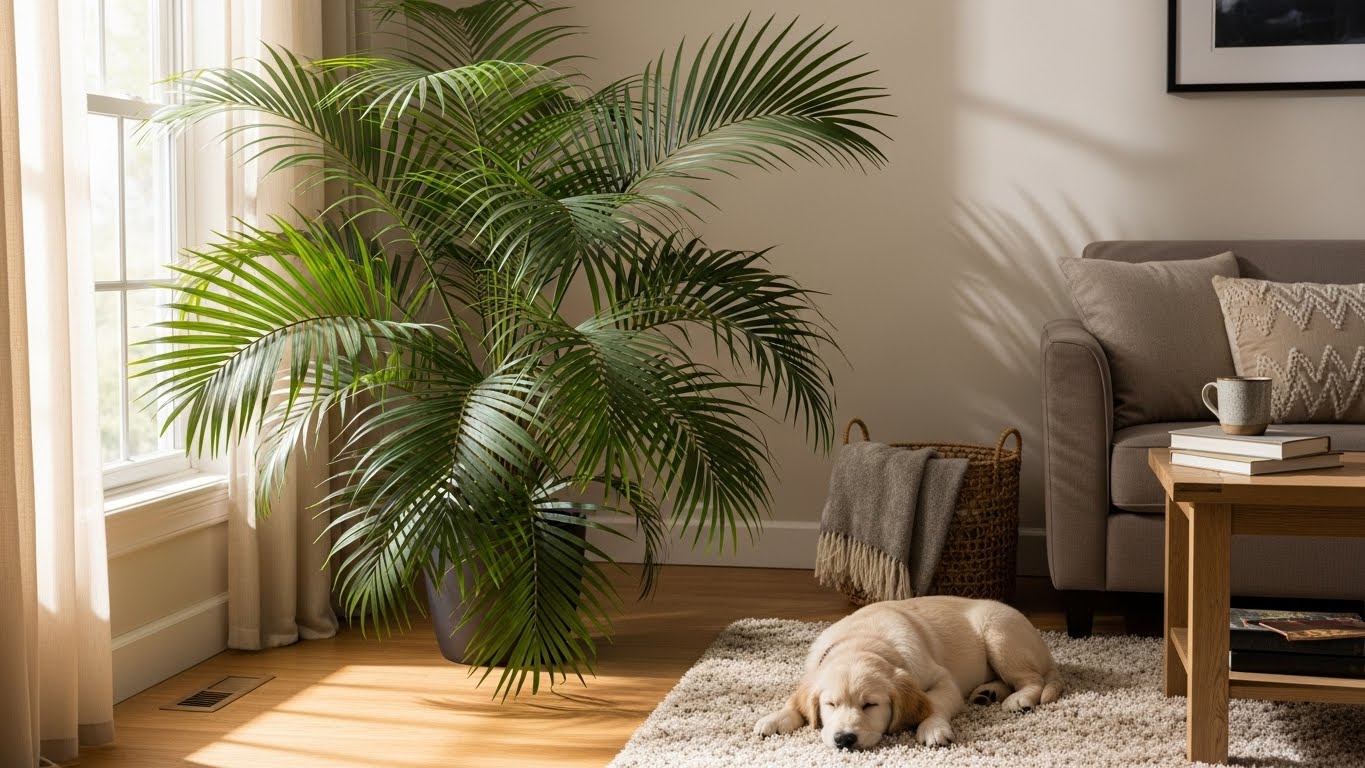
Kentia palms are fantastic indoor plants, and the best part? They’re completely safe for your pets! These elegant plants thrive in low light and won’t harm your furry friends if they take a curious nibble. However, it’s still a good idea to monitor your pets around the plants, especially if they’re playful. Keeping the leaves clean and ensuring the soil isn’t soggy will help as well. There’s so much more to discover about keeping your home pet-friendly!
Key Takeaways
💡 Understanding the longevity of your Kentia Palm can help you plan for its care and placement in your home.
➜ Discover the lifespan of Kentia Palms indoors
- Kentia palms are non-toxic to pets, making them a safe choice for households with furry friends.
- Monitor your pets’ interactions with the plant to ensure they don’t engage in excessive chewing or digging.
- Maintain proper plant care by keeping leaves clean and soil slightly moist to promote a healthy environment.
- If your pet shows symptoms like vomiting or lethargy, remove the plant and consult a veterinarian promptly.
- Position plants out of reach and use pet-safe soil to create a safe indoor garden.
Understanding Kentia Palms: Overview and Characteristics
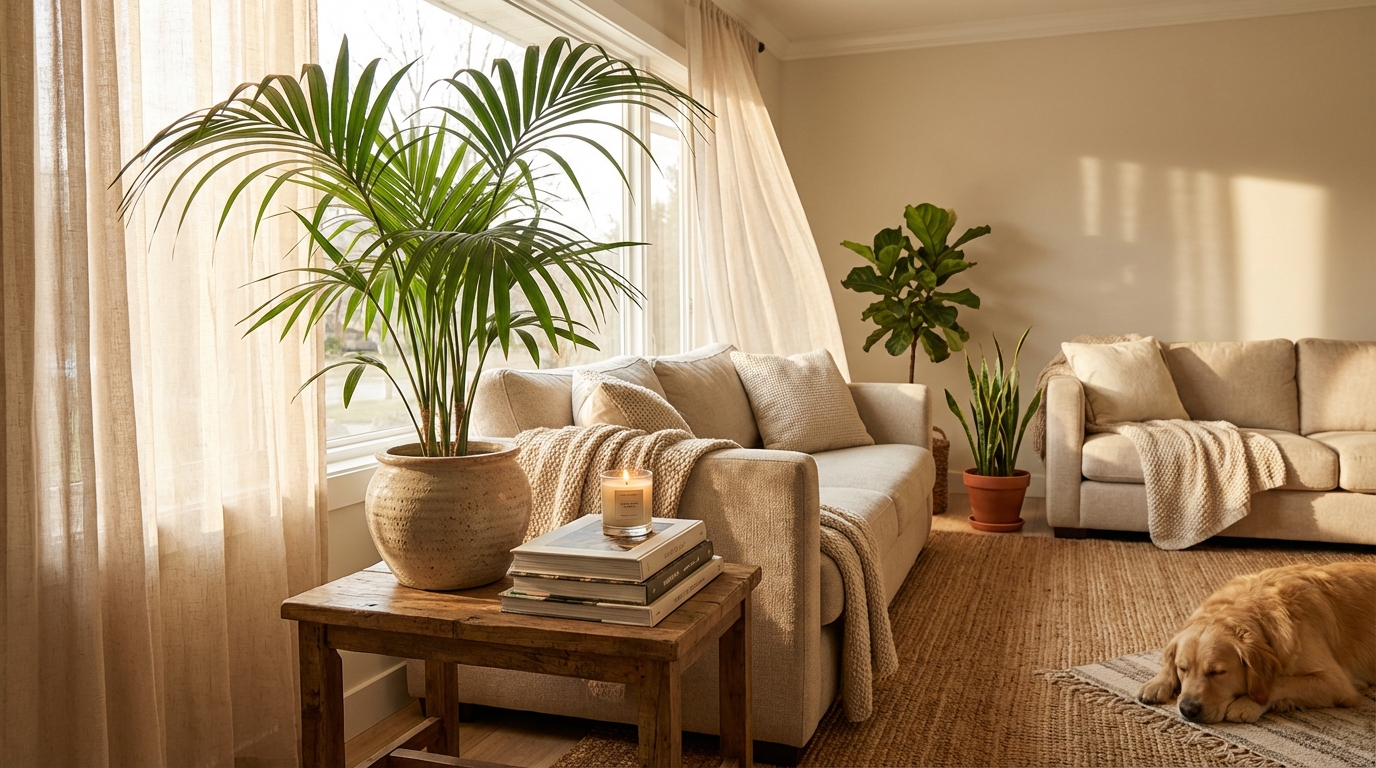
When you think about adding a touch of tropical flair to your home, Kentia palms might just be the perfect choice! These elegant plants boast long, arching fronds that bring a serene vibe to any space. Kentia palm characteristics include their ability to thrive in low light, making them ideal for indoor settings. They can grow up to ten feet tall, filling your room with lush greenery without overpowering it. For Kentia palm care, keep the soil slightly moist but not soggy, and mist the leaves occasionally to maintain humidity. Position them in a spot with indirect sunlight, and you’ll enjoy their beauty for years. With a little love and attention, these palms can truly elevate your home’s ambiance! Additionally, they are known for being non-toxic to pets, making them a safe choice for households with furry friends.
Are Kentia Palms Toxic to Pets?
Kentia palms are not only beautiful additions to your home, but they also bring peace of mind for pet owners. If you’re worried about your furry friends, you’ll be glad to know that Kentia palms are non-toxic to pets. This means your cat or dog can interact with them without any harmful effects. When you practice good Kentia palm care, such as keeping the leaves clean and ensuring proper watering, you create a safe environment for your pets. They can explore, sniff, and even lounge near these lovely plants without any concerns. Just remember to monitor their interactions; while the plants are safe, it’s always wise to keep an eye on your pet’s behavior around any greenery.
Signs of Plant Poisoning in Pets
When you have plants at home, especially Kentia Palms, it’s important to keep an eye on your pets for any signs of plant poisoning. Common symptoms like drooling, vomiting, or lethargy can indicate that something’s wrong, and the severity of these effects can vary. If you notice any unusual behavior in your furry friends, it’s vital to act quickly and seek help from a vet.
Common Symptoms to Watch
Noticing your pet acting strangely can be alarming, especially if you suspect they might have ingested something harmful, like a plant. Understanding symptom recognition is key to ensuring your furry friend stays safe. Keep an eye on their behavior—certain signs can indicate potential poisoning.
- Vomiting or nausea
- Excessive drooling
- Lethargy or weakness
- Diarrhea
- Changes in appetite
If you spot any of these symptoms, it’s important to act quickly. Your pet’s behavior can tell you a lot, so trust your instincts. Observing them closely will help you determine if a trip to the vet is necessary. Remember, being proactive is vital for your pet’s well-being!
Severity of Poisoning Effects
Recognizing the severity of poisoning effects in pets is essential, especially if they’ve had a run-in with a toxic plant. Different plants have varying toxicity levels, and understanding these severity levels helps you gauge how serious the situation might be.
Here’s a quick toxicity comparison table to help you:
Severity Level | Symptoms | Common Toxic Plants |
|---|---|---|
Mild | Vomiting, Diarrhea | Kentia Palm |
Moderate | Lethargy, Loss of Appetite | Aloe Vera, Pothos |
Severe | Seizures, Coma | Oleander, Sago Palm |
Always pay attention to your furry friend’s behavior. If you suspect poisoning, don’t wait—seek help! Your pet’s health and happiness depend on your quick response.
💡 Keeping your Kentia Palm healthy is vital for both your plant and your pets. Learn how to protect your Kentia Palm from pests.
➜ Learn how to protect your Kentia Palm from pests
Immediate Actions to Take
If your pet shows any signs of plant poisoning, knowing what to do can make all the difference. Acting quickly can help your furry friend feel better! Here are some immediate steps you should take:
- Stay calm and assess the situation.
- Check for symptoms like vomiting, drooling, or lethargy.
- Remove the plant from your pet’s environment.
- Contact your veterinarian or emergency contacts for pet first aid advice.
- Keep an eye on your pet’s behavior for any changes.
Safe Plant Care Practices for Pet Owners
When it comes to keeping your pets safe around plants, choosing non-toxic options and placing them wisely is key. You’ll want to pick plants that are safe for your furry friends, like Kentia Palms, while ensuring they’re out of reach of curious paws. By making smart choices in plant care, you can enjoy a beautiful home without worrying about your pet’s safety!
Non-Toxic Plant Choices
Choosing non-toxic plants for your home is an essential step in keeping your furry friends safe and happy. You’ll love surrounding yourself with greenery that won’t harm your pets. Consider these delightful options:
- Non-toxic succulents like jade and echeveria, perfect for sunny spots
- Pet safe herbs such as basil and parsley, great for cooking and snacking
- Spider plants, easy to care for and fun to watch grow
- Boston ferns, adding a lush vibe to your space
- Bamboo palms, bringing a tropical touch without risks
Proper Plant Placement
Properly placing your plants isn’t just about aesthetics; it’s essential for keeping your pets safe and happy. Consider the plant height when you’re arranging your Kentia palms. Tall plants may look stunning, but they can also become a tempting jungle for your curious pets. Position these beauties in areas that are out of reach, yet still visible, so you can enjoy their elegance. Think about your room layout too; avoid placing plants near furniture your pets can easily jump on. By carefully considering both height and layout, you create a safe environment where your pets can roam freely, without the worry of nibbling on your beloved greenery. Happy pets and happy plants—what more could you want?
Alternatives to Kentia Palms for Pet-Friendly Homes
While Kentia palms are popular houseplants, they might not be the best choice for homes with pets due to their potential toxicity. Luckily, there are plenty of pet friendly alternatives that can brighten your space without worrying about your furry friends. Here are some non-toxic options you might love:
- Spider Plant: Easy to care for and resilient.
- Bamboo Palm: Adds a tropical vibe and purifies the air.
- Areca Palm: Lush and safe for pets, perfect for indoor decor.
- Boston Fern: A beautiful, feathery option that thrives in humidity.
- Parlor Palm: Compact and elegant, great for small spaces.
These plants not only keep your pets safe, but they also enhance your home’s beauty!
Creating a Pet-Safe Indoor Garden
Creating a pet-safe indoor garden can be a fun and rewarding project that not only brightens your home but also keeps your furry companions safe. Start by choosing pet-friendly plants, like spider plants or Boston ferns, which are non-toxic and easy to care for. When planning your indoor gardening space, consider placing plants on high shelves or in hanging pots to keep them out of your pet’s reach. Use natural, pet-safe soil, and avoid chemical fertilizers that could harm your animals. Creating a cozy nook with these plants allows you to enjoy nature while ensuring your pets stay safe. Remember, a little research goes a long way in creating a thriving, pet-friendly indoor garden that you can cherish together!
Conclusion
To sum up, keeping your pets safe while enjoying the beauty of plants is like creating a cozy nest in a tree—a balance of nature and security. Kentia palms aren’t poisonous to pets, but always stay vigilant for signs of plant poisoning. By choosing pet-friendly alternatives and practicing safe care habits, you can cultivate a vibrant indoor garden where both your pets and plants thrive together. Remember, your home can be a haven for all its inhabitants, green and furry alike!
💡 Choosing the right companion plants can enhance the safety and aesthetics of your indoor garden. Explore the best companion plants for your Kentia Palm.
➜ Explore the best companion plants for your Kentia Palm


