
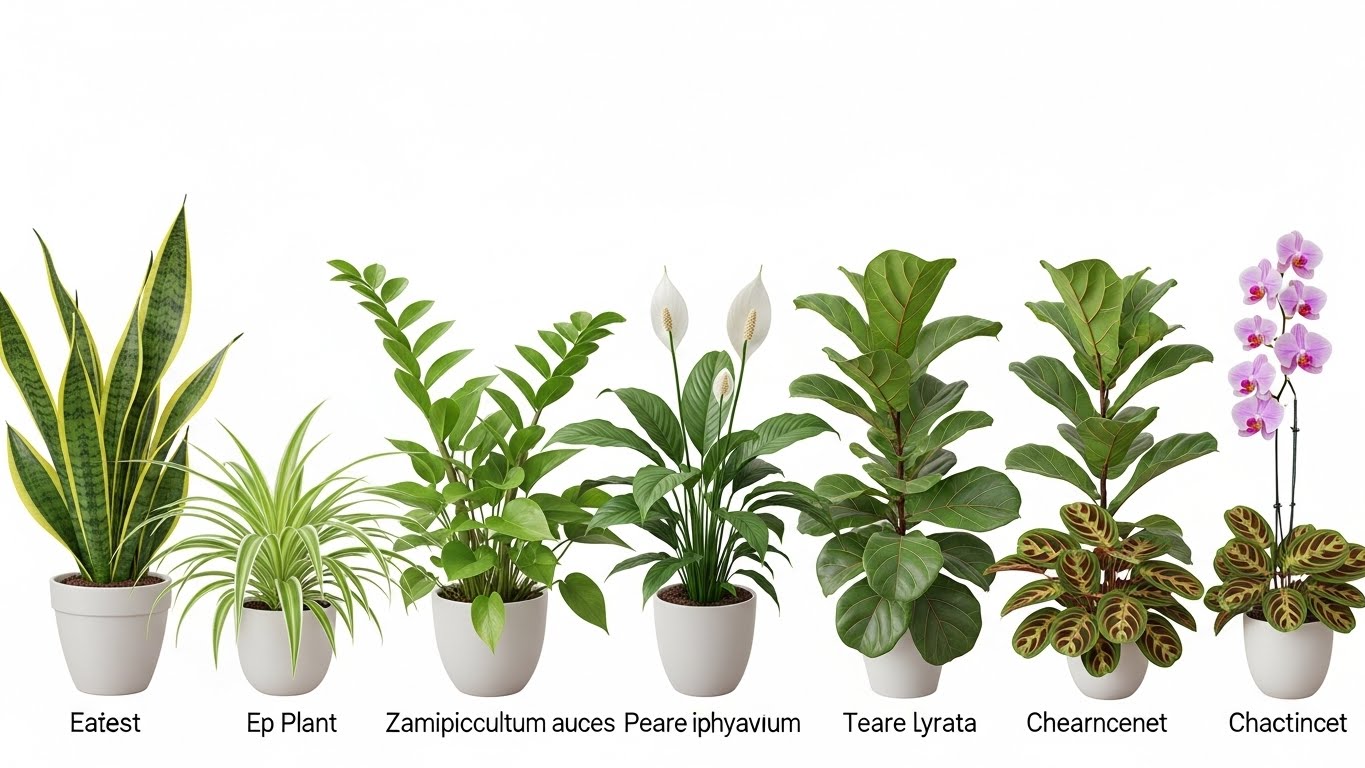
When it comes to air-purifying plants ranked by care level, you’ve got some fantastic options. At the top are easy-care plants like the Spider Plant, Snake Plant, and ZZ Plant that thrive with minimal attention. Then, you have Pothos, Peace Lily, and Bamboo Palm, which are slightly more demanding but still manageable. For those wanting a challenge, consider Aloe Vera and Philodendron. Each plant not only beautifies your space but also clears the air, so keep exploring for more great picks!
Spider Plant
When you think about easy-to-care-for houseplants, the Spider Plant is sure to come to mind! This delightful green companion not only brings a touch of nature indoors but also offers fantastic air-purifying benefits. The Spider Plant thrives in various conditions, making it perfect for both beginners and seasoned plant lovers. You’ll love its ability to absorb toxins, improving your home’s air quality. Plus, spider plant propagation is a breeze! When you see those charming little “babies” sprouting, you can easily propagate them by planting them in soil or water. This plant’s resilience and charm make it a joyous addition to your space, allowing you to enjoy both its beauty and health benefits effortlessly.
Snake Plant
The Snake Plant, often known for its striking upright leaves, is one of the easiest houseplants you can care for. Its resilience makes it perfect for beginners. Not only does it tolerate low light and infrequent watering, but it also boasts impressive snake plant benefits, like purifying the air by removing toxins. You’ll love how effortlessly it fits into your home. For those keen to expand their plant family, snake plant propagation is a breeze. Simply cut a leaf, let it dry, and place it in soil—soon, you’ll have new plants to admire. With minimal effort and maximum style, the Snake Plant truly shines as a beloved housemate, enriching your space while keeping the air fresh.
Pothos
Pothos is one of the easiest houseplants to care for, making it a great choice for beginners. You’ll want to know its growth requirements, including ideal light and water conditions, to keep it thriving. Plus, understanding how to manage common pests will help you maintain your plant’s health and beauty.
Growth Requirements Overview
Although caring for Pothos can be a breeze, understanding its growth requirements is essential for helping this plant thrive in your home. To start, Pothos loves well-draining soil; it doesn’t like to sit in water, which can lead to root rot. Make sure the pot has drainage holes. When it comes to plant nutrition, a balanced liquid fertilizer every 4-6 weeks during the growing season can keep your Pothos happy. Regarding growth conditions, this plant prefers warm temperatures, ideally between 60°F and 85°F. It’s also quite forgiving, so it tolerates a range of humidity levels, although it thrives in higher humidity. By meeting these basic needs, you’re setting your Pothos up for a healthy, vibrant life!
Light and Water Needs
When you want your Pothos to thrive, paying attention to its light and water needs is essential. This beautiful plant loves bright, indirect light but can adapt to lower light intensity too. Just be careful; too much direct sunlight can scorch its leaves. So, finding that sweet spot is key!
When it comes to water frequency, it’s better to let the soil dry out slightly between waterings. Aim to water your Pothos every 1-2 weeks, depending on the humidity and temperature of your home. If the leaves start to droop, that’s your cue it’s thirsty! By tuning into these needs, you’ll keep your Pothos healthy and vibrant, adding a lovely touch to your space.
Common Pests Management
Even the most vibrant Pothos can face challenges from pesky pests, so it’s important to keep an eye on your plant. Using effective pest identification techniques, you can spot issues early and act quickly. Common pests include spider mites, mealybugs, and aphids.
Here’s a handy table to help you identify these pests and find organic pest solutions:
Pest | Identification | Organic Solution |
|---|---|---|
Spider Mites | Tiny, web-like clusters | Spray with neem oil |
Mealybugs | White, cotton-like spots | Wipe with alcohol |
Aphids | Small, green or black | Introduce ladybugs |
Peace Lily
Let’s talk about the Peace Lily, a stunning plant that not only brightens up your space but also helps clean the air. You’ll find that it’s relatively easy to care for, as long as you know its environmental preferences and how to tackle some common issues it might face. By understanding these key points, you can keep your Peace Lily thriving and healthy, making it a perfect addition to your home!
Care Requirements Overview
Caring for a Peace Lily can be a rewarding experience, and with just a few simple guidelines, you can keep this beautiful plant thriving in your home. First, make sure it gets bright, indirect light; too much sun can scorch its leaves. Water your Peace Lily when the top inch of soil feels dry, but don’t let it sit in water, as this can lead to root rot. This plant thrives on humidity, so misting it occasionally helps improve air quality. Fertilize every six to eight weeks during the growing season to support its lush growth. With proper plant care, your Peace Lily will not only beautify your space but also purify the air, creating a healthier environment for you.
Environmental Preferences Explained
Understanding the environmental preferences of your Peace Lily can make a big difference in how well it thrives in your home. These lovely plants adore bright, indirect light, so placing them near a window is ideal, but avoid direct sunlight to prevent leaf burn. They also enjoy humidity, making bathrooms or kitchens great spots. Maintaining good air quality is essential, as Peace Lilies help filter toxins, providing plant benefits that improve your living space. Water them when the top inch of soil feels dry, but don’t let them sit in water. By meeting these simple needs, you’ll create a cozy environment for your Peace Lily, allowing it to flourish while enhancing your home’s atmosphere.
Common Issues Addressed
When caring for a Peace Lily, you might run into a few common issues that can disrupt its growth and beauty. One frequent problem is yellowing leaves, often caused by overwatering or poor drainage, which can lead to common plant diseases like root rot. If your Peace Lily’s leaves droop, it might be thirsty or need a brighter spot. Remember, these plants are champions at air quality improvement, so keeping them healthy is essential! To prevent pests, regularly check for any signs of infestation, especially on the undersides of leaves. With a little attention and care, your Peace Lily will thrive, bringing vibrant greenery and cleaner air to your space.
Bamboo Palm
The Bamboo Palm, known for its graceful fronds and ability to thrive in low light, makes a fantastic addition to any indoor space. You’ll love how easy bamboo palm care is—just keep the soil slightly moist and mist its leaves occasionally. This plant not only adds beauty but also offers impressive bamboo palm benefits, like removing toxins from the air and increasing humidity. It’s perfect for your bedroom or living room, creating a serene atmosphere you’ll appreciate. Plus, it grows well in small pots, making it a great choice for limited spaces. With a little attention, your Bamboo Palm can flourish, bringing a touch of nature indoors and enhancing your home’s air quality, so why not give it a try?
Rubber Plant
With its striking leaves and impressive height, the Rubber Plant is a popular choice for anyone looking to liven up their indoor space. These plants come in various rubber plant varieties, each with unique leaf shapes and colors that can brighten any room. Caring for a Rubber Plant is simple—you just need to provide it with bright, indirect light and water it when the top inch of soil feels dry. If you’re keen to expand your collection, rubber plant propagation is easy, too! You can do it through cuttings, which will root in water or soil. So, why not invite this stunning green companion into your home? It’s sure to boost your mood and purify the air!
Boston Fern
If you’re searching for a lush, green addition to your home, search no more than the Boston Fern! This beautiful plant not only adds a touch of nature but also offers fantastic air-purifying benefits. For Boston Fern care, keep it in a humid environment and guarantee it gets indirect sunlight. Water it regularly, but be careful not to overwater. You’ll love how this plant thrives in your space!
The Boston Fern benefits include improving indoor air quality by removing toxins like formaldehyde and xylene, making your home healthier for you and your loved ones. Plus, its feathery fronds create a calming atmosphere, perfect for relaxation. So, embrace the Boston Fern and enjoy its beauty and benefits today!
Dracaena
Now, let’s explore the fascinating world of Dracaena! These plants are not only stylish additions to your home but also easy to care for, making them perfect for beginners. You’ll soon discover the many benefits they bring, from purifying the air to adding a vibrant touch to any space.
Care Requirements Overview
Dracaenas are some of the easiest houseplants to care for, making them perfect for both beginner and seasoned plant lovers. To keep your Dracaena thriving, you’ll want to place it in bright, indirect light, as direct sunlight can scorch its leaves. Water it when the top inch of soil feels dry, but don’t drown it; overwatering is a common mistake. These plants are forgiving when it comes to humidity, making them ideal for indoor gardening. Plus, they contribute to better air quality, helping you breathe easier in your space. With minimal fuss and simple care needs, Dracaenas can be a delightful addition to your home, bringing a touch of greenery and freshness to your indoor environment.
Benefits of Dracaena
When you invite a Dracaena into your home, you’re not just adding a splash of greenery; you’re also bringing in a host of benefits that can enhance your living space. These beautiful plants come in various dracaena varieties, each with its unique charm and air-purifying capabilities. They help filter out harmful toxins like formaldehyde and benzene, making your environment healthier. Plus, Dracaenas are low-maintenance, thriving in indirect light and requiring minimal watering, perfect for busy lifestyles. However, it’s essential to note the dracaena toxicity, as they can be harmful to pets if ingested. By choosing a Dracaena, you’re not only beautifying your home but also taking a step toward a fresher, cleaner atmosphere.
ZZ Plant
The ZZ plant, with its glossy green leaves that seem to shine like polished gems, is a fantastic choice for anyone looking to add a touch of nature to their space. Not only is it beautiful, but its low-maintenance nature makes it a favorite among plant lovers. The zz plant benefits your home by purifying the air and thriving in low-light conditions, making it perfect for any room. When you’re ready for zz plant propagation, simply snip a healthy stem and place it in water or soil—it’s that easy!
Care Level | Light Needs | Watering Frequency |
|---|---|---|
Low | Low light | Every 2-3 weeks |
Easy | Indirect | Allow to dry out |
Hardy | Tolerates | Less is more |
Attractive | Glossy | Low upkeep |
Areca Palm
If you’re looking to elevate your indoor garden after admiring the sleek ZZ plant, the Areca Palm is an excellent option that brings a lively flair to any space. This beautiful palm not only adds a touch of tropical vibes but also offers impressive air-purifying benefits.
Here’s why you’ll love the Areca Palm:
- It’s a natural humidifier, helping to keep your home cozy.
- Its lovely fronds can brighten your mood and reduce stress.
- With simple areca palm propagation, you can easily create new plants to share!
Caring for this palm is straightforward, making it perfect for any plant lover. Embrace the Areca Palm’s charm, and enjoy its numerous benefits in your home!
Aloe Vera
Aloe Vera is not just a pretty plant; it’s a powerhouse when it comes to health benefits and growth requirements! You’ll love how easy it is to care for, as it thrives on minimal attention, making it perfect for your space. Plus, the soothing gel inside its leaves can help with burns and skin irritations, adding even more reasons to keep this fantastic plant around.
Growth Requirements
When you’re ready to grow your own Aloe Vera, you’ll find that meeting its growth requirements is a breeze! To keep your plant happy and thriving, pay attention to these key factors:
- Soil Types: Use well-draining succulent or cactus soil to prevent root rot.
- Humidity Levels: Aloe prefers dry air, so keep humidity low, ideally around 30-50%.
- Light: Make certain it gets plenty of bright, indirect sunlight for healthy growth.
With these requirements, your Aloe Vera will flourish and bring a touch of green to your space. Remember, it’s all about creating the right environment for your new friend, so don’t stress—just enjoy the process of nurturing this resilient plant!
Health Benefits
You might be surprised to learn just how many health benefits Aloe Vera offers beyond its decorative charm! This incredible plant isn’t just easy to care for; it provides a plethora of health advantages that can enhance your indoor wellness. First, Aloe Vera gel can soothe minor burns and skin irritations, making it a go-to remedy for those little accidents. Plus, its natural antibacterial properties can help keep your skin healthy. Did you know that having Aloe Vera indoors can also improve air quality? As it purifies the air, you’ll breathe easier and enjoy a fresher environment. Incorporating this vibrant plant into your space not only brightens it up but supports your overall health and well-being, too!
Lady Palm
The Lady Palm is one of the top choices for anyone looking to add a touch of greenery to their home while also improving air quality. Its graceful fronds not only brighten your space but also purify the air, making it a delightful companion.
Here are some lady palm maintenance tips to keep in mind:
- Water regularly but let the soil dry out between waterings.
- Place in indirect sunlight for ideal growth.
- Dust the leaves to help them breathe better.
The lady palm benefits include reducing indoor pollutants, creating a calming atmosphere, and being pet-friendly. With just a little care, you’ll enjoy the beauty and health benefits this stunning plant brings into your life.
Philodendron
Philodendrons are a fantastic choice for anyone wanting to liven up their living space while also improving air quality. With so many philodendron varieties, you can easily find one that fits your style and space, whether you prefer the heartleaf or the majestic selloum. They’re not just beautiful; they’re also super easy to care for! Just give them bright, indirect light and water when the soil feels dry. If you’re feeling adventurous, try philodendron propagation! You can easily grow new plants from cuttings, making it a fun project. Just place the cuttings in water until roots develop, then pot them up. Soon, you’ll have a thriving little jungle right in your home! Enjoy your green companions!
Ficus Benjamina
Ficus Benjamina, often called the weeping fig, is a popular choice among plant lovers, and it’s easy to see why! This lovely plant brings a touch of elegance to your space, and with some simple ficus benjamina care, it can thrive beautifully.
Ficus Benjamina, the elegant weeping fig, effortlessly enhances your space with its beauty and easy care requirements.
- It purifies the air, making your home feel fresher and cleaner.
- The lush green leaves add a calming vibe, perfect for relaxation.
- It’s relatively low-maintenance, so you can enjoy its beauty without too much hassle.
When you nurture your ficus benjamina, you’ll not only appreciate its aesthetic charm, but also the numerous ficus benjamina benefits it provides. So go ahead, invite this stunning plant into your life, and watch it flourish!
Conclusion
Incorporating air-purifying plants into your home not only brightens your space but also boosts your mood and health. Imagine walking into a room filled with the vibrant green of a snake plant or the cheerful leaves of a pothos, all while breathing in cleaner air. Whether you’re a novice with a spider plant or a pro with a peace lily, there’s a perfect plant for everyone. So, why not invite nature inside and enjoy the benefits these green friends bring?


