

Bromeliads are generally safe for both cats and dogs, making them a fantastic choice for pet-friendly homes! These colorful plants don’t contain harmful toxins, but keep an eye on your pets, as eating large amounts might cause mild stomach upset. It’s best to make sure your pets aren’t nibbling away. Plus, there are plenty of other non-toxic options out there! Stick around to discover more about keeping your furry friends safe around plants.
Key Takeaways
💡 Ensure your bromeliads thrive all year long with expert care tips.
➜ Get the step-by-step guide
- Most bromeliads, such as Guzmania and Neoregalia, are non-toxic to cats and dogs, making them safe houseplants.
- Mild stomach upset may occur if pets ingest large amounts of bromeliads, so monitoring is advisable.
- Common toxic plants, unlike bromeliads, can cause severe symptoms like vomiting and lethargy in pets.
- Creating a pet-friendly environment includes selecting non-toxic plants and employing barriers to keep plants out of reach.
- Regularly check plants for signs of nibbling and engage pets with toys to prevent curiosity towards plants.
Understanding Bromeliads: Characteristics and Varieties
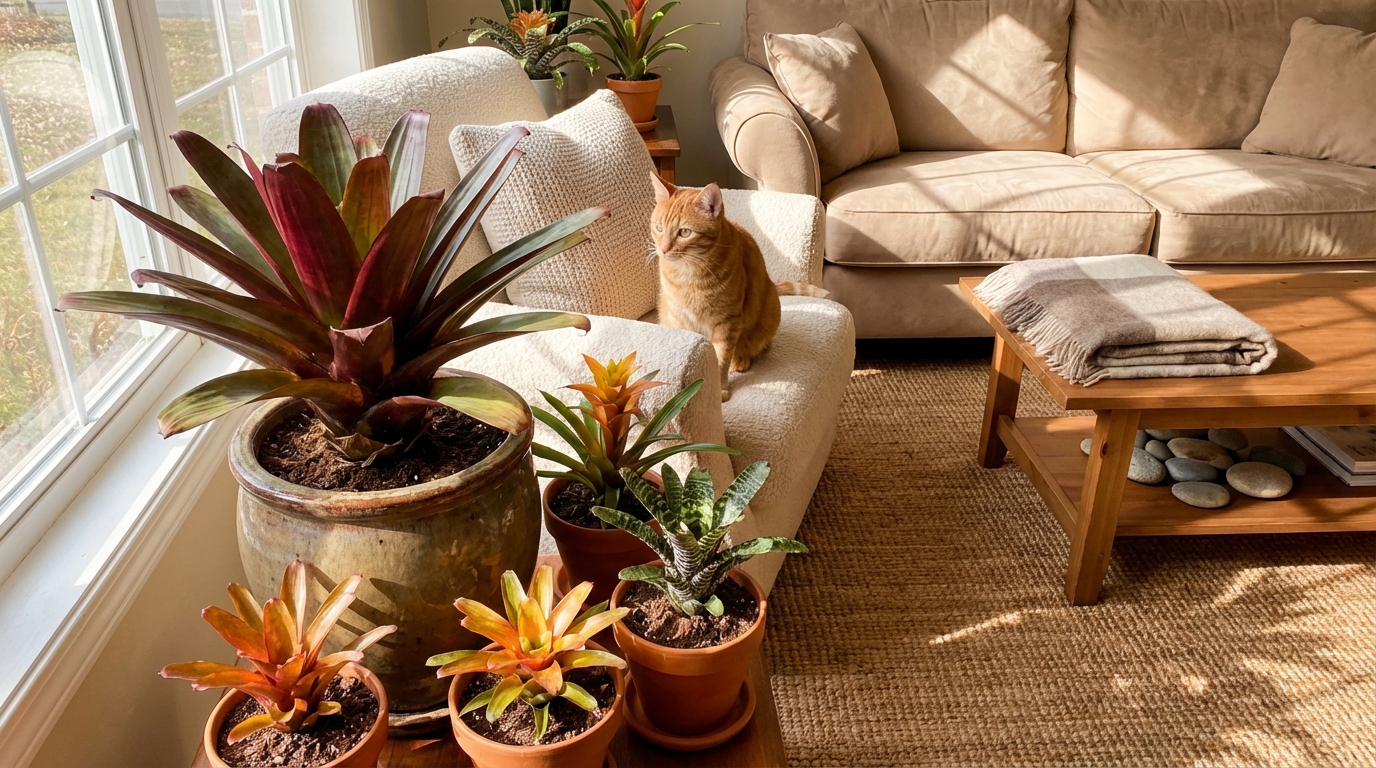
When you think about colorful houseplants, bromeliads might just pop into your mind, and for good reason! These vibrant plants come in various shapes and sizes, making them perfect for adding a splash of color to your home. Their rosettes of leaves can hold water, creating a unique habitat for small creatures. When it comes to bromeliad care, you’ll be happy to know they’re relatively low-maintenance. Just make sure they get bright, indirect sunlight and occasional watering. Plus, many pet-friendly varieties, like the Guzmania and Neoregalia, are safe around your furry friends. Understanding their epiphytic nature helps ensure you provide the right environment for these stunning plants. So, you can enjoy their beauty without worrying about your pets. Embrace these enchanting plants and let them brighten your living space!
Common Pet Toxic Plants: A Brief Overview
When it comes to keeping your furry friends safe, knowing which plants are toxic is essential. Some common plants, like lilies and azaleas, can cause serious health issues for pets if they nibble on them, leading to symptoms like vomiting or lethargy. Fortunately, there are plenty of safe plant alternatives, so let’s explore what to avoid and what to choose for a pet-friendly home!
Toxic Plant Examples
While many plants brighten up our homes, some can pose serious risks to your furry friends. It’s crucial to be aware of toxic plants that could harm your pets. For example, lilies and azaleas are notorious for causing distress in cats and dogs. If your pet nibbles on these, it can lead to troubling health issues. Additionally, philodendrons and sago palms are also known for their plant toxicity, making them a no-go in pet-friendly households. When it comes to bromeliad care, you’re in luck, as these colorful plants are generally safe. However, always double-check to verify your home remains a safe haven for your four-legged companions while enjoying the beauty of nature indoors!
Symptoms of Poisoning
Recognizing the signs of poisoning in your pets can be a lifesaver, especially since some plants can make them sick. If your furry friend has ingested a toxic plant, keep an eye out for symptoms like vomiting, diarrhea, or excessive drooling. You might also notice a lack of appetite or unusual lethargy. These symptoms’ descriptions are essential, as they highlight the poisoning effects on their bodies. Some pets may even show signs of distress, like whining or pawing at their mouths. Remember, early detection is key! If you notice any of these signs, don’t hesitate to contact your vet. Keeping your pets safe means staying informed about the plants around them and watching for any troubling changes in their behavior.
Safe Plant Alternatives
It’s important to know that not all plants are safe for your furry companions, as many common household plants can be toxic to pets. Luckily, there are plenty of pet-friendly plants and non-toxic options you can enjoy without worry. Here’s a handy list to help you choose safe plants for your home:
Plant Name | Toxicity Level | Pet Friendly |
|---|---|---|
Spider Plant | Non-toxic | Yes |
Boston Fern | Non-toxic | Yes |
Bamboo Palm | Non-toxic | Yes |
Areca Palm | Non-toxic | Yes |
Christmas Cactus | Non-toxic | Yes |
Choosing these safe alternatives guarantees your home remains a happy and healthy space for both you and your pets!
Are Bromeliads Toxic to Cats?
When it comes to bromeliads and your feline friend, you might be wondering about their safety. Luckily, most bromeliads aren’t toxic to cats, so you can breathe a sigh of relief! However, it’s still important to keep an eye on your pet for any unusual symptoms if they nibble on the plant.
Bromeliad Toxicity Levels
Have you ever wondered if the vibrant bromeliads that brighten up your home could pose a risk to your furry friends? The good news is that most bromeliad varieties are considered non-toxic to cats and dogs, making them a safe choice for pet safety. While your curious kitty or playful pup might be tempted to nibble on a leaf or two, they’re unlikely to face serious harm from these colorful plants. However, it’s always smart to keep an eye on your pets around new plants. Even non-toxic varieties can cause mild stomach upset if ingested in large amounts. So, enjoy the beauty of bromeliads while ensuring your furry companions remain safe and sound!
💡 Brown leaves can be a sign of stress, and understanding the causes is crucial for your plant’s health.
➜ Discover proven techniques
Symptoms of Poisoning
Wondering how to spot signs of bromeliad poisoning in your feline friend? Keeping an eye on your pet’s behavior is vital. If you suspect they’ve nibbled on a bromeliad, check for these symptoms:
💡 Proper lighting is essential for healthy bromeliads, especially if you’re growing them indoors.
➜ Explore advanced methods
- Vomiting or nausea
- Diarrhea
- Lethargy or unusual tiredness
- Loss of appetite
- Excessive drooling
This symptoms checklist can help you identify potential issues quickly. If you notice any of these signs, it’s best to consult your vet right away. They’ll guide you on what steps to take next. Remember, your furry companion relies on you to keep them safe, so being aware of their reactions can make all the difference in ensuring their health and happiness.
Are Bromeliads Toxic to Dogs?
Are you curious about whether bromeliads pose a risk to your furry friends? The good news is, bromeliads are generally non-toxic to dogs! When you think about bromeliad care, it’s important to remember that these colorful plants can brighten your home without endangering your pets. While it’s always a good idea to supervise your dogs around any plants, you won’t have to worry much about bromeliads causing harm. However, every pet is different, and some may still nibble on the leaves, so keeping an eye on their behavior is key for pet safety. Enjoy the beauty of your bromeliads and rest easy knowing they’re safe for your canine companions!
Signs of Bromeliad Ingestion in Pets
When it comes to your pets, knowing the signs of bromeliad ingestion can help you keep them safe and healthy. Different bromeliad types can affect your furry friends in various ways, so watch for changes in their behavior. If you suspect your pet’s been munching on a bromeliad, keep an eye out for these signs:
Being aware of bromeliad ingestion signs is crucial for your pet’s health and safety. Watch for behavioral changes!
- Vomiting or diarrhea
- Excessive drooling
- Lethargy or unusual tiredness
- Loss of appetite
- Changes in normal pet behavior
Recognizing these symptoms early is key to ensuring your pet gets the care they need. If you notice any of these signs after your pet has been around bromeliads, it’s best to consult your veterinarian for guidance. Your beloved companion’s well-being is worth it!
Safe Plant Alternatives for Pet Owners
For pet owners looking to brighten their homes with greenery, several safe plant alternatives can keep your furry friends happy and healthy. Consider adding pet friendly plants like spider plants and Boston ferns, both of which are non toxic varieties that thrive indoors. You might also love the vibrant colors of African violets or the easy-care nature of bamboo palms. Another great choice is the parlor palm, perfect for adding a touch of elegance without worrying about your pets. These options not only enhance your space but also guarantee your curious companions stay safe. By choosing these delightful plants, you can create a lush environment that both you and your pets will enjoy, making your home feel warm and inviting!
Tips for Keeping Your Pets and Plants Safe Together
Keeping your pets safe while nurturing your plants can seem tricky, but with a bit of planning and creativity, you can create a harmonious living space. Here are some tips for pet friendly gardening and thoughtful plant placement:
- Choose non-toxic plants that won’t harm your furry friends.
- Place your plants on high shelves or hanging pots to keep them out of reach.
- Create a designated pet area to distract them from your plants.
- Use decorative barriers like screens or plant stands to add flair and protection.
- Regularly check your plants for any signs of nibbling or curiosity from your pets.
With these strategies, you can enjoy your beautiful plants while ensuring your pets roam safely and happily around your home.
Conclusion
In summary, bromeliads are generally safe for both cats and dogs, making them a great choice for pet owners who love plants. However, it’s always smart to keep an eye on your furry friends around any greenery. After all, wouldn’t you want to guarantee their safety while enjoying the beauty of these vibrant plants? By choosing the right varieties and following a few simple tips, you can create a happy home for both your pets and your plants!
💡 Identifying and resolving common issues can help you maintain the health of your bromeliads.
➜ Master this approach


